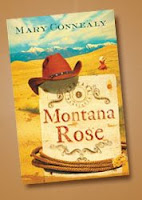
Montana Rose by Mary Connealy

It is time for a FIRST Wild Card Tour book review! If you wish to join the FIRST blog alliance, just click the button. We are a group of reviewers who tour Christian books. A Wild Card post includes a brief bio of the author and a full chapter from each book toured. The reason it is called a FIRST Wild Card Tour is that you never know if the book will be fiction, non~fiction, for young, or for old…or for somewhere in between! Enjoy your free peek into the book!

You never know when I might play a wild card on you!

Today’s Wild Card author is:

and the book:

Montana Rose

Barbour Publishing, Inc (July 1, 2009)

ABOUT THE AUTHOR:

An award-winning author, Mary Connealy lives on a Nebraska farm with her husband and is the mother of four grown daughters. She writes plays and shorts stories, and is the author of two other novels, Petticoat Ranch and Calico Canyon. Also an avid blogger, Mary is a GED instructor by day and an author by night.

Visit the author’s website.

Product Details:

List Price: $10.97

Paperback: 320 pages

Publisher: Barbour Publishing, Inc (July 1, 2009)

Language: English

ISBN-10: 1602601429

ISBN-13: 978-1602601420

AND NOW…THE FIRST CHAPTER:
Montana Territory, 1875

Cassie wanted to scream, “Put down that shovel!”

As if yelling at the red-headed gravedigger would bring Griff back to life. A gust of wind blew Cassie Griffin’s dark hair across her face, blinding her.

For one sightless moment it was as if the wind showed her perfectly what the future held for her.

Darkness.

Hovering in a wooded area, concealed behind a clump of quaking aspens that had gone yellow in the fall weather, she watched the hole grow as the man dug his way down into the rocky Montana earth.

Muriel, the kind storekeeper who had taken Cassie in, stood beside the ever-deepening grave. If Cassie started yelling, Muriel would start her motherly clucking again and force Cassie to return to town and go back to bed. She’d been so kind since Cassie had ridden in shouting for help.

In a detached sort of way, Cassie knew Muriel had been caring for her, coddling Cassie to get her through the day. But Cassie had gone numb since Muriel’s husband, Seth, had come back in with the news that Griff was dead. Cassie listened and answered and obeyed, but she hadn’t been able to feel anything. Until now. Now she could feel rage aimed straight at that man preparing the hole for her beloved Griff.

“I’m sorry, little one.” Cassie ran her hand over her rounded stomach. “You’ll never know your daddy now.” Her belly moved as if the baby heard Cassie and understood.

The fact that her husband was dead was Cassie’s fault. She should have gone for the doctor sooner. Griff ordered her not to, but first Griff had been worried about the cost. He’d shocked Cassie by telling her they couldn’t afford to send for the doctor. Griff had scolded Cassie if she ever asked questions about money. So she’d learned it wasn’t a wife’s place. But she’d known her parents were wealthy. Cassie had brought all their wealth into the marriage. How could they not afford a few bits for a doctor? Even as he lay sick, she’d known better than to question him about it.

Later, Griff had been out of his head with fever. She stayed with him as he’d ordered, but she should have doctored Griff better. She should have saved him somehow. Instead she’d stood by and watched her husband die inch by inch while she did nothing.

Cassie stepped closer. Another few steps and she’d be in the open. She could stop them. She could make them stop digging. Refuse to allow such a travesty when it couldn’t be true that Griff was dead.

Don’t put him in the ground! Inside her head she was screaming, denying, terrified. She had to stop this.

Before she could move she heard Muriel.

“In the West, nothing’ll get you killed faster’n stupid.” Whipcord lean, with a weathered face from long years in the harsh Montana weather, Muriel plunked her fists on her nonexistent hips.

Seth, clean-shaven once a week and overdue, stood alongside his wife, watching the proceedings, his arms crossed over his paunchy stomach. “How ’bout lazy? In the West, lazy’ll do you in faster’n stupid every time.”

“Well, I reckon Lester Griffin was both, right enough.” Muriel nodded her head.

Cassie understood the words, “lazy” and “stupid.” They were talking about Griff? She was too shocked to take in their meaning.

“Now, Muriel.” Red, the gravedigger, shoveled as he talked. “Don’t speak ill of the dead.”

On a day when Cassie didn’t feel like she knew anything, she remembered the gravedigger’s name because of his bright red hair.

One of the last coherent orders Griff had given her was, “Pay Red two bits to dig my grave, and not a penny more.”

Griff had known he was dying. Mostly delirious with fever, his mind would clear occasionally and he’d give orders: about the funeral, what he was to be buried in, what Cassie was to wear, strict orders not to be her usual foolish self and overpay for the grave digging. And not to shame him with her public behavior.

“Well honestly, it’s a wonder he wasn’t dead long before this.” Muriel crossed her arms and dared either man to disagree.

“It’s not Christian to see the bad in others.” Red dug relentlessly, the gritty slice of the shovel making a hole to swallow up Cassie’s husband. “And especially not at a time like this.”

It was just after noon on Sunday, and the funeral would be held as soon as the grave was dug.

Cassie looked down at her dress, her dark blue silk. It was a mess. She’d worn it all week, not giving herself a second to change while she cared for Griff. Then she’d left it on as she rode for town. She’d even slept in it last night. . .or rather she’d lain in bed with it on. She hadn’t slept, more than snatches, in a week. Ever since Griff’s fever started.

She needed to change to her black silk for the funeral.

Cassie wanted to hate Muriel for her words, but Muriel had mothered her, filling such a desperate void in Cassie that she couldn’t bear to blame Muriel for this rage whipping inside of Cassie’s head, pushing her to scream.

“Well, he was a poor excuse for a man and no amount of Christian charity’ll change that.” Muriel clucked and shook her head. “He lived on the labor of others ’n spent money he didn’t have.”

“It’s that snooty, fancy-dressed wife of his who drove him to an early grave,” Seth humphed. Cassie saw Seth’s shoulders quiver as he chuckled. “Of course, many’s the man who’d gladly die trying to keep that pretty little China Doll happy.”

Cassie heard Griff’s nickname for her. She ran her hands down her blue silk that lay modestly loose over her round belly. Fancy-dressed was right. Cassie admitted that. But she hadn’t needed all new dresses just because of the baby. Griff had insisted it was proper that the dresses be ordered. But however she’d come to dress so beautifully in silks and satins, there was no denying she dressed more expensively than anyone she’d met in Montana Territory. Not that she’d met many people.

But snooty? How could Seth say that? They were slandering her and, far worse, insulting Griff. She needed to defend her husband, but Griff hated emotional displays. How could she fight them without showing all the rage that boiled inside her? As the hole grew, something started to grow in Cassie that overcame her grief and fear.

Rage. Hate.

That shovel rose and fell. Dirt flew in a tidy pile and she hated Red for keeping to the task. She wanted to run at Red, screaming and clawing, and force Red to give Griff back to her. But she feared unleashing the anger roiling inside her. Griff had taught her to control all those childish impulses. Right now though, her control slipped.

[insert line break]

“A time or two I’ve seen someone who looks to be snooty who was really just shy. . .or scared,” Muriel said.

Red kept digging, determined not to join in with this gossip. But not joining in wasn’t enough. He needed to make them stop. Instead, he kept digging as he thought about poor Cassie. She’d already been tucked into Muriel’s back room when he’d come to town yesterday, but he’d seen Seth bring Lester Griffin’s body in. He couldn’t imagine what that little woman had been through.

“When’s the last time she came into our store?” Seth asked. “Most times she didn’t even come to town. She was too good to soil her feet in Divide. And you can’t argue about fancy-dressed. Griff ordered all her dresses ready-made, sent out from the East.”

Everything about Cassie Griffin made Red think of the more civilized East. She never had a hair out of place or a speck of dirt under her fingernails. Red had seen their home, too. The fanciest building in Montana, some said. Board siding instead of logs. Three floors and so many frills and flourishes the building alone had made Lester Griffin a laughingstock. The Griffins came into the area with a fortune, but they’d gone through it fast.

“That’s right,” Muriel snipped. “Griff ordered them. A spoiled woman would pick out her own dresses and shoes and finery, not leave it to her man.”

Seth shook his head. “I declare, Muriel, you could find the good in a rattlesnake.”

Red’s shovel slammed deep in the rocky soil. “Cassie isn’t a rattlesnake.” He stood up straight and glared at Seth.

His reaction surprised him. Red didn’t let much upset him. But calling Cassie a snake made Red mad to the bone. He glanced over and saw Muriel focusing on him as she brushed back wisps of gray hair that the wind had scattered from her usual tidy bun. She stared at him, taking a good long look.

Seth, a tough old mule-skinner with a marshmallow heart, didn’t seem to notice. “This funeral’ll draw trouble. You just see if it don’t. Every man in the territory’ll come a’running to marry with such a pretty widow woman. Any woman would bring men down on her as hard and fast as a Montana blizzard, but one as pretty as Cassie Griffin?” Seth blew a tuneless whistle through his teeth. “There’ll be a stampede for sure, and none of ’em are gonna wait no decent length of time to ask for her hand.”

Red looked away from Muriel because he didn’t like what was in her eyes. He was through the tough layer of sod and the hole was getting deep fast. He tried to sound casual even though he felt a sharp pang of regret—and not just a little bit of jealousy—when he said, “Doubt she’ll still be single by the time the sun sets.”

Muriel had a strange lilt to her voice when she said, “A woman is rare out here, but a young, beautiful woman like Cassie is a prize indeed.”

Red looked up at her, trying to figure out why saying that made her so all-fired cheerful.

Seth slung his beefy arm around Muriel with rough affection. “I’ve seen the loneliness that drives these men to want a wife. It’s a rugged life, Muriel. Having you with me makes all the difference.”

Red understood the loneliness. He lived with it every day.

“She’s a fragile little thing. Tiny even with Griff’s child in her belly. She needs a man to take care of her.” Muriel’s concern sounded just the littlest bit false. Not that Muriel wasn’t genuinely concerned. Just that there was a sly tone to it, aimed straight at Red.

Red thought of Cassie’s flawless white skin and shining black hair. She had huge, remote brown eyes, with lashes long enough to wave in the breeze, and the sweetest pink lips that never curved in a smile nor opened to wish a man good day.

Red thought on what he’d say to draw a smile and a kind word from her. Such thoughts could keep a man lying awake at night. Red knew that for a fact. Oh yes, Cassie was a living, breathing test from the devil himself.

“China Doll’s the perfect name for her,” Muriel added.

Red had heard that Griff called his wife China Doll. Griff never said that in front of anyone. He always called her Mrs. Griffin, real proper and formal-like. But he’d been overheard speaking to her in private, and he’d called her China Doll. The whole town had taken to calling her that.

Red had seen such a doll in a store window when he was a youngster in Indiana. That doll, even to a roughhousing little boy, was so beautiful it always earned a long, careful look. But the white glass face was cold. and her expression serious, rather than giving the poor toy a painted on smile. It was frighteningly fragile. Rather than being fun, Red thought a China doll would be a sad thing to own and, in the end, a burden to keep unbroken and clean. All of those things described Cassandra Griffin right down to the ground. Knowing all of that didn’t stop him from wanting her.

Cassie got to him. She had ever since the first time he’d seen her nearly two years ago. And now she was available. Someone would have to marry her to keep her alive. Women didn’t live without men in the unsettled West. Life was too hard. The only unattached women around worked above the Golden Butte Saloon and, although they survived, Red didn’t consider their sad existence living.

“You’re established on the ranch these days, Red. Your bank account’s healthy.” Muriel crouched down so she was eye level with Red, who was digging himself down fast. “Maybe it’s time you took a wife.”

Red froze and looked up at his friend. Muriel was a motherly woman, though she had no children. And like a mother, she seemed comfortable meddling in his life.

Red realized he was staring and went back to the grave, tempted to toss a shovel full of dirt on Muriel’s wily face. He wouldn’t throw it hard. He just wanted to distract her.

When he was sure his voice would work, he said, “Cassie isn’t for me, Muriel. And it isn’t because of what it would cost to keep her. If she was my wife, she’d live within my means and that would be that.”

Red had already imagined—in his unruly mind—how stern he’d be when she asked for finery. “You’ll have to sew it yourself or go without.” He even pictured himself shaking a scolding finger right under her turned-up nose. She’d mind him.

He’d imagined it many times, many, many times. And long before Griff died, which was so improper Red felt shame. He’d tried to control his willful thoughts. But a man couldn’t stop himself from thinking a thought until he’d started, now could he? So he’d started a thousand times and then he stopped himself. . .mostly. He’d be kind and patient but he wouldn’t bend. He’d say, “Cass honey, you—”

Red jerked his thoughts away from the old, sinful daydream about another man’s wife. Calmly, he answered Muriel, “She isn’t for me because I would never marry a non-believer.”

With a wry smile, Seth caught on and threw in on Muriel’s side—the traitor. “A woman is a mighty scarce critter out here, Red. It don’t make sense to put too many conditions on the ones there are.”

“I know.” Red talked to himself as much as to them. He hung on to right and wrong. He clung to God’s will. “But one point I’ll never compromise on is marrying a woman who doesn’t share my faith.”

“Now, Red,” Muriel chided, “you shouldn’t judge that little girl like that. How do you know she’s not a believer?”

“I’m not judging her, Muriel.” Which Red realized was absolutely not true. “Okay, I don’t know what faith she holds. But I do know that the Griffins have never darkened the doorstep of my church.”

Neither Seth nor Muriel could argue with that, although Muriel had a mulish look that told him she wanted to.

“We’d best get back.” Seth laid a beefy hand on Muriel’s strong shoulder. “I think Mrs. Griffin is going to need some help getting ready for the funeral.”

“She’s in shock, I reckon,” Muriel said. “She hasn’t spoken more’n a dozen words since she rode in yesterday.”

“She was clear enough on what dress I needed to fetch.” Seth shook his head in disgust. “And she knew the reticule she wanted and the shoes and hairpins. I felt like a lady’s maid.”

“I’ve never seen a woman so shaken.” Muriel’s eyes softened. “The bridle was on wrong. She was riding bareback. It’s a wonder she was able to stick on that horse.”

Red didn’t want to hear anymore about how desperately in need of help Cassie was.

Muriel had been teasing him up until now, but suddenly she was dead serious. “You know what the men around here are like, Red. You know the kind of life she’s got ahead of her. There are just some things a decent man can’t let happen to a woman. Libby’s boys are off hauling freight or I’d talk to them. They’d make good husbands.”

Muriel was right, they would be good. Something burned hot and angry inside of Red when he thought of those decent, Christian men claiming Cassie.

It was even worse when Red thought of her marrying one of the rough and ready men who lived in the rugged mountains and valleys around the little town of Divide, which rested up against the great peaks of the Montana Rockies. It was almost more than he could stand to imagine her with one of them.

But, he also knew a sin when he saw it tempting him, and he refused to let Muriel change his mind. She badgered him a while longer but finally gave up.

He was glad when Seth and Muriel left him alone to finish his digging. Until he looked up and saw Cassie as if he’d conjured her with his daydreams.

But this was no sweet, fragile China Doll. She charged straight toward him, her hands fisted, her eyes on fire.

“Uh. . .hi, Miz Griffin.” He vaulted out of the shoulder-deep hole and faced her. The look on her face was enough to make him want to turn tail and run.

She swept toward him, a low sound coming from her throat that a wildcat might make just before it pounced.

She’d heard it. All of it.

God forgive me for being part of that gossip, hurting her when she’s already so badly hurt.

Whatever she wanted to say, whatever pain she wanted to inflict, he vowed to God that he’d stand here and take it as his due. Her eyes were so alive with fury and focused right on him. How many times had his unruly mind conjured up the image of Cassie focusing on him? But this wasn’t the look he’d imagined in his daydreams. In fact, a tremor of fear ran up his backbone.

His grip tightened on his shovel, not to use as a weapon to defend himself but to keep her from grabbing it and taking a swing.

“Stop it.” Her fists were clenched as if to beat on him. “Stop saying those awful things.” Red saw more life in her eyes than he ever had before. She was always quiet and reserved and distant. “Give him back. I want him back!” She moved so fast toward him that, just as she reached his side, she tripped over her skirt and fell. A terrified shriek cut off her irate words.

“Cassie!” Red dropped the shovel and caught her just as she’d have tumbled into the open grave.

She swung and landed a fist right on his chin.

His head snapped back. She had pretty good power behind her fists for a little thing. Figuring he deserved it, he held on, stepping well away from the hole in the ground. He pulled her against him as she pummeled and emitted short, sharp, frenzied screams of rage. Punching his shoulders, chest, face. He took his beating like a man. He’d earned this by causing her more pain when she’d already been dealt more than she could bear. Of course he’d tried to stop it. But he’d failed now, hadn’t he?

“I’m sorry.” He spoke low, hoping to penetrate her anger. He could barely hear himself over her shouting. “I’m so sorry about Griff, Cassie. And I’m sorry you heard us speaking ill. We were wrong. So wrong. I’m sorry. I’m sorry.” His voice kept crooning as he held her, letting her wale away on him until her squeaks and her harmless blows slowed and then ceased, most likely from exhaustion, not because she’d quit hating him.

Her hands dropped suddenly. Her head fell against his chest. Her knees buckled and Red swung her up into his arms.

He looked down at her, wondering if she’d fainted dead away.

In his arms, he held perfection.

She fit against him as if his body and his heart had been created just for her. A soul-deep ache nearly buckled his own knees as he looked at her now-closed eyes. Those lashes so long they’d tangle in a breeze rested on her ashen face, tinged with one bright spot of fury raised red on her cheeks.

“I’m so sorry I hurt you. Please forgive me.” His words were both a prayer to God and a request to poor, sweet Cassie. He held her close, murmuring, apologizing.

At last her eyes fluttered open. The anger was there but not the violence. “Let me go!”

He slowly lowered her feet to the ground, keeping an arm around her waist until he was sure her legs would hold her. She stepped out of his arms as quickly as possible and gave him a look of such hatred it was more painful than the blows she’d landed. Far more painful.

“I’m so sorry for your loss, Cassie honey.” Red wanted to kick himself. He shouldn’t have called her such. It was improper.

She didn’t seem to notice he was even alive. Instead, her gaze slid to that grave, that open rectangle waiting to receive Cassie’s husband. . .or what was left of him. And the hatred faded to misery, agony, and worst of all, fear.

A suppressed cry of pain told Red, as if Cassie had spoken aloud, that she wished she could join her husband in that awful hole.

Her head hanging low, her shoulders slumped, both arms wrapped around her rounded belly, she turned and walked back the way she came. Each step seemed to take all her effort as if her feet weighed a hundred pounds each.

Wondering if he should accompany her back to Muriel’s, instead he did nothing but watch. There was nothing really he could do. That worthless husband of hers was dead and he’d left his wife with one nasty mess to clean up. And Red couldn’t be the one to step in and fix it. Not if he wanted to live the life God had planned for him.

She walked into the swaying stand of aspens. They were thin enough that if he moved a bit to the side, he could keep his eye on her. Stepping farther and farther sideways to look around the trees—because he was physically unable to take his eyes off her—he saw her get safely to the store.

Just then his foot slipped off the edge of the grave. He caught himself before he fell headlong into the six feet of missing earth.

Red heard the door of Bates General Store close with a sharp bang, and Cassie went inside and left him alone in the sun and wind with a deep hole to dig and too much time to think. He grabbed his shovel and jumped down, getting back at it.

He knew he was doing the right thing by refusing to marry Cassie Griffin.

A sudden gust caught a shovelful of dirt and blew it in Red’s face. Along with the dirt that now coated him, he caught a strong whiff of the stable he’d cleaned last night. Cassie would think Red and the Western men he wanted to protect her from were one and the same. And she’d be right, up to a point. The dirt and the smell, the humble clothes, and the sod house—this was who he was, and he didn’t apologize for that to any man. . .or any woman.

Red knew there was only one way for him to serve God in this matter. He had to keep clear of Cassie Griffin.

The China Doll wasn’t for him.

Love’s Rescue by Tammy Barley

It is time for a FIRST Wild Card Tour book review! If you wish to join the FIRST blog alliance, just click the button. We are a group of reviewers who tour Christian books. A Wild Card post includes a brief bio of the author and a full chapter from each book toured. The reason it is called a FIRST Wild Card Tour is that you never know if the book will be fiction, non~fiction, for young, or for old…or for somewhere in between! Enjoy your free peek into the book!

You never know when I might play a wild card on you!

Today’s Wild Card author is:

and the book:

Love’s Rescue (The Sierra Chronicles Book 1)

Whitaker House (June 4, 2009)

ABOUT THE AUTHOR:

Tammy Barley’s roots run deep and wide across the United States. With Cherokee heritage and such ancestors as James Butler “Wild Bill” Hickok, Ralph Waldo Emerson, and Henry David Thoreau, she inherited her literary vocation and her preferred setting: the Wild West. An avid equestrian, Tammy has ridden horseback over western mountains and rugged trails in Arizona and uses these experiences liberally in her writing. Tammy excelled in her college writing studies, and in 2006 published Beautiful Feet: Meditations for Missionary Women. She won second place in the Golden Rose Contest in the category of inspiration romance, and she serves as a judge for various fiction contests. Tammy is a full time writer and editor who manages to find time to homeschool her three children at her home in northern Illinois.

Visit the author’s website.

Product Details:

List Price: $6.99
Paperback: 400 pages
Publisher: Whitaker House (June 4, 2009)
Language: English
ISBN-10: 1603741089
ISBN-13: 978-1603741088

AND NOW…THE FIRST CHAPTER:

Prologue

Carson City, Nevada Territory

April 1860

She was going to lose him. With trembling fingers, Jessica Hale pushed back the brown tendrils of hair the wind was whipping into her eyes. Further down the road, her brother handed the last of his cases to the driver on top of the stagecoach, then tossed his hat through the window onto a seat with an air of resolve. He turned and strode toward her.

His wavy, wind-tossed hair gleamed brightly in the morning sun, its sandy hue like gold coins dulled intermittently by shifting dust. His sky-blue eyes—eyes that gleamed with subtle mockery or shone with patient understanding—now attempted to disguise unspoken regret. He smoothed a hand over each of the sorrel coach horses and calmly took in the young town he was leaving behind. Jessica knew better. He was going to miss this—the town, their parents. But his heart called him home. Ambrose was every inch a Kentucky gentleman. He always had been. Her throat tightened.

“Jessica?”

She couldn’t help but smile. Jessica. Like always, he spoke her name with that deep, flowing timbre that made her think of the brook they had often played in as children.

“Now, what is that smile for?”

“I’ll miss the sound of your voice. It’s so pleasant.”

“It is?” Ambrose’s eyes sparkled at her in amusement. “You never told me that before.”

“Well, now you know.” She loved the Southern lilt of it, the quiet honor he wore just as naturally as his greatcoat. She took a deep breath to steady herself. “Are your bags loaded, then?”

“They are. The driver was kind enough to strap them down. With the rough going, I’ll get bounced out long before they will.”

Her smile faded. “Perhaps you should stay.”

“Jess….” Ambrose patiently drew her hand through the crook of his arm and tipped his head toward the road. “We have a few minutes left before the stage leaves. Let’s walk for a bit.”

Jess sighed in frustration but complied, letting her head fall against his shoulder as they walked. At the edge of town, she looked back at Carson City’s wide streets, lazy with the long, morning shadows of tall buildings and newly built frames that smelled of sawn wood. One by one, other pedestrians appeared, striding briskly; then came rattling wagons, kicking up trails of dust this way and that. The wind whipped at Jess’s skirt and Ambrose’s coat, cavorting among the silvery green desert sage leaves that fluttered around them. The sights and sensations that usually intrigued her had amalgamated into one frolicking, singing fool, playing cruelly to her burdened heart.

Jess’s gaze followed the road out of town, then lifted to rest on the peaks that rose high above. The Mexican people called these mountains the Sierra Nevadas—the snowy mountains. When she had come West with her family a year before, Jess had thought them magnificent. In a wild, untamed way, they reminded her of the Kentucky homeland they had left behind. Instead of the rolling green hills and broadleaf forests she had always known, the Sierras jutted boldly from the desert like a rare stone half buried in sand. Depending on the angle of the sun, their terrain was a glorious red or gold.

For a moment, Jess merely breathed, drawing in the fresh scent of the pinyon pines that dotted the distant slopes and mingled with the earthy aroma of sage. Only a few months ago, winter had prevailed, and so had the glittering snows on the Sierras.

Ambrose, dear Ambrose—had understood her need to be outdoors. He’d convinced their father a time or two to excuse him from work, then would take her riding amid the stark beauty of the mountains.

Their father.

Jess frowned, pushing back strands of hair that had torn from their heavy twist and were stinging her eyes. A brusque but shrewd businessman and horse breeder from Lexington, their father had brought the family West to escape the growing turbulence in the South, and here, his import business thrived. With the recent discovery of untold millions of dollars in gold and silver buried in the land, the eager-to-be-rich swarmed to the Comstock from every major seaport in the world. Those fortunate enough to strike a vein of the mother lode scrambled to Hale Imports to stake their claims in society by acquiring French wines, Venetian glassware, Turkish carpets, and handcrafted furnishings made of dark German wood.

A golden dream for many, perhaps, but not for Jess. Her family had considerable wealth, but possessions beyond life’s basic comforts didn’t matter to her. What did matter were her father, her mother, and her brother, Ambrose, and the strength they had always given one another in face of the threat of war between North and South.

And the threat had become considerable.

Jess tightened her grip on Ambrose’s arm. He patted her hand reassuringly.

Worse, her family hadn’t left war fever behind as her father had hoped they would. Its effects were sweeping across the country like the unstoppable waves of the sea. Miners and other men in town chose sides as the conflict loomed nearer. Heated political discussions often erupted into fistfights in the streets. In the same way, tension had escalated within the Hale family as their loyalties divided. And now, Ambrose was about to return to Lexington—against his father’s will—to rejoin his militia unit. It was predicted that war would break out within a year. Two days earlier, when Ambrose had announced to Jess and their parents his intent to fight for the South, Jess had stood strong—stunned but unflinching. The announcement was followed by two days of her father and brother yelling and her mother pleading. A lifetime of paternal love was burning to cinders.

Their father was still so angry about his son’s decision that he had refused to see him to the stage stop, coldly disallowing all but the briefest of good-byes between mother and son.

Jess finally broke the silence. “I thought this place would be the answer, Ambrose. I thought here we would be safe from the war.” She stopped walking and tossed him a valiant smile. “What will I do without you?”

Ambrose considered her soberly. She’d hoped he would tease her gently. Not this time. “You’re seventeen now, Jess. At seventeen, most ladies stop concerning themselves with their families and set their eyes on marriage.”

“Marriage? Marriage! How could you suggest that?” She flung aside her earlier self-promise to remain calm. “This particular subject has never come up before, but since it has, let me tell you, Ambrose, I don’t need a husband to manage my life and order me about.”

“Jess—”

“I know you want to protect me, and I love you for it. But the South and its marrying traditions are a great distance away. Here, women are strong and independent”—she fought

to control the anger in her voice— “and so am I. I’ve seen too many wives’ hopes destroyed by their husbands’ selfish wants and ambitions. I could never live my life under some man’s boot heel. I’ll make my way on my own.”

Ambrose gave her a reluctant smile. “All right. There’s no talking you into an idea your mind is set against. Keep yourself busy, then. Tell Father you want to keep books at Hale Imports. You’ve been schooled the same as I have. You’ll do well.”

Jess’s legs nearly gave out. “Keeping his accounts is your job!” Ambrose wasn’t coming back at all—not even after the war. She really was going to lose him.

“No, Jess. Not anymore.” He shifted his gaze to the territory around them. “This place has never fit me the way it has you. That house in Kentucky is our house. Its lands are Hale lands. I was born and raised at Greenbriar, and so were you. That’s my home, Jess.” He faced her squarely. “When the war comes, I’ll defend it, whether the invading army is from the North or the South.”

Jess’s throat ached to beg him to stay. Their friendship was special, rare, in spite of growing up together amid talk of secession and war. Or perhaps because of it. She wanted to keep her brother close—and safe. Yet she forced down the urge to give words to her feelings. Ambrose’s blood flowed for Greenbriar, for Lexington. A year away hadn’t changed that. Yes, she loved him. Enough to understand that. Enough to let him go.

“I guess I always knew you’d go back,” she admitted, “and I understand, I really do. I just hate knowing that you’ll be right in the middle of the fighting.” She raised a hand. “And I hate that Father’s turned his back on you when you need him most! How could he do that to you? How could he do that to Mother?”

All at once, she knew. “He’s doing this because of Broderick, isn’t he?”

Broderick had died as a baby, when Jess was only five. Even now, she could clearly remember holding her little brother as his fever raged, could remember how helpless she had felt when she’d lain awake at night listening to his pathetic coughs in the nursery down the hall. Jess had been devastated when he died, but their mother…their mother had never been the same. Her joy and laughter Jess knew about only because Ambrose had told her of the way she had once been.

Ambrose acknowledged the fact. “Father doesn’t think Mother could bear to lose another son.”

Jess nodded slowly. “Then you’d best stay alive.”

The corner of his sandy mustache lifted. “You’re a Hale, that’s for certain. Idealistic and stubborn, through and through.”

“Hopefully stubborn enough to get through to Father. You know I can’t let things remain the way they are between the two of you.”

“Jess, I’d like to warn you against—”

“That would be pointless.” At his gentle frown of censure, she ordered her thoughts and explained. “For as long as I can remember, you were the one who held our family together. Not Father. Even when he was home, it was not Mother or anyone else, but you. You reasoned with Father when business made him unreasonable, you were a constant comfort to Mother, and you sat by my bed at night when storms and thunder threatened to shake the house apart.”

“You just wanted company while you were awake.” He lightly tugged a lock of her hair in a teasing way. “You never feared storms or anything else.”

“For the past few years, I’ve feared the coming war.” She lifted her chin and, with a mental step forward that she would never retrace, left the remnants of her childhood behind. “You won’t be here to keep us together. Now I’ll take your place and do what you’ve always done, and rely on solid Hale determination to see me through. Ambrose, don’t worry about Mother, or about Father’s anger at your decision to go. I’ll hold our family together, and I’ll do all I can to change his heart.”

Gratitude battled concern in his face as he studied his sister, but Jess knew that he also understood firsthand the inborn loyalty that drove her. “Just be careful you don’t jeopardize your relationship with him on my account,” he said.

“I will be careful.”

There was a movement near the stagecoach. A mailbag was slung aboard.

Jess’s heart lurched. It was almost time for him to go.

Ambrose patted her hand and looked intently into her eyes. “I don’t know when I’ll see you again. We’d better say good­bye.”

“No!” She shook her head, fighting sudden tears. “I won’t say good-bye.”

“Jess, I don’t want to frighten you, but if the war comes—”

“Then the war will end! Ambrose, if we say good-bye, it’s as if we won’t see each other again. I can’t do that. I have to believe—I have to know—that one day you’ll come back.”

“Believe it,” he said, his gaze firm beneath his brows, “because I intend to.”

She tightened her grip until it pained her. “Then we don’t say good-bye?”

He hesitated, then shook his head to assure her. “We don’t say good-bye.”

Suddenly, Jess recalled what she had wanted to do. With a quick tug, she untied the green satin ribbon of the pendant necklace she wore, slipped the ribbon free, and pressed it into his hand. “I’ll want that back one day,” she said. “Until then, keep the best memories of us all close to your heart.”

Ambrose smiled and tucked the ribbon into his shirt pocket with a little pat. “I can’t think of a better place to put them.”

Another movement drew her gaze. The coach driver climbed into his seat.

“Ambrose?”

“Pray for me, Jess. I’ll write to you as often as I can, I promise.”

Ambrose hurried toward the stage, Jess’s hand tucked in his. At the door, he pulled her into his arms and hugged her warmly.

“Will you write to me?”

Jess buried her face into the gray cloth of his coat. “Just try to stop me.”

He kissed the top of her head, briefly hugged her tighter, and then stepped away.

After Ambrose had swung aboard the coach, he turned and leaned out the window. His blue eyes shone. “The Lord has a plan, Jess!” he called. “Remember that!”

The driver cracked the reins and the six-in-hand pulled the stage away from Carson City, away from her. Jess watched until the coach disappeared through a pass in the mountains.

Keep him safe, Lord, she prayed. Whatever lies ahead, please keep him safe.

It was all she could do not to run for her horse and go after him.

Near Perryville, Kentucky

October 1862

His boots firm in the stirrups, Ambrose leaned over the heaving neck of the mare as he charged into the sunlit field. Well-muscled and dappled gray, the mare tore up stones with her thrashing hooves while Ambrose’s cotton shirt ballooned behind him and snapped in the blowing heat. His fear for General Bragg’s paltry command of sixteen thousand burned like liquid fire in his belly, and with heartrending despair, he recalled Mr. Lincoln’s reputed strong conviction that “to lose Kentucky is nearly the same as to lose the whole game.”

His colonel’s rapidly scrawled reconnaissance report was secured in a leather pouch tucked into his waistband. It was the only warning Bragg would have that the Yankee advance at Frankfort was merely a diversion, and that the whole of General Buell’s Union army was, in fact, moving toward Bragg’s position. Buell meant to take Kentucky.

The enemy was fifty-five thousand strong.

Sixteen thousand up against fifty-five. Ambrose whipped a sleeve across his forehead to blot the sweat seeping from underneath his hat. If he didn’t reach Bragg in time for the general to pull back and regroup, Kentucky would fall to the Federals—and to their torches. Ambrose tilted his head to hear the distant pum, pum of cannon fire.

Fields dotted with white and blue wildflowers blurred by. This was his home, his land, and now, Greenbriar was his, too. Ambrose frowned as he recalled the letter written by his stiff-necked, outraged father—the sole one he’d sent—in which he had given him Greenbriar. His father intended the house as an accusatory monument to the heritage he believed his son had betrayed by ultimately fighting for the South. But to Ambrose, if Greenbriar survived the war, it would again become his home, his livelihood, and the place his old bones would be laid. He yearned to fall in love there, to marry there, to raise children amid all its gurgling streams and grassy paddocks. Children who would love it as he always had, and as Jess had.

Memories intruded—memories of the day Jess was born and the moment he first held her. He had been seven, and the tiny, warm bundle that stared up at him with curious green eyes had captivated his heart. As she grew, it was to him that she would come for comfort and advice; with him, she shared her inmost thoughts. He had taught her more about the person she could become than their parents ever had, and she had matched his strength and dedication toward those whom she loved.

Now, Jess was his proponent and confidante. She wrote to him as often as he wrote to her, discreetly hiding his letters from their father. He knew many of their letters never made it through enemy lines since, in letters he did receive, Jess frequently referred to events he was unaware of, as well as to war news he had previously penned. Even so, they both persisted in sending them. As promised, she patiently worked to sway their father’s heart toward his son.

And she remained firm in her belief that her brother would survive the war.

His mind turned to the letter he had written to her only a few hours ago. He imagined her reading it at night by candlelight, the flame’s glow illuminating her casually knotted hair, highlighting the loose strands she rarely bothered with. He could almost hear the smooth flow of her Southern voice as if she were reading it aloud.

My dearest Jessica,

Like others here, I often look ahead to the end of the war and dream of what I will do after. For me, it has never been a question. The day I muster out, I will come without hesitation to all of you there, to make up lost years of brothering for you and baby Emma, and to find a way to repair the damage between Fatherand me. I will remain until Mother’s worries for me have gone, and she sees her family healed.

Until then, Jessica, you must continue to convey to her news of my well-being, and tell her of my unflagging determination to return to you all.

Then, as Grandfather would have wished for me to do, I will come back home to Greenbriar and rebuild what the war has ruined. I’ll fill its paddocks again with the prized horseflesh that has always graced its lands.

I yearn to walk again the brick path leading to the porch, to step into the downstairs hall and feel it welcome me home,…

Startled, Ambrose entered a town huddled beneath a haze of smoke. Perryville! The mare was slick with sweat and foam, but she had a bold heart, the likes of which he’d rarely seen in an animal. Spying a cluster of saddled mounts, Ambrose halted before a red brick house. The gray tugged at the reins while he listened to a soldier’s instructions on how to find General Bragg.

Ambrose immediately headed northwest on the river road. The roar of battle grew deafening. Yankee wounded and dead lay scattered over the hills.

He topped a rise. Below, gray-clad soldiers swarmed through thick smoke into the enemy, several falling beside their comrades. All around, cannon shells burst in sprays of jagged metal and earth.

“Lord in heaven,” Ambrose murmured, “help us all.”

Urging the mare along a path behind the lines, Ambrose ducked the whizzing cannon fire. He pulled out his leather pouch and withdrew the message.

…to throw open the nursery doors where we played, and step into the sunshine flowing through the window glass. Do you remember how we watched from that high window the newborn foals bounding about? And the way you were ever leaning over the sill for a better look, know­ing that I would hold you safe? After the war I must find myself a young lady, and convince her that we should fill the room anew with children’s laughter.…

A cannon shell exploded, and a terrible pressure struck his chest. The mare screamed. Groaning through his teeth, Ambrose clung to her neck. To the west, rifles barked flashes of orange as men in blue and gray surged into their enemies.

Ambrose pressed forward, searching the high ridges for the familiar starred collar and white-streaked beard of General Bragg.

…Lastly, I admit to looking ahead to sharing my life with someone who, like you, will write to me when I must be away, who will hold warm thoughts of me in my absence. I pray she may ever keep hope alive for our children that I will return to them, just as you, my sister, have done for our family. You have kept me alive through this war, Jess, for I know one by whom I will always be loved, always be remembered fondly, and always be welcomed home.…

Ambrose kicked the gray forward with all the strength he had. Fortunately, she lunged in response, not wavering at the unsteady weight on her back. Ambrose fought through the thickening fog in his mind and gripped the dispatch tighter.

A sudden burning burst along his thigh, and the smoky daylight and soldiers’ movements began to dim. Beneath him, the mare pulled ahead, pitching like a rocking chair. He imagined the stern face of General Bragg turning in surprise as he approached.

…I keep your ribbon in my pocket and frequently feel it there. When I think of you, as I often do, the single thought that comes is this: I cannot wait to see you again.…

He felt himself reaching out to her, to Jess. Wanting to see her one more time, to tell her how dear she was to him, had always been. He was fading. The message. He couldn’t feel it. Did the general receive the message?

Ambrose no longer knew what direction the mare took but threaded his fingers through her mane, imagining he was weaving hands with Jess.

…Your ever loving brother,…

No sky fell under his eyes; he saw only a lone field of dappled gray, oddly crossed with streams of red.

“Jess…,” he rasped.

Ambrose.

MY REVIEW:

Possibly because of overexposure to TV westerns as a child, I am still drawn to books featuring cowboys. Love’s Rescue has an abundance of them and friendly Indians too! This is not a shoot-em-up western but primarily a story of a working Nevada territory ranch that takes place during the Civil War.

Jessica’s family has relocated to the Nevada territory to escape the escalating war between the states only to find it has followed them in the attitudes of their fellow townspeople.  When Jessica’s family perishes in a devastating fire set by Union sympathizers, she is taken to Jake Bennet’s remote ranch for her protection. Although the feisty young woman fights against her enforced stay because she blames Jake for her family’s deaths, she soon finds the ranch and its people bringing a peace and joy into her life. Jake and his ranch hands meet the high standards of the “men in white hats” portrayed in the westerns of my childhood.

Love’s Rescue is definitely a keeper and an excellent first novel from Tammy Barley.

Menu for Romance by Kaye Dacus

It is time for a FIRST Wild Card Tour book review! If you wish to join the FIRST blog alliance, just click the button. We are a group of reviewers who tour Christian books. A Wild Card post includes a brief bio of the author and a full chapter from each book toured. The reason it is called a FIRST Wild Card Tour is that you never know if the book will be fiction, non~fiction, for young, or for old…or for somewhere in between! Enjoy your free peek into the book!

You never know when I might play a wild card on you!

Today’s Wild Card author is:

and the book:

Menu for Romance

Barbour Publishing, Inc (July 1, 2009)

ABOUT THE AUTHOR:

Kaye Dacus likes to say she writes “inspirational romance with a sense of humor.” She lives in Nashville and graduated from Seton Hill University’s Master of Arts in Writing Popular Fiction program. She is an active member and former Vice President of American Christian Fiction Writers (ACFW). Her Stand-In Groom novel took second place in the 2006 ACFW Genesis writing competition.

Visit the author’s website.

Product Details:

List Price: $10.97
Paperback: 320 pages
Publisher: Barbour Publishing, Inc (July 1, 2009)
Language: English
ISBN-10: 160260455X
ISBN-13: 978-1602604551

AND NOW…THE FIRST CHAPTER:

“Happy New Year!”

Her thirty-fourth New Year and still no kiss at the stroke of midnight. . .or any other day or time. Meredith Guidry stood in the doorway leading into Vue de Ciel—the cavernous, sky-view event venue at the top of the tallest building in downtown Bonneterre, Louisiana—and swallowed back her longing as she watched hundreds of couples kiss.

A short burst of static over the earpiece startled her out of her regrets.

“Mere, we’re going to set up the coffee stations and dessert tables.” The executive chef’s rich, mellow voice filled her ear.

She clicked the button on the side of the wireless headset. “Thanks, Major.” Turning her gaze back to the main room, she tapped the button again. “Let’s slowly start bringing the houselights back up. I want us at full illumination around twelve thirty.” She strolled into the ballroom, the floor now covered with shiny metallic confetti, the hundreds of guests milling about wishing each other a happy New Year. Out on the dance floor, a large group of men stood swaying, arms about shoulders, singing “Auld Lang Syne” at the tops of their lungs, accompanied by the jazz band.

“Let’s make sure tables are bussed.” Pressing her finger to the earpiece to speak over the network made her feel like those secret service agents in the movies who were always talking into their shirt cuffs. “I’m seeing several tables with empty plates and glasses.”

She kept to the perimeter of the room, doing her best to blend in with the starlit sky beyond the glass walls, barely repressing the feeling of being the loner, the schoolgirl no one else paid any attention to. . .the woman no man ever gave a second glance.

“You look like a kid staring through a candy-store window, wishing you could go inside.”

Meredith’s heart thumped at the sudden voice behind her. She turned. Major O’Hara grinned his lopsided grin, his chef’s coat nearly fluorescent with its pristine whiteness.

“How’re you holding up?” He squeezed her shoulder in a brotherly way, his indigo eyes gentle.

She sighed. “You know me—I operate on pure adrenaline at these things no matter how little sleep I’ve gotten the night before. So long as I stay busy and don’t slow down, the fatigue can’t catch up with me.”

“And stopping to grab a bite to eat would have meant slowing down?”

“Yep.”

Coldness embraced her shoulder when Major lifted his hand away. “I set aside a few take-home boxes for you—and Anne. I told her I’d be sure to save a little of everything.”

Anne. Meredith’s cousin and best friend. Her inspiration and mentor. Owner of a stellarly successful wedding- and event-planning business, Happy Endings, Inc. And friends with Major O’Hara on a level Meredith could never attain.

“If you see George, tell him I’ve been experimenting with that plum pudding recipe he gave me. I’ll need his expert opinion before I can officially add it to my repertoire.”

“I’ll tell him—but you see him more often than I do.”

“Yeah, I guess so. I’m glad we convinced Anne to fall in love with him. Finally, having another man’s opinion when we’re all working an event together.” He winked.

Meredith quickly turned her eyes toward the milling crowd so he wouldn’t see how he affected her. It would only embarrass him—and mortify her.

He tweaked her chin. “Come on. Back to work for the bosses.”

Over the next hour, Meredith poured herself into her work to try to keep exhaustion at bay. The last few guests meandered out just after one thirty. Meredith turned on all of the lights, their glare on the glass walls and ceiling nearly blinding her. She tasked her staff to stack chairs, pull linen from tables, and clear the room.

She directed the sorting of the rented decorations and materials into different dump sites around the room. Early Tuesday morning, she would meet all of the vendors here to have their stuff carted away so the building maintenance staff could get in for a final cleaning before resetting the room for lunch service.

“Miss Guidry, are these your shoes?” Halfway across the room, one of the black-and-white-clad workers held aloft a pair of strappy, spike-heeled sandals. Meredith’s medium-height, pointy-toed brown pumps rubbed her feet in a couple of places after six hours—but nothing like the pain those sandals would have caused.

“Lost-and-found,” she called over the music throbbing through the room’s built-in PA system. Not what she would choose to listen to, but it kept the staff—mostly college students—happy and working at a brisk clip. That made three pairs and two stray shoes, five purses, sixteen cellular phones, and one very gaudy ruby ring—and those were only the items Meredith had seen herself. Her assistant would be fielding phone calls for days.

Vacuum cleaners roared to life—a wonderful sound as it meant they were getting close to quitting time. A couple of guys loaded the last of the large round tables onto a cart and wheeled it down the hall to the freight elevator, followed by several more pushing tall stacks of dark blue upholstered chairs on hand trucks.

Vue de Ciel expanded in all directions around her. She hugged her arms around her middle. She’d survived another New Year’s Eve Masked Ball—and the eight hundred guests seemed to have enjoyed themselves immensely. Hopefully her parents would deem it a success.

The soprano of flatware, alto of china, tenor of voices, and bass rumble of the dish sterilizers created a jubilant symphony that thrilled Major O’Hara’s heart.

Simply from the questions the food-and-wine columnist from the Reserve had asked, the review in the morning newspaper wouldn’t be good. It would be glowing.

“Chef, stations are clean, ready for inspection.” Steven LeBlanc, sous chef, wiped his hands on the towel draped over his shoulder. Though Steven’s white, Nichols State University T-shirt was sweat-soaked—much like Major’s own University of Louisiana–Bonneterre tribute—the kid’s blond hair still stood stiff and tall in mini-spikes all over his head.

Major hadn’t yet been able to find anything that would keep his own hair from going curly and flopping down onto his forehead in the heat and humidity of a working kitchen. Yet asking Steven for hair-styling tips—Major grunted. He’d rather slice his hand open and stick it in a vat of lemon juice.

He followed Steven through the kitchen, inspecting each surface and utensil, releasing some of the staff to clock out, pointing out spots missed to others.

“Civilian in the kitchen,” rang out from one of the line cooks.

Meredith, stately and graceful, light hair set off to perfection by her brown velvet dress—like strawberries served with chocolate ganache—swept into the kitchen, drawing the attention of every man present. If she knew she had that effect on his crew, she would laugh her head off and call them all nuts.

“I’m ready to release my staff, unless you need any help in here.” Meredith came over and leaned against the stainless-steel counter beside him. She even smelled vaguely of strawberries and chocolate. . .or maybe that was just his imagination.

He cleared his throat. “I think we’ve got it covered.”

“Dishwashing station cleared, Chef!”

“See?” He grinned at her.

She graced him with a full smile, then covered her mouth as a yawn overwhelmed her. “I’ll let my guys go, then.” She pressed her hands to the base of her neck and rolled her head side to side. “I’ve got to run down to my office to get my stuff.”

“Why don’t I meet you at your office, since I have to come downstairs anyway?”

“Don’t be ridiculous. I’ll be fine—”

“Mere. Stop. I will come to your office to walk you to your car. You’re lucky I’m not insisting on driving you home myself.”

Her nutmeg eyes flickered as if she were about to argue; then her smile returned. “Thank you, Major. I’d appreciate that.”

Good girl. “That wasn’t too hard, was it?” He limited himself to once again laying his hand on her shoulder instead of pulling her into a hug. “Go on. I’ll make sure all the rest get clocked out and then shut everything down for the night.”

Meredith nodded and departed. Major rounded up the last few stragglers and watched them run their cards through the computerized time clock. Returning their happy-New-Year wishes, he ducked into his office at the rear of the kitchen, grabbed his dry-cleaning bag along with his duffel, turned off his computer and light, and locked the door.

The brass nameplate winked in the bright kitchen light. Major O’hara, Executive Chef. He grimaced. What pride he’d taken eight years ago when Mr. Guidry had offered him the position—saving Major years of working his way up the chain of command in restaurants.

He heaved the two bags over his shoulder. Meredith’s parents had been better to him than he deserved, had given him the flexibility in his schedule to take care of family matters no other employer would have given. They had also given him their blessing—their encouragement—to strike out on his own, to open the restaurant he’d dreamed of since working for Meredith’s aunt in her catering company throughout high school and college. The restaurant he’d already have, if it weren’t for his mother.

Major shut down the houselights, guilt nipping at his heels. Ma couldn’t help the way she was. The mirrored elevator doors whispered shut, and he turned to stare out the glass wall overlooking downtown Bonneterre from twenty-three floors above.

His descent slowed, then stopped. The doors slid open with a chime announcing his arrival on the fifth floor. Before he could turn completely around, Meredith stepped into the elevator.

“How long were you standing in the hall waiting for one of these doors to open?”

Meredith busied herself with pushing the button for the basement parking garage. “Not long.”

“Not long,” he imitated the super-high pitch of her voice. “You’ve never been a good liar, Mere.”

“Fine.” She blew a loose wisp of hair out of her eyes. “I was out there a couple of minutes. I didn’t want you to have to wait for me. Happy?”

“Not in the least. But I appreciate your honesty.” Due to the tenseness around her mouth, he changed the subject. “Your mom invited me to drop by their New Year’s open house. You going?”

Meredith shook her head. “No.” The simple answer held a magnitude of surprise.

“She said she had something she wanted to talk to me about.”

The porcelain skin between Meredith’s brows pinched. “Hmm. No—I don’t usually go over for the open house, just for our family dinner later. Instead, I’m fixing to go home, sleep for a few hours, and then head over to the new house. I’m planning to get the paint stripped from all the woodwork in the living room and dining room tomorrow.”

“In one day?” Major grunted. Meredith’s new house was anything but: a one-hundred-year-old craftsman bungalow everyone had tried to talk her out of buying. “Wouldn’t you rather relax on your holiday?”

“But working on the house is relaxing to me. Plus, it gives me a good excuse to go off by myself all day and be assured no one’s going to disturb me.”

The elevator doors opened to the dim, chilly underground parking garage. Major took hold of Meredith’s arm and stopped her from exiting first. He stepped out, looked around, saw nothing out of the ordinary, then turned and nodded to her. “Looks safe.”

“Of course it’s safe. You lived in New York too long.” She walked out past him.

“Meredith, Bonneterre isn’t the little town we grew up in anymore. Even before Hurricane Katrina, it was booming.” He stopped her again, planted his hands on her shoulders, and turned her to face him. “Please don’t ever take your safety for granted. Not even here in the garage with security guards on duty. If anything happened to you. . .”

Meredith blushed bright red and dropped her gaze.

“Look, I don’t mean to alarm you. But in this day and age, anything could happen.” He kept hold of her a moment longer, then let go and readjusted the straps of the bags on his shoulder.

Meredith released a shaky breath. “So, what are you going to do on your day off?”

“Watch football.” He winked at her over his shoulder as he approached her Volvo SUV. The tinted windows blocked him from seeing inside. Perhaps he had lived in New York too long. But Bonneterre had changed even in the eight years he’d been back. Crime rates had risen along with the population. And he would have done this for any other lady of his acquaintance, wouldn’t he?

He heard the lock click and opened the driver’s-side door for her—taking a quick peek inside just to make sure that the boogey man wasn’t hiding in the backseat.

“Oh, honestly!” Meredith playfully pushed him out of the way and, shaking her head, opened the back door and heaved her large, overstuffed briefcase onto the seat.

Major moved out of the way for her to get in. “Drive safely, okay?”

“I always do.”

“Call me when you get home. Nuh-uh. No arguments. If you don’t want to call, just text message me—all right?—once you’re in your apartment with the door locked.”

“Hey, who died and made you my keeper?” Meredith laughed.

He didn’t let his serious expression crack. “Just call me safety obsessed.”

“Okay, Major Safety Obsessed.” She leaned into his one-armed hug, then settled into the driver’s seat. “Thank you for your concern. I will text you as soon as I arrive safely home, am safely in my house, with my door safely locked.”

He closed the car door and waved before walking over to Kirby, his beaten-up old Jeep, a few spaces down. As he figured, Meredith waited to back out until he was in with the engine started. He followed her out of downtown and waved again as they parted ways on North Street.

A few fireworks flickered in the distance against the low-hanging clouds. He turned the radio on and tuned it to the Southern Gospel station. Always keyed-up after events, he sang the high-tenor part along with the Imperials. Though it had taken him a while to build the upper range of his voice—having always sung baritone and bass before—when he, George Laurence, Forbes Guidry, and Clay Huntoon started their own quartet, Major had been the only one who could even begin to reach some of the high notes. Sometimes it was still a strain, but he practiced by singing along with the radio as loudly as he could. . .to keep his voice conditioned.

When he pulled into the condo-complex parking lot, his cell phone chimed the new text message alert. He shook his head. Of course she texted instead of calling. He pulled the phone out of the holster clipped to his belt and flipped it open to read the message:

SAFELY home. : – )

happy new year

Mere

While Kirby’s engine choked itself off, Major typed out a return message:

home too

sweet dreams

MO’H

The phone flashed a confirmation that the message was sent, and he holstered it. Grabbing his black duffel from the back, he left the orange dry-cleaning bag to drop off at the cleaners Tuesday.

To blow off some steam and try to relax enough to fall asleep, he turned on the computer and played a few rounds of Spider Solitaire. About an hour later, his whole body aching, eyes watering from yawning every other minute, he grabbed a shower before turning in. At thirty-eight years old, he shouldn’t feel this out of shape—of course, if he still made time to go to the gym every day and didn’t enjoy eating his own cooking as much as he did, he probably wouldn’t be this out of shape. He weighed as much now as he had playing middle linebacker in college. . .except twenty years ago, it had all been muscle.

But who trusted a skinny chef anyway?

Thunder grumbled, and rain pattered against the window. Major kicked at the comforter that had become entangled in his legs during the night and rolled over to check the time.

Eight thirty. What a perfect day to don ratty old sweats, sit in the recliner watching football on the plasma TV, and eat junk food.

If he had a plasma TV. Or any junk food in the condo.

Alas, though, he’d promised Mrs. Guidry he would drop by. Best check the schedule of games, see which he cared least about, and make the visit then. He pulled on the ratty old sweats and an equally ratty ULB T-shirt, though. As he passed down the short hallway, he tapped the temperature lever on the thermostat up a couple of degrees to knock a little of the chill out of the air.

His stomach growled in concert with the thunder outside. The tile in the kitchen sent shockwaves of cold up his legs. Shifting from foot to foot, he yanked open the dryer door, dug through the clothes in it, and found two somewhat matching socks. Sometimes having the laundry hookups here did come in handy, even though they took up more than a third of the space in the small galley kitchen.

The fridge beckoned. Not much there—maybe he should hit the grocery store on the way back from the Guidrys’ open house.

Half an hour later, with the Rose Bowl parade providing ambiance, he sank into his recliner and dug into the andouille sausage, shrimp, potato, mushroom, red pepper, onion, jack cheese, and bacon omelet spread with Creole mustard on top.

Maybe he should consider making a New Year’s resolution to cut back on calories this year. What was missing? Oh, yeah, the grits. He’d left the bowl sitting by the stove.

Halfway to the kitchen to retrieve the rest of his breakfast, the phone rang. He unplugged it from the charger as he passed by.

“Hello?”

“Mr. O’Hara, this is Nick Sevellier at Beausoleil Pointe Center.”

Major stopped. So did his heart.

“I’m sorry to bother you on a holiday, sir, but your mother has had an episode. She’s asking for you.”

MY REVIEW:
The second volume of the Brides of Bonneterre series, Menu for Romance continues where Stand-In Groom left off with the focus on event planner Meredith Guidry and chef Major O’Hara. Favorite characters from the first book make their appearance in this one as well and new ones are introduced, setting the stage for the next installment.

Plot and character development are realistic with inside glimpses of what goes on behind the scenes of successful huge social events. As two of the major players who make these events happen, Meredith and Major have spent the past eight years in close contact and secretly in love with each other. Meredith finally decides to get on with her life and end her daydreams about marriage to Major and begins to date another man.

Menu for Romance is a witty, romantic tale with endearing characters. The reader will root for Meredith and Major to get together but will remain frustrated with their inability to see what is right in front of their eyes for most of the narrative. But a story that begins and ends with no conflict would be a very dull story indeed. Since a happy ending is a foregone conclusion with most romance novels, Menu for Romance satisfies on all levels.