Hometown Favorite by Bill Barton and Henry O. Arnold

This week, the
Christian Fiction Blog Alliance
is introducing
Hometown Favorite
Revell (September 1, 2008)
by
Bill Barton and Henry O. Arnold

ABOUT THE AUTHORS:

Bill Barton is a business partner with Compass Technologies. An active member and volunteer at his church, Hendersonville Chapel, Barton is a regular speaker at services and other events. He lives in Hendersonville, Tennessee, with his family.


Henry O. Arnold has been a professional actor, writer, and director in theatre, film, and television. He co-wrote and produced the film The Second Chance starring Michael W. Smith and wrote the screenplay for the first authorized film documentary on evangelist Billy Graham, God’s Ambassador. Arnold lives in Portland, Tennessee.

ABOUT THE BOOK:

Talented, handsome, and personable, Dewayne Jobe rose from humble beginnings in rural Mississippi to play college football in Southern California and beyond. One of the best wide receivers in college ball, Dewayne is assured a promising career in professional football as one of those rare athletes whose exceptional abilities place him in a league of his own.

He easily finds success both on and off the field. Dewayne’s got a beautiful, intelligent wife running his lucrative endorsement business and carrying his child and the pristine white picket fence to boot. The only thing lacking is a road sign confirming his address on Easy Street.

But catastrophe looms right around the corner and ultimately strikes with a crushing vengeance. Will Dewayne’s faith and character stand the test of such tragedy? Or will he lose everything–including the love of his life?

This modern retelling of the story of Job will capture readers with the age-old question of why bad things happen to good people–and how good people can survive.

Combining realistic sports action and a deadly serious challenge to faith, Hometown Favorite is a story that won’t let you up off the turf until the game clock hits zero.

If you’d like to read the first chapter of Hometown Favorite, go HERE

“An amazing story of betrayal, forgiveness, redemption and hope. The characters are vibrant and alive. Barton and Arnold have a rare and keen understanding of human nature, making the spiritual truths of this story both profound and compelling.”
~Michael W. Smith, recording artist
“Like a close game and a score that just won’t turn around, Dewayne’s true fans and Hometown Favorite readers will appreciate the daunting odds fate doles out and this story’s hard-won outcome.”

~Darnell Arnoult, author of Sufficient Grace

Bill and Henry can be reached through the Contact links on their Website

MY REVIEW:

I will confess that when I first looked at the cover of Hometown Favorite, I was a bit dubious about it. A story about football – definitely not the type book I usually read. But I had elected to review it so I began to read like a dutiful girl. I am not sorry I did. The authentic characters, realistic dialogue, intriguing plot, and the conversational writing style held my attention until the very end.

Hometown Favorite is a contemporary tale that can be compared to the biblical story of Job. It is complete with success and failure, love and hate, good and evil, loyalty and betrayal, triumph and tragedy. The writers do no pull any punches – the narrative is bold and gritty and does not hesitate to deal with difficult  real life issues.

Dwayne Jobe’s story illustrates just how quickly one’s life can change and leaves the reader with some hard spiritual truth to ponder. “How would I react in a similar situation? Will I just trust God during the good times or will I cling to Him when life deals a losing hand?”

I would recommend Hometown Favorite even if you are not a sports fan. I’m glad I read it.

Come and visit some of those participation in this blog tour:

Adam at Northwoods Blumer
Amy at Simple Folk Schoolhouse
Amy at My Life
Andie at frommipov
Andrea at The Laughs Will Go On
Angela at Angela Benson.com
Angela at One Baby, Seven Dogs, and a Mommy
April at Projecting A
April at Living In A State Of Constant Kansas
Becky at Savvy Mom
Bonnie at Bonnie Writes
Brittanie at A Book Lover
Camille at There is a season
Carla at Carla’s Writing Café
Carolyn at Serenity
CeeCee at Book Splurge
Christy at At Split Ends
Courtney at A Mom Speaks
Dave at Dave Rhoades
Dave at Novel Spotlight
Deanna at Deannna’s Corner
Deborah at books, movies and chinese food
Deborah at Comfort Joy Designs
Debra at Soul Reflections
Deena at A Peek At My Bookshelf
Delia at Gatorskunkz And Mudcats
Erin at Life Around Here
Gretchen at Inspire Me
Heidi at Take Root And Write
Janis at The Nearsighted Bookworm
Janna at Cornhusker Academy
Jennifer at Musings on This, That, & The Other Thing
Jennifer at My Buckling Bookshelf
Karen at Mommy of Three
Karla at Ramblin’ Roads To Everywhere
Kelly at A Disciple’s Steps
Kim at Window To My World
Kristi at Stamped With Grace
Kristinia at Loving Heart Mommy
Kristy at I Need To Read
LaShaunda at See Ya On The Net
Laura at Laura William’s Musings
Leah at Ponderings From My Heart
Linda at Mocha With Linda
Lori at Noggin Bits
Lynetta at Open Book
Lynnae at Lynnae’s Bookshelf
Margaret at Creative Madness
Michelle at Edgy Inspirational Author
Michelle at Just A Minute
Michelle at Raising Little Women
Nicole at Into The Fire
Nora at Finding Hope Through Christian Fiction
Pam at Pam’s Private Reflections
Pam at Daysong Reflections
Rachel at Rachel Hauck
Rachelle at Stifled Squeal
Rel at Relz Reviewz
Rhonda at Whatever…
Sally at Welcome To Sally Bradley.com
Sean at Bookmark Cafe
Sunny at Life In The Estrogen Sea
Takiela at Beauty 4 Ashes
Tiffany at Snapshots Of Life
Tracy at Pix-N-Pens
Victoria at Overlooked Orchid

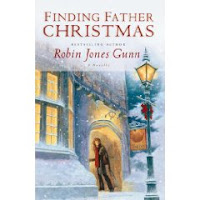
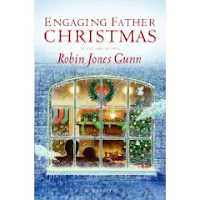
Finding Father Christmas & Engaging Father Christmas by Robin Jones Gunn

It is time to play a Wild Card! And this time I’m doubling the score; you can preview not one, but two books by this amazing author. Every now and then, a book that I have chosen to read is going to pop up as a FIRST Wild Card Tour. Get dealt into the game! (Just click the button!) Wild Card Tours feature an author and his/her book’s FIRST chapter!

You never know when I might play a wild card on you!

Today’s Wild Card author is:

and the book:

Finding Father Christmas

FaithWords (October 11, 2007)

Engaging Father Christmas

FaithWords (October 30, 2008)

ABOUT THE AUTHOR:

Robin Jones Gunn is the bestselling author of sixty books, representing 3.5 million copies sold. A dozen of her novels have appeared on the top of the CBA bestseller list, including her wildly successful Sisterchicks series. Thousands of teens from around the world have written letters to Robin sharing how God used the Christy Miller and Sierra Jensen series to bring them to Christ as well as lead them to make life changing decisions regarding purity. Robin and her husband of thirty years live near Portland, OR, where they are members of Imago Dei Community along with other Christian authors.
Visit the author’s website.

Product Details for Finding Father Christmas:

List Price: $13.99
Hardcover: 176 pages
Publisher: FaithWords (October 11, 2007)
Language: English
ISBN-10: 0446526290
ISBN-13: 978-0446526296

Product Details for Engaging Father Christmas:

List Price: $
Hardcover: 176 pages
Publisher: FaithWords (October 30, 2008)
Language: English
ISBN-10: 0446179469
ISBN-13: 978-0446179461

AND NOW…THE FIRST CHAPTER:

A string of merry silver bells jumped and jingled as the north wind shook the evergreen wreath on the heavy wooden door. Overhead a painted shingle swung from two metal arms, declaring this place of business to be the Tea Cosy.

As I peered inside through the thick-paned window, I could see a cheerful amber fire in the hearth. Tables were set for two with china cups neatly positioned on crimson tablecloths. Swags of green foliage trimmed the mantel. Dotted across the room, on the tables and on shelves, were a dozen red votive candles. Each tiny light flickered, sending out promises of warmth and cheer, inviting me to step inside.

Another more determined gust made a swoop down the lane, this time taking my breath with it into the darkness of the December night.

This trip was a mistake. A huge mistake. What was I thinking?

I knew the answer as it rode off on the mocking wind. The answer was, I wasn’t thinking. I was feeling.

Pure emotion last Friday nudged me to book the round-trip ticket to London. Blind passion convinced me that the answer to my twenty-year question would be revealed once I reached the Carlton Photography Studio on Bexley Lane.

Sadly, I was wrong. I had come all this way only to hit a dead end.

I took another look inside the teahouse and told myself to keep walking, back to the train station, back to the hotel in London where I had left my luggage. This exercise in futility was over. I might as well change my ticket and fly back to San Francisco in the morning.

My chilled and weary feet refused to obey. They wanted to go inside and be warmed by the fire. I couldn’t deny that my poor legs did deserve a little kindness after all I had put them through when I folded them into the last seat in coach class. The middle seat, by the lavatories, in the row that didn’t recline. A cup of tea at a moment like this might be the only blissful memory I would take with me from this fiasco.

Reaching for the oddly shaped metal latch on the door, I stepped inside and set the silver bells jingling again.

“Come in, come in, and know me better, friend!” The unexpected greeting came from a kilt-wearing man with a valiant face. His profoundly wide sideburns had the look of white lamb’s wool and softened the resoluteness in his jaw. “Have you brought the snowflakes with you, then?”

“The snowflakes?” I repeated.

“Aye! The snowflakes. It’s cold enough for snow, wouldn’t you say?”

I nodded my reluctant agreement, feeling my nose and cheeks going rosy in the small room’s warmth. I assumed the gentleman who opened the door was the proprietor. Looking around, I asked, “Is it okay if I take the table by the fire? All I’d like is a cup of tea.”

“I don’t see why not. Katharine!” He waited for a response and then tried again. “Katharine!”

No answer came.

“She must have gone upstairs. She’ll be back around.” His grin was engaging, his eyes clear. “I would put the kettle on for you myself, if it weren’t for the case of my being on my way out at the moment.”

“That’s okay. I don’t mind waiting.”

“Of course you don’t mind waiting. A young woman such as yourself has the time to wait, do you not? Whereas, for a person such as myself . . .” He leaned closer and with a wink confided in me, “I’m Christmas Present, you see. I can’t wait.”

What sort of “present” he supposed himself to be and to whom, I wasn’t sure.

With a nod, the man drew back the heavy door and strode into the frosty air.

From a set of narrow stairs a striking woman descended. She looked as surprised at my appearance as I was at hers. She wore a stunning red, floor-length evening dress. Around her neck hung a sparkling silver necklace, and dangling from under her dark hair were matching silver earrings. She stood tall with careful posture and tilted her head, waiting for me to speak.

“I wasn’t sure if you were still open.”

“Yes, on an ordinary day we would be open for another little while, until five thirty. . . .” Her voice drifted off.

“Five thirty,” I repeated, checking my watch. The time read 11:58. The exact time I’d adjusted it to when I had deplaned at Heathrow Airport late that morning. I tapped on the face of my watch as if that would make it run again. “I can see you have plans for the evening and that you’re ready to close. I’ll just—”

“Che-che-che.” The sound that came from her was the sort used to call a squirrel to come find the peanuts left for it on a park bench. It wasn’t a real word from a real language, but I understood the meaning. I was being invited to stay and not to run off.

“Take any seat you want. Would you like a scone with your tea or perhaps some rum cake?”

“Just the tea, thank you.”

I moved toward the fire and realized that a scone sounded pretty good. I hadn’t eaten anything since the undercooked breakfast omelet served on the plane.

“Actually, I would like to have a scone, too. If it’s not too much trouble.”

“No trouble at all.”

Her smile was tender, motherly. I guessed her to be in her midfifties or maybe older. She turned without any corners or edges to her motions. I soon heard the clinking of dishes as she prepared the necessary items in the kitchen.

Making my way to a steady looking table by the fire, I tried to tuck my large shoulder bag under the spindle leg of the chair. The stones along the front of the hearth were permanently blackened from what I imagined to be centuries of soot. The charm of the room increased as I sat down and felt the coziness of the close quarters. This was a place of serenity. A place where trust between friends had been established and kept for many years.

A sense of safety and comfort called to the deepest part of my spirit and begged me to set free a fountain of tears. But I capped them off. It was that same wellspring of emotion that had instigated this journey.

Settling back, I blinked and let the steady heat from the fire warm me. Katharine returned carrying a tray. The steaming pot of tea took center stage, wearing a chintzquilted dressing gown, gathered at the top.

Even the china teapots are treated to coziness here.

“I’ve warmed two scones for you, and this, of course, is your clotted cream. I’ve given you raspberry jam, but if you would prefer strawberry, I do have some.”

“No, this is fine. Perfect. Thank you.”

Katharine lifted the festooned teapot and poured the steaming liquid into my waiting china cup. I felt for a moment as if I had stumbled into an odd sort of parallel world to Narnia.

As a young child I had read C. S. Lewis’s Narnia tales a number of times. In the many hours alone, I had played out the fairy tales in my imagination, pretending I was Lucy, stepping through the wardrobe into an imaginary world.

Here, in the real country of Narnia’s author, I considered how similar my surroundings were to Lewis’s descriptions of that imaginary world. A warming fire welcomed me in from the cold. But instead of a fawn inviting me to tea, it had been a kilted clansman. Instead of Mrs. Beaver pouring a cup of cheer for me by the fire, it was a tall, unhurried woman in a red evening gown.

An unwelcome thought came and settled on me as clearly as if I had heard a whisper. Miranda, how much longer will you believe it is “always winter and never Christmas”?

Copyright © 2007 by Robin’s Ink, LLC

This article is used with the permission of Hachette Book Group and Robin Jones Gunn. All rights reserved.

Around me swarms of Londoners rushed by, intent on their destinations and sure of their plans. My destination was the small town of Carlton Heath, and my plans revolved around a certain Scotsman who was now officially late.

I tried to call Ian again. His voice mail picked up for the third time. “It’s me again,” I said to the phone. “I’m here at Paddington station and —”

Before I finished the message, my phone beeped, and the screen showed me it was Ian.

“Hi! I was just leaving you another message.” I brushed back my shoulder-length brown hair and stood a little straighter, just as I would have if Ian were standing in front of me.

“You made it to the station, then?”

“Yes. Although I was about to put on a pair of red rain boots and a tag on my coat that read, ‘Please look after this bear.’ ” I was pretty sure Ian would catch my reference to the original Paddington Bear in the floppy hat since that was what he had given to my niece, Julia, for Christmas last year.

“Don’t go hangin’ any tags on your coat,” Ian said with an unmistakable grin in his voice. “I’m nearly there. The shops were crammed this morning, and traffic is awful. I should have taken the tube, but I’m in a taxi now. I’ll be there in fifteen minutes tops. Maybe less if I get out and run the last few blocks.”

“Don’t run. I’ll wait. It’s only been, what? Seven weeks and three days since we were last together? What’s another fifteen minutes?”

“I’ll tell you what another fifteen minutes is. It’s just about the longest fifteen minutes of my life.”

“Mine too.” I felt my face warming.

“You’re at track five, then, as we planned?”

“Yes. Track five.”

“Good. No troubles coming in from the airport?”

“No. Everything went fine at Heathrow. The fog delayed my flight when we left San Francisco, but the pilot somehow managed to make up time in the air. We landed on schedule.”

“Let’s hope my cabbie can find the same tailwind your pilot did and deliver me to the station on schedule.”

I looked up at the large electronic schedule board overhead, just to make sure my watch was in sync with local time. “We have about twenty minutes before the 1:37 train leaves for Carlton Heath. I think we can still make it.”

“I have no doubt. Looks like we have a break in the traffic jam at the moment. Don’t go anywhere, Miranda. I’ll be there as soon as I can.”

“I’ll be here.”

I closed my phone and smiled. Whenever Ian said my name, with a rolling of the r, he promptly melted my heart. Every single time. His native Scottish accent had become distilled during the past decade as a result of his two years of grad school in Canada and working in an architect office with coworkers from around the world. But Ian knew how to put on the “heather in the highlands” lilt whenever he wanted. And I loved it, just as I loved everything about this indomitable man.

I looked around the landing between the train tracks for an open seat on one of the benches. Since none were available, I moved closer to the nearest bench just in case someone decided to leave.

Balancing my large, wheeled suitcase against a pole so it wouldn’t tip over, I carefully leaned my second bag next to the beast. This was my third trip to England since my visit last Christmas and the first time I had come with two suitcases. This time I needed an extra bag for all the gifts I had with me, wrapped and ready to go under the Christmas tree at the Whitcombe manor.

Last Christmas and for many Christmases before that, the only gift I bought and gave was the one expected for the exchange at the accounting office where I worked in downtown San Francisco. Up until last Christmas I had no family to speak of — no parents, no siblings, no roommate. I didn’t even have a cat. My life had fallen into a steady, predictable rhythm of work and weekends alone, which is probably why I found the courage to make that first trip to Carlton Heath last December. In those brief, snow-kissed, extraordinary few days, I was gifted with blood relatives, new friends, and sweetest of all, Ian.

Christmas shopping this year had been a new experience. While my coworkers complained about the crowds and hassle, I quietly reveled in the thought that I actually had someone — many someones — in my life to go gift hunting for.

I had a feeling some last-minute shopping was the reason Ian was late. He told me yesterday he had a final gift to pick up this morning on his way to the station. He hadn’t explained what the gift was or whom it was for. His silence on the matter led me to wonder as I wandered along a familiar path in my imagination. That path led straight to my heart, and along that path I saw nothing but hope for our future together — hope and maybe a little something shiny that came in a small box and fit on a certain rather available finger on my left hand.

Before my mind could sufficiently detour to the happy land of “What’s next?”, I heard someone call my name. It was a familiar male voice, but not Ian’s.

I looked into the passing stream of travelers, and there he stood, only a few feet away. Josh. The last person I ever expected to see again. Especially in England.

“Miranda, I thought that was you! Hey, how are you?” With a large travel bag strapped over his shoulder, Josh gave me an awkward, clunking and bumping sort of hug. His glasses smashed against the side of my head. He quickly introduced me as his “old girlfriend” to the three guys with him.

“What are you doing here?” He unstrapped the bag and dropped it at his feet.

One of the guys tagged his shoulder and said, “We’ll be at the sandwich stand over there.”

“Okay. I’ll be there in a few minutes.” Josh turned back to me. “You look great. What’s been happening with you?”

“I’m good,” I said. “What about you? What are you doing here?” I was still too flustered at the unexpected encounter to jump right into a catch-up sort of conversation after the almost three-year gap.

“Just returned from a ski trip to Austria with a group from work. Incredible trip. I’m in a counseling practice now. Child psychologist. I don’t know if you knew that.”

“No. That’s great, Josh. I know that’s what you wanted to do.”

“Yes, it’s going well so far.” He seemed at ease. None of the stiltedness that had been there right after I broke up with him came across in his voice or demeanor.

“And what about you? What are you doing in England?”

Before I could put together an answer, Josh snapped his fingers. “Wait! Are you here because you’re looking for your birth father?”

“You remembered.” Once again he surprised me.

“Of course I remembered. You had that picture of some guy dressed as Father Christmas, and it had the name of the photography studio on the back. That was your only clue.”

I nodded.

“So? What happened?”

“I followed the clue last Christmas, and it led me here, to my birth father, just like you thought it would.”

“No way! Did it really?”

I nodded, knowing Josh would appreciate this next part of the story. “The man in the photo dressed like Father Christmas was my father. And the boy on his lap is my brother, or I guess I should say my half brother, Edward.”

“Incredible,” Josh said with a satisfied, Sherlock Holmes expression on his unshaven face. “What happened when you met him?”

I hesitated. Having not repeated this story to anyone since it all unfolded a year ago, I didn’t realize how much the answer to Josh’s question would catch in my spirit and feel sharply painful when it was spoken aloud.

“I didn’t meet him. He passed away a few years ago.”

“Oh.” Josh’s expression softened.

“You know, Josh, I always wanted to thank you for the way you urged me to follow that one small clue. I’ve wished more than once that I would have come to England when you first suggested it four years ago. He was still alive then. That’s what I should have done.”

“And I should have gone with you,” he said in a low voice.

“Why do you say that?”

Josh’s eyebrows furrowed, his counselor mode kicking in. “I felt you needed that piece in your life. By that I mean the paternal piece of your life puzzle. I didn’t like you being so alone in the world. I wish you could have met him.”

“I do, too, but I actually think things turned out better this way. It’s less complicated that I didn’t meet him while he was still alive.”

“Why do you say that?” Josh asked.

I hesitated before giving Josh the next piece of information. In an odd way, it felt as if he needed the final piece of the puzzle the same way I had.

“It’s less complicated this way because my father was . . .” I lowered my voice and looked at him so he could read the truth in my clear blue eyes. “My father was Sir James Whitcombe.”

Copyright © 2008 by Robin’s Ink, LLC.

This article is used with the permission of Hachette Book Group and Robin Jones Gunn. All rights reserved.

My Sister Dilly by Maureen Lang

It is time to play a Wild Card! Every now and then, a book that I have chosen to read is going to pop up as a FIRST Wild Card Tour. Get dealt into the game! (Just click the button!) Wild Card Tours feature an author and his/her book’s FIRST chapter!

You never know when I might play a wild card on you!

Today’s Wild Card author is:

and the book:

My Sister Dilly

Tyndale House Publishers (September 10, 2008)

ABOUT THE AUTHOR:

Maureen Lang has written three secular romance novels as well as Pieces of Silver, Remember Me, The Oak Leaves and On Sparrow Hill. She is the winner of multiple awards including the Noble Theme Award from American Christian Fiction Writers. Lang lives in suburban Chicago with her husband and three children.

Visit the author’s website.

Product website

Product Details:

List Price: $ 12.99

Paperback: 352 pages

Publisher: Tyndale House Publishers (September 10, 2008)

Language: English

ISBN-10: 1414322240

ISBN-13: 978-1414322247

AND NOW…THE FIRST CHAPTER:

The prison was in the middle of nowhere; at least that was how it seemed to me. Not many property owners must want a facility like that in their backyard, even one for women. So there were no crops of housing developments taking up farmland around here the way they seemed to everywhere else. Not that I thought much about farmland, even having grown up in the middle of it. The only green cornfields I’d seen since I’d left for college were from an airplane as I jetted from one end of the country to the other.

“Are you here for the Catherine Carlson release?”

I looked up in surprise as not one but a half dozen people seemed to have appeared from nowhere. I’d noticed a couple of vans and cars farther down the parking lot but hadn’t seen any people until now. My gaze had been taken up by the prison, a forlorn place if ever I saw one. Even the entire blue sky wasn’t enough to offset the building’s ugliness. Block construction, painted beige like old oatmeal. If the cinder walls didn’t give it away, the lack of windows made it clear it was an institution. The electric barbed wire fencing told what kind.

Two men in my path balanced cameras on their shoulders, and in front of them a pair of pretty blonde journalists shoved microphones in my face while another thrust forth a palm-sized recorder. One on the fringe held an innocuous notepad.

My first impulse was to run back to my car and speed away. But Dilly was waiting. I clamped my mouth shut, gripped the strap of my Betsey Johnson purse, and walked along the concrete strip leading to the doors of the prison. There was an invisible line at the gate that not a single reporter could penetrate. But I knew they’d wait.

At the front door, a woman greeted me through a glass window. Dilly was being “processed,” she told me, then said to have a seat. I turned, noticing the smell of inhospitable antiseptic for the first time. Hard wooden benches were the only place to sit. Evidently they thought the families of those in such a place needed to be punished too. I’d have brought a book if I’d known the wait was going to be so long; there wasn’t even a magazine handy to help me pass the time.

Only thoughts. Of how I would make up for my failures. I’d told Mac, my best friend—and somehow it seemed he’d become my only friend—that this was the first step in fixing things. Keeping a broken past in the past. Dilly’s . . . and mine.

I remembered the day our parents brought my sister home from the hospital just after she was born. The excitement was as welcome as the warmth of the sun shining through the bare trees that early March afternoon. Everyone smiled, and even though Mom was moving kind of slow up the stairs to our farmhouse, she smiled too. It was the kind of excitement you see when there’s a new and hopeful change, like at weddings.

I was five, and even at that age I knew my parents had waited a long time for my sister. I heard Mom say once that she’d envisioned a houseful of kids, but the Lord hadn’t seen fit to bless her with a productive womb. I think I wondered, even then, what my mother would have done with a bunch more kids when I seemed to be in the way of other things she did: lunches with friends she’d known all her life; making decorative quilts and pillows she sold at fairs; canning fruits, pickles, and jam; or endless work on the farm. In retrospect maybe it was a surprise they’d even had me and Dilly; she must have been so tired at the end of the day.

I wondered later if everybody was happier because things you wait for seem better once you finally get them. But in recent years I thought everybody in town might have been relieved there weren’t a whole slew of kids born into our family.

“Go take a seat, Hannah,” Dad had said to me after Mom told us I couldn’t hold the baby unless I was sitting down.

I skipped over to Aunt Elsie on the couch and hopped up next to her, holding out my arms as my mother made the careful transfer. It wasn’t like holding one of my dolls, even though the blanket was made of the same soft material my plastic babies enjoyed. Unlike my dolls, my sister was warm and squirmy. Dad told me not to hold her too tight, so I put her on my legs and pulled back the cover to get a good look at her.

Her eyes were closed, and she wore a pink cotton bonnet. Even then, the straight lines of her brows had been drawn, which later filled in so well. Her cheeks were splotched red and white and her arms and legs moved in four different directions. When she opened her mouth, I saw her flat gums, no hint of the teeth to come someday. I thought she was the prettiest thing I’d ever seen.

“She’s a dilly,” I whispered to Aunt Elsie, who’d taught me her favorite word for the things she liked. It came from a song called “Lavender Blue,” and while my parents spent so much time at the hospital in those last couple of days, that was what my aunt and I had been doing—going about farm chores singing of things being dilly.

The name on my sister’s birth certificate was Catherine Marie Williams, but neither Catherine nor Cathy nor even Marie ever stuck. She was Dilly from that day on.

Nearly thirty years later, here I was, ready to bring Dilly back home to our farmhouse.

Finally I heard something other than the distant sounds of an institution. Closer than the clatter of plates somewhere, something nearer than the echo of a call down a corridor. I heard the click of an automatic door lock, followed by the swish of air accompanying a passage opening.

Dilly. Instead of prison orange, she wore regular street clothes. Was it possible she was taller? Did people grow in their twenties? She was still short, having taken from the same gene pool I’d inherited, but I was barely an inch taller now. Spotting me right away, she dropped her black leather suitcase on the floor. For a moment the case looked vaguely familiar, but that thought was lost when I noted a shadow of someone standing next to Dilly. My eyes stayed on my sister. She flung herself at me before I had the chance to go to her.

“Thanks for coming,” she said, and her voice was so wobbly I knew she was fighting tears. I choked back my own.

“Thanks?” I repeated. Thanks? How could I not come?

“It’s a long way from California.”

I laughed. “Yeah, another galaxy.”

The woman beside Dilly stepped closer and I couldn’t ignore her any longer. She was tall and thin, dressed in jeans but with a more formal black jacket that somehow didn’t look misplaced over the denim.

I pulled myself away from Dilly and accepted the woman’s handshake.

“I’m Catherine’s social worker, Amanda Mason. We just finished our exit session and she’s all set to go.”

Dilly held up a folder. “Probation rules, contact names, phone numbers.”

“Formalities, Catherine,” Amanda said. “Nothing out of the ordinary.”

It was always something of a surprise to me that others outside of our hometown knew my sister by any name but Dilly. She certainly looked ready to go home, wearing a spring jacket I hadn’t seen before, carrying a suitcase I now recognized as one I’d left behind when I headed to college so long ago.

“I didn’t know you’d have luggage,” I said when she picked up the black leather case. I didn’t know what else to say.

“The women are allowed to purchase certain necessities during their stay. Clothes, mostly.”

I knew that, because Mom had told me I could send Dilly money—no cash, just cashier’s checks or money orders, no more than fifty dollars at a time—but somehow I never connected that money with actual purchases. It wasn’t like there could be a regular store inside a prison.

“Socks,” Dilly said with a grin. “My feet still get cold.”

When we were little, we shared a full-size bed, before our parents finally bought a set of twin beds. I still remember her icicle feet in winter. “You have a suitcase full of socks?”

“Just about. They never let me keep them all in one place till today. Guess I didn’t know I had so many.” Then she turned to the other woman and set the suitcase down again. “Thanks, Amanda. You—” Something caught in her throat, and she stopped herself. “You did so much for me.” She put both of her hands on the woman’s forearms, and the social worker didn’t even flinch.

Amanda shifted her arms to take Dilly’s hands in hers. “I haven’t done enough,” she said. “Not nearly enough.”

They hugged and I watched, wondering if the prison movies I’d stopped watching since Dilly’s arrest had given me the wrong impression. No hint of inmate animosity toward those in power here.

“Keep praying, though, will you? I won’t stop needing that.”

“You don’t even have to ask.”

Then Dilly slipped away and I had to turn and follow her or be left behind.

Prayer. That was what Dilly had asked for. All our life we’d been told to pray. On our knees, right after we got up, right before going to bed, and as often as possible in between. I might have had faith as a child, but by the time I was in high school, I began wondering what I was praying to. Some light in the sky that saw all the suffering in this world and didn’t lift a finger—a supposedly all-powerful finger—to do something about it?

I’d given up prayer years ago; spiritually, long before I left home for college. Physically, once I stepped foot outside my parents’ home. I eyed Dilly, trying to see if she’d been serious about the request or said it because that was what the other woman wanted to hear. But Dilly was looking ahead, walking out the door.

The reporters were still there when we stepped outside. I meant to warn Dilly, to make some sort of plan about getting to the car as fast as we could, telling her in advance which way to go.

But when Dilly came upon them, instead of hustling past, to my amazement she stopped. For a moment she looked to the ground, then to me, and I thought I saw a hint of uncertainty before she took an audible breath. “I just want to say one thing.” Her voice trembled slightly, and she paused long enough to look down at the sidewalk again, then at each one of the reporters.

“When I did what I did so long ago, I didn’t have any hope. When I stepped into this place, I didn’t have hope. But that’s all changed now because of the Lord Jesus.”

I stared, aware of the silence that followed as the reporters waited to see if she was finished. But that wasn’t why I couldn’t find words or even the gumption to pull her along to the car. What was she talking about? Between this obviously rehearsed statement and the request for prayer, it was as if she’d “done found Jesus,” as Grandpa used to say.

A barrage of questions shot from the reporters.

“Are you going to see your daughter?”

“Are you going to try to regain custody?”

“Has your husband forgiven you for what you did?”

Dilly didn’t answer a single question. Instead, she looked at me, then toward the parking lot. It took the briefest moment for me to realize she didn’t know where to go, which car was mine, so I led the way. I pressed the keyless remote to unlock her door before she reached it. She struggled a moment to get her bag into the rear seat, then settled herself just as I slid behind the wheel.

One of the reporters, the one I’d mistakenly believed harmless because the only technology he held was a pad of paper, had followed us to the car. He tapped on the window. I saw Dilly reach for the button, but quicker than her, I touched the window lock.

“I was only going to crack it,” she said.

“Do you really want to hear what he has to say?”

He was yelling now, his young, impassioned face nearly pressed to the glass. “Did it take prison to teach you you’re not the one to take matters into your own hands? that your daughter’s life is just as important as anyone else’s?”

Dilly and I exchanged glances. I put the car in reverse; there was something militant about the young man that made me want to get away from him, spare Dilly from anything else he had to say. I’d seen judgment in people’s eyes before and I was sure Dilly had too. This guy might be a reporter, but he wasn’t an unbiased one. If such a kind existed.

Dilly stared at him, the brows everyone noticed on her, so thick, so dramatic, now drawn. A moment ago she’d found the courage to speak about something most people kept to themselves: faith. Now she looked like the Dilly I’d known when we shared the same roof. Timid, malleable. Maybe hoping I would take her away as fast as I could.

I backed out of the spot even as a thousand questions came to my mind too. I wanted to resist asking, though, unlike the guy with the notepad. His emphasis had been all wrong. He’d asked about the effect of prison, unconcerned about what Dilly really believed these days.

I still felt awkward after being away from her so long. But even that wasn’t enough to keep me quiet. Once an older, wiser sibling, always so. I figured it gave me the right to be nosy.

“Did you mean what you said back there?” Since I was navigating out of the now-busy parking lot, I had to focus on driving, avoiding the need for eye contact.

“About Jesus?” She looked behind us at the reporters now packing up. “Wouldn’t have said it if I didn’t.”

“What did you mean?”

“Just what I said.”

I didn’t know how to rephrase the question to get an answer I could understand, so I found the silence I probably should have stayed with. Once we pulled away from the prison grounds, Dilly touched my forearm much as she had the social worker’s. I spared a quick glance, keeping both hands on the wheel.

“I’ve changed, Hannah. God changed me.”

I wasn’t yet sure I believed her. I wasn’t the only one who’d grown up in a house where rules were more important than people, work more important than any kind of play, keeping up an appearance of holiness more important than living a holy life. We’d both vowed never to set foot in a church once we moved out of our parents’ house, and I’d kept my end. I thought Dilly had too. I knew she’d stopped going to church after she got married. But lately . . . Did they even have church in prison?

“Since when has God done anything for either one of us, Dil?” I asked.

“I wanted to write you, tell you all about it—”

“Right.” Even I heard the cynicism. I’d received exactly three letters from her the entire six years she’d been in prison, despite the hundreds I’d written. Well, one hundred, anyway. That first year. After that I just sent money orders as I made my plans. True, I’d made those plans without input from her, but I’d made them to benefit both of us.

Her eyes, brown like two spots of oversteeped tea, shone with sudden, yet-to-be-shed tears. “You know me, Hannah. I’m a talker, not a writer. I tried a thousand times to write, but every time I did, my brain froze. I can’t explain it on paper. It’s something I wanted to tell you in person.”

“What about last Christmas? I visited you then.”

She let out something that sounded a little like a Ha! but not quite as cynical as me. “In front of Mom and Dad? Are you kidding? I couldn’t explain it with them there.” She sat back in her seat, and laughter squeezed out one tear, leaving her eyes dry. “Not that everybody wouldn’t have liked to see a good argument—from Mom and Dad about what grace and forgiveness really mean and from you about . . . about everything. The inmates would’ve laid bets for a winner, except if nobody drew blood they wouldn’t have been able to figure out who won.”

I didn’t know if she was being sarcastic or not, since our family didn’t argue. We hid all our resentment and anger, especially from each other. Even now I held my tongue. For a moment I felt like I was back home, preparing to listen to one of Dad’s endless sermons at the family altar he’d set up in the corner of the living room.

I sucked in a breath. “Okay, let’s have it, then.”

But Dilly didn’t reply. She shook her head, her whole body facing me instead of the dashboard. “I will tell you, Hannah. Everything. But not right now. Not yet. I need to know something first.”

I glanced at her again, prepared for the questions I knew she’d ask.

“Have you seen Sierra?”

I nodded. “Yesterday.”

“They let you? Nick’s mother let you—you know, in the same room? You talked to her? How is she?”

I shook my head. “I went to her school. They wouldn’t let me into her classroom, but they told me she was there. That she’s all right. Then I waited outside until the buses came, and . . .” I was tempted to lie, to tell her I’d seen Sierra close enough to prove what the school receptionist had said, that Dilly’s daughter was okay. “I saw all the kids get on their buses, and they looked happy.”

Whatever joy, whatever light I’d seen in Dilly’s eyes since the moment she mentioned her daughter’s name began to fade before I’d even finished talking.

“So she wouldn’t let you see her?”

There was no way I’d describe the phone conversation I’d had with Nick’s mother; I didn’t use that kind of language. Nick had never really taken charge of his own daughter’s care, but his mother had taken full responsibility for Sierra. One thing she’d stipulated: no visits from anyone in our family.

“I’ve got to see her,” Dilly said, so low I barely heard her.

I knew seeing her daughter was only the beginning. I knew what she really wanted, but I wasn’t sure what I wanted. Did I really want a fight to restore everything to the way it used to be or should have been? What if we won?

But I reminded myself that when determination was greater than fear, people could do just about anything, even take charge of someone like Sierra.

All I had to do now was make sure that determination stayed stronger than my fears. All I had to do was convince myself, and then Dilly, that I wouldn’t let my fears stand in the way.

Because if I knew Dilly—and I still did, even when she seemed different—my guess was that our future held three of us together. Somehow, in some way.

Me, Dilly, and her daughter, Sierra.

But not God.

MY REVIEW:

My Sister Dilly is a gripping narrative about two sisters who have returned to their home town after years away. Dilly has come home after several years in prison for a shocking crime and her sister Hannah has come back to support her. It is a story that deals with some hard issues that may encourage the reader to view similar situations with more compassion in the future.

Hannah’s strong sense of guilt and false responsibility caused her to put her entire life on hold at Dilly’s imprisonment. Willing to give up everything that mattered to her, she vowed to make it up to Dilly whose response was unexpected. Yet in the midst of difficult family dynamics and events, God’s grace and mercy overflowed.

Maureen Lang’s realistic characters and settings made it easy for me to empathize with them. I found myself a bit impatient with Hannah as she struggled with her issues and sympathetic with Dilly’s reaction to her attempts to help. I enjoyed the book with the exception of one small matter. As a life long country girl, I was bothered by the definition given for chitlins. I’m sure it is a petty thing, but I wish authors would be a little more careful with their research.


A Constant Heart by Siri Mitchell

This week, the
Christian Fiction Blog Alliance
is introducing

A Constant Heart

(Bethany House October 1, 2008)
by

Siri Mitchell

ABOUT THE AUTHOR:

Siri Mitchell graduated from the University of Washington with a business degree and worked in various levels of government. As a military spouse, she has lived all over the world, including in Paris and Tokyo. Siri enjoys observing and learning from different cultures. She is fluent in French and loves sushi.

But she is also a member of a strange breed of people called novelists. When they’re listening to a sermon and taking notes, chances are, they’ve just had a great idea for a plot or a dialogue. If they nod in response to a really profound statement, they’re probably thinking, “Yes. Right. That’s exactly what my character needs to hear.” When they edit their manuscripts, they laugh at the funny parts. And cry at the sad parts. Sometimes they even talk to their characters.

Siri wrote 4 books and accumulated 153 rejections before signing with a publisher. In the process, she saw the bottoms of more pints of Ben & Jerry’s than she cares to admit. At various times she has vowed never to write another word again. Ever. She has gone on writing strikes and even stooped to threatening her manuscripts with the shredder.

A Constant Heart is her sixth novel. Two of her novels, Chateau of Echoes and The Cubicle Next Door were Christy Award finalists. She has been called one of the clearest, most original voices in the CBA.

ABOUT THE BOOK:

In a world of wealth, power, and privilege…love is the only forbidden luxury.

“Trust was a valuable commodity at court. Traded by everyone, but possessed by no one. Its rarity was surpassed only by love. Love implied commitment and how could any of us commit ourselves to any but the Queen? Love implied singularity and how could any of us benefit another if our affections were bound to one in exclusivity? Love was never looked for and rarely found. When it was, it always ended badly.”

In Queen Elizabeth’s court where men and women willingly trade virtue for power, is it possible for Marget to obtain her heart’s desire or is the promise of love only an illusion?

A riveting glimpse into Queen Elizabeth’s Court…

Born with the face of an angel, Marget Barnardsen is blessed. Her father is a knight, and now she is to be married to the Earl of Lytham. Her destiny is guaranteed … at least, it would seem so. But when her introduction to court goes awry and Queen Elizabeth despises her, Marget fears she’s lost her husband forever. Desperate to win him back, she’ll do whatever it takes to discover how she failed and capture again the love of a man bound to the queen.

If you would like to read the first chapter of A Constant Heart, go HERE
Siri can be reached through the Contact link on her Website

MY REVIEW:

Although it took me awhile to get into A Constant Heart, I quickly became absorbed in it. I was fascinated by all the scheming involved to be accepted as part of the court, particularly the lengths the women went to with their personal appearance even to the detriment of their health. I can only imagine the insecurity of a queen who demanded such behavior as a proof of loyalty.

I felt like A Constant Heart was about trust on so many levels. Marget’s husband could not trust her because of a past betrayal. Marget’s inexperience allows her to be manipulated by someone she should not trust. Yet throughout all the twists and turns of the plot, it is Marget’s constancy and refusal to step across certain lines that go against her beliefs that is the crux of this story.

Come and visit with some of those on this blog tour:

Amber at A Fiction-Filled Life
Amy at Simple Folk Schoolhouse
Amy at My Life
Andie at frommipov
Andrea at The Laughs Will Go On
Angela at One Baby, Seven Dogs, and a Mommy
April at Projecting A
April at Living In A State Of Constant Kansas
Barbara at Victoria Hill Farm
Becky at Savvy Mom
Bonnie at Bonnie Writes
Brittanie at A Book Lover
Camy at Camy Tang
Cara at the law, books, and life
Carla at Carla’s Writing Café
Carol at Blogging With Carol
CeeCee at Book Splurge
Dave at Dave Rhoades
Dave at Novel Spotlight
Dawn at Book Junkie Confessions
Deborah at books, movies and chinese food
Debra at Soul Reflections
Deena at A Peek At My Bookshelf
Delia at Gatorskunkz And Mudcats
Edyth at Great Reads by Jasmine
Elaina at Restore
Erin at Life Around Here
Georgiana at Georgiana D
Gina at Upon Reflection
Janis at The Nearsighted Bookworm
Janna at Cornhusker Academy
Jendi at Jendi’s Journal
Jennifer at So Many Books…So Little Time
Jenny at Jenny B. Jones
Jill at Christian Work At Home Moms
Karen at Mommy of Three
Karla at Ramblin’ Roads To Everywhere
Katie at Christian Novels
Kelly at A Disciple’s Steps
Kelly at Scrambled Dregs
Kim at Window To My World
Krista at Welcome To Married Life
Kristinia at Loving Heart Mommy
Laura at Laura William’s Musings
Leslie at A Little Bit Of Sunlight
Linda at Mocha With Linda
Lisa at Musings
Lori at journey in grace
Lori at Noggin Bits
Mandy at Mommy Cracked
Margaret at Creative Madness
Michelle at Edgy Inspirational Author
Michelle at Just A Minute
Michelle at Michelle’s Great Blogs
Nora at Finding Hope Through Christian Fiction
Pam at Pam’s Private Reflections
Pam at Daysong Reflections
Pattie at FreshBrewedWriter
Peg at Sips ‘n Cups Cafeteria
Pepper at Great Christian Fiction
Rachel at Rachel Hauck
Ruth at Booktalk & more…
Ryan at loves to read
Sally at Welcome To Sally Bradley.com
Sonya at My Thousand Loves
Stormi at Mystery, Suspense, And God, Oh My!
Sunny at Life In The Estrogen Sea
Takiela at Beauty 4 Ashes
Tara at Tara’s View Of The World
Tiffany at Snapshots Of Life