Cursebreaker by Nancy Wentz

It is time to play a Wild Card! Every now and then, a book that I have chosen to read is going to pop up as a FIRST Wild Card Tour. Get dealt into the game! (Just click the button!) Wild Card Tours feature an author and his/her book’s FIRST chapter!

You never know when I might play a wild card on you!

Today’s Wild Card author is:

and the book:

Cursebreaker

Whitaker House (January 5, 2009)

ABOUT THE AUTHOR:

Born and raised in Colorado, award-winning author Nancy Wentz graduated cum laude from the University of Colorado. Two of her short stories, Henry Cushing and Babi Yar, were winners in the National Writers Association Short Story Contests. She has also written plays for the youth group to perform at her church and has freelanced articles for her current employer. Nancy has a great love for history and English literature, and, in their pursuit, found her creative outlet by incorporating aspects of both into her writing. Her voice is unique in that it refl ects a classic nuance not typically seen in modern writing.

Nancy became a Christian in her childhood and for years has prayed for God s will in her life. Through trials of brokenness and faith, God has shown her that He uses the most insignifi cant, the most defeated, to bring about His will and glory. This theme was the inspiration for her first novel that God chooses the foolish things of the world to confound the wise. Nancy and her husband have a wonderful young son. She and her family are active members of Littleton Baptist Church in Littleton, Colorado.

Visit the author’s website.

Product Details:

List Price: $ 9.99

Paperback

Publisher: Whitaker House (January 5, 2009)

Language: English

ISBN-10: 1603740805

ISBN-13: 978-1603740807

AND NOW…THE FIRST CHAPTER:

Prologue

Winter, 1565

Italy

A turbulent wind assaulted the night, moaning through the graveyard, enjoining dead leaves to swirl about his feet. He steadied his lantern, squinting at the tombstones that stretched before him. They rose like apparitions, enlivened by the shadows of barren trees caught in the light. Twigs clutched at his hooded cloak. He pulled at them impatiently.

Stealing upon a humble grave, laid amidst murderers, paupers, and the unbaptized, he knelt to decipher the etchings. Worn by time, the tombstone almost denied him the name of its dead. He pushed back his cowl and traced the engraving with his finger.

Frate Domenicano Salvatore Ansaldo

1471—1550

Dio ha la compassione sulla sua anima maledetta

Swinging a canvas bag from his shoulder, he extractedfrom it a shovel and a pickax. He tossed his cloak over the tombstone. The night air felt good against his flesh as he labored to exhume the grave. He stopped once at a sound. His dark eyes scanned the eerie monuments leaning askew before him—silent witnesses watching without eyes, listening without ears, curious and apprehensive at his presence. Ignoring the uneasiness that stiffened the hair on his arms, he continued digging.

The shovel struck the coffin with a hollow thud. He fell to his knees, swept the dirt from the box, and grabbed the pickax, stabbing the corroded wood repeatedly until the lid lifted with no more resistance than a groan. The stench of mold permeated the air. He reached for the lantern, which reflected off the shaved crown of his head. Startled shadows leaped from the grave like souls before the judgment.

Death had paid the Dominican friar no homage. It had robbed him of his flesh and feasted on his bones. Fragments of the burial shroud remained adhered to their owner, as did gray hair to his skull. His gaping mouth, lacking several teeth, protested in silence the desecration of his grave.

Upon the corpse lay a wooden crucifix, the rosary entwining the fingers. The robber scanned the body, hesitantly patting the shroud. Finding nothing, the hope of discovery waned until he slipped his hands beneath the corpse. At his touch, the rib cage crumpled, rippling around his wrists as he delved, until his fingers grasped two scrolls. Shaking off the human remains, he placed the scrolls in the bag, climbed from the hole, and reburied the defiled dead.

He made haste to the monastery. In his cell, he barred the door and released his cowl to the floor. After lighting several candles to alleviate the darkness, he pulled the scrolls from the bag, gingerly spreading them across a wooden table. Though they had lain in the grave with corrupting flesh, he was amazed to find them unsullied, written upon with an odd shade of russet ink. He drew a candle closer.

Choosing one, he read:

Et ait ei tibi dabo potestatem hanc universam et

gloriam illorum quia mihi tradita sunt et cui volo

do illa tu ergo si adoraveris coram me erunt tua omnia.

The pounding of his heart quickened. The legend was true—he had found the scrolls. The Gregorian chant of distant choristers broke the early morning silence. He gasped—he had forgotten the Eucharist!

He glanced at the painting on the stone wall, the fair Madonna enfolding the Christ Child in her arms, then looked back at the scroll. The reddish ink was smudged. He peered at it suspiciously.

His eyes widened. Blood. It was written in blood.

Invitarme che cerca il potere e la fortuna nell’abbondanza. Invitarme che cerca i misteri del buio. Inviterà Lucifer.

Chills crept up his back. He crossed himself. Were not these words against the sacred Scripture? It was blasphemy. Heresy. Was he not risking his soul? Yet the words were so clear; did they not offer him the world? He glanced at the Madonna and Child again, then back at the scroll. The garnet rosary about his neck tapped against the table.

Chiunque invita Lucifer offrirà la sua anima, e ciò del secondo maschio nella sua casa per tutte le generazioni.

All the power of the world and the glory thereof was at his fingertips—his, Luccio Frattarelli—the abbot of the church of the Spirito Santo. With the heightening of his voice, the words fell from his lips: La mia fedeltà, la mia anima, il mio corpo che do a Lucifer. Invito Lucifer a essere il mio padrone. Visito il suo demone potentemente, Il Governatore del Rotolo, vivere nel mio corpo.

Death took Luccio by surprise. The scroll slipped from his hands as he grasped at his heart. He tumbled backward over a chair, his sandaled feet kicking the floor in wild succession. A trembling cold seized his frame, congealing the blood in his veins. Then, struck with the conviction of his fate, his eyes opened in terror upon the Madonna and Child, and his breath ceased.

Moments passed as he lay there, his body not feeling the cold morning air. Then, a blistering gust swirled through the cell, scorching the wood, singeing the cowl, burning the painted images beyond recognition.

The eyelids began to flutter, the eyebrows to twitch, the chest to rise and fall with regular breathing. The muscles in the arms and legs stretched as if released from bondage.

When the eyes opened, the life behind them was not that of Luccio Frattarelli.

Chapter One

Winter, 1931

Colorado, United States of America

A scream escaped the boy’s lips. The startling pain across his left ear and cheek jerked his head to the side. His eyes snapped open. Looking around with the shocked confusion of broken sleep, he cringed to see the black pillar leaning over his bed.

“I ain’t done nothin’, Pa!”

“Get up.”

He glanced out the window. A breath of air shook the broken pane, scraping the ice-frosted curtains against each other. Beyond them, the stars were bright against the sky.

“I ain’t heard the rooster—”

Even as he spoke, he threw up his arms to shield his face. The hand came down hard against his head. It knocked his arms out of the way and found his throbbing ear once more.

“Get up, or I’ll throw you down those stairs.”

Shielding his ear, he strove to sit up. It wasn’t fast enough. That hand seized him—“No!”—yanked him from his narrow bed—“Not the stairs again!”—and flung him toward the bedroom door. The blanket strangled his feet. He reeled across the floor, collided with the washstand, and fell on his back. Wresting away the blanket, he just escaped his father’s boots as they stomped an inch from his fingers.

“Start the fire.”

Coiled against the wall, he watched his father’s rigid silhouette leave the room. He listened to the tread on the staircase, the steps through the kitchen below, and the slam of the back door. All was silent. Only then did he move. He stood on trembling legs, the warped floorboards creaking beneath his weight.

Testing the movement of his jaw, he cupped his ear and swallowed against the pain that traveled down his neck. His face felt hot.

“You all right?” a voice whispered from the darkness.

He looked at his two older brothers lying huddled together under a single blanket. The head of the oldest lifted, his youthful profile barely discernable.

“Yeah.” The boy rubbed the bones of his chest through a tear in his long underwear.

“Stay clear of Pa.” The profile sank back into the bed.

“Today’s the day Ma died.”

The recollection shocked him. He felt sick to his stomach and wondered how long that pillar had stood over his bed. Picking up his overalls from the floor, he maneuvered his feet into the threadbare pant legs. While securing the straps to the bib with safety pins, he slipped his naked feet into his boots, scrunching his toes against the cracked soles.

Not having heard the squeak of the back door, he went downstairs without fear, pulling a woolen coat across his shoulders. Finding a lantern burning in the kitchen, he took it and stepped outside.

The November chill seeped through his clothes. He looked at the moon, blew a warm stream of air from his mouth toward it, and watched the steam evaporate. The moon’s glow beautified the farm to a shimmering, snowy landscape, but he saw no beauty there, only the skeleton of the plow, the empty corral, the sinister corner behind the chicken coop—a myriad of hiding places where his father might lurk. It was then his fear returned; somewhere in that darkness was his father.

He crept along the snow-covered path, afraid the sound of his boots would give him away. Placing the lantern by the door of the woodshed, he paused to wipe his bangs out of his eyes, his gaze traveling to the barn set against the open prairie, an expanse of blackness where nothing moved. A lantern burned within, emitting light between the loose-fitting boards. He heard the horse’s neigh, the worried screech of a chicken, and the thud of an ax against wood. He had found his father.

Snatching an armload of wood, he ran back inside the house. As he hurried to build a fire in the kitchen stove, his mind raced to find places where he could hide. The root cellar?

No, too easy to be found. What about the barn down the road, or the lake? Yeah, the lake. He could break through the ice. Maybe if he caught some fish, Pa wouldn’t beat him that night.

No sooner had he decided where to run than the warmth of the fire encouraged him to linger. Daring to place an additional stick on the quivering flames, he dragged a chair from the table before the stove. He would run when he heard his father’s step on the back porch, but for now, the glow of the crackling wood was too good to leave.

He fell asleep.

He did not hear the steps. He did not hear the door open. For a surreal moment, he hovered between dreaming and waking, feeling the brush of his mother’s apron, the smell of bread. Then the door slammed. A rush of air stirred his hair like an icy hand. With a gasp, he spun around. Gazing up into the beardless face, an image flashed in his mind of the scarecrow suspended in the cornfield—that frayed figure no threat of storm could move. He feared its claw-like arms that stretched out for an embrace; he knew well the terror of that embrace. He bolted from the chair, knocking it over.

“Pick it up.”

The words stopped him cold. Returning, he righted the chair, keeping his eyes averted and his hands ready to push it forward if his father made any abrupt movements.

“Sit down.”

He teetered on his feet, debating whether to run out the back door or the front, when he noticed what was in his father’s hands. In one dangled the downy body of a freshly killed chicken; in the other, the bloody cleaver.

He sat down.

“Remember your Ma?” His father tossed the chicken and the cleaver on the table.

“Yeah.” The sight of the headless chicken set off a nervous spasm in his stomach.

“It’s been three years. I reckoned you’d forgot.”

An anxious moment of silence hung between them.

Risking a glance, he found his father’s unblinking gaze fixed on him. Yellow flames from the lantern quivered in his green eyes. When he spoke, his mouth revealed the bottom row of his stained teeth.

“She was a good woman. Kept this place nice. Didn’t have much, but she made it stretch.”

Removing his straw hat, he began to pace the floor. The sound of his boots scraping the wood sent a shudder down the boy’s spine. He looked back at the chicken.

“I miss her cookin’. I miss her gettin’ mad when I tracked in dirt. I miss watchin’ her wash her hair and dryin’ it front of the stove. She never fussed over nothin’—” he stopped his deliberate tread, “—except you. ‘My baby’s sick,’ she’d say.”

The hat slipped from his soiled fingers to the floor. He leaned close to the boy’s ear.

“Then you got the fever.”

His father’s breath on his neck caused him to look around wildly. His shoulders flinched with expectation.

“She made me sell the cow to pay the doctor. I told her she already had two strong boys. Better to keep the cow. Then she got the fever.”

The hand seized the boy’s neck and squeezed.

“She died…and you got better.”

With a jerk, his father spun him around, knocking the chair over. He lifted the boy close to his face.

“Why ain’t it you rottin’ in that graveyard?”

“I’m sorry, Pa.” Tears stung the boy’s eyes. His chin quivered.

“I should’ve drowned you in the river like a runt.”

The fist rose like a pendulum.

“No! I’m sorry!”

It hailed on his head, cutting short his screams, blurring his vision with flashes of red. He felt his body being thrashed back and forth. The hand twisting his clothing nearly choked off his breath.

“Stop it, Pa!”

The beating stopped. Warmth trickled from his nose and mouth as he sagged in his father’s grip. Through the spinning room, he saw his brothers in the doorway in their long underwear, their brown hair mussed.

The oldest stepped forward. “Let him go. It ain’t his fault, and you know it.”

“He killed her as true as I’m standin’ here. He’s got every bit of it comin’.”

“It ain’t his fault, and beatin’ him ain’t gonna bring her back. Nothin’s bringin’ her back. She’s dead.”

Staggering as if struck from behind, he pressed the boy backward against the table, his neck on the chicken’s carcass.

“I know! I know, but she was everything…all I had…since we were kids…all I wanted.” Anguish creased his tanned forehead. Sobs he could no longer control heaved in his chest until he laid his head on the boy’s chest, wailing.

The boy dared not move. He shot his brothers a terrified plea with his eyes, but they, too, stood motionless.

“It ain’t right that she died.” He lifted his head, his face flushed, wet, the veins in his forehead and neck pulsating. “It ain’t right that he lived.”

He seized the cleaver and lifted it high. The boys shrieked in unison, “No!”

Still caught in the trap of that great hand, the boy threw up his arms. Light glinted off the cleaver as it plummeted, its edge slicing across his uplifted palm. He felt no pain, just the keen sensation of his flesh opening, sending a streak of blood across his father’s face.

The cleaver rose again. His brothers rushed forward. In a skirmishing blur of hands, he saw the cleaver pushed aside. His father reared back, shouting. Saliva dripped from his lips. One brother fell to the floor. The cleaver rose again. He closed his eyes. Screaming. A crack. A grunt.

He felt himself pulled to the floor by the hand that would not let go. Blood sprayed in every direction as he kicked and screamed, helpless until his brothers freed him and dragged him to the other side of the kitchen.

“Stop squirmin’!”

The oldest held his brother’s wrist, forcing open his clenched fingers to inspect the gash while the other tried to soothe him. Too terrified to be calmed, he continued to scream, to struggle, even though his father lay motionless on the floor, the fire poker beside him. Turning him away from the sight, they held him close until he settled into a quiet sob. The oldest then brought him to his feet. Grabbing a rag from the table, he wiped the tears that rolled down the boy’s cheeks.

“Listen,” he said, wrapping the rag around the bleeding hand. “You need your wits. Run away. He’ll kill you next time. Go to town. Find Uncle Harald. Here’s your cap.”

Their father groaned. All stared at him for a silent moment, then rushed to the door.

“Run fast. Don’t tell nobody your name. Don’t let the sheriff catch you neither. He’ll bring you back or put you in the orphanage and work you till you drop dead.”

His brothers hugged him, then sent him out into the cold. He ran with one glance back, one final look at his brothers standing in the doorway. Into the darkness he ran, leaving a scattered trail of tears and blood behind.

MY REVIEW:

Cursebreaker is one of those books you don’t want to read by yourself on a dark stormy night. It is full of mystery and suspense, some violence necessary to the story, and glimpses into the usually unseen spiritual dimension. Set in depression era Colorado, Cursebreaker graphically illustrates the very real war between good and evil. The primary characters include a young boy running from an abusive father, members of a Mafia family and their cohorts, a lawyer who is trying to prosecute one of the Mafia clan, and a young woman. As the plot progresses, each character becomes more deeply affected by the centuries old curse of the Fratelli family.

At first glance, Cursebreaker seems to be a dark and violence filled book but if the reader persists, he will find the hope, redemption and light that Christ brings to the most vile circumstances. Not for the fainthearted, but for those who are not afraid of the dark, Cursebreaker is a must read!

Hannah Grace by Sharlene MacLaren

It is time to play a Wild Card! Every now and then, a book that I have chosen to read is going to pop up as a FIRST Wild Card Tour. Get dealt into the game! (Just click the button!) Wild Card Tours feature an author and his/her book’s FIRST chapter!

You never know when I might play a wild card on you!

Today’s Wild Card author is:

and the book:

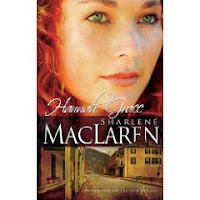
Hannah Grace

Whitaker House (January 30, 2009)

ABOUT THE AUTHOR:

Sharlene Maclaren is an award-winning novelist , retired elementary school teacher, wife, mother, and grandmother.

Visit the author’s website.

Product Details:

List Price: $ 9.99

Paperback

Publisher: Whitaker House (January 30, 2009)

Language: English

ISBN-10: 1603740740

ISBN-13: 978-1603740746

AND NOW…THE FIRST CHAPTER:

Sandy Shores, Michigan • August 1903

The minute hand on the nickel-cased Waterbury clock ticked away the seconds as Hannah Grace Kane primped in the mirror. She leaned back and squinted with displeasure when her unruly, rusty-colored curls refused to cooperate, poking out all over like a bunch of broken bedsprings. “Aargh!” she muttered, throwing down her comb and watching it bounce off the wood floor with a ping before landing on the braided wool rug.

“Supper’s almost ready!” wailed the youngest of the Kane sisters, Abbie Ann, from the foot of the stairs.

“Abbie Ann, you’ll damage my hearing,” Jacob Kane muttered.

Even from the upstairs bedroom, Hannah heard her father’s newspaper rattle and sensed that his tone bordered on brusqueness. She pictured him sitting in his plush blue velvet chair, as he always did at six o’clock, the Sandy Shores Tribune spread in his lap, his reading spectacles perched low on his longish nose. “Why is it that at seventeen, you’re still screaming like a banshee?”

“Seventeen, Papa? Have you forgotten that I turned eighteen in May?”

There was a lengthy pause. “Eighteen? Are you sure?”

Her high-pitched giggle drifted upward. “Of course I’m sure, silly. A lady never forgets her age.”

“Well, then, all the more reason to cease with your howling.”

“Sorry, Papa.”

“Besides, Hannah Grace isn’t even eating at home this evening.”

“Oh, how could I forget? That ol’ Stuffy Huffy’s coming to call. I suppose they’ll take a long stroll in the moonlight. Blechh.” Her voice danced with unrestrained sarcasm, and Hannah could only imagine the look of disapproval on her father’s bearded face. “I don’t know what she sees in him, do you, Papa? If you ask me, he’s boring and unfriendly.”

The newspaper crackled. “Abbie.” He heaved a breath, which echoed up through the register. “Doctor Van Huff seems like a nice enough gentleman. There is no call for judging him. And besides, your sister seems to like him.”

“I’m not judging. I’m merely expressing my view on things, which I happen to think is more fact than opinion. Personally, I suspect she just likes him ’cause he’s just about the only eligible bachelor around.”

Hannah bent down to retrieve her comb and sighed in the process. Everyone knew sounds carried faster than a windstorm in this two-story, foursquare structure. Was there no respect? Why, had she wanted, she could have walked to the twelve-inch heat vent in the floor and peered through its narrow slats to give her sister a snarling glower, but she

wouldn’t, for that was exactly what Abbie wanted her to do. All three Kane sisters had played the “spying game” through that heat register as children, but Abbie seemed bent on continuing it till kingdom come.

“Abbie Ann, you mind your manners. Hannah will hear you.”

Well, it’s about time someone thought of that, Hannah mused, thankful for her grandmother’s scolding tone. Helena Kane, Jacob’s mother, had tirelessly tended to the entire family since shortly after the girls’ own mother had succumbed to pneumonia and died just days short of Abbie’s second birthday. “Ralston Van Huff is a fine, upstanding citizen, and you had best show your respect.” Even after all these years in Michigan, her British accent still lingered like a fresh aroma.

“I do, I do,” Abbie insisted. “But he’s always talking about himself and that stupendous medical practice he runs. After a while, one grows downright weary of it.”

Jacob snapped his paper and exhaled noisily. “The man is doing his best to make a success of himself. I would think taking on the task of town physician would require a bit of ambition…speaking of which, shouldn’t you be out in the kitchen helping your grandmother and sister?”

“I’ll second that,” said Grandmother. “Take the napkins out of the bureau, Abbie.”

“Do you suppose he’s a true Christian, Papa?” Abbie asked, ignoring his inquiry.

“Well, I would hope so. Hannah Grace wouldn’t settle for anyone who didn’t claim to have a faith of his own. May I please read today’s news now, Abigail?”

Keeping one ear to the conversation downstairs, Hannah picked up her comb and resumed her hair-styling task.

“I, for one, think Dr. Van Huff is charming.” Maggie Rose spoke up for the first time that evening. From the kitchen wafted her habitually melodious voice—melodious in that she spoke in pleasant tones rather than melodious from a musical standpoint, that is. Sadly, Maggie thought she could carry a tune quite well, but after years of sitting beside her in church, Hannah knew otherwise. “He picked two roses from our garden last week and gave one to Hannah and one to me. I’d call that rather sweet.”

“Oh, poke me with a stick!” Abbie whined. “He should rather have picked flowers from his own garden—or bought some at Clara’s Flower Shop.”

“Abbie Ann Kane, stop being so persnickety,” Grandmother said. “My goodness, what side of the bed did—?”

A deafening scream sounded through the house when something metallic made clanging contact with the linoleum floor.

“My giddy aunt, what a gobblin’ mess we have here! Don’t burn yourself, Maggie!” Grandmother screeched. “Abbie, come in here this minute and lend a hand. Noodles are everywhere.”

“What’s happened?” Jacob asked.

“It looks like a pig’s breakfast just landed on our kitchen floor. Oh, forevermore and a day! Supper will be delayed, I’m afraid.”

Abbie’s uncontrollable giggles lent to the clamor of rushing feet, running water, Grandmother’s stern orders to stop laughing and fetch some rags, and Maggie’s pathetic verbal attempts to vindicate her clumsiness.

From her cushioned bench in front of the vanity, Hannah stifled a smile, glad to be upstairs and away from

the commotion. She leaned forward to study herself in the mirror. After this close scrutiny, her slightly upturned mouth curled into a pout. Grayish eyes, neither true blue nor clear green, stared back at her as she viewed her thin, longish neck and narrow shoulders, pointy chin, square jaw, and plumpish lips. To top matters off, she had a skinny frame with very little up front to prove her womanhood. As a matter of fact, she’d thought more than once that if she wanted to pass as a boy, she could pile all her hair under a cap, if ever there was one big enough, don a pair of men’s coveralls, work boots, and a jacket, and no one would be the wiser.

She thought about her sisters’ attractive looks—Maggie’s fair-haired beauty and Abbie’s dark eyes, olive complexion, and flowing, charcoal hair. Assuredly, they both outshone her pasty features by a country mile, Abbie’s assets originating from their mother’s Italian heritage, Maggie’s coming from their Grandmother Kane’s long line of elegant features. To be sure, Helena was an aging woman in her sixties, but anyone with an eye for beauty could see that with her high cheekbones, perfectly set blue eyes, well-chiseled nose and chin, and remarkably smooth skin, she must have been the picture of youthful elegance and charm.

But where did she, Hannah Grace, fit into the picture? Certainly, she’d inherited her grandmother’s curly hair, but where Helena’s lay in perfect, gentle waves, gathered into a tidy silver bun at the back, Hannah’s crimped and frizzed atop her head like a thousand corkscrews. And nothing she did to tame it seemed to work. She’d even lain her head on an ironing board some years ago, like a sacrificial hen, and allowed her sisters to straighten it with a hot iron—until they came too close to the skin and singed her scalp. The silly recollection made her brow crinkle into four straight lines.

She pulled her shoulders back, dipped her chin, and tried to look dignified in her ivory silk afternoon gown with the button-down front and leg-o-mutton sleeves.

“Hannah Grace Van Huff,” she whispered, testing the name aloud and wondering how it would feel to say it for the rest of her days.

Tonight, they would dine at the Culver House in downtown Sandy Shores, and, afterward, perhaps walk down to the harbor to watch the boats come and go. Along the way, they would pass the closed shops on Water Street and probably do some window gazing. Ralston would speak about his practice and tell her about the patients he’d seen that day—the broken bones he’d set, the wounds he’d wrapped. He would tell her about his dreams of constructing a new building—one that would allow him to relocate his practice away from his residence. Not for the first time, he would mention his hopes for a partner with whom to launch this undertaking, someone who shared his passion for medicine, of course, and had the financial wherewithal to pitch in his fair share. There would be a placard above the door and maybe a more prominent sign in the front yard. They would hire a nurse, of course, and, down the road, a bookkeeper to keep the multiplying records straight.

He would ask Hannah about her day at Kane’s Whatnot, her father’s general store, and inquire as to how sales had gone. She would be vague in her answer, knowing that the details would bore him to tears. Nevertheless, he’d smile and nod, appearing deeply interested, but then quickly resume speaking about his medical practice.

Perhaps Abbie was right in calling Ralston stuffy and boring, if not a trifle selfish, but he had ambition on his side, and Hannah admired that. Even Papa recognized it. Besides, she’d reached the ripe age of twenty-one, and hadn’t Grandmother once said that when a woman reached her twenties, her chances of finding a genteel fellow slimmed considerably? It was best not to listen to Abbie’s foolish musings. What did she know about the subject? Dr. Ralston Van Huff would make a fine catch for any woman.

“Hannah wouldn’t settle for a man who didn’t claim to have a faith of his own.”

Her father’s words circled in her head, almost like a band of pesky mosquitoes out for blood. Well, of course, Ralston had an active faith. She’d met him at a church gathering, after all. True, he rarely speaks about the Lord, but these things come with time and practice, she told herself. One doesn’t grow strong in faith overnight.

As the racket continued downstairs, Hannah proceeded to pile her mass of red curls on top of her head, using every available pin to hold them in place.

“Thank heaven for hats,” she muttered to herself.

Gabriel Devlin tipped his dusty hat at the woman he passed on the narrow sidewalk, then scolded himself for stealing a glance backward after she passed. What was he doing? He was done with women! And he had Carolina Woods to thank for that. No, I can thank the Lord for bringing our impending marriage to a halt, he rephrased in his head.

A horse whinnied and kicked up a swirl of dirt as it galloped by, carrying its rider through the street, a barking dog on its heels. Since stores closed at precisely five o’clock in this

small but thriving community of Dutch settlers known as Holland, Michigan, the dog and horse were about the only sounds he heard as he made his way toward an open restaurant, stepping down from the rickety-planked sidewalk and crossing the heavily trodden, dirt-packed street in the middle of town. He removed his hat and slapped it across his leather-clad thigh, letting loose a cloud of dust he estimated was almost as big as the horse’s. Setting it back on his head of sandy-colored hair, he stepped up onto a slab of newly laid concrete and saw that one entire block of sidewalk looked freshly poured. Evidently the town council had started a beautification project, at least on this side of the street. He surmised the other side would follow, perhaps before the first blast of winter weather.

He passed several storefronts, glanced in a few windows, and then saw something out the corner of his eye that brought his steps to a halt as his gaze fell on the object of interest. Across the street and another block over, a young lad was crawling out from under a tarp that was stretched over the back of a wagon. He put his hands on his hips and twisted his body from side to side, stretching as if he had just awakened from a long nap. Then, he rubbed his neck and looked at the trees swaying overhead. The horse that was hitched to the front of the wagon turned and granted the boy a disinterested glance, then swished its mangy tail.

Wondering what the boy was up to, Gabe feigned interest in a window display, embarrassed to discover that it was laden with feminine wares and frilly garments. Still, he kept up the façade so as not to miss the boy’s next move. With deft hands, he was plundering through the items under the canvas, stuffing things into every pocket, front and back.Hannah Grace ? 17

Instinct told him to yell at the lad, for surely he was stealing from some unsuspecting citizen, but something held him back—the tattered clothing hanging off his skinny shoulders, the uncombed mop of black hair, the spattering of dirt and grime on his face and arms, and those shoddy-looking boots.

When the little vagabond had filled his pockets with who knew what, he took off on a run down an alley between two buildings, disappearing within seconds like a fox daunted by daylight. Gabe shook his head, vexed at himself for not caring more but feeling too exhausted after his long day’s ride to muster up much indignation. Maybe once he crammed his stomach with beef stew and bread and gave his horse and mule a period of rest at the livery, he’d go looking for him to see if he could figure out his story.

Pfff! Who was he kidding? After a quick bite and a bit of respite, he planned to finish his trip, following the path along the railroad tracks to Sandy Shores, his final destination. There’d be no time to look for a tattered boy who couldn’t have been a day over nine years old.

A few restaurant patrons cast him curious looks when he found a window seat in the smoke-filled room, but most kept to themselves, faces buried in newspapers or hovering over their suppers. They were likely accustomed to summer tourists, although, by all appearances, he probably resembled a bum more than anything else.

Certainly not Sandy Shores’ newly appointed sheriff.

“What can I do for y’, mister?”

He gazed into the colorless eyes of an elderly woman whose hard-lined face, slumped shoulders, and pursed mouth denoted some unnamed trial of the past. Gray hair fell around her stern countenance, straight and straw-like, reminding him of a scarecrow—the kind whose expression would chase off the meanest bull.

“I’ll have a bowl of beef stew and a slice of—”

“Plumb out.”

“No beef stew?”

“You hard o’ hearin’?”

“Chicken noodle?”

“No soup atall.” With hooked thumb, she pointed behind her. “Menu’s back there.”

His eyes scanned the chalkboard behind the counter where someone had scrawled several words with creative spellings: “Chikin liver and onyuns – 50¢; potatos and gravy on beef – 75¢; cheese sanwich – 25¢; pork sanwich on toasted Bred – 35¢; Ted’s specielty – 50¢”

“What’s Ted’s specialty?” He had to ask.

“Fish. You want it?”

“Is it cooked?”

She gave him a scornful look. “What kind o’ lame-brained question is that? ’Course it’s cooked.”

“I don’t know. Some people eat raw fish.”

“Not ’round these parts they don’t. Where you from?”

“Ohio. Columbus area.”

She sniffed. “Long ways from home, ain’t ya?”

He grinned. “It’s taken me a few days’ ride.”

Lifting one brow as if to size him up, but keeping her thoughts to herself, she asked, “You want the fish? It’s fresh out o’ the big lake, pan-fried.”

His stomach had been growling ever since he walked through the doors, and, in spite of the grit and grime beneath his feet, the dark and dingy walls, and the fetid odors of burnt onions and cigarette smoke, he had a feeling this Ted fellow could cook.

“I’ll try the fish.” He smiled at the killjoy, but, as expected, she just nodded and turned on her heel. “Can I have some coffee, too?”

Another slight nod indicated she’d heard him.

“Ohio, huh?”

From the table next to him, a man sporting a business jacket, string bow tie, and white ruffled shirt, lowered his newspaper. A half-smoked cigar hung out the side of his mouth directly under his pencil thin moustache. He removed the cigar and laid it on an ashtray. “What brings you to these parts?”

Always wary of shysters, Gabe examined the fellow on the sly. Experience had taught him not to trust anyone until he’d earned that right. “Work,” he replied.

“Yeah?” The man massaged his chin, and Gabe knew he was getting equal treatment, a careful scrutiny. Suddenly, the stranger reached across the four-foot span that separated their tables and offered his hand. “Vanderslute’s the name. George.”

Gabe stuck out his arm and they shook hands. “Gabriel Devlin. Good Dutch name you’ve got there.”

Vanderslute chuckled. “You’re definitely in Dutch territory. Pretty near half the town, I’d say. Maybe more.” He looked out over the small, dimly lit eatery. “Not Ted, though. He’s English, through and through. That there was Eva, his

aunt. She owns this place, has for thirty years.” He leaned forward. “She comes across as an old crank,” he murmured in hushed tones, “but on the inside, she’s nothing but mush. Known the two of them since I was this high.” He stretched a palm out level with the tabletop. “Used to stop by here on my way home from school. Depending on her mood, Aunt Eva—that’s what everyone calls her—would pass out free cookies. On good days, that is.”

Vanderslute took a sip of coffee, then took a giant drag off his cigar and placed it back on the tray. Gabe felt the tension roll off his shoulders. He glanced out the window and spotted the little ragamuffin again, his lean frame bent over a barrel as he rifled through the garbage within. “Who’s that little waif over there?” he asked.

“Huh? Where?” Vanderslute pitched forward to peer out the smudged glass.

“Oh, him. He’s been hanging around for a few days. He’ll move on. ’Spect he jumped the back of a train coming from Chicago area. Vagabonds do that from time to time.”

“Vagabonds? He’s just a little kid. Hasn’t anyone tried to help him?”

“He runs off every time. Like some wild pup. Some of the ladies leave bowls of food on their doorsteps, and he’ll run and get them whilst no one’s watching, providing some mongrel mutt doesn’t beat him to it.” He laughed, as if what he’d just said was unusually funny.

Just then, Eva brought a steaming cup of coffee to the table and George slid back in place. When Gabe looked out again, the boy had vanished—like some kind of apparition. He blinked twice and shook his head.

Silence overtook the two for the next several moments as George dug into the plate of roast beef and potatoes Eva had dropped off at his table when she’d deposited a mug of coffee under Gabe’s nose. Gabe’s mouth watered, his stomach grumbled. He sipped on his coffee and ruminated about the boy.

“What’s your trade, anyway?” George asked between chews.

Gabe took another slow swig before setting the tin mug on the table. “You ever hear of Judge Bowers?”

“Ed Bowers, the county judge? ’Course I have. I work the newspaper. I’m a line editor, not a reporter, but I read the headlines before anybody else does. I hear he just appointed a new interim sheriff up in Sandy Shores—someone from…” A light seemed to dawn in his eyes. “Ohio.” Gabe grinned. “You wouldn’t be…?”

“You should be a reporter,” Gabe said. “You’ve got the nose for it.”

“You learn, you know. Well, I’ll be. Too bad about Sheriff Tate, though. He was a good man, honest and fair. Heard his heart just gave out.” George shook his head. “The law business is hard on the body. Good thing you’re young. What are you—twenty-four? Twenty-five?”

“Twenty-eight.”

George nodded, as if assessing the situation. “You can handle it. Most of what happens in these parts is petty crimes, but there’s the occasional showdown. Not often, though,” he added hastily. “You watch yourself, young man. You’ll do fine.”

“Thanks. I appreciate that.”

Not a minute too soon, Eva returned, this time plopping a plate of pan-fried fish in front of Gabe. On the side were cooked carrots drizzled with some sort of glaze and a large helping of applesauce. The most wonderful aromas floated heavenward, and his stomach growled in response. “Eva, you are an angel.” He smiled at her and felt a certain pleasure to see one side of her mouth quirk up a fraction and the tiniest light spark in her eyes.

“Pfff,” she tittered. “Go on with you.” She swiveled her tiny frame and hobbled off toward the kitchen, still looking like a scarecrow, but with a little less severity.

As he always did before delving into a meal, Gabe bowed his head and offered up a prayer of thanks to God. Then, he draped a napkin over his lap, knowing George Vanderslute’s eyes had taken to drilling holes in his side.

“You’re a praying man, I see.”

Gabe took his first bite. “I am. I pray about everything, actually.”

“Huh. That’s somethin’.” Seeming stumped, George forked down the rest of his meal in silence, the smoke from his cigar making a straight path to the ceiling.

As much as he would have liked taking his sweet time, Gabe wolfed down his plate of food, thinking about the miles of road that still stretched out before him. If he didn’t arrive before nightfall, he’d have to camp alongside the tracks again, and the thought of one more night under the stars didn’t set well with him.

The image of the mysterious little imp who’d stolen from the back of a wagon, rummaged through a waste barrel, and disappeared down an alley materialized at the back of his mind. Would he be shivering in some dark corner tonight, half starved? Gabe swallowed down the last of his coffee, determined to chase him out of his thoughts.

Protect him, Lord, he prayed on a whim, suppressing the pang of guilt he felt for not taking the time to search for him.

Sandy Shores came into view at exactly a quarter till ten, three hours after he left Holland. It had been the slowest, steepest, and most precarious leg of the entire trip, requiring him to navigate gravelly slopes in the light of the moon. Not for the first time, he thanked the Lord for his sure-footed mule, Zeke the Streak, who could not run if his life depended on it but still had strength enough to pull a redwood from its roots; and for Slate, his dapple-gray gelding, calmly bringing up the rear but possessing the speed of a bullet if the situation called for it.

A cool breeze was coming off the lake, bringing welcome relief from an otherwise long, hot day on the trail. Gabe cast a glance out over the placid lake, amazed once more by its vastness. At first glimpse, one would never suppose its distance across to be a mere one hundred miles; it seemed more like an ocean. Gentle waves licked the shoreline, making a whooshing sound before ebbing back into the chilly depths. The Sandy Shores lighthouse, sitting like a proud mother at the end of the pier, flashed her beacon for incoming fishing boats and steamers.

Electric streetlights lit the way as Gabe turned east off the railroad path onto Water Street, which led to the center of town. On the corner to his right stood the three-story Sherman House, the hotel he would call home until he found permanent housing suitable for his budget, if not for his taste. According to Ed Bowers, who had made all his room arrangements, he had a view of the Grand River Harbor and the big lake from his third-floor window. Nice for the interim, he thought, but not a necessity for my simple lifestyle. He’d grown up in affluence and decided he was ready for humbler circumstances. His father’s money had been well-earned, and it had reaped him warranted respect in the community and surrounding areas. Even so, Gabe couldn’t live off his father’s wealth and still respect himself. Besides, he’d had enough of women pursuing him for his family money—Carolina Woods, for one—and it was high time he moved away from Ohio, where the Devlin name didn’t make such an impact every time folks heard it mentioned. Furthermore, a smaller town meant smaller crimes, he hoped—the kind that didn’t require gunfire to resolve them.

Boisterous piano music and uproarious laughter coming from a place called Charley’s Saloon assaulted his senses after two hours spent with nary a sound, save for Zeke’s occasional braying, some sleepy crickets’ chirps, and a gaggle of geese honking from the lake. Gabe wondered if he should expect a run-in or two with a few of Charley’s patrons.

His eyes soaked up the names of storefronts—Jellema Newsstand, Moretti’s Candy Company, Hansen’s Shoe Repair, DeBoer’s Hardware, Kane’s Whatnot—and he wondered about the proprietors who ran each place. Would they accept him as their new lawman, particularly since the late Sheriff Watson Tate had held the office for well over twenty years?

When he spotted Enoch Sprock’s Livery on the second block, he pulled Zeke’s reins taut. Slate snorted, his way of exhaling a sigh of relief for having reached their destination.

“I know what you mean, buddy,” Gabe muttered, feeling stiff and sore himself. He threw the reins over the brake handle and jumped down, landing on the hard earth.

“You needin’ some help there, mister?”

A white-bearded fellow with a slight limp emerged from the big double door.

“You must be Enoch.”

“In the flesh.” The man extended a hand. “And who might you be?”

“Gabriel Devlin.”

“Ah, the new sheriff. We been expectin’ ya’. Hear your room’s waitin’ over at the Sherman.” They shook hands. “Nice place you’re stayin’ at.”

Gabe grinned. “News gets around, I take it.”

Enoch snorted and tossed back his head. “This ain’t what you call a big metropolis.” He took a step back and massaged his beard even while he studied Gabe from top to bottom. “Awful young, ain’t ya?”

Is this how folks would view him? Young, inexperienced, still wet behind the ears? He supposed few knew he’d been responsible for bringing down Joseph Hamilton, aka “Smiley Joe”—a murderous bank robber who wielded his gun for goods throughout Indiana, Ohio, and parts of Kentucky. His last spree was on February 4, 1901, when Gabe received word in his office via telegraph that undercover sources determined Smiley Joe had plans to rob the Delaware County State Bank at noon that very day.

It hadn’t made national headlines, but every Ohioan had the best night’s sleep of his life after reading the next day’s headlines: Gabriel Devlin, Delaware County Sheriff, Takes Down Notorious Middle-West Bank Robber!

Having watched the entire robbery out of the corner of his eye while pretending to fill out a bank slip, Gabe, who had placed two plainclothes deputies at the door in case the villain tried to escape, confronted him while the deputies aimed their guns. “Smiley! It’s the end of the line for you, buddy,” he said coolly. “Drop the bags and turn around slowly, hands in the air.”

At first, it appeared Smiley would comply. His shoulders dropped and he started to turn. “Drop the bags!” Gabe yelled. “Hands to the sky!”

Other deputies, all placed strategically around the bank, surrounded him. The bank stilled to funeral parlor silence as customers scattered and backed against all four walls, terror pasted on every face.

But Smiley Joe wasn’t one to surrender, and, in a rattled state, he went for the eleventh-hour approach: he drew his gun. Wrong move. Shots were fired, and, when it was over, one wounded customer lay sprawled on the floor, groaning and bleeding from the shoulder, while Smiley Joe Hamilton lay dead, Gabe’s gun still hot from the bullet he shot through his head.

“That’s all right by me, you bein’ young,” Enoch was saying. “Time for some new blood ’round here. ’Sides, any friend o’ Judge Bowers is a friend o’ mine.” A slight accent from the British Isles colored his tone.

“I appreciate that.”

“Want I should take your rig inside and tend to your animals?”

“That’d be mighty nice of you.”

Gabe made a move to retrieve his money pouch, but Enoch stopped him. “You just get what you need out o’ your rig, and we’ll settle up in the mornin’.”

“You have no idea how good that sounds.” Gabe reminded himself to retrieve his carpetbag from the back of the wagon. All he needed was a change of clothes for tomorrow, his shaving gear, a bar of soap, and some tooth powder. Right now, nothing sounded better than a soft bed. Shoot, I might even sleep through breakfast, he mused. Ed Bowers didn’t expect him in his office until mid-afternoon.

Slate sidestepped the two as they went to the back to remove the tarp. When they did, they got the surprise of their lives.

“Wull, I’ll be jig-swiggered. What is that?”

Gabe stared open-mouthed at the bundle of a body curled into a tight ball.

“Looks to be a sleeping boy,” he murmured.

MY REVIEW:

Sharlene MacLaren is a new author to me but I can’t imagine why. If her previous books are as well crafted and enjoyable as Hannah Grace, then I want to read them all! MacLaren’s characters are so realistic that they could almost walk off the page. The story line moves at the perfect pace with plenty of humor, suspense, and drama to satisfy all but the most picky reader.

Hannah Grace was happy with her life – she thought! She enjoyed working in her father’s store and had settled for a possible future with the town doctor (much to her sister’s dismay). When Gabe Devlin and his stowaway came to town, Hannah Grace suddenly found her world topsy-turvy. Only when she finally turned her future over to the Lord was she able to find the answers she so desperately needed.

Engaging Father Christmas by Robin Jones Gunn

This week, the
Christian Fiction Blog Alliance
is introducing
Engaging Father Christmas
FaithWords (October 30, 2008)
by
Robin Jones Gunn

ABOUT THE AUTHOR:

Robin grew up in Orange County, California and has lived in all kinds of interesting places, including Reno and Hawai’i.

She and her husband currently live near Portland, Oregon and have been married for 30 years. They spent their first 22 years of marriage working together in youth ministry, and enjoying life with their son and daughter who are now both grown.

As a frequent speaker at local and international events, one of Robin’s favorite topics is how God is the Relentless Lover and we are His first love. She delights in telling stories of how God uses fiction to change lives.

Robin is the recipient of the Christy Award, the Mt. Hermon Pacesetter Award, the Sherwood E. Wirt Award and is a Gold Medallion Finalist. She also serves on the Board of Directors for Media Associates International and the Board of Directors for Jerry Jenkins’ Christian Writers’ Guild.

ABOUT THE BOOK:

Miranda Carson can’t wait to return to England for Christmas and to be with her boyfriend, Ian. She has spent a lifetime yearning for a place to call home, and she’s sure Carlton Heath will be it, especially when a hinted-at engagement ring slips into the conversation.

But Miranda’s high hopes for a jolly Christmas with the small circle of people she has come to love are toppled when Ian’s father is hospitalized and the matriarch of the Whitcombe family withholds her blessing from Miranda. Questions run rampant in Miranda’s mind about whether she really belongs in this cheery corner of the world. Then, when her true identity threatens all her relationships in unanticipated ways, Miranda is certain all is lost.

And yet…maybe Father Christmas has special gifts in store for her after all.

If you would like to read the first chapter of Engaging Father Christmas, go HERE

Learn more about Robin and her books on her Website

Quills and Promises by Amber Miller

This week, the
Christian Fiction Blog Alliance
is introducing
Quills And Promises
Barbour Publishing, Inc (May 28, 2008)
by
Amber Miller

ABOUT THE AUTHOR:


Hi, I’m Amber, but my friends call me Tiff, short for Tiffany, my first name. I am in my 30’s, married the love of my life in July 2007, and live in beautiful Colorado just east of the Front Range of the Rockies, but I love to travel and visit new places. Ultimately, my dream is to own horses and live in a one-level rancher or log cabin nestled in the foothills of the mountains. For now, I will remain where I am and do what I love—design web sites and write.

Amber’s very first book, Promises, Promises, released in February 2008. It’s a historical fiction set in Delaware during the Colonial period and the Great Awakening. The other 2 books in the series are this current one, Quills And Promises (July 2008) and Deceptive Promises (December 2008). In 2009, they will be repackaged for a state set entitled Delaware Brides. She has also sold another series set in historical Michigan during the Industrial Revolution. The 3 books in that series will begin releasing in May 2009 and will be repackaged in 2010 as Michigan Brides.

ABOUT THE BOOK

— Separated from Madison when he leaves to fight the French and Indians, Elanna Hanssen must choose between her heart and her head, especially when Madison’s integrity is questioned. —

“Trust in the Lord with all thine heart, and lean not until thine own understanding. In all thy ways acknowledge Him, and He shall direct thy paths.” ~Proverbs 3:5-6

Innocence paired with wisdom beyond her years. With these traits, Elanna Hanssen unwittingly captures the attentions of Major Madison Scott. Her honest desire to understand the war fascinates him, and he resolves to get to know this perspicacious young lady better. When his military duty separates them, they begin a correspondence, cautiously baring their hearts to each other. Elanna has never known emotions like this before, but she is drawn to the integrity she sees in her major. When a local news reporter questions the major’s credentials and activities, however, will she allow her heart or her head to rule? Can true love grow over such distance and around such obstacles?

If you’d like to read the first chapter of Quills And Promises, go HERE.
Learn more about Amber and her books on her Website.

MY REVIEW:

Quills And Promises is a well researched historical romance that takes place mostly through letters between Elanna Hanssen and Major Madison Scott. The reader is also given glimpses of their lives apart – his at a military fort and hers in her home town. Elanna’s interaction with a local news reporter adds another dimension and tension to the story.

I personally am not a fan of stories told through correspondence; however Quills And Promises manages to hold the reader’s interest.

Come and visit with some of those posting for this blog tour.

Abi at lighter side
Amy at Simple Folk Schoolhouse
Andie at frommipov
Andrea at The Laughs Will Go On
Angela at One Baby, Seven Dogs, and a Mommy
April at Projecting A
Barbara at Victoria Hill Farm
Becky at Savvy Mom
Bonnie at Bonnie Writes
Brittanie at A Book Lover
Camille at There is a season
Carolyn at Serenity
Cheryl at Writing Remnants
Christy at Christy’s Book Blog
Courtney at A Mom Speaks
Dave at The Plot Thickens
Dave at Novel Spotlight
Deborah at books, movies and chinese food
Deena at A Peek At My Bookshelf
Gina at Portrait Of A Writer
Janis at The Nearsighted Bookworm
Jendi at Jendi’s Journal
Jeni at Allen Family Circus
Jenn at Adventures At Walden’s Pond
Jennifer at Musings on This, That, & The Other Thing
Jenny at Come Meet AusJenny
Jill at Artistic Blogger
Kara at Ramblings-n-Writings
Karen at Mommy of Three
Kim at Window To My World
Kim at Rainy Day Diamonds
Krista at Welcome To Married Life
Kristy at I Need To Read
Laura at Laura William’s Musings
Leah at Ponderings From My Heart
Linda at Mocha With Linda
Linda at Reading For His Glory
Lori at Noggin Bits
Michelle at Edgy Inspirational Author
Pam at Pam’s Private Reflections
Pam at Daysong Reflections
Margaret at Creative Madness
Pattie at FreshBrewedWriter
Pepper at Great Christian Fiction
Ryan at loves to read
Sabrina at Hijinks From The Heartland
Shera at Froggy Reviews
Sherry at Everything Moms
Sunny at That Book Addiction
Takiela at Beauty 4 Ashes
Tara at Tara’s View Of The World
Tiffany at Snapshots Of Life
Vanessa at Ramblings of A Texas Housewife
Victoria at Overlooked Orchid

Dark Pursuit by Brandilyn Collins

This week, the
Christian Fiction Blog Alliance

is introducing

Dark Pursuit
Zondervan (December 1, 2008)
by

Brandilyn Collins

ABOUT THE AUTHOR:


Brandilyn Collins is known for her trademark Seatbelt Suspense®. She is currently working on her 20th book. For chances to win free copies of her work, join her Fan Club on Facebook. Here’s what Brandilyn has to say about why she wrote Dark Pursuit:

In John Milton’s Paradise Lost Satan’s followers, kicked out of heaven, boast about storming the gates and reclaiming their territory. Beelzebub scoffs at their boasting as merely “hatching vain empires” and suggests a different revengeful scheme: seduce mankind away from God. So Satan visits the Garden of Eden to teach humans the very thing he and his cohorts have learned to be futile—the dark pursuit of hatching their own vain empires instead of following God. He presented man with this “gift” of death, disguised as life. And man fell for it.

Upon this theme of man’s fall and spiritual blindness, I created the characters and events in Dark Pursuit. The story clips along at a fast pace, with much symbolism running underneath.

ABOUT THE BOOK:

Dark Pursuit—A twisting story of murder, betrayal, and eternal choices

Novelist Darell Brooke lived for his title as King of Suspense—until an auto accident left him unable to concentrate. Two years later, reclusive and bitter, he wants one thing: to plot a new novel and regain his reputation.

Kaitlan Sering, his twenty-two-year-old granddaughter, once lived for drugs. After she stole from Darell, he cut her off. Now she’s rebuilding her life. But in Kaitlan’s town two women have been murdered, and she’s about to discover a third. She’s even more shocked to realize the culprit—her boyfriend, Craig, the police chief’s son.

Desperate, Kaitlan flees to her estranged grandfather. For over forty years, Darell Brooke has lived suspense. Surely he’ll devise a plan to trap the cunning Craig.

But can Darell’s muddled mind do it? And—if he tries—with what motivation? For Kaitlan’s plight may be the stunning answer to the elusive plot he seeks…

Read the first chapter of Dark Pursuit, HERE.

Learn more about Brandilyn and her books HERE.

You can purchase your own copy of Dark Pursuit Here.

MY REVIEW:

As I have come to expect from Brandilyn’s books, Dark Pursuit is a hang-onto-your-seat crazy ride. It is riddled with those “Oh no!” moments that keep me turning the pages when I should be doing something else. And as always, just when I think I have things figured out, Brandilyn throws in another unexpected twist that takes the story off in another direction.

What happens when a famous suspense novelist tries to play God by manipulating his granddaughter real life situation? It isn’t pretty but Dark Pursuit delivers plenty of drama and suspense along with some great spiritual lessons. Run, don’t walk, to your nearest bookstore and get a copy of Dark Pursuit for yourself.

Come and visit with some of those posting for this tour:

Adam at Northwoods Blumer
Amber at A Fiction-Filled Life
Amy at sprightly
Amy at My Life
Andie at frommipov
Angela at One Baby, Seven Dogs, and a Mommy
April at Projecting A
April at Living In A State Of Constant Kansas
Becky at Savvy Mom
Bonnie at Bonnie Writes
Brittanie at A Book Lover
C.J. at C.J. Darlington.com
Caleb at Reviews Plus+
Camille at There is a season
Camy at Camy Tang
Cara at the law, books, and life
Carla at Carla’s Writing Café
Carol at Blogging With Carol
CeeCee at Book Splurge
Cheryl at Writing Remnants
Chris at So Much Stuff I Can’t Recall
Christy at Christy’s Book Blog
Dave at Dave Rhoades
Dave at Novel Spotlight
Dawn at Book Junkie Confessions
Deborah at books, movies and chinese food
Debra at Soul Reflections
Deena at A Peek At My Bookshelf
Delia at Gatorskunkz And Mudcats
Dineen at Kittens Come From Eggs
E.J at Sword and Pen
Ernie at Writing: My Adventures In Words
Georgiana at Georgiana D
Gina at Portrait Of A Writer
Gretchen at Inspire Me
Janis at The Nearsighted Bookworm
Janna at Cornhusker Academy
Jason at Spoiled For The Ordinary
Jeni at Allen Family Circus
Jennifer at Musings on This, That, & The Other Thing
Jennifer at Quiverfull Family Blog
Jenny at Jenny B. Jones
Jill at Christian Work At Home Moms
Jill at Artistic Blogger
Jim T. at One Small Stone–CFBA Book Reviews
Kara at Ramblings-n-Writings
Karen at Mommy of Three
Kate at A Simple Walk
Katie at Christian Novels
Kelly at Scrambled Dregs
Kim at Window To My World
Kristi at Stamped With Grace
LaShaunda at See Ya On The Net
Laura at Laura William’s Musings
Lauren at Wren Reviews
Leah at Ponderings From My Heart
Linda at Mocha With Linda
Lisa at Musings
Lori at journey in grace
Lynetta at Open Book
Margaret at Creative Madness
Melissa at LifeWithTwo
Michelle at Edgy Inspirational Author
Michelle at Michelle’s Great Blogs
Michelle at Raising Little Women
Mike at wide-eyed fiction
Myra at Writer at Random
Nicole at Into The Fire
Nora at Finding Hope Through Christian Fiction
Pam at A Writer’s Journey
Pam at Pam’s Private Reflections
Pam at Daysong Reflections
Patricia at Readin N Writin With Patricia
Peg at Sips ‘n Cups Cafeteria
Rachelle at Stifled Squeal
Rebecca at A Christian Worldview of Fiction
Rel at Relz Reviewz
Rulan at Fiction Showcase
Ryan at loves to read
Sabrina at Hijinks From The Heartland
Sally at Welcome To Sally Bradley.com
Sally at Smiling Sally
Stacy at Vader’s Mom
Stormi at Mystery, Suspense, And God, Oh My!
Sunny at That Book Addiction
Susan at New Every Morning
Takiela at Beauty 4 Ashes
Tami at Tree Swing Reading
Tara at Tara’s View Of The World
Tracy at Pix-N-Pens
Trish at Books and Book Reviews
Vanessa at Ramblings of A Texas Housewife
Nessie at Illuminating Fiction
Vicki at Grace Lessons
Victoria at Overlooked Orchid