John Parker, Professor of English at Lipscomb University in Nashville, Tennessee, has taught Shakespeare and other literary classes there for twenty-eight years. He holds the M.A. and Ph.D. in English from the University of Tennessee, and also the Master of Arts in Religion from Harding Graduate School of Religion in Memphis. At Lipscomb and previously at Freed-Hardeman University in Henderson, Tennessee, he has also taught classes in the Bible.
 Paul Seawright is currently Chair of Photography at the University of Ulster. Previously he was Dean of Art Media and Design at the University of Wales, Newport, and the Director of the Centre for Photographic Research. His photographs have been exhibited worldwide and are held in many museum collections including The Tate London, San Francisco Museum of Modern Art, the Art Institute of Chicago, International Centre of Photography New York, Portland Art Museum, the Art Gallery of Ontario and the Irish Museum of Modern Art.
Paul has a Ph.D. in Photography from the University of Wales and was awarded a personal chair in 2002. He is an honorary Fellow of the Royal Photographic Society, currently chairing their Fellowship panel. He is also a fellow of the Royal Society of the Arts. He has published six books.
Abide With Me
A Photographic Journey Through Great British Hymns
Text by John H. Parker
Photography by Paul Seawright
Prologue
The focus of Abide with Me is place—the places in England and Wales where the great British hymns were written and where the stories of the men and women who wrote them unfolded: Olney (“Amazing Grace”), Brighton (“Just As I Am”), Stoke Newington (“When I Survey the Wondrous Cross”), Broadhembury (“Rock of Ages”), and many others. This book shows and tells about those places and what you would see if you visited them.
On the north coast of England, silhouetted against the gray sky and the dark sea, stand the ruins of Whitby Abbey. There in the sixth century a common sheep herder named Caedmon wrote the earliest surviving hymn written in English. In the centuries following—Middle Ages, Renaissance, Eighteenth Century, Nineteenth Century—men and women devoted to Christ and blessed with the gift of poetry composed the words of the English hymns sung in Britain, in America, and across the globe, generation after generation—sung in times of happiness, grief, joy, fear, and wonder. Here are the places those writers lived and their life stories.
Join us now for a stroll through the quaint Cotswolds, the beautiful Lake District, bustling
London, and the glorious poppy-bedecked English countryside as you meet the great minds whose works have inspired, uplifted, and carried us through the tragedies and triumphs of our lives. It’s a journey of the heart and soul—a meandering through your own spirituality.
Speaking to one another in psalms and hymns and spiritual songs.
Ephesians 5:19
Lost & Found
Olney, on the Ouse River in Northampton, England, not far from Cambridge, was a small farming and crafts village in the late eighteenth century. As we drive into the market square this Sunday afternoon, we find a bustling and cheerful town with two popular claims. One is the annual pancake race on Shrove Tuesday when housewives run 415 yards from the marketplace to the Church of St. Peter and St. Paul, each carrying a pan holding a pancake, which she flips on crossing the finish line. The other is the curate and preacher for that church from 1764–1780, John Newton (1725–1807), and the vicarage, where he wrote perhaps the most popular hymn of all time, “Amazing Grace.”
The church was expanded during those years to accommodate the crowds who came to hear John, and its square tower still rises over the Ouse River. The sanctuary is large and impressive, and a stained-glass window commemorates the preacher and his hymn. Still, time has encroached a bit. His pulpit is now somewhat pushed back into a corner, though John Newton’s Pulpit is proudly displayed along one edge. John’s rather smallish portrait hangs on the stone buttress of one wall, sharing space between a fire extinguisher and a bulletin board where his name promotes a ministry in Sierra Leone. But after 230 years, it’s still John Newton whose story and hymn live on here.
John was born to a master mariner, who was often away at sea, and a mother who taught him Bible lessons and the hymns of Isaac Watts (see pages 38-41). But she died when he was only six years old. At age eleven, after a few years of living with relatives or attending boarding school, he began sailing with his father.
In time John fell in love with Mary Catlett, daughter of friends of his mother, but in 1744 he was forced to serve on a naval ship. He records that while watching England’s coast fade as the ship sailed away, he would have killed either himself or the captain except for his love of Mary.
Later John managed to join the crew of a slave trade ship, the brutal traffic he so much regretted in later years. This life blotted out his early religious training and led him into bad behavior. Finally, though, when a fierce March storm one night in 1748 threatened to sink his ship, he prayed for the first time in years. And for the rest of his life he regarded every March 21 as the anniversary of his conversion. Relapses occurred, but after a serious illness he committed himself to God, returned to England, and married Mary in 1750.
John worked for a while in civil service in the region of Yorkshire. But soon he became popular as a lay preacher, developing friendships with George Whitefield and John Wesley, and began to consider the ministry. Although he studied biblical languages and theology privately, he received ordination in the Church of England only after completing his autobiography, Authentic Narrative, in 1764, an account that caused influential religious leaders to recognize his spiritual commitment. The book was soon translated into several languages.
John’s principal sponsor for priesthood, Lord William Dartmouth, helped arrange the station for John in Olney, and for the next sixteen years he lived in the vicarage and preached at St. Peter’s and St. Paul’s and in surrounding parishes. His religious devotion, remarkable personal history, and natural poetic skills gave John the gifts and preparation for writing hymns—especially one great hymn—but he needed a circumstance to prompt him. That came in 1767 when William Cowper moved to Olney.
William was one of England’s fine eighteenth-century poets, producing The Task (1784) and translations of Homer. He received an excellent literary education at Westminster School in London and, at his father’s wish, studied for the bar. But he lived an often-miserable life. Depression, his distaste for the law, poverty, and an ill-fated romance with his cousin Theadora Cowper ruined any chances of happiness. More than once he attempted suicide.
During this trauma William found relief in the home of friends first made in Huntingdon—Morley and Mary Unwin, a religious and wealthy couple. When Morley died from a fall from his horse in April of 1767, Mary moved to Olney with her daughter Susanna to be near the renowned preacher John Newton. In fact, only an orchard stood between the rear yard of their house, Orchard Side, and John’s vicarage. Soon, William also came to Olney and moved in with them. The two poets became close friends, and by 1771 they were collaborating on what became one of England’s most successful hymnals, The Olney Hymns.
On a bright June afternoon we stroll with Elizabeth Knight in the garden of Orchard Side, now the Cowper & Newton museum, where she has been curator for more than thirty years. Nestled in the rows of flowers is an odd little summerhouse in which William gazed through its side and rear windows. Here he wrote most of the hymns in his part of the collection. After another lapse into depression, he wrote few others, but by that time he had composed his great hymns, “There is a Fountain” and “God Moves in a Mysterious Way.”
Leaving the Orchard Side garden, we walk through the site of the original orchard, to the back of the two-story brick vicarage, and look up to the last dormer window on the top right. Here, in this room, during the last two weeks of December 1772, John Newton wrote “Amazing Grace.”
In his book Amazing Grace: The Story of America’s Most Beloved Hymn (Harper Collins, 2002), music historian Steve Turner records that John routinely wrote hymns to accompany his sermons and composed “Amazing Grace” in preparation for a New Year’s Day sermon on January 1, 1773. He also observes that the words of the hymn evidently paraphrase entries from John’s notebook. For example, the entry “Millions of unseen dangers” is rendered “through many dangers, toils, and snares” in the song. Turner gives these illustrations of Newton’s use of the Scriptures in the hymn:
Newton embroidered biblical phrases and allusions into all his writing.
The image of being lost and found alludes to the parable
of the prodigal son, where the father
is quoted as saying in Luke 15:24,
“For this my son was dead, and is alive again;
he was lost, and is found.”
His confession of wretchedness may have been drawn
from Paul’s exclamation in Rom. 7:24,
“O wretched man that I am!
Who shall deliver me from the body of this death?”
The contrast of blindness and sight refers directly
to John 9:25, when a man healed by Jesus says,
“One thing I know, that, whereas I was blind,
now I see.”
Newton had used this phrase in his diary
during his seafaring days when he wrote on
August 9, 1752,
“The reason [for God’s mercy] is unknown to
me, but one thing I know, that whereas
I was blind, now I see.”
Turner observes that this day of the introduction of “Amazing Grace,” in Lord Dartmouth’s Great House in Olney, was also the last that the despondent William Cowper came to church.
John and William published The Olney Hymns in 1779. The following year, 1880, William Cowper died, and John accepted a pulpit position at St. Mary Woolnoth Church in London. Audiences continued large here as well. Visitors today can pass through a wrought-iron gate and coffee shop at the entrance, walk through the church doors into the sanctuary, and view the ornate pulpit where the slave-trader turned preacher delivered sermons for the next twenty-seven years, becoming a major figure in the evangelical portion of the Anglican Church. He died on December 21, 1807, and was buried with Mary at St. Mary Woolchurch in London. They were re-interred at the Church of St. Peter and St. Paul in Olney in 1893. And he is primarily remembered for these touching words:
|
Amazing Grace (1772)
Ephesians 2:8-9
Amazing grace! How sweet the sound
That saved a wretch like me!
I once was lost, but now am found;
Was blind, but now I see.
’Twas grace that taught my heart to fear,
And grace my fears relieved;
How precious did that grace appear
The hour I first believed!
The Lord has promised good to me,
His Word my hope secures;
He will my Shield and Portion be,
As long as life endures.
The earth shall soon dissolve like snow,
The sun forbear to shine;
But God, who called me here below,
Will be forever mine.
|

 I have one copy of You Were Born For This to give away today.
 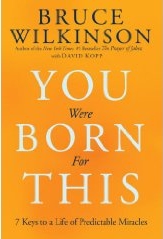 Anyone can do a good deed, but some good works can only happen by a direct intervention from God. Around the world these acts are called miracles—not that even religious people expect to see one any time soon. But what would happen if millions of ordinary people walked out each morning expecting God to deliver a miracle through them to a person in need? You Were Born for This starts with the dramatic premise that everyone at all times is in need of a miracle, and that God is ready to meet those needs supernaturally through ordinary people who are willing to learn how Heaven works.
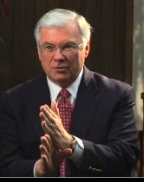 One of the world’s foremost Christian teachers, Bruce Wilkinson is best known as the author of the New York Times #1 bestseller The Prayer of Jabez. He is also the author of numerous other bestsellers, including A Life God Rewards, Secrets of the Vine, and The Dream Giver. Over the past three decades, Wilkinson has founded several global initiatives, including organizations that recruited and trained thousands of Americans to address hunger, AIDS, and poverty in Africa. Bruce and his wife, Darlene, have three children and six grandchildren. They live outside Atlanta.


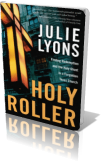 Hey guys, just a reminder that today is supposed to be the last day to comment for a chance to win a copy (hardback) of
  Julie Lyons was working as a crime reporter when she followed a hunch into the South Dallas ghetto. She wasn’t hunting drug dealers, but drug addicts who had been supernaturally healed of their addictions. Was there a church in the most violent part of the city that prayed for addicts and got results?
 Julie Lyons is an award-winning writer, editor and investigative reporter who for more than 11 years served as editor-in-chief of the Dallas Observer, an alternative weekly newspaper owned by Village Voice Media. She holds a master’s degree in journalism from Northwestern University and a B.A. in English from Seattle Pacific University. She and her husband, Larry Lyons Jr., live in Dallas with their son.
 I have three copies of Amy Grant’s new book, “Mosaic” to give away. If you will leave a comment between now and October 20, 2007, I will draw three names. If you will include your email, I can notify you if you are a winner and I can then get your mailing address. Thanks for reading!


