Over the Edge by Brandilyn Collins


This week, the
Christian Fiction Blog Alliance
is introducing
Over the Edge

B&H Books (May 1, 2011)
by
Brandilyn Collins


ABOUT THE AUTHOR:

Brandilyn Collins is an award-winning and best-selling novelist known for her trademark Seatbelt Suspense®. These harrowing crime thrillers have earned her the tagline “Don’t forget to b r e a t h e…”® Brandilyn’s first book, A Question of Innocence, was a true crime published by Avon in 1995. Its promotion landed her on local and national TV and radio, including the Phil Donahue and Leeza talk shows. Brandilyn is also known for her distinctive book on fiction-writing techniques, Getting Into Character: Seven Secrets a Novelist Can Learn From Actors (John Wiley & Sons). She is now working on her 20th book.

In addition, Brandilyn’s other latest release is Final Touch, third in The Rayne Tour series—young adult suspense co-written with her daughter, Amberly. The Rayne Tour series features Shaley O’Connor, daughter of a rock star, who just may have it all—until murder crashes her world.


ABOUT THE BOOK:

Torn from the front lines of medical debate and the author’s own experience with Lyme Disease, Over the Edge is riveting fiction, full of twists and turns—and powerful truths about today’s medical field.

Janessa McNeil’s husband, Dr. Brock McNeil, a researcher and professor at Stanford University’s Department of Medicine, specializes in tick-borne diseases—especially Lyme. For years he has insisted that Chronic Lyme Disease doesn’t exist. Even as patients across the country are getting sicker, the committee Brock chairs is about to announce its latest findings—which will further seal the door shut for Lyme treatment.

One embittered man sets out to prove Dr. McNeil wrong by giving him a close-up view of the very disease he denies. The man infects Janessa with Lyme, then states his demand: convince her husband to publicly reverse his stand on Lyme—or their young daughter will be next.

But Janessa’s marriage is already rocky. She’s so sick she can hardly move or think. And her husband denies she has Lyme at all.

Welcome to the Lyme wars, Janessa.

“A taut, heartbreaking thriller. Collins is a fine writer who knows how to both horrify readers and keep them turning pages.”

–Publishers Weekly

“Tense and dramatic. Holds its tension while following the protagonist in a withering battle.” –NY Journal of Books

“A frightening and all-too-real scenario. Very timely and meaningful book.” –RT Reviews

“If you know someone who suffers from Lyme, you need to read this compelling novel.” –Lydia Niederwerfer, founder of Lyme-Aware

If you would like to read the Prologue of Over the Edge, go HERE

Watch the book video:


MY REVIEW:

Over the Edge is somewhat different than the other books I’ve read by Brandilyn Collins (and I think I’ve read them all). Using her fertile imagination, Collins has taken her very real life experience with Lyme disease and turned it into another one of her trademark Seatbelt Suspense novels. In many ways, Over the Edge may be more frightening than any of her other books simply because it details a nightmare that could strike any one of us at any time. And the medical system that most of us trust to have our best interests at heart may just let us down.

When I learned that this book was to be different from her others, I was afraid I might not like it. That fear was put to rest before I finished the first chapter. Brandilyn has what it takes to hold my interest no matter what she writes. The book description and book trailer above give sufficient information so I won’t elaborate and take a chance on being a spoiler. Just take my word when I say that Over the Edge is a must read book. It might even be one to share with your doctor.

Diagnosis Death by Richard L. Mabry, MD

It is time for a FIRST Wild Card Tour book review! If you wish to join the FIRST blog alliance, just click the button. We are a group of reviewers who tour Christian books. A Wild Card post includes a brief bio of the author and a full chapter from each book toured. The reason it is called a FIRST Wild Card Tour is that you never know if the book will be fiction, non~fiction, for young, or for old…or for somewhere in between! Enjoy your free peek into the book!

You never know when I might play a wild card on you!


Today’s Wild Card author is:


and the book:


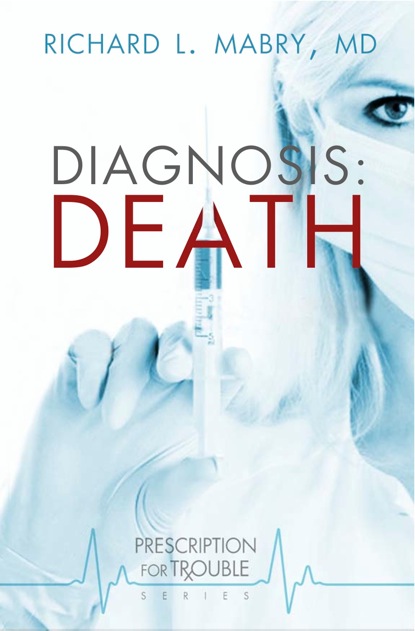
Diagnosis Death

Abingdon Press (April 2011)

***Special thanks to Julie A. Dowd, Marketing Manager, The United Methodist Publishing House for sending me a review copy.***

ABOUT THE AUTHOR:

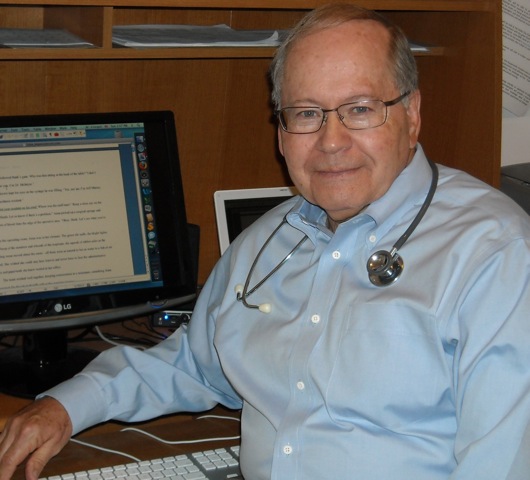
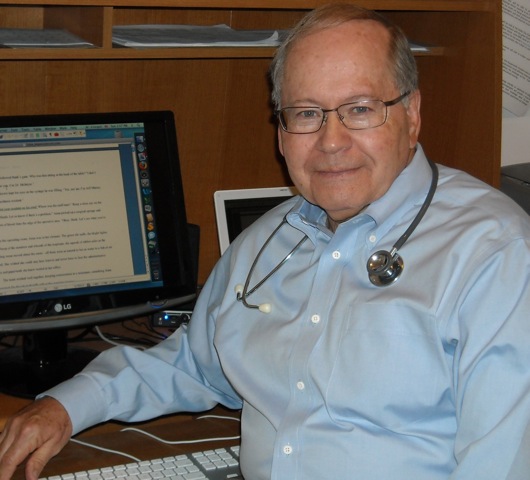
Richard L. Mabry, MD, is a retired physician and medical school professor who achieved worldwide recognition as a writer, speaker, and teacher before turning his talents to non-medical writing after his retirement. His first novel, Code Blue, was published by Abingdon in the Spring of 2010, followed by Medical Error that fall. He is also the author of one non-fiction book, and his inspirational pieces have appeared in numerous periodicals. He and his wife, Kay, live in North Texas.

Visit the author’s website and blog blog.

SHORT BOOK DESCRIPTION:

Removing life support can be a killer!

When her comatose husband died in the ICU while on life support, the whispers about Dr. Elena Gardner began. They were stronger after another patient died in ICU. After she took up practice in a small town, the whispers turned to a shout: “mercy killer.”

Then there were the midnight phone calls that started after her husband’s death. Who was the woman who sobbed out, “I know what you did?” And how could Elena stop the calls that tortured her?

Two physicians, widowers themselves, tell Elena they know what she is going through. But do they? And is it safe to trust either of them?

What was the dark secret that kept Elena’s lips sealed when she should be defending herself? Would what she did in her husband’s ICU room turn out to be a prescription for trouble?

Product Details:

List Price: $13.99
Paperback: 288 pages
Publisher: Abingdon Press (April 2011)
Language: English
ISBN-10: 1426710216
ISBN-13: 978-1426710216

AND NOW…THE FIRST CHAPTER:

Prologue

She stood by his bedside and waited for him to die.

Outside the room, the machines and monitors of the ICU hummed and beeped, doctors and nurses went about their business, and the hospital smell—equal parts antiseptic and despair—hung heavy in the air.

With one decisive move she flipped the switch of the respirator and stilled the machine’s rhythmic chuffing. In the silence that followed, she imagined she could hear his heartbeat fade away.

She kissed him and exhaled what passed for a prayer, her lips barely moving as she asked for peace and forgiveness—for him and for her.

She stood for a moment with her head bowed, contemplating the enormity of her action. Then she pocketed the empty syringe from the bedside table and tiptoed out of the room.

1

Dr. Elena Gardner approached her apartment as she had every night for six months—filled with emptiness and dread. The feeling grew with each step, and by the time she put the key in the door, fear enveloped her like a shroud. Some nights it was all she could do to put her foot over the threshold. This was one of those nights.

She turned the key and pushed open the door. The dark shadows reached out at her like a boogeyman from her childhood. The utter stillness magnified every sound in the old apartment, turning creaking boards into the footsteps of an unknown enemy.

She flipped on the light and watched the shadows turn into familiar surroundings. Even though the thermostat was set at a comfortable temperature, she shivered a bit.

Elena dropped her backpack by the door and collapsed into the one comfortable chair in the living room. The TV remote was in its usual place on the table beside her. She punched the set into life, paying no attention to what was on. Didn’t matter. Just something to drown out the silence, something to remind her that there was life outside these four walls. That somewhere there were people who could laugh and joke and have fun. Somewhere.

She sighed and picked up the phone. She should call David.

He’d been firm about it. “Call me anytime, but especially when you get home at night. That’s the toughest time. It’s when the memories butt heads with the ‘what-ifs.’”

She dialed the number. Maybe she should put him on her speed dial. But that implied there wouldn’t be an end to this soon. And she wasn’t ready to think about that.

“Hey, Elena.” Although Dr. David Merritt—a resident physician in one of the busiest obstetrics programs in the Southwest—was surely as tired as she was, his voice sounded fresh, almost cheery. “What’s up?”

“Oh, you know. Just needed to hear a friendly voice.”

“Glad to oblige. How was your day?”

That was one of the things Elena missed most. Now that Mark was gone, there was no one to share her day. “Not too bad until I was about to check out. The EMT’s brought in a thirty-two-year-old woman, comatose from a massive intracranial hemorrhage. The neurosurgeons rushed her to surgery, but––”

She knew David could guess the rest. He cleared his throat. “Did that…was it tough to take?”

Elena started to make some remark about it not bothering her. But that wasn’t true. And she knew David wanted the truth. “Yeah. Not while it was happening. Then I was pretty much on automatic pilot. But afterward, I almost had a meltdown.”

“It’ll get better.”

“I hope so.”

“Any more phone calls?”

Elena felt goose bumps pop up on her arms. “Not yet. But it’s Tuesday, so I expect one later tonight.”

“Why don’t you call the police?”

“What, and tell them that for four weeks I’ve answered the phone every Tuesday at midnight and heard a woman sobbing, then a hang-up? That’s not a police matter.”

“And you—”

“I know what they’ll ask. Caller ID? ‘Anonymous.’ Star 69? ‘Subscriber has blocked this service.’ Then they’ll tell me to change my number. Well, this one’s unlisted, but that doesn’t seem to matter. How much trouble would it be for whoever’s calling to get the new one?”

David’s exhalation was like a gentle wind. “Well, let me know if there’s anything I can do.”

“You’ve done plenty already. You know, after Mark died, I had a lot of people fuss over me for about three days, but you’re the only one who’s stayed with it. Why?”

His silence made her think she’d asked an embarrassing question. People didn’t go out of their way to be nice the way David had with no thought of something in return. Did they?

“Elena, I’ve been where you are,” David said. “Oh, I know. A spouse divorcing you isn’t the same as one dying, but a lot of the feelings are the same. I mean, when I saw my wife and little girl pull away from the house for the last time, I wanted to lie down and die.”

She knew exactly what he was talking about. “That’s me. I wanted to crawl into the coffin with Mark. At that point, my life was over.”

“But I got past it,” David said. “Oh, I didn’t ‘heal.’ You don’t get back to where you were, but you learn to move on. And when Carol sent me the invitation to her wedding, it broke my heart, but it helped me realize that part of my life was over. Anyway, I made up my mind to use what I’d learned to help other people. And that’s what I’m doing.”

Elena sniffled. “Sorry.” She pulled a tissue from her pocket and dabbed at her eyes. “That’s another thing. I feel like tears are always right there, ready to come anytime.”

“That’s normal. Let them out.”

They talked for a few minutes more before Elena ended the conversation. She wandered into the kitchen, opened the refrigerator and looked in without seeing the contents. She wasn’t hungry. Since Mark’s death she’d lost twelve pounds off a frame that had little to spare. Maybe she should patent the process. “Sure-fire weight loss guaranteed. Withdraw life support and let your husband die. If you don’t lose weight, double your money back.”

Her lips drew back in what started as a hesitant smile but turned into a grimace of pain. She dissolved into tears.

Elena wasn’t sure how long she sat at the kitchen table with her head cradled in her arms before the ring of the phone roused her. She looked at her watch. A little after nine—too early for her midnight caller. Had the routine changed?

She shuffled back to the living room. When she checked the caller ID, she felt some of her tension subside. Dr. Helen Bennett represented the only ray of sunshine in Elena’s dark landscape right now.

“Hello?”

“Elena, did I wake you?”

“No, not really. Just starting to unwind. What’s up?”

“We need to talk.”

That didn’t sound promising. “Wow, that sounds like what I used to tell boys in college before breaking up with them. What’s going on?”

“I’d rather do this face to face. Why don’t we have breakfast tomorrow morning? I usually make rounds at six-thirty. Can you meet me in the St. Paul Hospital staff cafeteria at six? We can talk then.”

Elena hung up with a growing sense of unease. Mark’s death had plunged her into a dark abyss. The only glimmer of hope for a future had been Dr. Helen Bennett’s offer to join her practice. The opportunity to work alongside a woman who was one of the most respected family practitioners in the community, a doctor Elena had admired since her days in medical school, seemed like a gift from above. Was that about to be taken from her?

The evening dragged on as Elena worried about the problem like a kitten with a ball of yarn. Finally, she ate some peanut butter and crackers, forced down a glass of milk. She’d shower in the morning. Right now, she just wanted to crawl into bed.

Sleep was elusive as a glob of mercury. She picked up the book from her bedside table and tried to read, but the words blurred on the page. Finally, she closed the book, turned out the light, and tried to sleep. Instead, she watched the red numerals on her bedside clock change: 10:00, 10:40, 11:15.

She was tossing in a restless slumber when she heard the ring of the phone. The clock showed 12:05 as Elena reached for the receiver. Her left hand clutched the covers tighter around her as her right lifted the phone and brought it to her ear.

At first there was silence. Maybe this was simply a wrong number. Maybe the calls had stopped.

No, there it was. Sobbing. Starting softly, then rising to a crescendo. A woman’s voice—a husky alto, like a lounge singer in a smoky, second-rate club.

“Who is this?” Elena said.

No answer. Only sobbing.

“What do you want?” Elena’s voice rose to a shriek.

A click. Then silence.

Elena stabbed blindly at the phone’s “end” button, finally hitting it as an electronic voice began, “If you’d like to make a call—”

She turned on the bedside lamp and stared at the cheap lithograph on the opposite wall. In it, a young man and woman were walking through a field of flowers. They looked so happy. Like she and Mark had been.

But he was gone, and she’d never be happy again. Ever.

She reached for the light, but withdrew her hand. No, leave it burning. Elena burrowed deeply under the covers, the way she used to do as a child after hearing a ghost story. She closed her eyes and watched the images march across her brain: endless days spent at the bedside of a living corpse, Mark’s casket disappearing into the ground, a faceless woman at some shadowy location sobbing into a phone.

As the sound of those sobs echoed through Elena’s mind, that image of a face from her past came into focus. Was that who was calling? If so, there was nothing Elena could do. She’d simply suffer . . . because she deserved it.

* * *

Elena slapped at the snooze button on her alarm clock. Why was it buzzing already? Then she remembered—her breakfast with Dr. Bennett. What had Helen meant by, “We need to talk?”

Her stomach did a flip-flop, and she tasted a bitter mix of peanut butter and bile. Maybe some coffee would help.

Elena padded to the kitchen and reached into the cabinet, wishing she’d had the foresight to make coffee before going to bed last night. The weight of the canister told her before she removed the lid—empty. She filled a glass at the sink and drank the contents, hoping to at least wash the bad taste from her mouth.

A quick shower brought her a bit more awake. Now for hair and makeup. Elena had always taken pride in her resemblance to her mother, a beautiful woman with dark, Latina looks. But long days at the hospital followed by sleepless nights took their toll.

There were dark circles under her eyes, the brown irises surrounded by a network of red. A few drops of Visine, and she looked less like the survivor of an all-night drinking spree. She’d cover the circles with a little make-up and hope Dr. Bennett didn’t notice.

Elena ran her hands through her long, black hair. She needed a haircut, needed it in the worst way. But there was neither time nor money for that right now. She’d pull it into the always-utilitarian ponytail she’d favored more and more lately.

Dressed, her backpack slung over one shoulder, her purse over the other, she stepped through the door into the early morning darkness, in no way ready to face the day. It was bad already. She hoped it wouldn’t get worse.

* * *

The ride in the elevator was three floors up, but Elena’s stomach felt as though she was in a free fall. She didn’t have to do this today. When Helen Bennett called, she should have put this visit on “hold.” But something told her she needed to get it out of the way.

The elevator doors slid open, and the scene before her made memories scroll across her mind like a filmstrip unwinding. The waiting area of the ICU at Zale University Hospital was quiet at 5:30 a.m. The television set high on the far wall flickered with silent images as closed captions of the local news crawled across the bottom of the screen. An older man huddled in a chair near the “Staff Only” door, glancing every few seconds toward that portal as though Gabriel himself were about to come through it with news of his loved one.

Elena knew the feeling. For two weeks, she’d spent much of every day in this same waiting room. The rest of the time, the minutes not spent snatching a quick bite in the cafeteria or hurrying home for a shower and change of clothes, were spent at her husband’s bedside, holding his hand and listening to the even rhythm of the respirator that kept him alive. Her heart bled for the old man and for every other person who’d ever sat in this room.

Elena was pleased when her final training assignment took her away from Zale, the place where her life fell apart. St. Paul Hospital was less than half a mile away, but she welcomed every foot of that buffer. When she walked out of Zale for the last time, she silently vowed never to return.

Now she was back, and she still wasn’t sure of her reason. Was it to add the books from the box balanced on her hip to the dog-eared paperbacks next to the volunteer’s desk? Or was it to show she had the courage to revisit the scene of the most terrible two weeks of her life? No matter, she was here. She clenched her jaw and forced her feet to move.

“Dr. Gardner. What are you doing here?”

Elena looked up at the nurse emerging from the elevator. The woman’s name tickled at the periphery of Elena’s memory like a loose hair. What was it?

“Oh. You startled me.”

“Sorry. What brings you back here?”

Elena held up a handful of books and shoved them into the bookcase. “These are some of Mark’s––” Her throat closed up and words left her. With an effort, she began again. “I was going through some of Mark’s things and thought these might help the people in the waiting room pass the time.”

The nurse moved closer and Elena sneaked a look at her nametag. Karri Lawson. Of course. How could she forget Karri? The pretty brunette had been the nurse responsible for Mark’s care almost the entire time he was in the ICU. In fact Karri had been Mark’s nurse the day––. Elena shook her head. Don’t go there. Don’t go back.

If Karri noticed Elena’s discomfort, she made no mention of it. Instead, she gave Elena a brief hug. “I haven’t seen you since…since that day. I’m sorry for your loss.” She made a gesture toward the closed doors leading to the ICU. “We all are.”

Elena had heard “sorry for your loss” so many times, it was almost meaningless. Her response was automatic. “Thank you.”

“Would you like to come in and see the other staff?” Karri looked at her watch. “The day shift isn’t here yet, but there may be some nurses you remember from when…from your time here.”

“I don’t think so.” Elena reached out and touched Karri on the shoulder. “I have a meeting. But tell everyone hello for me. Tell them I said, ‘thanks.’”

* * *

“The coffee here is surprisingly good,” Elena said. “Everyone always says that hospital food, especially hospital coffee, is terrible.”

“I agree,” Helen Bennett said. “I wish my receptionist could make coffee like this. She’s a jewel, but in fifteen years with me she’s never learned to make coffee that doesn’t taste like it’s brewed from homogenized tire treads.”

“Don’t be too hard on her, Helen. I’m looking forward to working with her. And with you, of course.”

Helen placed her mug on the table as carefully as an astronaut docking the space shuttle. “Well, that’s what we need to talk about.” She looked around to make sure there was no one within earshot. Around them, the cafeteria was filled with bleary-eyed residents, medical students, and nurses, but no one seemed interested in the conversation at their table. “I’m afraid you’re not going to be working with my receptionist, or my nurse, or me.”

“What—”

Helen stemmed Elena’s words with an upraised hand. “Let me give you the whole story. Then I can answer questions if you have any—assuming you’re still speaking to me by then.”

The hollow feeling in Elena’s stomach intensified.

“I’ve been in private practice for fifteen years, going it alone. There aren’t many of us left in solo situations, but I’ve held out. I’ve managed to get other doctors in various groups to share call with me, but lately that’s been somewhere between difficult and impossible.”

“I know. That’s why you wanted to bring me into the practice,” Elena said.

“True, but that’s changed. The Lincoln Clinic has approached me to join their family practice section. Actually, they want me to head it. They’ve made me a great offer. Not just the money, although that’s good. The whole package seems tailor-made for me. I’ll be supervising six other doctors, and I’ll be exempt from night call. A great retirement plan and benefits.” Helen looked down at the tabletop. “I couldn’t turn it down.”

Elena’s mind scrambled for a solution. The ship was sinking, and she grabbed for something to keep her afloat. “So, why don’t I take over your practice? I can buy you out. I mean, I won’t have the money right way, but I can pay you over several years. It’ll be sort of like an annuity for you.”

Helen was already shaking her head. “No, one part of the deal was that I bring my patients with me. The clinic will hire both my receptionist and nurse, and give them a good package as well. They’ll even buy my equipment from me. I’ve already terminated the office lease. I’m moving out in ninety days.”

Elena forced back the tears she felt forming. “Helen, do you realize what this does to me?”

“I know. I just—”

“No.” Elena worked to keep her voice level. “You don’t know. You don’t know how I’ve struggled to get through my residency after Mark’s death. You have no idea what it meant to me to have a practice waiting for me. No need to lease space, to remodel and buy equipment. No waiting to build up a practice. There’d be a guaranteed income and a chance to pay off a mountain of debt.”

“Elena—”

Elena shook her head. “I finish my residency in less than a month. Thirty days! Now you’ve pulled the rug out from under me. I have four weeks to find a way to do the only thing I know how to do—practice medicine.” She turned her back to Helen, thinking that Helen had done the same thing to her. “No, I realize this is good for you, but I don’t think you really know the effect it has on me.”

“Elena, I had to do this. Once you get over the shock, you’ll think about it and agree. But listen, I’m not going to leave you hanging.”

Elena turned back to face the woman who’d been her mentor, the friend who was now betraying her. “What do you mean?”

“The clinic gave me a very short deadline to accept or reject their offer. I only made my final decision this weekend. But the second call I made, after the one to the clinic administrator, was to your chair, Dr. Amy Gross. She and I are both putting out feelers for a place you can practice.” Helen reached across the table and patted Elena’s shoulder. “We know how hard this past three months have been on you. We worry about you. And believe me, we won’t abandon you now. God has something out there for you. Trust Him.”

Elena drained the last of the coffee from her cup. When she set it down, she knocked her fork off the table. The dull clank of silverware on vinyl floor was barely audible over the low hum of voices that filled the cafeteria. “Trust God? I don’t think so. I trusted Him when Mark lay there fighting for his life, but it didn’t seem to do any good.”

“I know. But He’s still in control.”

Elena shook her head, while one more hobgoblin joined those already dancing in her brain.


MY REVIEW:

Although Diagnosis Death is the third book of a series, it can easily stand alone. A medical mystery, the novel is a definite page turner that will keep the reader in suspense until the end. Although written by a retired doctor, there is just enough medical information given to keep the plot realistic and interesting. Characters are well rounded and believable. The plot moves at a consistent pace with few rabbit trails that distract. Controversial subjects such as euthanasia are examined but readers are left to reach their own conclusions. A strong message of faith is woven unobtrusively into the story.

Plagued with frequent nightmares and harassing midnight telephone calls after her husband’s death, Dr. Elena Gardner soon finds herself in the middle of more controversy and suspicion after the similar death of another patient. She takes a job with another doctor in Dainger, Texas hoping to leave her problems behind. Unfortunately, her problems continue to escalate.

How does a doctor defend herself and her reputation when she is uncertain of the truth herself? Diagnosis Death has the answer to that question and more. I heartily recommend Diagnosis Deathand Dr. Mabry’s other novels for those who love medical thrillers.

Code Triage by Candace Calvert


MY REVIEW:

The third book in the Mercy Hospital series, Code Triage delivers a page-turning medical drama laced with adrenaline and action, romance and regrets. Calvert gives readers an inside look at  the ER and medical procedures as well as the lives of the people who work there.

Police officer Nick Stathos hopes to stop the divorce from his wife Dr. Leigh but Samantha Gordon will do whatever she can to prevent their reconciliation. Tensions mount as circumstances place them in close proximity and the divorce date quickly approaches. As the story progresses, the reader learns how childhood experiences have affected the choices made by each of these three characters.

Will Nick and Leigh resolve their differences or will Sam have her way and snag Nick for herself? Will any of them be able to surrender their control and let God have His way in their lives? Will they take heed of a wise little girl’s remarks – “Jesus is always here . . . We don’t have to be afraid, because he’ll always be here, no matter what . . . Forever and ever.”

I thoroughly enjoyed my visit to Golden Gate Mercy Hospital. I do hope that we will learn the rest of Riley Hale’s story in an upcoming book.

This book was provided for review by Tyndale House Publishers.


ABOUT THE BOOK:

Dr. Leigh Stathos likes her ER shifts fast, furious, and adrenaline-infused—“Treat ’em and street ’em”—with no emotional complications. Life’s taught her a soul-rending lesson: nothing lasts forever, including marriage. And the clock is ticking toward the end of hers. Then an unwelcome confrontation with “the other woman” begins a whole new set of lessons.

San Francisco police officer Nick Stathos never gives up, whether protecting his patrol neighborhood, holding fast to faith—or trying to save his marriage. Seven days is all he has to reach Leigh’s heart. But when a desperate act of violence slams Golden Gate Mercy Hospital into lockdown, it starts a chain of events that will change lives forever.


ABOUT THE AUTHOR:

Candace Calvert is an ER nurse who landed on the “other side of the stethoscope” after the equestrian accident that broke her neck and convinced her that love, laughter—and faith—are the very best medicines of all. The inspirational account of her accident and recovery appears in Chicken Soup for the Nurse’s Soul and launched her writing career.

The author of a madcap cruise mystery series in the secular market, Candace now eagerly follows her heart to write Christian fiction for Tyndale House. Her new medical drama series offers readers a chance to “scrub in” on the exciting world of emergency medicine, along with charismatic characters, pulse-pounding action, tender romance, humor, suspense—and a soul-soothing prescription for hope.

Wife, mother, and very proud grandmother, Candace makes her home in northern California.

Please visit her Web site at www.candacecalvert.com.

Medical Error by Richard L. Mabry, MD

It is time for a FIRST Wild Card Tour book review! If you wish to join the FIRST blog alliance, just click the button. We are a group of reviewers who tour Christian books. A Wild Card post includes a brief bio of the author and a full chapter from each book toured. The reason it is called a FIRST Wild Card Tour is that you never know if the book will be fiction, non~fiction, for young, or for old…or for somewhere in between! Enjoy your free peek into the book!

You never know when I might play a wild card on you!


Today’s Wild Card author is:


and the book:


Medical Error (Prescription for Trouble Series)

Abingdon Press (July 12, 2010)

***Special thanks to Maegan Roper, Marketing/PR Manager, Christian Fiction, Abingdon Press for sending me a review copy.***

ABOUT THE AUTHOR:

Dr. Richard Mabry built a worldwide reputation as a clinician, researcher, author, and teacher before retiring from medicine. He entered the field of non-medical writing after the death of his first wife, with the publication of his book, The Tender Scar: Life After The Death Of A Spouse.

Richard describes his work as “medical suspense with heart.” Medical Error is his second novel. His first novel, Code Blue, was published by Abingdon Press in April of 2010, and will be followed next spring by the third book in the Prescription For Trouble series, Diagnosis Death.

He and his wife, Kay, live in North Texas.

Visit the author’s website.
Visit the author’s blog.

Product Details:

List Price: $13.99
Paperback: 288 pages
Publisher: Abingdon Press (July 12, 2010)
Language: English
ISBN-10: 1426710003
ISBN-13: 978-1426710001

AND NOW…THE FIRST CHAPTER:

Eric Hatley’s last day alive began routinely enough.


He paused beside his brown delivery truck, shifted the bulky package, and turned in a tight circle to search for the right apartment.

Shouts filled the air. Firecrackers exploded all around him. A dozen red-hot pokers bored holes through his gut.

The package flew from his arms. He crumpled into a privet hedge at the edge of the sidewalk, clutching his midsection and recoiling when his fingers encountered something wet and slimy.

A wave of nausea swept over him. Cold sweat engulfed him.

Eric managed one strangled cry before everything faded to black.

* * *

Dr. Anna McIntyre bumped the swinging door with her hip and backed into Parkland Hospital’s Operating Room Six, her dripping hands held in front of her, palms inward. “Luc, tell me what you’ve got.”

Chief surgical resident, Dr. Luc Nguyn, didn’t look up from the rectangle of abdomen outlined by green draping sheets and illuminated by strong surgical lights. “UPS driver, making a delivery in the Projects. Got caught in the crossfire of a gang rumble. Took four bullets in the belly. Pretty shocky by the time he got here.”

“Find the bleeding source?”

“Most of it was from the gastric artery. Just finished tying it off.”

Anna took a sterile towel from the scrub nurse and began the ritual of gowning and gloving made automatic by countless repetitions. “How about fluids and blood replacement?”

Luc held out his hand, and the nurse slapped a clamp into it. “Lactated Ringer’s, of course—still running wide open. We’ve already pushed one unit of unmatched O negative. He’s finishing his first unit of cross-matched blood. We’ve got another one ready and four more holding in the blood bank.”

“How’s he responding?”

“BP is still low but stable, pulse is slower. I think we’re catching up with the blood loss.”

Anna plunged her hands into thin surgical gloves. “Lab work?”

“Hematocrit was a little over ten on admission, but I don’t think he’d had time to fully hemodilute. My guess is he was nine or less.”

Anna turned slightly to allow the circulating nurse to tie her surgical gown. “Bowel perforations?”

“So far I see four holes in the small intestine, two in the colon.”

“Okay, he’ll need antibiotic coverage. Got that started?”

Luc shrugged. “Not yet. We don’t know about drug allergies. His wallet had ID, but we’re still working on contacting next of kin. Meanwhile, I have Medical Records checking his name in the hospital computer for previous visits.”

“And if he’s allergic—“

The nursing supervisor pushed through the swinging doors, already reading from the slip of paper in her hand. “They found one prior visit for an Eric Hatley, same address and date of birth as on this man’s driver’s license. Seen in the ER two weeks ago for a venereal disease. No history of drug allergy. They gave him IM Omnilex. No problems.”

The medical student who’d been assisting moved two steps to his left. Anna took his place across the operating table from Luc.

Luc glanced toward the anesthesiologist. “Two grams of Omnilex IV please.”

Anna followed Luc’s gaze to the head of the operating table. “I don’t believe I know you. I’m Dr. McIntyre.”

The doctor kept his eyes on the syringe he was filling. “Yes, ma’am. I’m Jeff Murray, first year anesthesia resident.”

A first year resident on his own? Where was the staff man? “Keep a close eye on the blood and fluids. Let us know if there’s a problem.” Anna picked up a surgical sponge and blotted a bit of blood from the edge of the operative area. “Okay, Luc. Let’s see what you’ve got.”

In the operating room, Anna was in her element. The green tile walls, the bright lights, the soft beep of the monitors and whoosh of the respirator, the squeak of rubber soles as the circulating nurse moved about the room—all these were as natural to her as water to a fish or air to a bird. Under Anna’s direction, the team worked smoothly together. Conversation was at a minimum, something she appreciated. Do the job in the OR, talk in the surgeons’ lounge.

“I think that’s got it,” Luc said.

“Let’s check.” Anna’s fingertips explored the depths of the patient’s belly with the delicate touch of a concert violinist. Her eyes roamed the operative field, missing nothing. Luc had done an excellent job. He’d do well in practice when he finished his training in three months.

Anna stepped away from the table. “I think you’re through. Routine closure, leave a couple of drains in. Keep him on antibiotic coverage for the next few days.”

Luc didn’t need to hear that, but she figured the medical student did. She might as well earn her Assistant Professor’s salary with a little low-key teaching.

She stripped off her gloves and tossed them in the waste bucket at the end of the operating table. “If you need me—“

“Luc, we’ve got a problem. Blood pressure’s dropping, pulse is rapid.” A hint of panic rose in the anesthesiologist’s voice.

The scrub nurse held out fresh gloves, and Anna plunged her hands into them. “He must be bleeding again. Maybe one of the ligatures slipped off.”

“No way,” Luc said. “Everything was double-tied, with a stick-tie on the major vessels. You saw yourself, the wound was dry when we finished.”

“Well, we’ve got to go back in and look.” Anna turned to the anesthesiologist. “Run the IV wide open. Hang another unit of blood and send for at least two more. Keep him oxygenated. And get your staff man in here. Now!”

He snapped out a couple of requests to the circulating nurse before turning back to Anna. “He’s getting hard to ventilate. Do you think we might have overloaded him with fluid and blood? Could he be in pulmonary edema?”

“I want your staff doctor in here now! Let him evaluate all that. We’ve got our hands full.” Anna snatched a scalpel from the instrument tray and sliced through the half-dozen sutures Luc had just placed. “Deavor retractor.” She shoved the curved arm of the instrument into the edge of the open wound and tapped the medical student’s hand. “Hold this.”

Anna grabbed a handful of gauze sponges, expecting a gusher of blood from the abdomen. There was none. No bleeding at all within the wound. So why was the blood pressure dropping?

“Pressure’s down to almost nothing.” The anesthesia resident’s voice was strained. “And I’m really having trouble ventilating him.”

Dr. Buddy Jenkins, one of the senior anesthesiologists, pushed through the swinging doors. “What’s going on?”

Anna gave him the short version. “Blood pressure’s dropping, pulse is climbing. We’ve gone back into the belly, but there’s no bleeding. And there’s a problem ventilating him.”

Jenkins moved his resident aside, then slipped a stethoscope under the drapes and listened for a moment. “Wheezes. And no wonder. Look at his face.”

Anna peeked over the screen that separated the patient’s head and upper body from the operative field. Her heart seemed to skip a beat when she saw the swelling of the lips and the red blotches on the man’s face.

“It’s not blood loss,” Jenkins said. “He’s having an anaphylactic reaction. Most likely the blood. Did you give him an antibiotic? Any other meds?”

Anna’s mind was already churning, flipping through mental index cards. Anaphylaxis—a massive allergic reaction, when airways closed off and the heart struggled to pump blood. Death could come quickly. Treatment had to be immediate and aggressive.

“He had two grams of Omnilex,” Luc said. “But his old chart showed—“

Jenkins was in action before Luc stopped speaking. “I’ll give him a cc. of diluted epinephrine by IV push now, then more in a drip.” He turned to the anesthesia resident. “Get that ready— one milligram of epinephrine in a hundred milliliters of saline.”

“Luc, you two close the abdominal wound,” Anna said. “I’m going to break scrub and help Dr. Jenkins.”

Jenkins handed her a syringe. “Give him this Decadron, IV push. I need to adjust the ventilator.”

Anna injected the contents into the patient’s intravenous line. She said a quick prayer that the epinephrine and steroid would turn the tide, that they hadn’t been too late in starting treatment.

The team battled for almost half an hour, at first gaining ground, then losing it steadily. Finally, Jenkins caught Anna’s eye. They exchanged glances. There was no need for words.

She sighed and stepped away from the table. “I’m calling it.” Her voice cracked. “Time of death is eleven oh seven.”

Luc let the instrument he’d been holding drop back onto the tray. Jenkins picked up the anesthesia record and began to scribble. Murray, the anesthesia resident, turned back to his supply table and started straightening the mess. The medical student looked at Anna. She nodded toward the door, and he slipped out of the room. She didn’t blame him. This was probably the first patient he’d seen die.

Anna tossed her gloves and mask into the waste container. She shrugged, but the tension in her shoulders didn’t go away. “Any idea why this happened? The blood was supposed to be compatible. He’d tolerated Omnilex before. What else could have caused it?”

No one offered an answer. And she certainly had none. But she intended to find out.

The OR charge nurse directed Anna to the family room, where she found Hatley’s mother huddled in a corner, twisting a handkerchief and occasionally dabbing at her eyes. The room was small and quiet, the lighting was soft, the chairs as comfortable as possible. A box of tissues sat on the table, along with a Bible and several inspirational magazines. Soft music playing in the background almost covered the hospital sounds drifting in from the nearby surgical suite.

Anna whispered a silent prayer. She’d done this dozens of times, but it never got any easier. She knelt in front of the woman. “Mrs. Hatley, I have bad news for you.”

Anna stumbled through the next several minutes, trying to explain, doing her best to make sense of a situation that she herself couldn’t fully understand. When it came to the matter of permission for an autopsy, Anna wasn’t sure of the medico-legal situation here. Hatley had died after being shot, but his injuries weren’t the cause of death. Would she have to call the County Medical Examiner and get him to order one? The weeping mother solved the problem by agreeing to allow a post-mortem exam.

There was a light tap at the door, and the chaplain slipped into the room. “I’m sorry. I was delayed.” He took the chair next to Mrs. Hatley and began speaking to her in a low voice.

Anna was happy to slip out of the room with a last “I’m so sorry.” Outside, she paused and took several deep breaths.

It took another half-hour for Anna to write a chart note, dictate an operative report and final case summary, and change into clean scrubs. She was leaving the dressing room when her pager sounded. The display showed her office number followed by the suffix “911.” A “stat” page—respond immediately.

As she punched in the number, Anna wondered what else could possibly go wrong today. “Lisa, what’s up?”

“Dr. McIntyre, there are two policemen here. They want to talk with you. And they say it’s urgent.”

* * *

Nick Valentine looked up from the computer and grimaced when he heard the morgue attendant’s rubber clogs clomping down the hall. The summons he knew was coming wasn’t totally unexpected. After all, he was the pathologist on autopsy call this week, which was why he was sitting in this room adjacent to the morgue of Parkland Hospital instead of in his academic office at the medical school. But he’d hoped for some undisturbed time to get this project done.

The attendant stuck his head through the open door. “Dr. Valentine, you’ve got an autopsy coming up. Unexpected death in the OR. Dr. McIntyre’s case. She asked if you could do it as soon as possible. And please page her before you start. She’d like to come down for the post.” The man’s head disappeared like that of a frightened turtle. More clomps down the hall signaled his departure.

There was nothing new about an attending wanting a post-mortem done ASAP. You’d think they’d realize there was no hurry any more, but that didn’t seem to stop them from asking. At least she was willing to come down and watch instead of just reading his report. Nick turned to the shelf behind his desk and pulled out a dog-eared list headed “Frequently Needed Pager Numbers.” He ran his finger down the page. Here it was: Department of General Surgery. Anna E. McIntyre, Assistant Professor. He picked up the phone and punched in her number. After he heard the answering beeps, he entered his extension and hung up.

While he waited, Nick looked first at the pile of papers that covered half his desk, then at the words on his computer screen. He’d put this off far too long. Now he had to get it done. To his way of thinking, putting together this CV, the curriculum vitae that was so important in academics, was wasted effort. Nick had no interest in a promotion, didn’t think he’d get one even if his chairman requested it from the dean. But his chairman wanted the CV. And what the chairman wanted, the chairman got.

The phone rang. Probably Dr. McIntyre calling back.

“Dr. Valentine.”

“Nick, this is Dr. Wetherington. Do you have that CV finished yet?”

“I’m working on it.”

“Well, I need it soon. I want you to get that promotion to Associate Professor, and I have to be able to show the committee why I’ve nominated you. Don’t let me down.”

Nick hung up and riffled through the pile on his desk. Reprints of papers published, programs showing lectures delivered at medical meetings, textbooks with chapters he’d written, certificates from awards received. His professional résumé was pitifully small, but to Nick it represented the least important part of his job. What mattered most to him was what he was about to do: try to find out why the best efforts of a top-notch medical staff failed to save the life of some poor soul. If he did his job well, then maybe those doctors would be able to snatch some other patient from the jaws of the grim reaper.

His phone rang. “Dr. Valentine, are you about ready?” the morgue attendant said.

Nick looked at his watch. Almost half an hour, and Dr. McIntyre hadn’t responded to the page. He hated to start without her, but he might have to. “Give me another ten minutes.”

While he waited, Nick figured he might as well try to make Dr. Wetherington happy. Now when did he deliver that paper before the American Society of Clinical Pathology? And who cared, anyway?

* * *

Her administrative assistant met Anna at the doorway to the outer office. “Dr. McIntyre, I didn’t know what to do.”

“That’s all right, Lisa. I’ll talk with them.” Anna straightened her white coat and walked into her private office, where two people stood conversing in low tones. Lisa had said, “Two policemen,” but Anna was surprised to see that one of them was a woman.

The man stepped forward to meet Anna. “Doctor McIntyre?”

Anna nodded.

He pulled a leather folder from his pocket and held it open for her inspection. Anna could see the gold and blue badge pinned to the lower part of the wallet, but couldn’t read the words on it. The card in the top portion told her, though. It carried a picture beside the words, US Drug Enforcement Administration.

Lisa had been wrong. These people were from the DEA, not the police. Still, an unannounced visit from that agency made most doctors sweat. You never knew when some innocent slip might get you into trouble.

The man flipped the credential wallet closed. “This won’t take long.”

“Good. I’ve just finished an emergency case, and I still have a lot to do.” Anna moved behind her desk and sat.

“Your chairman said you’d give us as much time as we need.”

Anna glanced pointedly at her watch. “Well, have a seat and let’s get to it. What do you need from me?”

The man lowered himself into the chair, his expression slightly disapproving. His partner followed suit. “We have some things we need for you to clear up.”

“Could I see those credentials again?” Anna said. “Both of you.”

They obliged, laying the open wallets on the desk. Anna pulled a slip of notepaper toward her and began copying the information, occasionally glancing up from her writing to match the names and faces on the ID’s with the people sitting across from her. The spokesman was Special Agent John Hale, a chunky, middle-aged man wearing an off-the rack suit that did nothing to disguise his ample middle. Anna thought he looked more like a seedy private eye than an officer of the law.

The woman, the silent half of the pair so far, was Special Agent Carolyn Kramer, a woman who reminded Anna of a California surfer bunny, complete with perfect tan and faultlessly styled short blonde hair. The resemblance stopped there, though. Kramer’s eyes gleamed with a combination of intelligence and determination that told Anna she’d better not underestimate the woman. Kramer wore a stylish pants suit that had probably cost more than Anna made in a week, How could a DEA agent have money for an outfit like that?

Anna handed the badge wallets back to Hale and Kramer. “All right, how can I help you?”

Hale pulled a small notebook from his inside coat pocket and flipped through the pages. “Doctor, recently you’ve been writing a large number of Vicodin prescriptions, all of them for an excessive amount of the drug. Can you explain that?”

“I don’t know what you mean,” Anna said. “I’m pretty sure I haven’t written any more Vicodin ‘scripts than usual, and I certainly haven’t changed my prescribing practices.”

Hale nodded, stone-faced. “What are those practices?”

“I prescribe Vicodin for post-operative pain in many of my patients, but always in carefully controlled amounts, usually thirty pills at a time. By the time they’ve exhausted that first prescription I can generally put them on a non-narcotic pain reliever. It’s rare that I refill a Vicodin ‘script.”

Apparently it was Kramer’s turn in the tag-team match. She picked up a thick leather folder from the floor beside her chair, unzipped it, and extracted a sheaf of papers held together by a wide rubber band. “Would you care to comment on these?” Her soft alto was a marked contrast to Hale’s gruff baritone,

Anna’s eyes went to the clock on her desk. “Will this take much longer? I really have things I need to do.”

Kramer seemed not to hear. She held out the bundle of papers.

“Okay, let me have a look.” Anna recognized the top one in the stack as a prescription written on a form from the faculty clinic. She pulled it free and studied it. The patient’s name didn’t stir any memory, but that wasn’t unusual. She might see twenty or thirty people in a day. The prescription read:

VICODIN TABS

Disp. [#100]

Sig: 1 tab q 4 h PRN pain

At the bottom of the page, three refills were authorized. The DEA number had been written into the appropriate blank on the lower right-hand corner.

Anna squinted, closed her eyes, then looked again. There was no doubt about it. The DEA number was hers. And the name scrawled across the bottom read: Anna McIntyre, MD.

“Can you explain this?” Kramer asked.

A familiar vibration against her hip stopped Anna before she could reply. She pulled her pager free and looked at the display. The call was from the medical center, but she didn’t recognize the number. Not the operating room. Not the clinic. She relaxed a bit when she saw there was no “911” entry after the number. If this was about the autopsy, she’d have to miss it.

Hale picked up the questioning as though there had been no interruption. “What can you tell us about all these prescriptions for Vicodin?”

“I suppose the most important thing I can tell you is that I didn’t write them.” She riffled through the stack, paying attention only to the signature at the bottom of each sheet. “None of these are mine.”

“That’s your number and name. Right?” Kramer said.

“Right. But that’s not my signature. It’s not even close.”

“Can you explain how someone else could be writing prescriptions on your pads using your DEA number?” Hale asked.

“I have no idea.” Anna made no attempt to keep the bitterness out of her words. “Sorry, I’ve just lost a patient, and I’m not in the best of moods. Can’t we wind this up? I didn’t write those ‘scripts, and I don’t know who did.”

Obviously, Hale didn’t want to let the matter go. “You’re sure there’s nothing you want to tell us?”

“What would I have to tell you? I said I don’t know anything about this.”

Kramer spoke, apparently filling the role of good cop. “Take a guess. Help us out here.”

Anna felt her jaw muscles clench. These people were relentless. She had to give them something, or this would never end. “I really don’t know. I mean, we’ve got an established routine, and all the doctors here are pretty careful.”

Kramer pulled a silver ballpoint from the leather folder and began twirling it between her fingers. “Why don’t you walk us through that routine?”

Anna wanted to follow up on Hatley’s autopsy, talk with her department chair about today’s events, eventually sit down and try to relax. She was drained. The agents, on the other hand, seemed to have unlimited time and energy.

“Doctor?” Kramer’s voice held no hint of irritation. Patient, understanding, all the time in the world. Just two women chatting.

“Sorry.” Anna tried to organize her thoughts. “The prescription pads in the faculty clinic are kept in a drawer in each treatment room. That way they’re out of sight, although I guess if someone knew where they were he could latch onto one when no one was in the room.” She looked at the agents. Kramer simply nodded. Hale scowled. “Hey, we know it’s not perfect, but that’s the way we have to do it. Otherwise, we’d waste all our time hunting for a pad.”

“And do you ever forget and leave the pads sitting out when you’ve finished writing a prescription?” Kramer asked.

“Sure. Especially when we’re in a hurry.” Anna’s cheeks burned.

Hale turned a page in his notebook and frowned. “How about your DEA number?”

“You’ll notice those aren’t printed on the forms. Each of us has to fill in our number.”

“Maybe someone else had access to your number. Do nurses ever write the prescriptions for you?” This came from Kramer. Anna felt as though she was watching a tennis match, going back and forth between the two agents.

“When we have a nurse in the room with us, yes, she’ll write the prescription. I don’t know what the other doctors do, but I sign the prescriptions after she writes them. And I add the DEA number to the narcotic ‘scripts myself.”

The questioning went on for another half hour. Anna’s throat was dry, her eyes burned, she felt rivulets of sweat coursing between her shoulder blades. Finally, she’d had enough. “Look, am I being charged with something? Because if I am, I’m not saying another word without a lawyer.”

Hale replaced his notebook in his pocket. Kramer picked up her folder and purse. They let the silence hang for a moment more before exchanging glances, then standing.

“Right now, we’re simply investigating, Doctor,” Hale said. “You may be hearing from the Texas Department of Public Safety and the Dallas Police as well. Also, since your DEA number and identity have been compromised, I’d advise you not to prescribe any controlled substances for now. You’ll receive formal notification in writing tomorrow about applying for a new permit.”

The agents walked out, leaving Anna with her hands pressed to her throbbing temples.

* * *

Nick stepped back from the autopsy table, pressed the pedal under his right foot, and spoke into the microphone hanging near his head. “No other abnormalities noted. The balance of findings will be dictated after review of the histopathology specimens and the results of the toxicology tests. Usual signature. Thanks.” He turned away from the body and gestured to the morgue assistant to close the incisions. “I’ll be in the office if you need me. Thanks for your help.”

Nick removed his goggles and stripped off his mask, gown, and gloves. He was standing at the sink outside the autopsy room, drying his hands, when he heard footsteps hurrying down the corridor toward him. He turned to see a woman approaching. The attractive redhead wore surgical scrubs, covered by a white coat. As she neared him, he could make out the embroidered name above the breast pocket: Anna McIntyre, MD. She stopped in front of him, and the set of her jaw and the flash of her green eyes told Nick she was in no mood for light banter.

“Dr. McIntyre?”

She nodded.

“Nick Valentine. I paged you, but when you didn’t answer I had to go ahead and get started. Sorry.”

She waved away his apology. “No, it’s my fault. I couldn’t break free to answer your page. What can you tell me?”

“Why don’t I buy you a cup of coffee and I’ll tell you what I’ve found so far? If we go to the food court, we can get away from the smell down here. I hardly notice it anymore, but I’ve learned that my visitors aren’t too fond of the odor of chemicals.”

She hesitated for a few seconds. “Okay. Lead the way.”

It seemed to Nick there was a Starbucks on every corner of every major city in the US. Most important to him, however, was the one here in the basement of the Clinical Sciences Building at Southwestern Medical Center. As he waited to order, he sniffed the rich aromas that filled the air. The smell of coffee never failed to lift his spirits. Maybe it would do the same for the woman who stood stoop-shouldered beside him. For most doctors, caffeine was the engine that helped propel them through long days and longer nights. Maybe all she needed was a booster shot.

When they were seated at a corner table with their venti lattes Nick filled her in on his findings at the autopsy he’d just completed. “That’s about it,” he concluded. “I’ll sign the death certificate with the preliminary cause of death as anaphylaxis due to an unknown cause.”

“But you won’t have a final diagnosis until—“

“Right. I’ll review the tissue samples and the results of the toxicology screen, but I doubt that we’ll find anything there. I’m going to have some tests run on the blood samples I took, and maybe that will help us. I’ll need to research whether there’s a good blood test for a drug reaction or latex allergy. The long and short of it is that we may never know the real reason he developed anaphylaxis and died.”

“I hadn’t even thought of latex allergy,” she said. “But that’s pretty rare, isn’t it?”

“Less than one percent of the population. Seen in people chronically exposed to latex: surgeons and nurses, industrial workers, patients with lifelong indwelling catheters.” He felt himself slipping into his lecture mode and made an effort to pull back. “I mean, we could talk about all these uncommon things, but I’ll bet you learned the same thing in medical school that I did. When you hear hoof beats—“

“Think horses, not zebras.” She managed a tiny smile. “Yes, I know. So we should concentrate on the blood or the antibiotic. If it was the blood, there’s a problem in the blood bank because he got one unit of unmatched O negative, which should have been okay, and one unit that was supposedly compatible by cross-match.”

“The residuals in both bags of blood are being re-typed and cross-matched against your patient’s blood as we speak. We’ll know the answer by the time we finish our coffee.” He drank deeply from his cup. “Don’t you think an antibiotic reaction is the most likely cause?”

She took a sip of coffee. “Probably, although I hope not. Choosing an antibiotic wasn’t a routine matter, because we didn’t know if Hatley had any drug allergies. The resident—one of our sharpest ones, by the way—thought he’d see if we could get the information another way. He had medical records check for a previous visit for the patient. They found a recent emergency room visit by the patient where he tolerated Omnilex. Since that antibiotic’s the best choice to cover spillage from a perforated bowel, I agreed with Luc when he ordered it.”

“But—“

“I know. If you give that drug to a patient who’s allergic to it or to penicillin, their reaction is likely to be severe—like this one. But I thought, since we had that history of tolerance, it was okay.” She blinked hard. “I should have known better. Should have made him use a different drug.”

Nick sensed he was treading on thin ice here. Maybe he should change the subject. Besides, he wanted to know more about this woman. “You know, I’ve seen you in the halls, but we’ve never actually met. Did you train here?”

She hesitated before reeling off what had apparently become a stock answer. “Raised in Oklahoma. Graduated from med school in North Carolina. Duke, actually. Lucky enough to get a surgery residency here at Parkland, and when I finished I was offered a faculty position in the Surgery Department. I’ve been here a little less than a year now.”

Nick held up a hand, palm out. “I know better. You don’t get a surgery residency here because you’re ‘lucky.’ You get one because you’re good. Let me guess. AOA at Duke?” If Anna was Alpha Omega Alpha, she must have been in the top ten percent of her class.

“Right. But I don’t guess it’s enough to be bright if you foul up and cost a patient his life.” She drank from her cup, and Nick noticed that she kept swallowing several more times after that.

Nick was barely aware of the activity around him, the ebb and flow of people, the sounds of pagers punctuating dozens of conversations. All he saw was Anna. She was one of the prettiest women he’d encountered in quite a while. But he was certain there was more to this trim, green-eyed redhead than striking good looks. Right now she was focused on medicine—it was obvious she cared a great deal about her patients, and this loss hit her hard—but Nick had a sense that in a different setting she’d be fun to know. And he intended to see if he couldn’t arrange that. Anna shifted in her chair. He couldn’t let her leave yet.

“Wait a minute,” he said. “Aren’t you curious about me at all? There may be a prize if you can answer all the questions later.”

Did he see the ghost of a grin? “Sure. Why not? What’s your story—the Reader’s Digest version?”

Nick moved his cup aside and leaned forward with his elbows on the table. He wasn’t sure how much longer he could draw out their time together, but he was determined to give it his best shot. “My roots are Italian. Named for my grandfather. He was Nicolo Valentino when he got off the boat, changed his name when he got his citizenship. I’m Nicolo the Third.” He ticked off the points on his fingers. “Worked my way through pre-med at Texas Tech. Got into the med school there by the skin of my teeth. Managed to get a residency in pathology here at Southwestern. When I finished, they had an opening in the department.” He held out his hand, palm up, fingers spread, thumb tucked under. “So here I am—four years in the department, still an Assistant Professor. Up for promotion now, and I suspect that if I don’t make it they’ll cut me like a dead branch from a tree.”

Nick’s last sentence rang a faint alarm bell in his head. He had to finish that project or the chairman would be royally ticked off, but it only took Nick a second to put that chore out of his mind. He was sitting with the most beautiful woman he’d ever met. He wanted to get to know her better, and he intended to keep her here as long as possible, even if it meant incurring Dr.. Wetherington’s wrath.

MY REVIEW:

Medical Error is the first book I’ve read by Dr. Mabry but I don’t intend for it to be my last. I plan to pick up a copy of Code Blue asap and look forward to reading Diagnosis Death upon its release. Hoping it will be on my ‘to review’ list also. Medical Error was one of those books I couldn’t put down – it kept me up way TOO late. Filled with compelling characters, medical drama, riveting suspense, a strong message of faith, plus a bit of a love triangle, the twists and turns of the plot kept me flipping  the pages.

After a patient dies on the operating table on her watch, Dr. Anna McIntyre soon finds that is the least of her troubles. She also learns that she is under investigation by both the FBI and the city police force, her identity has been stolen, and it is up to her to find some answers. As Anna works with Dr. Nick Valentine, a pathologist and her attorney Ross Donovan to solve the mystery, she finds herself drawn to both men.

Why has someone stolen Anna’s identity and how did they manage to do it? How is her stolen identity connected with mysterious deaths and forged prescriptions? Who could be setting her up? Will Anna choose Nick or Ross? You can find the answers to these and other questions if you pick up a copy of Medical Error for yourself. I highly recommend that you do so.


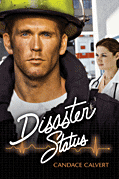
Disaster Status by Candace Calvert

It is time for a FIRST Wild Card Tour book review! If you wish to join the FIRST blog alliance, just click the button. We are a group of reviewers who tour Christian books. A Wild Card post includes a brief bio of the author and a full chapter from each book toured. The reason it is called a FIRST Wild Card Tour is that you never know if the book will be fiction, non~fiction, for young, or for old…or for somewhere in between! Enjoy your free peek into the book!

You never know when I might play a wild card on you!


Today’s Wild Card author is:


and the book:


Disaster Status (Book #2 in Mercy Hospital series)

Tyndale House Publishers, Inc. (March 4, 2010)

***Special thanks to Mavis Sanders of Tyndale House Publishers, Inc. for sending me a review copy.***

ABOUT THE AUTHOR:

Candace Calvert is an ER nurse who landed on the “other side of the stethoscope” after the equestrian accident that broke her neck and convinced her that love, laughter—and faith—are the very best medicines of all. The inspirational account of her accident and recovery appears in Chicken Soup for the Nurse’s Soul and launched her writing career. The author of a madcap cruise mystery series in the secular market, Candace now eagerly follows her heart to write Christian fiction for Tyndale House. Her new medical drama series, launched with Critical Care in 2009, offers readers a chance to “scrub in” on the exciting world of emergency medicine, along with charismatic characters, pulse-pounding action, tender romance, humor, suspense—and a soul-soothing prescription for hope. Born in northern California and the mother of two, Candace now lives in the Hill Country of Texas.

Visit the author’s website.

Product Details:

List Price: $12.99
Paperback: 352 pages
Publisher: Tyndale House Publishers, Inc. (March 4, 2010)
Language: English
ISBN-10: 1414325444
ISBN-13: 978-1414325446

AND NOW…THE FIRST CHAPTER:

Fire captain Scott McKenna bolted through the doors of Pacific Mercy ER, his boots thudding and heart pounding as the unconscious child began to stiffen and jerk in his arms. He cradled her close as her small spine arched and her head thumped over and over against his chest. “Need help here. Seizure!”


“This way.” A staff person beckoned. “The code room. Someone page respiratory therapy stat!”

Scott jogged behind a trio of staff in green scrubs to a glassed-in room, laid the child on a gurney, and stepped back, his breath escaping in a rush of relief. He swiped a trickle of sweat from his forehead and tried to catch a glimpse of the girl’s face. He’d swept her up too fast to get a good look at her. Now, with merciful distance, Scott’s heart tugged. Six or seven years old with long black braids, frilly clusters of hair ribbons, little hoop earrings, she looked disturbingly pale despite her olive skin. Her dark eyes rolled upward, unfocused, as the ER team closed in to suction her airway, start oxygen, and cut away her flowered top and pants.

The alarms of the cardiac monitor beeped as a technician attached gelled electrodes to her tiny chest. Thankfully, the seizure ended, although saliva—foamy as a salted garden snail—still bubbled from her parted lips.

Scott inhaled slowly, the air a sour mix of illness, germicidal soap, and anxious perspiration. He thought of his nephew, Cody, lying in a pediatrics bed two floors above.

The ER physician, a vaguely familiar woman, gestured to a nurse. “Get an IV and pull me some labs. I’ll need a quick glucose check and a rectal temp. Let’s keep lorazepam handy in case she starts up again. What’s her O2 saturation?”

“It’s 98 percent on the non-rebreather mask, Dr. Stathos.”

Leigh Stathos. Golden Gate Mercy Hospital. Scott nodded, recognizing her—and the irony. She left San Francisco. I’ve applied for a job there . . . and everywhere else.

“Good. Now let’s see if I can get a medic report.” Dr. Stathos whirled to face Scott, her expression indicating she was trying to place him as well. Her gaze flickered to his badge. “Oh yes. McKenna. Didn’t recognize you for a second there. So what’s the history? And where’s the rest of your crew? Are they sending you guys out solo now?”

“No. But no crew. And no report. I was here as a visitor, until some guy waved me down in the parking lot. I took one look at this girl and decided to scoop and run.” Scott nodded toward a woman crying near the doorway. “That could be family. They were in the truck with her.”

“Seizure history?”

“Don’t know. My Spanish isn’t the best. I think they said ‘sick’ and ‘vomiting,’ but—”

One of the nurses called out for the doctor. “She’s starting to twitch again. IV’s in, and the blood glucose is good at 84. No fever. How much lorazepam are you going to want? She weighs about 20 kilos.”

Dr. Stathos moved back to the gurney. “We’ll start with one milligram slowly. But let me get a look at her first, listen to her lungs, and check her eyes.” She looked up as a blonde nurse appeared in the doorway. “Yes, Sandy?”

“Sorry, Doctor. I couldn’t get much, but her name’s Ana Galvez. Six years old. No meds, no allergies, and no prior seizure history. I think. There’s a language barrier, and I don’t have an official interpreter yet. But thought you should know I’ve got a dozen more people signing in for triage, all with gastric complaints and headaches. The parking lot’s full of farm trucks, and—” She stopped as the child began a second full-blown seizure.

Two respiratory therapists rushed through the doorway.

Scott tensed. A dozen more patients? Then his Spanish was good enough to have understood one last thing the terrified family had said before he took off running with their child: “Hay muchos más enfermos”—There are many more sick people.

He glanced back at the child convulsing on the gurney. What was going on?

+++

Muscle it. Punch through it. Control it. Be bigger than the bag.

Erin Quinn’s fist connected in one last spectacular, round-winning right hook, slamming the vinyl speed bag against the adjacent wall. And causing a tsunami in her grandmother’s goldfish tank. Water sluiced over the side.

“Whoa! Hang on, buddy. I’ve got you.” She dropped to her knees, steadying the tank with her red leather gloves. Everything she’d done in the last six months was focused on keeping Iris Quinn safe, secure, and happy, and now she’d nearly KO’d the woman’s only pet.

Erin watched the bug-eyed goldfish’s attempts to ride out the wave action. She knew exactly how he felt. Her own situation was equally unsettling: thirty-one and living with her grandmother and a geriatric goldfish named Elmer Fudd in a five-hundred-square-foot beach house. With two mortgages and a stubborn case of shower mold. She caught a whiff of her latest futile bout with bleach and grimaced.

But moving back to Pacific Point was the best option for her widowed grandmother, emotionally as well as financially. Erin was convinced of that, even if her grandmother was still skeptical . . . and the rest of the family dead set against it. Regardless, Erin was determined to put the feisty spark back in Nana’s eyes, and she had found the change surprisingly good for herself as well. After last year’s frustrating heartaches, being back in a house filled with warm memories felt a lot like coming home. She needed that more than she’d known.

Erin tugged at a long strand of her coppery hair and smiled. The fact that her grandmother was down at the chamber of commerce to inquire about volunteer work was proof they were finally on the right track. Meanwhile, she had the entire day off from the hospital. March sunshine; capris instead of nursing scrubs; time to catch up with her online course work, jog on the beach, and dawdle at the fish market with her grandmother.

She turned at the sound of her cell phone’s Rocky theme ring tone, then struggled, teeth against laces, to remove a glove in time to answer.

She grabbed the phone and immediately wished she hadn’t. The caller display read Pacific Mercy ER. “Yes?”

“Ah, great. We caught you.”

“Not really,” Erin said, recognizing the relief charge nurse’s voice and glancing hopefully toward the door. “In fact, I was just heading out.”

“Dr. Stathos said she’s sorry, but she needs you here. Stat. We’ve got kind of a mess.”

Mess? Erin’s breath escaped like a punctured balloon. In the ER, a mess could mean anything. All of it bad. She’d heard the TV news reports of a single-engine plane crash early this morning, but the pilot had been pronounced dead on the scene, and there were no other victims. The hospital shouldn’t be affected. Then . . . “What’s going on?”

“Eighteen sick farm workers,” the nurse explained, raising her voice over a cacophony of background noise. “Maybe a few more now; they keep coming in. We’re running out of gurneys, even in the hallway.”

“Sick with what?” Erin asked. The sheer number of patients qualified as a multicasualty disaster, but only if it were a motor vehicle accident, an explosion, or a similar tragedy.

“Dr. Stathos isn’t sure. But she’s thinking maybe food poisoning. They’re all from the same ranch. Everyone’s vomiting, and—”

“It’s a real mess,” Erin finished, sighing. “I got that part. But how come the ambulances are bringing them all to us? Dispatch should be sending some to Monterey.”

“They’re not in ambulances. They’re arriving in work vehicles. A couple of guys were even sprawled out on a flatbed truck. They’re lucky no one rolled onto the highway. The police are at the ranch investigating, but meanwhile we’re overwhelmed. And of course the media got wind of it, so now we have reporters showing up. You know how aggressive they get. I’m sorry, but I feel like I’m in over my head with this whole thing.”

The nurse was new at taking charge, and Erin remembered how scary that felt when things went south in the ER. Monday shifts were usually fairly tame, but this sounded like . . . “Tell the nursing supervisor I’m on my way in and that we’ll probably need to go on disaster status and . . . Hold on a second, would you?” She yanked off her other glove and strode, phone to her ear, toward the miniscule closet she shared with her grandmother. “Close the clinic and use that for overflow. Get security down there to help control things, the chaplain too. And see if the fire department can spare us some manpower.”

Erin pulled a set of camouflage-print scrubs from a hanger, then began peeling off her bike shorts with one hand. “I’ll get there as soon as I can. Just need to take a quick shower and leave my grandmother a note.” And kiss my free day good-bye?

No, she wasn’t going to think that way. As a full-time charge nurse, the welfare of the ER staff was a huge priority. Besides, Leigh Stathos wouldn’t haul her in on her day off if it weren’t important. Erin had dealt with far worse things. Like that explosion at the day care center near Sierra Mercy Hospital last year. In comparison, food poisoning wasn’t such a big deal, even two dozen cases. Messy, yes. Life-altering, no. Central service would find more basins, she’d help start a few IVs, they’d give nausea meds and plenty of TLC, and they’d get it all under control.

“No problemo,” she murmured as she hung up, then realized the inarticulate phrase was pretty much the extent of her Spanish. She made a mental note to be sure they had enough interpreters. Interpreters, basins, more manpower, and a full measure of TLC to patients—and her staff. That should do it.

Ten minutes later she snagged an apple for the road, wrote Nana a note, and stowed her boxing gloves on the rack beneath the TV. She wouldn’t need battle gear for this extra stint in the ER. And then she’d be back home. In a couple of hours, tops.

+++

When Erin turned in to the hospital parking lot, she realized she’d forgotten her name badge. Good thing security knew her. Her eyes widened as she approached the ambulance entrance. She braked to a stop, her mouth dropping open as she surveyed the scene at the emergency department’s back doors: four dusty and battered trucks—one indeed a flatbed—at least three news vans, a fire truck, an ambulance, and several police cars. She quickly put the Subaru in park, then opened her door and squinted up at the sky. Oh, c’mon, was that a helicopter? A plane crash wasn’t big enough news today?

Several nurses stood outside the doors holding clipboards and dispensing yellow plastic emesis basins to a restless line of a least a dozen patients in long sleeves, heavy trousers, and work boots. Including one elderly man who seemed unsteady on his feet as he mopped his forehead with a faded bandanna. A young uniformed firefighter paramedic, the husband of their ER triage nurse, was also helping out. Good, Erin’s request for extra manpower had been accepted.

Reporters in crisp khakis and well-cut jackets leaned across what appeared to be a hastily erected rope-and-sawhorse barricade. It was manned by a firefighter in a smoke-stained turnout jacket with the broadest shoulders she’d ever seen. And an expression as stony as Rushmore.

Erin locked the car, grabbed her tote bag, and jogged into the wind toward the barricade, trying to place the daunting firefighter. Tall, with close-cropped blond hair, a sturdy jaw, and a rugged profile. He turned, arms crossed, to talk with someone across the barricade, so she couldn’t see all of his face. But he wasn’t a full-time medic; she knew them all. An engine company volunteer? Maybe, but she hadn’t met him. She was sure of that. Because, even from what little she’d seen, this man would have been memorable. Her face warmed ridiculously as she slowed to a walk.

But her growing curiosity about his identity was a moot point. There wasn’t time for that now. She needed to slip between those sawhorses, hustle into the ER, touch base with the relief charge nurse, brainstorm with Leigh Stathos, and see what she could do to help straighten out this mess.

Erin stopped short as the big firefighter turned abruptly, blocking her way. “Excuse me,” she said, sweeping wind-tossed hair from her face as she peered up at him. Gray. His eyes were granite gray. “I need to get past you. Thanks. Appreciate it.” She attempted to squeeze by him, catching a faint whiff of citrusy cologne . . . mixed with smoke.

“Don’t thank me. And stop right where you are.” He stepped in front of her, halting her in her tracks. There was the slightest twitch at the corner of his mouth. Not a smile. He crossed his arms again. “No one can come through here. Those are the rules. And I go by the book. Sorry.”

By the book? As if she didn’t have policies to follow? Erin forced herself to take a deep breath. Lord, show me the humor in this. Called to work on her day off and then denied access. It was funny if you thought about it. She tried to smile and managed a pinched grimace. This was about as funny as the mold in her shower. She met his gaze, noticing that he had a small scar just below his lower lip. Probably from somebody’s fist.

“I work here, Captain . . . McKenna,” Erin explained, reading the name stenciled on his jacket. “In fact—” she patted the left breast pocket of her scrubs, then remembered her missing name badge—“I’m the day-shift charge nurse. But I forgot my badge.”

“I see,” he said, uncrossing his arms. He pointed toward the trio of reporters leaning over the barricade. “See that reporter over there—the tall woman with the microphone and bag of Doritos? Ten minutes ago she pulled a white coat out of one of those news vans and tried to tell me she was a doctor on her way to an emergency delivery. Premature twins.”

“But that’s unbelievable. That’s—”

“Exactly why I’m standing here,” the captain interrupted. “So without hospital ID or someone to corroborate, I can’t let you in.”

Her jaw tightened, and she glanced toward the ER doors. “One of your paramedics is back there somewhere; Chuck knows me. He’s married to my triage nurse. Find him and ask him.”

McKenna shook his head. “Can’t leave this spot.”

“Then call.” Erin pointed to the cell phone on his belt. “Better yet, ask for Dr. Leigh Stathos. Tell her I’m here. She’ll verify my identity. The number is—”

“I’ve got it,” he said, lifting his phone and watching her intently as he made an inquiry. He gave a short laugh. “Yes. A redhead in what looks like Army fatigues . . . Ah, let’s see . . . green eyes. And about—” his gaze moved discreetly over her—“maybe five foot nine?”

Erin narrowed her eyes. What was this, a lineup?

The captain lowered the phone. “Your name?”

“Erin Quinn,” she said, feeling like she should extend her hand or something. She resisted the impulse.

“Hmm. Yes,” he said into the phone. “I see. Okay, then.” He cleared his throat and disconnected the call.

She looked at him. “Did you get what you needed?”

“Well,” he said, reaching down to detach the rope from a sawhorse, “it seems you’re who you say you are. And that I shouldn’t expect a commendation for detaining you. Apparently it’s because of your request that I’m here. Not that I wanted to be. I still have men out on the plane crash, but . . .” He hesitated and then flashed the barest of smiles. Though fleeting, it transformed his face from Rushmore cold to almost human. “Go on inside, Erin Quinn. You’re late.” His expression returned to chiseled stone. “And for what it’s worth, I’m sorry. But that’s the way this has to work.”

“No problemo.” Erin hitched her tote bag over her shoulder and stepped through the barricade. Then she turned back. “What’s your first name, McKenna?”

“Scott.”

She extended her hand and was surprised by the warmth of his. “Well, then. Good job, Scott. But going by the book isn’t always the bottom line. Try to develop a little trust, will you? We’re all on the same team.”

Twenty minutes later, Erin finished checking on her staff and rejoined Leigh Stathos in the code room. They both looked up as the housekeeping tech arrived at the doorway.

“You wanted these?” Sarge asked.

“Yes. Great. Thank you.” Erin nodded at the tall, fortysomething man wearing tan scrubs, his brown hair pulled back into a short ponytail and arms full of plastic emesis basins. “Put those in the utility room, would you? And I think we could use some extra sheets and gowns too. If you don’t mind.”

His intense eyes met hers for an instant before glancing down. “Yes, ma’am, double time.”

Erin smiled at Sarge’s familiar and somber half salute, then watched him march away, his powerful frame moving in an awkward hitch to accommodate his artificial leg. She returned her attention to Leigh and the dark-eyed child on the gurney beside them. The ventilator, overriding her natural breathing, whooshed at regular intervals, filling the girl’s lungs. “She had two seizures but none before today?”

“Looks that way.” The ER physician, her long mahogany hair swept back loosely into a clip, reached down and lifted the sheet covering the child. “But see how her muscles are still twitchy? And her pupils are constricted. I’ll be honest: I don’t like this. The only thing I know for sure is that the X-ray shows an aspiration pneumonia. Probably choked while vomiting on the truck ride in. I’ve started antibiotics. Art’s coming in,” she added, referring to the on-call pediatrician. “And I paged the public health officer.”

“Good.” Erin’s brows scrunched. It was puzzling; an hour after arrival, Ana Galvez remained unresponsive, her skin glistening with perspiration. Though Leigh had inserted an endotracheal tube and the child was suctioned frequently, she was still producing large amounts of saliva. Her heart rate, barely 70, was surprisingly slow for her age. She’d had several episodes of diarrhea. Poor kid. What happened to you?

Erin glanced toward the main room of the ER, grateful things appeared to be settling down out there. “I still don’t get this, though. Ana came from home? Not the ranch where everybody got sick?”

“Yes, but—” Leigh fiddled with the stethoscope draped across the shoulders of her steel gray scrub top—“she’d been there earlier. Felt sick after lunch and her father took her home.”

“So that goes right back to the food. But salmonella takes time. Still, the symptoms fit. Triage says most of the patients are complaining of headache, nausea, cramps, and diarrhea.” Erin checked the monitor: heart rate 58. Why so slow? “What did they eat?”

Leigh sighed. “Sack lunches. Every one different. That doesn’t fit at all. I wanted it to be huge tubs of chicken stew that everyone shared. That would make sense. But Sandy’s seen twenty-six patients in triage now, and the story from everybody sounds the same: picking strawberries since 6 a.m., lunch together around eleven, and—”

“I’m sorry to interrupt, but something’s . . . wrong.” Erin and Leigh turned at the sound of the triage nurse’s voice at the doorway.

Erin’s eyes widened. The triage nurse looked awful—pale, sweaty, teary-eyed. Sandy was holding her hand to her head, trembling. What happened?

Before she could ask, Sandy’s eyelids fluttered and her knees gave way.

MY REVIEW:

Disaster Status is a riveting and realistic drama that brings the world of the ER to life on its pages. Charge nurse Erin Quinn and firefighter Scott McKenna’s first encounter during a disaster response got them started off on the wrong foot. As they continue to work together, they fight their mutual attraction but find themselves drawn irresistibly closer. Each of them have personal issues with trust and commitment that are caused by unresolved family conflict and feelings of guilt. Will they be able to forgive themselves and others? Can they learn to trust God again? What about the possibility of a future together? These and other questions can be answered by picking up a copy of Disaster Status for yourself.

The Y Factor by Liam Roberts

MY REVIEW:

Although The Y Factor doesn’t fall within my usual preferred genre, once I got into it I found it to be a riveting page turner. This book has enough action, suspense and intrigue to keep most men interested but also contains a sweet romance that should appeal to female readers.

Mr. Roberts apparently has researched his subject matter well and does an excellent job of presenting it. He has vividly portrayed  radical Muslims and Al Quaeda,  their hate filled agenda and their relentless pursuit to implement it. His descriptions of the Genographic Project, secret code, technology, and Special Forces suggest a familiarity with these subjects as well.

The Y Factor centers around Eric and Alana who become caught up in an international web of danger and intrigue as they seek to find their missing friend. Yet even as they find themselves in the most threatening situations, they realize that they must rely on the Lord to see them through.

I would definitely recommend The Y Factor to anyone who enjoys a gripping suspense novel. And those who usually do not read this type book might find themselves surprised and like it.

ABOUT THE BOOK:

Y-FactorMedical AND political thriller? You bet! Liam Roberts is a debut novelist with characters who are bent on unraveling the genetic code…and applying it to the simmering situation between Christians and Muslims.

National Geographic’s Genographic Project is mapping hundreds of thousands of DNA samples to develop a comprehensive family tree of the human race. Computer scientist Eric Colburn and geneticist Alonna McKinsey join the project and continue their college romance, but find the stress of workplace conflict and business travel test the limits of their relationship. Eric stumbles on a plot by a brilliant Muslim scientist, Dr. Alomari, who has co-opted the Genographic project.

Before Eric is able to produce the proof, he is targeted by al Qaeda assassins in a series of devastating attacks. A Mossad agent uncovers the explosive plot: Alomari plans to inflame the Muslim faithful with genetic proof that will vindicate Ishmael as the rightful heir of the Abrahamic covenant. Armed with this knowledge, Alomari vows to unify the fractured Muslim kingdoms into a mighty Islamic empire that will finally drive the Jews into the sea.

It’s a race against time as Alana becomes a target in an attempt to silence Eric. When she disappears in the slums of Karãchi, Pakistan, Eric resolutely embraces the role of reluctant hero and is determined to rescue the woman he loves. Eric succeeds and they desperately elude the relentless terrorists, but their options begin to diminish. Their hope of staying hidden begins to fade as Alana relays an urgent plea to her brother, an officer with the Navy SEALs.

Will the SEALs risk a daring rescue from a Islamic nuclear power – a tenuous ally in the war on terror? Will Eric and Alana live to reveal the explosive truth? The Y Factor will keep you engaged as these subplots come to a breathtaking climax.


ABOUT THE AUTHOR:

Liam BlankedFirst, let’s be real…Liam Roberts isn’t his true name

When your sons are engaged in the very real war in the Middle East and they tell you to keep a low profile, slapping your true name on the cover of a novel about Middle Eastern tensions isn’t the smartest course to take. But what is a writer to do when he has a story that must be told? An idea that refuses to die, that will engage readers and do what great stories do…make them re-visit their opinions?You invent a pen name. Something like, oh, Liam Roberts.


Roberts knows the technology and unrest of which he writes. A computer whiz by day, he has close family members fighting in the very region in which his story is set. His love of technology led to the question: what if technology allowed us to know something that would significantly impact the situation in the Middle East?

To learn more visit Liam’s blog.

Thanks to Rebeca Seitz of Glass Road Public Relations for my review copy of The Y Factor.