Tuck by Stephen Lawhead

It is time for a FIRST Wild Card Tour book review! If you wish to join the FIRST blog alliance, just click the button. We are a group of reviewers who tour Christian books. A Wild Card post includes a brief bio of the author and a full chapter from each book toured. The reason it is called a FIRST Wild Card Tour is that you never know if the book will be fiction, non~fiction, for young, or for old…or for somewhere in between! Enjoy your free peek into the book!
You never know when I might play a wild card on you!

Today’s Wild Card author is:

and the book:

Tuck

Thomas Nelson (February 17, 2009)

ABOUT THE AUTHOR:
Stephen R. Lawhead is an internationally acclaimed author of mythic history and imaginative fiction. His works include Byzantium, Patrick, and the series The Pendragon Cycle, The Celtic Crusades, and The Song of Albion.

Stephen was born in 1950, in Nebraska in the USA. Most of his early life was spent in America where he earned a university degree in Fine Arts and attended theological college for two years. His first professional writing was done at Campus Life magazine in Chicago, where he was an editor and staff writer. During his five years at Campus Life he wrote hundreds of articles and several non-fiction books.
After a brief foray into the music business—as president of his own record company—he began full-time freelance writing in 1981. He moved to England in order to research Celtic legend and history. His first novel, In the Hall of the Dragon King, became the first in a series of three books (The Dragon King Trilogy) and was followed by the two-volume Empyrion saga, Dream Thief and then the Pendragon Cycle, now in five volumes: Taliesin, Merlin, Arthur, Pendragon, and Grail. This was followed by the award-winning Song of Albion series which consists of The Paradise War, The Silver Hand, and The Endless Knot.

He has written nine children’s books, many of them originally offered to his two sons, Drake and Ross. He is married to Alice Slaikeu Lawhead, also a writer, with whom he has collaborated on some books and articles. They make their home in Oxford, England.
Stephen’s non-fiction, fiction and children’s titles have been published in twenty-one foreign languages. All of his novels have remained continuously in print in the United States and Britain since they were first published. He has won numereous industry awards for his novels and children’s books, and in 2003 was awarded an Honorary Doctorate of Humane Letters by the University of Nebraska.
Visit the author’s website.
Product Details:

List Price: $26.99
Hardcover: 464 pages
Publisher: Thomas Nelson (February 17, 2009)
Language: English
ISBN-10: 1595540873
ISBN-13: 978-1595540874
AND NOW…THE FIRST CHAPTER:

Prologue

Wintan Cestre
Saint Swithun’s Day

King William stood scratching the back of his hand and watched as another bag of gold was emptied into the ironclad chest: one hundred solid gold byzants that, added to fifty pounds in silver and another fifty in letters of promise to be paid upon collection of his tribute from Normandie, brought the total to five hundred marks. “More money than God,” muttered William under his breath. “What do they do with it all?”
“Sire?” asked one of the clerks of the justiciar’s office, glancing up from the wax tablet on which he kept a running tally.

“Nothing,” grumbled the king. Parting with money always made him itch, and this time there was no relief. In vain, he scratched the other hand. “Are we finished here?”

Having counted the money, the clerks began locking and sealing the strongbox. The king shook his head at the sight of all that gold and silver disappearing from sight. These blasted monks will bleed me dry, he thought. A kingdom was a voracious beast that devoured money and was never, ever satisfied. It took money for soldiers, money for horses and weapons, money for fortresses, money for supplies to feed the troops, and as now, even more money to wipe away the sins of war. The gold and silver in the chest was for the abbey at Wintan Cestre to pay the monks so that his father would not have to spend eternity in purgatory or, worse, frying in hell.

“All is in order, Majesty,” said the clerk. “Shall we proceed?”

William gave a curt nod.

Two knights of the king’s bodyguard stepped forward, took up the box, and carried it from the room and out into the yard where the monks of Saint Swithun’s were already gathered and waiting for the ceremony to begin. The king, a most reluctant participant, followed.

In the yard of the Red Palace—the name given to the king’s sprawling lodge outside the city walls—a silken canopy on silver poles had been erected. Beneath the canopy stood Bishop Walkelin with his hands pressed together in an attitude of patient prayer. Behind the bishop stood a monk bearing the gilded cross of their namesake saint, while all around them knelt monks and acolytes chanting psalms and hymns. The king and his attendants—his two favourite earls, a canon, and a bevy of assorted clerks, scribes, courtiers, and officials both sacred and secular—marched out to meet the bishop. The company paused while the king’s chair was brought and set up beneath the canopy where Bishop Walkelin knelt.

“In the Holy Name,” intoned the bishop when William Rufus had taken his place in the chair, “all blessing and honour be upon you and upon your house and upon your descendants and upon the people of your realm.”

“Yes, yes, of course,” said William irritably. “Get on with it.”

“God save you, Sire,” replied Walkelin. “On this Holy Day we have come to receive the Beneficium Ecclesiasticus Sanctus Swithinius as is our right under the Grant of Privilege created and bestowed by your father King William, for the establishment and maintenance of an office of penitence, perpetual prayer, and the pardon of sins.”

“So you say,” remarked the king.

Bishop Walkelin bowed again, and summoned two of his monks to receive the heavy strongbox from the king’s men in what had become an annual event of increasing ceremony in honour of Saint Swithun, on whose day the monks determined to suck the lifeblood from the crown, and William Rufus resented it. But what could he do? The payment was for the prayers of the monks for the remission of sins on the part of William Conqueror, prayers which brought about the much-needed cleansing of his besmirched soul. For each and every man that William had killed in battle, the king could expect to spend a specified amount of time in purgatory: eleven years for a lord or knight, seven years for a man-at-arms, five for a commoner, and one for a serf. By means of some obscure and complicated formula William had never understood, the monks determined a monetary amount which somehow accorded to the number of days a monk spent on his knees praying. As William had been a very great war leader, his purgatorial obligation amounted to well over a thousand years—and that was only counting the fatalities of the landed nobility. No one knew the number of commoners and serfs he had killed, either directly or indirectly, in his lifetime—but the number was thought to be quite high. Still, a wealthy king with dutiful heirs need not actually spend so much time in purgatory—so long as there were monks willing to ease the burden of his debt through prayer. All it took was money.

Thus, the Benefice of Saint Swithun, necessary though it might be, was a burden the Conqueror’s son had grown to loathe with a passion. That he himself would have need of this selfsame service was a fact that he could neither deny, nor escape. And while he told himself that paying monks to pray souls from hell was a luxury he could ill afford, deep in his heart of hearts he knew only too well that—owing to the debauched life he led—it was also a necessity he could ill afford to neglect much longer.

Even so, paying over good silver for the ongoing service of a passel of mumbling clerics rubbed Rufus raw—especially as that silver became each year more difficult to find. His taxes already crushed the poor and had caused at least two riots and a rebellion by his noblemen. Little wonder, then, that the forever needy king dreaded the annual approach of Saint Swithun’s day and the parting with so much of his precious treasury.

The ceremony rumbled on to its conclusion and, following an especially long-winded prayer, adjourned to a feast in honour of the worthy saint. The feast was the sole redeeming feature of the entire day. That it must be spent in the company of churchmen dampened William’s enthusiasm somewhat, but did not destroy it altogether. The Red King had surrounded himself with enough of his willing courtiers and sycophants to ensure a rousing good time no matter how many disapproving monks he fed at his table.

This year, the revel reached such a height of dissipation that Bishop Walkelin quailed and excused himself, claiming that he had pressing business that required his attention back at the cathedral. William, forcing himself to be gracious, wished the churchmen well and offered to send a company of soldiers to accompany the monks back to the abbey with their money lest they fall among thieves.

Walkelin agreed to the proposal and, as he bestowed his blessing, leaned close to the king and said, “We must talk one day soon about establishing a benefice of your own, Your Majesty.” He paused and then, like the flick of a knife, warned, “Death comes for us all, and none of us knows the day or time. I would be remiss if I did not offer to draw up a grant for you.”

“We will discuss that,” said William, “when the price is seen to fall rather than forever rise.”

“You will have heard it said,” replied Walkelin, “that where great sin abounds, great mercy must intercede. The continual observance and maintenance of that intercession is very expensive, my lord king,”

“So is the keeping of a bishop,” answered William tartly. “And bishops have been known to lose their bishoprics.” He paused, regarding the cleric over the rim of his cup. “Heaven forbid that should happen. I know I would be heartily sorry to see you go, Walkelin.”

“If my lord is displeased with his servant,” began the bishop, “he has only to—”

“Something to consider, eh?”

Bishop Walkelin tried to adopt a philosophical air. “I am reminded that your father always—”

“No need to speak of it any more just now,” said William smoothly. “Only think about what I have said.”

“You may be sure,” answered Walkelin. He bowed stiffly and took a slow step backwards. “Your servant, my lord.”

The clerics departed, leaving the king and his courtiers to their revel. But the feast was ruined for William. Try as he might, he could not work himself into a festive humour because the bishop’s rat of a thought had begun to gnaw at the back of his mind: his time was running out. To die without arranging for the necessary prayers would doom his soul to the lake of everlasting fire. However loudly he might rail against the expense—and condemn the greedy clerics who held his future for ransom—was he really prepared to test the alternative at the forfeit of his soul?

Part I

Come listen a while, you gentlefolk alle,
That stand this bower within,
A tale of noble Rhiban the Hud,
I purpose now to begin.

Young Rhiban was a princeling fayre,
And a gladsome heart had he.
Delight took he in games and tricks,
And guiling his fair ladye.

A bonny fine maide of noble degree,
Mérian calléd by name,
This beauty soote was praised of alle men
For she was a gallant dame.
Rhiban stole through the greenwoode one night
To kiss his dear Mérian late.
But she boxed his head till his nose turn’d red
And order’d him home full straight.

Though Rhiban indeed speeded home fayrlie rathe,
That night he did not see his bed.
For in flames of fire from the rooftops’ eaves,
He saw all his kinsmen lay dead.

Ay, the sheriff’s low men had visited there,
When the household was slumbering deepe.
And from room to room they had quietly crept
And murtheréd them all in their sleepe.

Rhiban cried out ‘wey-la-wey!’
But those fiends still lingered close by.
So into the greenwoode he quickly slipt,
For they had heard his cry.

Rhiban gave the hunters goode sport,
Full lange, a swift chase he led.
But a spearman threw his shot full well
And he fell as one that is dead.

1

Tuck shook the dust of Caer Wintan off his feet and prepared for the long walk back to the forest. It was a fine, warm day, and all too soon the friar was sweltering in his heavy robe. He paused now and then to wipe the sweat from his face, falling farther and farther behind his travelling companions. “These legs of mine are sturdy stumps,” he sighed to himself, “but fast they en’t.”

He had just stopped to catch his breath a little when, on sudden impulse, he spun around quickly and caught a glimpse of movement on the road behind—a blur in the shimmering distance, and then gone. So quick he might have imagined it. Only it was not the first time since leaving the Royal Lodge that Tuck had entertained the queer feeling that someone or something was following them. He had it again now, and decided to alert the others and let them make of it what they would.

Squinting into the distance, he saw Bran far ahead of the Grellon, striding steadily, shoulders hunched against the sun and the gross injustice so lately suffered at the hands of the king in whom he had trusted. The main body of travellers, unable to keep up with their lord, was becoming an ever-lengthening line as heat and distance mounted. They trudged along in small clumps of two or three, heads down, talking in low, sombre voices. How like sheep, thought Tuck, following their impetuous and headstrong shepherd.

A more melancholy man might himself have succumbed to the oppressive gloom hanging low over the Cymry, dragging at their feet, pressing their spirits low. Though summer still blazed in meadow, field, and flower, it seemed to Tuck that they all walked in winter’s drear and dismal shadows. Rhi Bran and his Grellon had marched into Caer Wintan full of hope—they had come singing, had they not?—eager to stand before King William to receive the judgement and reward that had been promised in Rouen all those months ago. Now, here they were, slinking back to the greenwood in doleful silence, mourning the bright hope that had been crushed and lost.

No, not lost. They would never let it out of their grasp, not for an instant. It had been stolen—snatched away by the same hand that had offered it in the first place: the grasping, deceitful hand of a most perfidious king.

Tuck felt no less wounded than the next man, but when he considered how Bran and the others had risked their lives to bring Red William word of the conspiracy against him, it fair made his priestly blood boil. The king had promised justice. The Grellon had every right to expect that Elfael’s lawful king would be restored. Instead, William had merely banished Baron de Braose and his milksop nephew Count Falkes, sending them back to France to live in luxury on the baron’s extensive estates. Elfael, that small bone of contention, had instead become property of the crown and placed under the protection of Abbot Hugo and Sheriff de Glanville. Well, that was putting wolves in charge of the fold, was it not?

Where was the justice? A throne for a throne, Bran had declared that day in Rouen. William’s had been saved—at considerable cost and risk to the Cymry—but where was Bran’s throne?

S’truth, thought Tuck, wait upon a Norman to do the right thing and you’ll be waiting until your hair grows white and your teeth fall out.

“How long, O Lord? How long must your servants suffer?” he muttered. “And, Lord, does it have to be so blasted hot?”

He paused to wipe the sweat from his face. Running a hand over his round Saxon head, he felt the sun’s fiery heat on the bare spot of his tonsure; sweat ran in rivulets down the sides of his neck and dripped from his jowls. Drawing a deep breath, he tightened his belt, hitched up the skirts of his robe, and started off again with quickened steps. Soon his shoes were slapping up the dust around his ankles and he began to overtake the rearmost members of the group: thirty souls in all, women and children included, for Bran had determined that his entire forest clan—save for those left behind to guard the settlement and a few others for whom the long journey on foot would have been far too arduous—should be seen by the king to share in the glad day.

The friar picked up his pace and soon drew even with Siarles: slim as a willow wand, but hard and knotty as an old hickory root. The forester walked with his eyes downcast, chin outthrust, his mouth a tight, grim line. Every line of him bristled with fury like a riled porcupine. Tuck knew to leave well enough alone and hurried on without speaking.

Next, he passed Will Scatlocke—or Scarlet, as he preferred. The craggy forester limped along slightly as he carried his newly acquired daughter, Nia. Against every expectation, Will had endured a spear wound, the abbot’s prison, and the threat of the sheriff’s rope . . . and survived. His pretty dark-eyed wife, Noín, walked resolutely beside him. The pair had made a good match, and it tore at his heart that the newly married couple should have to endure a dark hovel in the forest when the entire realm begged for just such a family to settle and sink solid roots deep into the land—another small outrage to be added to the ever-growing mountain of injustices weighing on Elfael.

A few more steps brought him up even with Odo, the Norman monk who had befriended Will Scarlet in prison. At Scarlet’s bidding, the young scribe had abandoned Abbot Hugo to join them. Odo walked with his head down, his whole body drooping—whether with heat or the awful realization of what he had done, Tuck could not tell.

A few steps more and he came up even with Iwan—the great, hulking warrior would crawl on hands and knees through fire for his lord. It was from Iwan that the friar had received his current christening when the effort of wrapping his untrained tongue around the simple Saxon name Aethelfrith proved beyond him. “Fat little bag of vittles that he is, I will call him Tuck,” the champion had said. “Friar Tuck to you, boyo,” the priest had responded, and the name had stuck. God bless you, Little John, thought Tuck, and keep your arm strong, and your heart stronger.

Next to Iwan strode Mérian, just as fierce in her devotion to Bran as the champion beside her. Oh, but shrewd with it; she was smarter than the others and more cunning—which always came as something of a shock to anyone who did not know better, because one rarely expected it from a lady so fair of face and form. But the impression of innocence beguiled. In the time Tuck had come to know her, she had shown herself to be every inch as canny and capable as any monarch who ever claimed an English crown.

Mérian held lightly to the bridle strap of the horse that carried their wise hudolion, who was, so far as Tuck could tell, surely the last Banfáith of Britain: Angharad, ancient and ageless. There was no telling how old she was, yet despite her age, whatever it might be, she sat her saddle smartly and with the ease of a practiced rider. Her quick dark eyes were trained on the road ahead, but Tuck could tell that her sight was turned inward, her mind wrapped in a veil of deepest thought. Her wrinkled face might have been carved of dark Welsh slate for all it revealed of her contemplations.

Mérian glanced around as the priest passed, and called out, but the friar had Bran in his eye, and he hurried on until he was within hailing distance. “My lord, wait!” he shouted. “I must speak to you!”

Bran gave no sign that he had heard. He strode on, eyes fixed on the road and distance ahead.

“For the love of Jesu, Bran. Wait for me!”

Bran took two more steps and then halted abruptly. He straightened and turned, his face a smouldering scowl, dark eyes darker still under lowered brows. His shock of black hair seemed to rise in feathered spikes.

“Thank the Good Lord,” gasped the friar, scrambling up the dry, rutted track. “I thought I’d never catch you. We . . . there is something . . .” He gulped down air, wiped his face, and shook the sweat from his hand into the dust of the road.

“Well?” demanded Bran impatiently.

“I think we must get off this road,” Tuck said, dabbing at his face with the sleeve of his robe. “Truly, as I think on it now, I like not the look that Abbot Hugo gave me when we left the king’s yard. I fear he may try something nasty.”

Bran lifted his chin. The jagged scar on his cheek, livid now, twisted his lip into a sneer. “Within sight of the king’s house?” he scoffed, his voice tight. “He wouldn’t dare.”

“Would he not?”

“Dare what?” said Iwan, striding up. Siarles came toiling along in the big man’s wake.

“Our friar here,” replied Bran, “thinks we should abandon the road. He thinks Abbot Hugo is bent on making trouble.”

Iwan glanced back the way they had come. “Oh, aye,” agreed Iwan, “that would be his way.” To Tuck, he said, “Have you seen anything?”

“What’s this then?” inquired Siarles as he joined the group. “Why have you stopped?”

“Tuck thinks the abbot is on our tail,” Iwan explained.

“I maybe saw something back there, and not for the first time,” Tuck explained. “I don’t say it for a certainty, but I think someone is following us.”

“It makes sense.” Siarles looked to the frowning Bran. “What do you reckon?”

“I reckon I am surrounded by a covey of quail frightened of their own shadows,” Bran replied. “We move on.”

He turned to go, but Iwan spoke up. “My lord, look around you. There is little enough cover hereabouts. If we were to be taken by surprise, the slaughter would be over before we could put shaft to string.”

Mérian joined them then, having heard a little of what had passed. “The little ones are growing weary,” she pointed out. “They cannot continue on this way much longer without rest and water. We will have to stop soon in any event. Why not do as Tuck suggests and leave the road now—just to be safe?”

“So be it,” he said, relenting at last. He glanced around and then pointed to a grove of oak and beech rising atop the next hill up the road. “We will make for that wood. Iwan—you and Siarles pass the word along, then take up the rear guard.” He turned to Tuck and said, “You and Mérian stay here and keep everyone moving. Tell them they can rest as soon as they reach the grove, but not before.”

He turned on his heel and started off again. Iwan stood looking after his lord and friend. “It’s the vile king’s treachery,” he observed. “That’s put the black dog on his back, no mistake.”

Siarles, as always, took a different tone. “That’s as may be, but there’s no need to bite off our heads. We en’t the ones who cheated him out of his throne.” He paused and spat. “Stupid bloody king.”

“And stupid bloody cardinal, all high and mighty,” continued Iwan. “Priest of the church, my arse. Give me a good sharp blade and I’d soon have him saying prayers he never said before.” He cast a hasty glance at Tuck. “Sorry, Friar.”

“I’d do the same,” Tuck said. “Now, off you go. If I am right, we must get these people to safety, and that fast.”

The two ran back down the line, urging everyone to make haste for the wood on the next hill. “Follow Bran!” they shouted. “Pick up your feet. We are in danger here. Hurry!”

“There is safety in the wood,” Mérian assured them as they passed, and Tuck did likewise. “Follow Bran. He’ll lead you to shelter.”

It took a little time for the urgency of their cries to sink in, but soon the forest-dwellers were moving at a quicker pace up to the wood at the top of the next rise. The first to arrive found Bran waiting at the edge of the grove beneath a large oak tree, his strung bow across his shoulder.

“Keep moving,” he told them. “You’ll find a hollow just beyond that fallen tree.” He pointed through the wood. “Hide yourselves and wait for the others there.”

The first travellers had reached the shelter of the trees, and Tuck was urging another group to speed and showing them where to go when he heard someone shouting up from the valley. He could not make out the words, but as he gazed around the sound came again and he saw Iwan furiously gesturing towards the far hilltop. He looked where the big man was pointing and saw two mounted knights poised on the crest of the hill.

The soldiers were watching the fleeing procession and, for the moment, seemed content to observe. Then one of the knights wheeled his mount and disappeared back down the far side of the hill.

Bran had seen it too, and began shouting. “Run!” he cried, racing down the road. “To the grove!” he told Mérian and Tuck. “The Ffreinc are going to attack!”

He flew to meet Iwan and Siarles at the bottom of the hill.

“I’d best go see if I can help,” Tuck said, and leaving Mérian to hurry the people along, he fell into step behind Bran.

“Just the two of them?” Bran asked as he came running to meet Siarles and Iwan.

“So far,” replied the champion. “No doubt the one’s gone to alert the rest. Siarles and I will take a stand here,” he said, bending the long ashwood bow to string it. “That will give you and Tuck time to get the rest of the folk safely hidden in the woods.”

Bran shook his head. “It may come to that one day, but not today.” His tone allowed no dissent. “We have a little time yet. Get everyone into the wood—carry them if you have to. We’ll dig ourselves into the grove and make Gysburne and his hounds come in after us.”

“I make it six bows against thirty knights,” Siarles pointed out. “Good odds, that.”

Bran gave a quick jerk of his chin. “Good as any,” he agreed. “Fetch along the stragglers and follow me.”

Iwan and Siarles darted away and were soon rushing the last of the lagging Grellon up the hill to the grove. “What do you want me to do?” Tuck shouted.

“Pray,” answered Bran, pulling an arrow from the sheaf at his belt and fitting it to the string. “Pray God our aim is true and each arrow finds its mark.”

Bran moved off, calling for the straggling Grellon to find shelter in the wood. Tuck watched him go. Pray? he thought. Aye, to be sure—the Good Lord will hear from me. But I will do more, will I not? Then he scuttled up the hill and into the wood in search of a good stout stick to break some heads.


Spring of Candy Apples by Debbie Viguié

It is time for a FIRST Wild Card Tour book review! If you wish to join the FIRST blog alliance, just click the button. We are a group of reviewers who tour Christian books. A Wild Card post includes a brief bio of the author and a full chapter from each book toured. The reason it is called a FIRST Wild Card Tour is that you never know if the book will be fiction, non~fiction, for young, or for old…or for somewhere in between! Enjoy your free peek into the book!

You never know when I might play a wild card on you!

Today’s Wild Card author is:

and the book:

Spring of Candy Apples (A Sweet Seasons Novel)

Zondervan (February 1, 2009)

ABOUT THE AUTHOR:

Debbie Viguié has been writing for most of her life. She has experimented with poetry and nonfiction, but her true passion lies in writing novels.

She obtained her Bachelor of Arts degree in Creative Writing from UC Davis. While at Davis she met her husband, Scott, at auditions for a play. It was love at first sight.

Debbie and Scott now live on the island of Kauai. When Debbie is not writing and Scott has time off they love to indulge their passion for theme parks.

The Sweet Seasons Novels:

The Summer of Cotton Candy
The Fall of Candy Corn
The Winter of Candy Canes
The Spring of Candy Apples

Visit the author’s website.

Product Details:

List Price: $9.99
Reading level: Young Adult
Paperback: 208 pages
Publisher: Zondervan (February 1, 2009)
Language: English
ISBN-10: 0310717531
ISBN-13: 978-0310717539
AND NOW…THE FIRST CHAPTER:

Once again Candace found herself seated across from a Zone executive. Only this time it wasn’t Lloyd Peterson, the hiring manager; it was John Hanson, owner of the theme park. She tried hard not to squirm in her seat. He was smiling and friendly, but there was so much more at stake this time than a part-time job.

“So, Candace, as one of the five finalists for The Zone Game Master Scholarship, you must be pretty excited,” he said.

Excited. Bewildered. Nervous. So many to choose from. Excited because the winner got a full scholarship to a college in Florida. Bewildered because she still couldn’t believe her Balloon Races doodle could be taken seriously by anyone. Nervous because she didn’t want to blow it.

She’d finally forgiven her friend Josh for secretly entering her in the competition.

“Yes, I’m very excited and pretty nervous,” she admitted.

“Just try to relax,” he urged.

“I’ll try.”

“Now, as you know, there are many stages in the competition and you’ve passed them all to get this far. During the first stage contestants who don’t meet the qualifications are weeded out. Every year I’m surprised to hear how many of those there are. Next the Game Masters take a look at the attraction concepts for viability. Then they announce the top twenty candidates.”

Candace vaguely remembered that and how shocked she had been. She had just doodled her Balloon Races idea for a new them park ride on a napkin. She had been about to throw it away but gave it to Josh instead and he had secretly entered it in the scholarship competition.

“At that point we announce the candidates and give everyone who works for The Zone a chance to submit a recommendation for a candidate. Now, this isn’t just some sort of popularity vote. Recommendations are serious things. The person filling it out has to take the time to submit a ten-page form evaluating your strengths and telling the search committee exactly why they believe you should have the position. Based on the strength and numbers of those recommendations, the group of twenty is narrowed to five.”

“Wow! I can’t believe enough people recommended me,” Candace said, humbled at the amount of work it sounded like that would take.

“Several people here think quite highly of you. You had enough recommendations to just beat out a another young man for the fifth spot.”

“So, I’m here because I had one more recommendation?”

“Basically, yes. It’s policy that we don’t allow contestants to see their recommendations. However, since you are in the top five, I can tell you the people who recommended you.”

Suddenly, Candace realized her heart was in her throat. This somehow made her more nervous than the interview itself. It was a reflection of what people thought of her and how they had chosen to support her. She found herself holding her breath as she waited for the names.

“You had eight recommendations. The first seven came from your supervisor, Martha, Kowabunga referee Josh, Muffin Mansion’s Becca and Gib, Sue from janitorial, Roger from The Dug Out, and Pete the train operator.

None of those came as a great surprise, but Candace was touched and flattered that they would all spend the time and effort on her. She made a mental note to thank them later. That had to mean that the final recommendation that had put her over the top had to come from her boyfriend Kurt. She felt a warm glow as she thought about him.

“And the last one to come in was from Lisa in food carts.”

Candace was stunned. It wasn’t Kurt, who had written a recommendation for her, but rather Lisa, the girl who hated her? “Are you sure about that?” she burst out.

John looked surprised. “Yes. Why?”

“Nothing,” Candace mumbled, dropping her eyes.

The owner of the park chuckled. “Sometimes it’s a surprise when we discover who has actually noticed and thought we’ve done a good job.”

She nodded.

“And so, here you are—one of the final five contestants.”

“What happens now,” Candace asked, still a little unsure about the entire process.

“This is it. I stay out of the selection process until the very end. Now I interview the five candidates and choose the winner.”

Candace had suspected that might be the case but actually knowing it made her even more nervous

“You’ve been doing seasonal work for us, is that right?”

“Yes, sir.”

“You know, I think it’s time to upgrade you. How would you like to work part-time at The Candy Counter?”

“In the Home Stretch?” she asked.

“That would be the one.”

“That would be great,” she said, not sure what else to say at the moment. She hadn’t really had a chance to think about working during the spring. There was a part of her that was instantly excited, though. Working at The Candy Counter meant she wouldn’t be working at a cart.

“So, shall we begin the interview?” he asked, the smile leaving his face.

She nodded mutely.

After the interview, Candace headed straight for the Muffin Mansion. There were no customers inside and Candace made a beeline for Becca, who was manning the cash register. Candace walked around the counter and gave Becca a big hug.

“What was that for?” Becca asked.

“For recommending me! I’ve got a hug for Gib too. Is he here?”

“He should be back from break in a minute.”

“I’ll wait.”

“So, how did the interview go?” Becca asked.

“I’m not sure. I feel like I totally blew it,” Candace confessed.

“Everyone probably felt that way.”

“I don’t know. I’m still not even sure how I’ve gotten this far in the competition.”

“Are you kidding? Balloon Races looks awesome.”

“How do you know?”

Becca smiled. “Josh has been showing a copy of your drawing to everyone.”

Candace rolled her eyes. “Great, one more thing I’ve gotta kill him for.”

“Hey, go easy on the guy. If you get that scholarship you’ll owe him big time for entering you.”

“Yeah, I guess,” Candace admitted.

“What’s with the frown face,” Becca said.

“Kurt didn’t recommend me for the competition,” Candace admitted.

“Ouch,” Becca said, wincing.

“And Lisa did. Isn’t that weird?”

“Definitely freaky.”

“How did your interview go?” a deep voice asked.

Candace jumped off the counter and hugged a surprised Gib. He patted her back awkwardly.

“Thank you for nominating me,” she said.

“No problem. Glad to do it.”

“Kurt didn’t nominate her,” Becca said.

“Knave!” Gib said, his face darkening.

Before Candace could respond, customers streamed through the door. She gave Becca and Gib a little wave and headed out. Once in the clear she headed for the Splash Zone, hoping to catch Josh who had started again a couple of days earlier in anticipation of summer. She saw him in his tank top and shorts in front of the Kowabunga ride.

“You’ve gotta be cold,” she said as she walked up.

“It’s worth it for not sweating through the summer,” he said with his customary grin. “So, how’d it go?”

“I don’t know,” she confessed as she gave him a hug. “But thank you for nominating me. Thank you for entering me,” she said, laughing a little.

“Told you the Balloon Races was cool,” he said.

She stepped back with a laugh. “Remind me to listen to you more.”

“That’s an easy one.”

“So, do you think I have a shot?” she asked.

He grew serious for a moment. “I hope so, but I don’t know. I entered you and I nominated you. That was really all I could do. It’s out of my hands.”

“I know. I’m just nervous.”

She was about to tell him who had nominated her when she remembered she had other news. “I did get a part-time job out of it,” she said.

His eyes widened. “Seriously? Part-time, not seasonal?”

She nodded. “I’m going to be working at The Candy Counter.”

“That’s great! Congratulations. I’m going to miss seeing you on the carts, though.”

She shrugged. “We can still hang on breaks.”

“Absolutely! Well, that is, after the Talent Show. My team and I are practicing a lot.”

Candace blinked at him. “Talent Show? What Talent Show?”

Josh laughed. “Same old Candace.”


MY REVIEW:


Spring of Candy Apples is a satisfying conclusion to a fun seasonal series featuring Candace (Candy) and her adventures revolving around her job at The Zone theme park.


I heartily recommend this series for teen girls. It is filled with the usual girly stuff such as fashion, romance, slumber parties, and just plain fun. But beyond that, the reader can clearly see Candace grow spiritually in each installment without feeling preached at.


I hope we will see more from Debbie Viguié in the near future.

Tender Grace by Jackina Stark

This week, the

Christian Fiction Blog Alliance

is introducing

Tender Grace

Bethany House (February 1, 2009)

by

Jackina Stark

ABOUT THE AUTHOR:

I have also spoken nationally and internationally at many retreats and seminars and enjoy running into many readers and former students. I have written frequently for both Christian Standard and Lookout, periodicals of Standard Publishing. Years ago I wrote two non-fiction books, published by College Press, but currently out of print. These days, I’m exploring fiction. My first novel, Tender Grace, will be released by Bethany House January 30, 2009, and a second, Things Worth Remembering, will be released in October, 2009. I’m working on new projects, including a third novel, as time permits. Whether speaking or writing, I love the opportunity to tell about Him whom Jesus called “Holy Father” and “the only true God.”

She lives in Joplin, Missouri with her husband, and she spends most of her free time doing is reading and writing. That is what she usually do when she’s not teaching, enjoying the children and grandchildren, or sitting on the back porch drinking a Diet Coke and watching her husband till the garden!

ABOUT THE BOOK

Audrey Eaton awakes at three in the morning and gets up to retrieve her husband, Tom, from the recliner where he has fallen asleep watching a ball game. But when she enters the living room and looks at his gentle face in the soft lamp light, she knows their time together is over. Grief attacks her until all she can think about is how much she wants her old life back. Determined to find healing, she embarks on a journey to the one place Tom and she always intended to visit but never did. Along the way, she discovers, through shared experiences with friends old and new, the meaning of the “tender graces” God provides each and every day.

I’ve quit reading–even bestsellers, even the newspaper, even my Bible. I’ve also quit listening to music. This lack of appreciation for things I once loved is beginning to define me. More mornings than I can count, I say to myself before I open my eyes, “I don’t want to do this.” In the days shortly following Tom’s death, that made sense, but what does it mean now? That I’m in trouble? One of the best qualities of the former me was thankfulness. As I was trying to sleep last night, needing Tom to be curled up behind me, his left arm slung across me, I realized to my horror that I couldn’t remember the last time I was truly thankful. I think of a line from an old hymn: “Awake, my soul, and sing.” I miss Tom. I also miss me. Determined to find healing, Audrey Eaton embarks on a trip to the one place she and her husband always intended to visit but never did. When things don’t go as planned, will she embrace the unexpected graces that guide her journey?

If you would like to read the first chapter of Tender Grace, go HERE

Learn more about Jackina and her books on her Website

Come and Visit with some of those posting for this tour:

Amy at My Life
Andie at Radiant Light
Angela at God Uses Broken Vessels
April at Projecting A
Becky at Savvy Mom
Bonnie at Bonnie Writes
Brittanie at A Book Lover
Caleb at Reviews Plus+
Camille at There is a season
Carolyn at Serenity
CeeCee at Book Splurge
Christy at Christy’s Book Blog
Dave at The Plot Thickens
Deborah at books, movies and chinese food
Debra at Soul Reflections
Deena at A Peek At My Bookshelf
Delia at Gatorskunkz And Mudcats
Gina at Upon Reflection
Gretchen at Inspire Me
Heidi at Reviews By Heidi
Janis at The Nearsighted Bookworm
Janna at Cornhusker Academy
Jenn at One House Schoolroom Reviews
Jessica at Praise, Prayers and Observations
Kate at A Simple Walk
Kim at Window To My World
Krista at Welcome To Married Life
Kristi at Stamped With Grace
Kristinia at Loving Heart Mommy
Linda at Mocha With Linda
Linda at Reading For His Glory
Lori at Noggin Bits
Melissa at LifeWithTwo
Michelle at Edgy Inspirational Author
Michelle at Michelle’s Great Blogs
Nora at Finding Hope Through Christian Fiction
Pam at Daysong Reflections
Rulan at Fiction Showcase
Sally at Book Critiques
Sunny at That Book Addiction
Takiela at Beauty 4 Ashes
Tara at Tara’s View Of The World
Tiffany at Snapshots Of Life

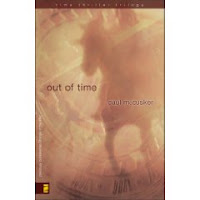
Out of Time by Paul McCusker

It is time for a FIRST Wild Card Tour book review! If you wish to join the FIRST blog alliance, just click the button. We are a group of reviewers who tour Christian books. A Wild Card post includes a brief bio of the author and a full chapter from each book toured. The reason it is called a FIRST Wild Card Tour is that you never know if the book will be fiction, non~fiction, for young, or for old…or for somewhere in between! Enjoy your free peek into the book!

You never know when I might play a wild card on you!

Today’s Wild Card author is:

and the book:

Out of Time (Time Thriller Series #2)

Zondervan (February 1, 2009)

ABOUT THE AUTHOR:

Paul McCusker is the author of The Mill House, Epiphany, The Faded Flower and several Adventures in Odyssey programs. Winner of the Peabody Award for his radio drama on the life of Dietrich Bonhoeffer for Focus on the Family, he lives in Colorado Springs with his wife and two children.

Visit the author’s website.

Product Details:

List Price: $9.99
Reading level: Young Adult
Paperback: 240 pages
Publisher: Zondervan (February 1, 2009)
Language: English
ISBN-10: 0310714370
ISBN-13: 978-0310714378

AND NOW…THE FIRST CHAPTER:

“Quid est ergo tempus? si nemo ex me quaerat, scio; si quaerenti explicare velim, nescio.”

[Translation: “What, then, is time? If no one asks me, I know; if I want to explain it to someone who does ask me, I do not know.”]

-St. Augustine

Prologue

A tall gray old man stepped to the pinnacle of Glastonbury Tor, an unusual cone-like hill with a tower named after a saint. In the wet English twilight, the wind whipped the old man’s long gray hair and beard and the ragged brown monk’s robe he wore like a flag in a gale. The dark clouds above moved and gathered around him. Chalice and Wearyall Hills sat nearby, their shoulders hunched. A battered Abbey beyond listened in silence.

The old man cast a sad eye to the green landscape, spread like a quilt, adorned with small houses and shops. He prayed silently for a moment, then pulled an ancient curved horn from under his habit. He placed it to his lips and blew once, then twice, then a final time. The three muted blasts were caught by the wind and carried away.

It was a summons.

PART ONE: The Stranger

Chapter 1
Chapter 2

“Look at that,” Ben Hearn said to his wife Kathryn. “It’s crazy, I tell you. Crazy.”

They were in Ben’s pick-up truck rattling for the Fawlt Line High School to help chaperone the sophomore class end-of-the-year school dance. Mr. and Mrs. Hearn weren’t keen on dances themselves, at least not the modern kind, but their daughter Chelsea would be there for her first real dance in her formal dress and flowers and carefully permed hair. She was escorted by Tommy Daughtry who showed up tonight at their front door in an ill-fitting tuxedo and an awkward blush on his cheeks. Kathryn thought they were an adorable couple, and said so again and again with every photograph she insisted on taking next to the fireplace and on the patio and by Tommy’s dad’s car. Kathryn even took a picture as they drove away.

“Kathryn, are you listening to me?”

“What’s crazy, Ben?” Kathryn suddenly asked, peering through the unusual fog.

“Didn’t you see the sign for Malcolm Dubb’s village?”

Kathryn hadn’t. But since they were on one of the roads bordering Malcolm Dubb’s vast estate, she remembered what sign her husband was talking about. It was the one that announced the construction of Malcolm Dubb’s Historical Village.

“I don’t know what the town council was thinking when they agreed to it,” Ben said. Malcolm was the wealthiest citizen of their little town of Fawlt Line. In fact, his family had been there for close to two centuries. Malcolm, a history buff, had designated a large portion of his property for the village.

Kathryn squinted at the fog ahead. “Don’t you think you should slow down?”

The truck engine whined as Ben heeded his wife. “You know what he’s doing with the village, right? He’s shipping in buildings, Kathryn. Brick by brick and stone by stone from all over the world. Have you ever heard of such a thing? A museum with a few trinkets and artifacts I could understand, but buildings?”

Kathryn smiled. “Malcolm always was obsessed with history. I remember when we were in school together—”

Ben wasn’t listening. “Do you know what they’ve been working on for the past few weeks? Some kind of a ruin from England. A monastery or castle or cathedral or something.”

“From England?” Kathryn asked. “Did he ship in this fog too?”

Ben grunted, “I just don’t understand Malcolm’s fascination with something that’s ruined. What’s the point?”

Kathryn was about to answer—and would have—if a man on horseback hadn’t suddenly appeared on the road in front of them. The fog cleared just in time for Ben to see him. He swore out loud as he hit the brakes and jerked the steering wheel to the right. The horse reared wildly. The man flew backwards to the ground. Kathryn cried out as the truck skidded into a ditch on the side of the road and came to a gravel-spraying stop.

Ben and Kathryn looked at each other shakily.

“You all right?” Ben asked.

Kathryn nodded.

“Of all the stupid things to do—” Ben growled and angrily pushed his door open. “Stay here,” he said before the door slammed shut again.

Kathryn reached over and turned on the emergency flashers.

Ben made his way cautiously down the road. “Fool,” Ben muttered to himself, then called out. “Hello? Are you all right?”

The fog parted like a curtain, as if to present the man lying on the side of the road to Ben.

“Oh no,” Ben said, rushing forward. He crouched down next to the figure, a very large man. Whoever it was seemed to be wrapped in a dark blanket. The man was perfectly still and his face was hidden in the fog and shadows.

“Hey,” Ben said, hoping the man would stir. He didn’t. Ben looked him over for any sign of blood. Nothing was obvious around his head. But what could he expect to see in that fog? “Kathryn! Call 911 on the mobile phone. And bring me the flashlight from the glove compartment!” he called out.

He peered closely at the shadowed form of the man as he heard Kathryn open her door. She was already talking into the phone, gasping instructions to an emergency operator. The shaft of light from the flashlight bounced around eerily in the ever-moving fog. “Ben?”

“Here,” Ben said.

Kathryn joined him. “Ambulance is on its way. But they’re on the line and want to know his condition.”

He took the flashlight from her and got his first full look at the stranger. He had long dark salt-and-peppery hair, beard, and moustache and a rugged, outdoorsy kind of face. Ben couldn’t guess an age for the man. Anywhere from 40 to 60, he figured. He wore a peaceful expression. He could’ve been sleeping. “I can’t tell. There’s no blood.”

Kathryn reported Ben’s findings to the emergency operator, then asked Ben, “He’s not dead is he?”

“I don’t think so.” Ben reached down, separating the blanket to check the man’s vital signs. The feel of the cloth told him it wasn’t a blanket at all. And as he pushed the fabric aside, he realized that it was a cape made of a thick course material, clasped at the neck by a dragon brooch. “What in the world—?”

Kathryn gasped.

They expected to see a shirt or a sweater or a coat of some sort. Instead he wore a long vest with the symbol of a dragon stitched on to the front, a gold belt, brown leggings, and soft leather footwear that looked more like slippers than shoes. The whole outfit reminded Ben of the kind of costume he’d seen in a Robin Hood movie. At his side was a sword in a sheath.

“Is it Halloween?” Kathryn asked.

***

At the high school, the sophomore dance was just getting under way. The Starliners, a rock and jazz band from nearby Hancock, warmed up for their first number as the sound engineer tried to get the volume just right.

Jeff Dubbs, dressed in a tux and looking all the more uncomfortable for it, stepped into the converted gymnasium and looked around. Streamers and balloons blew gently in the rafters above. A banner wishing the class a good summer rustled over the scoreboard.

A couple of dozen kids mingled in the middle of the dance floor and along the walls. Jeff tugged at his collar and wished he was somewhere else. Anywhere else.

Elizabeth Forde, Jeff’s girlfriend, slipped her hand into the crook of Jeff’s arm. She kissed him on the cheek. “Tell me you like it. We were here all afternoon getting the room decorated.”

“It’s nice,” Jeff said. You’re nicer, he thought as he looked Elizabeth over for the umpteenth time. She was wearing a stunning pink gown with lots of lacy things around the neck and sleeves. The white corsage he had bought for her was pinned to the strap. She looked out over the gathering students and he took in her profile: the delicate nose, large brown eyes and full lips, all framed by the long brown hair that she’d taken extra care with earlier that evening. He had to admit it, she was beautiful.

She glanced at him and caught him looking at her. He blushed.

“What’s wrong?” she asked self-consciously.

A loud metallic crash behind them saved Jeff from answering. Elizabeth’s father, Alan Forde, an eccentric man at the best of times, had dropped a tray of paper cups filled with drinks. Elizabeth’s mother rolled her eyes. “I told you to be careful,” she lectured.

“Too many cups to one side,” he answered quickly as he knelt to clean up the mess. “I misjudged the balance.”

“Oh, Daddy,” said Elizabeth bemused, and went to his side to help.

Jeff grinned. There was a time when Elizabeth would have raced from the room in embarrassment over her father. Not any more. Not since she’d had an adventure that, in part, made her realize how much she loved her parents, quirks and all.

“Hello, Jeff,” Malcolm Dubbs said. Malcolm was an English relative who’d become Jeff’s guardian—and the head of the Dubbs family’s vast American estate—after Jeff’s parents had died in a car accident.

“Hi, Malcolm,” Jeff said. “Nice suit.”

Malcolm tugged at bottom of his jacket. “It doesn’t smell musty, does it?”

Jeff sniffed the air. “Nope.”

“Good.”

The lead singer for the band stepped up to the microphone. “How’re you doing?” We’re the Starliners and we hope you’re ready to dance!” The three-piece brass section started an up-tempo song with the rest of the band joining in a few bars later. A handful of dancers wiggled their way onto the floor. Again, Jeff wished he was somewhere else. He didn’t like to dance.

Elizabeth left her father and mother to finish cleaning up the spilled drinks and rejoined Jeff.

“You look exquisite, Elizabeth,” Malcolm said.

Elizabeth curtseyed. “Thank you, Malcolm. You look pretty nice yourself.”

He smiled at her, then at Jeff. “Why don’t you two dance?”

“Malcolm,” Jeff said through clenched teeth. Malcolm knew full well that Jeff didn’t like to dance.

Elizabeth feigned a melodramatic tone, “I’ve resigned myself to an evening as a wallflower.”

“Will you dance with me?” Malcolm asked, with a slight bow.

“I’d love to,” she said and offered him her hand.

He took it and winked at Jeff as he lead her onto the dance floor. Jeff leaned against the door post, his arms folded. Upstaged by his cousin once again. But he didn’t mind at all.

A tap on the shoulder took his gaze from the dance floor and into the round boyish face of Sheriff Richard Hounslow. The Sheriff was in his uniform—Fawlt Line Police Department’s traditional beige shirt and trousers. The shirt was unbuttoned at the collar. He didn’t wear a gun unless he had to. His only official equipment was his badge and a walkie-talkie strapped to his belt. “Is your cousin here?”

Jeff tipped his head towards the dance floor. “Out there with Elizabeth. Is something wrong?”

“Kinda.”

“You want me to go get him?”

Hounslow shook his head. “Nah, I’ll wait until the song’s over.”

They stood silently for a moment and watched Malcolm and Elizabeth play Fred Astaire and Ginger Rogers amidst the wild gyrations of the dancers around them.

“He’s not bad,” Hounslow said.

The song ended. Malcolm and Elizabeth, pleasantly breathless, returned to Jeff.

“Uh oh,” Malcolm said when he saw Hounslow. “What’s wrong?”

Hounslow straightened up. “I need you to come to the hospital. Apparently one of the workers from your so-called historical village was knocked down by Ben Hearn’s truck.”

“One of my workers?” Malcolm said, surprised. “But they’re off for the weekend. Are you certain he’s from my village?”

Hounslow shrugged. “He came racing off of your property on a horse—right in front of Ben. Worse, he doesn’t speak a word of English, just some gibberish. That’s why I need you to come.”

“Is he seriously hurt?”

“No. But Doc McConnell wants to keep him in overnight for observation.” Hounslow gestured to the dance. “Sorry to take you away from all your fun.”

“Hmm.” Malcolm turned to Jeff. “My dear boy, I leave Elizabeth in your capable hands. Dance with her.”

Jeff hung his head.

“You heard your cousin,” Elizabeth said, and dragged Jeff onto the dance floor.

***

The stranger had caused such a ruckus at the hospital—shouting, trying to get away—that the doctor had had to sedate him and strap him into the bed. He lay sleeping as Malcolm, Sheriff Hounslow, and Dr. McConnell approached the bed.

“We had to give him three times the normal dose because of his size,” Dr. McConnell said softly, as if he was afraid of waking the man.

Malcolm looked closely at the unconscious figure. He was big, all right, stretching the length of the bed. “I’ve never seen him before,” Malcolm said.

“He was riding one of your horses,” Hounslow stated.

Malcolm cocked an eyebrow. “I’ll have to talk to Mr. Farrar, my groundskeeper. He lives in the cottage next to the stables.”

“Already done,” Hounslow said. “He was watching television. Didn’t hear a thing. He was surprised that one of your horses was gone. So, if nothing else, you could press charges against the man for horse-thievery.”

Malcolm shook his head. “I’d like to find out more about him first.”

“Well, good luck. We couldn’t get anything out of him. He kept yakking away in some gibberish. Kept pounding his chest and calling himself Rex or Regis or something like that.”

Dr. McConnell interjected. “It’s strange, but he spoke words and phrases that reminded me of the Latin I picked up in medical school.”

“Latin?” Malcolm asked.

“Could’ve been,” Dr. McConnell said. “But I’m no expert.”

Hounslow pulled at his belt. “I called the asylum in Grantsville to see if they’ve had any escapes. None.”

“Just because he speaks Latin doesn’t mean he’s mentally disturbed,” Malcolm said.

“Agreed,” Hounslow answered, “but how about that.” He pointed to the stranger’s clothes, now draped across a visitor’s chair.

Malcolm walked to the chair. “This is what he had on?” he asked, surprised.

Hounslow nodded. “That’s another reason we figured he was from your village. You haven’t started hiring character actors, have you?”

“The construction workers are still building,” Malcolm said. “I haven’t hired any staff yet.” He fingered the fabric of the robe and tunic, making a mental note of the dragon insignias. He picked up the soft leather shoes and looked them over. “Amazing. The outfit looks so authentic. And I don’t mean authentic like a well-done replica, I mean it looks worn like they’re real clothes.”

“Maybe he’s one of those homeless fruitcakes who just happened to wander into town,” Hounslow offered.

Dr. McConnell folded his arms, “It’s hard to imagine this guy being homeless and just wandering anywhere with that sword.”

“Sword?” asked Malcolm.

“Here,” Hounslow said and opened the door to the large wardrobe in the corner. With both hands he pulled out a long sword encased in an ornate golden scabbard. He cradled it in his arms for Malcolm to inspect.

“Good grief,” Malcolm gasped, running his hand along the golden scabbard. “Is that real gold?”

“Looks like it,” Hounslow said.

Malcolm examined the handle of the sword, also golden, with a row of unfamiliar jewels imbedded along the length of the stem. Even in the washed-out fluorescent light of the room, it sparkled as if it reflected the sun. “Can I take it out?”

“Yeah,” Hounslow said, “but be careful. It’s heavy and sharp.”

Malcolm grabbed the handle with both hands and withdrew the sword from the scabbard. It was heavy, as Hounslow said, and Malcolm imagined it would take a man the size of the stranger to weald it with any effect. It was a strain to hold it up. The blade was made of thick, shiny steel with an elaborate engraving of what looked like thin vines and blossoms along the edges. “It must be worth a fortune,” Malcolm said as he slid the sword back into the sheath.

Dr. McConnell agreed. “So what’s a derelict doing with a Latin vocabulary and a valuable sword?”

“That’s what I’d like to find out when he wakes up,” Malcolm answered.

Chapter 3
Chapter 4
Within two hours the stranger was awake and pulling at the restraining straps on the bed. He shouted at the nurse, Dr. McConnell, Sheriff Hounslow and Malcolm in a tone that was unmistakably belligerent. When he realized it didn’t help, he resigned himself to watch the flashing lights and electronic graphs on the medical equipment around him.

After hearing a few of the phrases he yelled—like rex, regis, libertas, stultus—Malcolm was certain about the Latin and phoned a friend of his from the University at Frostburg to come. Dr. Camilla Ashe was so intrigued by Malcolm’s description that she decided not to wait until morning and drove the forty-five minutes to Fawlt Line that night. She arrived a little after ten. By that time the group in the room included Jerry Anderson, editor of Fawlt Line’s Daily Gazette. He had heard the news about the mystery man on his police scanner.

Dr. Ashe, a prim scholarly woman dressed from head to toe in tweed, approached the side of the bed warily. The stranger was once again transfixed by the lights on the equipment and only seemed to realize she was there when she cleared her throat. He looked at her with an expression of impatience. She spoke to him in Latin and he gawked at her. Then, realizing he finally had someone who understood him, he bombarded her with words. She tried to interject, but the stranger kept talking. His voice rose to a shout and she seemed to lose patience and responded in kind.

Malcolm watched them, astounded that they seemed to be arguing and wished he had taken the time to learn Latin in college. Jeff and Elizabeth quietly slipped into the room, still dressed in their clothes from the dance, and leaned against the far wall to stay out of the way.

The stranger continued his assault with words. Finally, Dr. Ashe put her hands on her hips and spoke in a tone that was withering in any language. The stranger turned his head away from her as if to say that the conversation was over. He didn’t look at her again. She spun around to the expectant group, growled loudly and stormed out of the room.

“What was that all about?” Malcolm asked her in the hall.

Her hands trembled as she unwrapped a piece of gum and tossed it into her mouth. “I’ve given up smoking, but I’d love to have a cigarette now.”

“Sorry,” Malcolm said, then waited politely for her to compose herself.

“He said he didn’t want to talk to a woman,” she said. “He resented a woman being sent to him by his captors.”

“Captors!”

Dr. Ashe chewed her gum forcefully. “I don’t mind saying that that man should be certified. He’s not sane.”

“Why? What did he say?”

“He said that, as a king, he should be treated with more respect. He wants to speak with whichever baron or duke is holding him captive. He wants to know where he’s being held and if there’s a ransom. He demands to be told how he got here and where his knights are. And, finally, he wants someone to tell him about the magic boxes with the flashing lights.” Dr. Ashe groaned.

“I told you he’s a fruitcake,” Sheriff Hounslow said from behind Malcolm.

“Or it’s a very tiresome joke,” Dr. Ashe added and wagged a finger at Malcolm. “You wouldn’t be pulling a prank on me, would you?”

“No,” Malcolm said simply.

“Then you should get him some psychiatric help,” she said.

“I still don’t understand,” Malcolm said. “He said he’s a king. But King who—and king of what”

Dr. Ashe grinned irritably. “He says he’s King Arthur.”

Chapter 5
Chapter 6
Dr. Ashe left. She wanted nothing more to do with the Latin-speaking lunatic.

“What are you going to do now?” Jerry Anderson asked Malcolm.

Before Malcolm could answer, Hounslow jumped in. “Let’s get something straight. Doc McConnell and I are making the decisions here. Not Malcolm.”

“Sorry,” Jerry said. “What are you going to do now, Sheriff Hounslow?”

Hounslow shrugged, “I don’t know yet.”

Malcolm smiled politely. “In my humble opinion, we should find someone else who knows enough Latin to communicate with him. A man this time.”

Elizabeth raised her hand and wiggled her fingers. “I know someone.”

All eyes fell to her.

“My Dad,” she said. “He studied Latin when he was in college and sometimes uses it for his research.” Elizabeth’s father was a teacher at the middle school, though some said he should have been teaching at a major university.

“Of course,” Malcolm said and went to the phone.

Alan Forde was quite tall himself and his size, combined with his knowledge of Latin, obviously impressed the stranger. The stranger seemed more patient and spoke in calmer tones. Alan pulled up a chair next to the bed. After a brief spurt of conversation, he turned to Dr. McConnell. “Can we free his hands please?”

Dr. McConnell looked skeptically at Alan and the stranger. “You’re kidding.”

“He promises not to resort to physical violence or even to attempt an escape. But it’s offensive to his honor to be tied up.”

“Well … “ Dr. McConnell began, then looked to Sheriff Hounslow and Malcolm for help.

“I think you should do it,” Malcolm suggested.

Sheriff Hounslow unclipped the walkie-talkie from his belt and called to one of his officers on the other end. “Bring me my gun,” he said.

“Okay,” Dr. McConnell said. He undid the restraining straps.

The stranger rubbed his wrists then sat up in the bed. He spoke to Alan.

“Thank you,” Alan translated, then added: “I think he’ll be more agreeable to talk now.”

“Does he really think he’s King Arthur?” Hounslow asked.

“Yes.”

“Then what’s he doing here?” Malcolm asked. “What was he doing on my property? Why did he take my horse?”

Alan posed the questions to the stranger.

Through Alan, the stranger explained, “My nephew Sir Mordred, that traitorous and wicked knight, attempted to usurp my throne whilst I was pursuing Sir Lancelot north to his castle at Joyous Gard. Verily, I loved Lancelot as my own, even whilst he coveted my queen and betrayed me. While I was gone, Mordred enticed many weak-willed nobles to join his army to overthrow my rule. My army met and routed his forces on Barham Down, but my nephew fled to other parts. We made chase but did not battle them again, choosing instead to negotiate a peace. I desired not the terrible bloodshed that would ensue if we were to engage in combat. And so it is that we have come here to this plain to meet and discuss terms.”

“What’s this got to do with anything?” Hounslow growled.

Malcolm ignored him. “So tonight is the eve of your meeting with Mordred to make a truce,” he said to Alan while looking at the stranger. “What happened?”

The stranger answered through Alan, “As I lay upon my bed in my pavilion, I dreamed an incredible dream. I sat upon a chair which was fastened to a wheel in the sky. I was adorned in a garment of finest woven gold. Far below me I saw deep black water wherein was contained all manner of serpents and worms and the most foul and horrible wild beasts. Suddenly, it was as if the wheel turned upside-down and I fell among the serpents and wild beasts and they pounced upon me. I cried out in a loud voice and awoke upon a cold slab of stone in the midst of a vast field. Troubled by this vision, I rose, determined to find my knights. I espied glowing torches in the distance and approached them. I found there not my army but a stable of horses. I mounted one and made haste in the direction of my knights. I spurred the horse ever-faster and faster until I was attacked by the armored cart that was drawn by neither man nor beast. Frightened, my horse reared and I fell to the ground.” He turned to Malcolm, “Now, speak knave, am I a prisoner or is a dream?”

Malcolm tugged gently at his ear and said to the others, “He woke up on one of the stone slabs in my historical village. Probably in the church ruins I bought from England. Very interesting.”

“You don’t believe any of this nonsense, do you?” Hounslow asked.

Malcolm answered in a guarded tone, “For the moment, I believe that he’s confused and found himself on my property.”

The stranger folded his arms and muttered the same phrase over and over.

“He says Merlin is responsible,” Alan said. “He doesn’t know how, but he’s sure it is some trickery of Merlin’s.”

“That’s it,” Hounslow said. “Everybody out. It’s now past midnight and I’ve had enough of this. We’re going to transfer this nutcase to the Hancock Sanitarium. Let them decide what to do with him.” With that said, he marched out of the room.

Dr. McConnell looked at Malcolm apologetically. “What else can I do with him?”

Malcolm didn’t know. “I wish I could take him back to my cottage.”

The stranger spoke again and Alan translated, “Answer me! Am I to be ransomed or is this a dream?”

Malcolm spoke as soothingly as he could. “Tell him that we are not his captors and, if it’ll help, to consider this a bizarre dream.” As an afterthought, he added, “Also ask him if he’ll give us his word as King not to try to escape tonight. Otherwise, the doctor will have to strap his arms again.”

The stranger gave his word.

Outlaw Marshall by Al & Joanna Lacy

outlawmarshallIf you are a fan of old westerns, you will probably love Outlaw Marshall by Al and Joanna Lacy. As I read, I was reminded of the black and white TV westerns I loved as a child in the early sixties.

The story line of Outlaw Marshall is simplistic with minimal character development. Perhaps the authors assumed the reader would be familiar with many of the characters from previous books. The basic premise of the story was good but I found the character interaction to be idealistic and far from realistic. I also quickly tired of the “turn or burn” evangelism that was a recurring theme.

If you are already a Lacy fan or looking for a pleasant read, you will probably want to add Outlaw Marshall to your collection. The book would probably be ideal for a younger audience. However, if you are looking for a meatier reading experience, you would probably do better to look elsewhere.