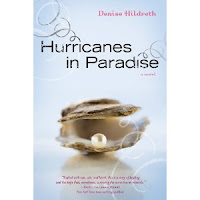
Hurricanes in Paradise by Denise Hildreth

It is time for a FIRST Wild Card Tour book review! If you wish to join the FIRST blog alliance, just click the button. We are a group of reviewers who tour Christian books. A Wild Card post includes a brief bio of the author and a full chapter from each book toured. The reason it is called a FIRST Wild Card Tour is that you never know if the book will be fiction, non~fiction, for young, or for old…or for somewhere in between! Enjoy your free peek into the book!

You never know when I might play a wild card on you!


Today’s Wild Card author is:


and the book:


Hurricanes in Paradise

Tyndale House Publishers, Inc. (May 10, 2010)

***Special thanks to Vicky Lynch of Tyndale House Publishers, Inc for sending me a review copy.***

ABOUT THE AUTHOR:

Denise Hildreth is a novelist and international speaker. She has spoken for the last ten years to women’s ministries, churches, and for the Billy Graham Evangelistic Association. Denise began her career over seventeen years ago writing for other people. She eventually ventured into the world of fiction with her first novel, Savannah from Savannah, and has since published several books. Her novels have been featured in Southern Living; hailed as “smart and witty” by Library Journal; and chosen for the Pulpwood Queen’s and Women of Faith book clubs.

Visit the author’s website.

Product Details:

List Price: $13.99
Paperback: 384 pages
Publisher: Tyndale House Publishers, Inc. (May 10, 2010)
Language: English
ISBN-10: 1414335571
ISBN-13: 978-1414335575

AND NOW…THE FIRST CHAPTER:
Saturday morning . . .


The salt air of the Caribbean rushed through the open sliding-glass door with the force of a tropical storm gust and blew a picture frame on her coffee table to the floor, reminding Riley Sinclair that her second chance at life was just as fragile. Her bare feet stepped onto the warm concrete of the small balcony, and she leaned against the iron railing. Her pajama pants blew between the teal-painted slats as a soft curl swept in front of her face, its color as dark as the black tank top she wore.

She closed her eyes and breathed in, the oxygen traveling all the way to her toes. This was the smell she knew, the scent of her memories. She also knew the teasing dance that hurricanes played on the coastal waters. And this tropical paradise that she now resided in had avoided another close call in Hurricane Jesse. But rumor had it a new storm churned in the Atlantic. And though the Bahamas had avoided each storm this year, the mere chance was never good for business. She exhaled deliberately and released anything else that needed to go. The first prayer of the day was offered as the sun pressed its way through dissipating clouds.

When the discourse of her morning was over, she headed back inside to get some Dr Pepper, her new a.m. sugar kick of choice. The South knew how to grow its women proper, raise its boys to be gentlemen, and make its tea sweet. But Bahamians had no idea they were as southern as you could get, so sweet tea wasn’t a readily accessible commodity here. So she had switched to Dr Pepper.

She knew that amount of sugar probably wasn’t an ideal breakfast companion, but she figured if that was the only addiction she possessed after what she’d been through, she’d fared pretty well. She set her liquid sunshine down and turned the sleek silver shower handle upward to let the water heat up to just below scalding. When steam had taken over the shower door and made its way to the bathroom mirror, she entombed herself. As warm water cascaded over her, the low, melodic sounds of her hum reverberated through the stone bathroom. She closed her eyes and began to sing softly, letting the thickness of her alto voice take up the spaces the steam had left vacant.

The shower was over when she was finished singing. She dried off, dressed, and released her hair from a large clip; it fell to the center of her back as she glanced at her reflection in the mirror.

There were days she could see it. This was one of them.

Life had come back into her almost-thirty-nine-year-old face. It was as if she got younger with each day that moved her farther from her past. And sometimes, like today, she could actually see it in her eyes. They were alive. Even her laughter had changed. Okay, come back. And every time it arrived, she could feel it travel from somewhere in her gut. It was real. And it was wonderful. Yet still slightly foreign. But she was so grateful for it. And if it brought new lines with it, that was a fair trade. She’d trade the aged face of stress for a new one streaked with laugh lines as willingly as the gamblers here traded dollars for chips.

She gave her reflection a smile and pulled the taupe silk top over her head, then readied her face for the day. Now she was ready to face the biggest challenge of her day: waking Gabby.

The distance from her bedroom to Gabby’s was three full steps. Though at five foot two, for her, it was more like five. Even though the condo was only a little over nine hundred square feet, she and Gabby didn’t require much; plus it was right on the Atlantis property and a blessing of a deal for this season in her life. And it was peaceful. She was more than willing to sacrifice her four thousand square feet of turmoil for nine hundred square feet of peace.

The twin bed gave slightly beneath her weight as she sat down and pushed the curls that hid Gabby’s tiny face. They brushed across the Cinderella nightgown and fell over her shoulder. Riley relished this brief moment without her mouth moving. Since Gabby had learned to talk, she hadn’t stopped. That’s why Gabriella had quickly been shortened to Gabby.

She leaned over and pressed her mouth against the soft skin of her little girl’s face. Her words swept past Gabby’s ear. “Time to get up, sunshine. You’ve got to get ready for school.”

The tiny frame wriggled beneath the white down comforter. Long black eyelashes tugged at each other before they finally broke free and revealed eyes that carried as much variety of blue as the Bahamian ocean. Even though Bahamian waters could be as unique as aquamarine, as taunting as turquoise, and as regal as royal blue, they were the only waters distinguishable from space. Gabby’s eyes were able to transform as well, but Riley could recognize them from space too.

Gabby rubbed her eyes with the backs of her fists. Her mouth opened wide as she yawned away some of her sleepiness. Then she rolled over.

“Come on, Gabby. You’ve got to get up.” Riley rubbed her back. “It’s a big day, remember?”

Gabby rolled over and forced her eyes open. “I’m going to the science museum today.”

Riley stood up from the bed. “That’s right. Are you still taking Ted?”

Gabby slipped quickly out of the bed, her tiny feet dotting the carpet as she ran toward her fishbowl, where Ted resided. “Yep. I’m taking Ted,” she stated matter-of-factly in her distinctly raspy little voice.

She lifted his bowl and spun it around the room. Ted jolted from the rock he had been sleeping on, his stubby turtle legs rapidly trying to regain their positioning. “Don’t you want the little boys and girls to see you today on our field trip, Ted?” she asked.

Ted didn’t respond. He was still trying to get back to his throne.

“Slip on your clothes, and Mommy will go make your breakfast,” Riley said as she laid out some khaki shorts and a white polo. She hadn’t told Gabby that they didn’t have to wear uniforms today because it was a Saturday field trip to celebrate the end of this semester and to begin their three-week break from year-round school. She thanked God for school uniforms. They removed one morning battle. Pink ballerina outfits weren’t the best attire for first grade.

Riley headed to the kitchen. “What are you hungry for, angel girl?”

“I’m thinking pancakes would be good!” Gabby called out.

Riley laughed as she opened the refrigerator door. She kept a flourless, sugarless pancake batter in the refrigerator most of the week. A friend had given her the recipe and Gabby had no idea they were healthy. Riley had no intention of telling her.

Gabby finally bounded into the kitchen and pulled out a barstool from beneath the black granite countertop. Riley turned over the last pancake and put it on Gabby’s plate next to her glass of orange juice. She picked up her own plate and sat down beside her.

Gabby held up her hand as if Riley was about to intrude on her prayer. “I’ll bless it, Mommy.”

“Go for it.”

Gabby folded her tiny hands, where pieces of her hot pink fingernail polish clung for dear life. “God is great and God is good. Let us thank Him for our food. By His hands we all are fed. Give us, Lord, our daily bread. Amen,” she announced with a bob of her head.

“Amen,” Riley echoed.

“Is Daddy coming to get me this week?” Gabby asked, half a piece of pancake hanging from her mouth.

“That’s pretty.” Riley laughed.

Gabby snickered and chewed wildly.

“No, he’s coming next Saturday. You’re going to spend the first part of your break with Mommy and the last part with Daddy.” Gabby smiled wildly; then Riley saw the light slowly dim behind Gabby’s eyes. For six, her mind worked way too hard. “Whatcha thinking?”

“That you’ll be by yourself. I don’t like you being by yourself, Mommy.”

Gabby could still get her in the deep place. Riley set her fork down. “Angel girl, you don’t have to worry about Mommy. I love it that you get to go see Daddy. And you need to spend that time enjoying him and Amanda, not worrying about me, okay? I’ve got a lot of things to keep me busy and I want you to have fun. That’s what matters to Mommy. Okay?”

Gabby had stopped chewing and begun talking, her Southern accent as thick as pluff mud, keeping Charleston always before her. “But now we have to fly to get to you. Used to, you could just drive.”

Riley placed her hand on Gabby’s exposed knee that stuck out from her shorts. “But Mommy can get to you at any time if I need to. So you just know that. Mommy’s not going anywhere. Got it? Not ever again. You can get to me anytime and I can get to you anytime.”

Gabby’s voice was solemn. “Anytime?”

Riley gave her a reassuring smile and wished for a six-year-old instead of a thirty-year-old. “Anytime. Now eat up. You and Ted have a busy day.”

Gabby jammed her fork into a piece of pancake and stuck it in her mouth. Her muffled tones came through anyway. “Ted’s going to be a hit!”

“A surefire hit.”

***

When Gabby’s form disappeared through the front door of St. Andrew’s School, the International School of the Bahamas, Riley could finally deal with the heaviness that Gabby’s words had blanketed over her heart. She had spent the last few years climbing out of heavy moments that were as boggy and stinky as Charleston’s marshes. Thankfully, she handled them much differently now than she had in the past. Now she plowed through them when they swept over her. She didn’t avoid them. Nor did she stay in them. She simply put her head down and didn’t look up until she got to the other side.

The second prayer of the day was made on the way to the hotel. And by the time she got there, one more moment had been experienced, grieved, and left. She was through existing. Even if living meant fording through pain, that was a journey worth taking. To her, living meant no longer hiding. Hiding had robbed her of years with Gabby, of her marriage, and almost of herself. No, there would be no more hiding.

Riley parked her car in the employee parking lot and headed toward The Cove, one of the exclusive properties on the Atlantis complex. This place took her breath away. She couldn’t imagine a day that it wouldn’t.

Towering palm trees swayed slowly with the subtle breeze of the tropical morning as she stepped into the porte cochere that welcomed guests at The Cove.

She passed a young valet. “Hey, Bart.” They had become friends on her first day.

“Hello, Miss Riley. You and Gabby enjoying your weekend?”

She smiled. “So far, so good.”

“So is this our week?” he said with his thick Bahamian accent, an accent that could move with such a quick cadence, she sometimes had to make him repeat himself.

“I’m thinking Friday would be great.”

His huge white smile took over his black face. “Well, that’s what I was thinking.” The pitch of his voice rose. “I’ll meet you at the end of the aisle.”

“Don’t be late,” she chided at their little joke. Then laughed from deep inside. He had been proposing marriage since she’d arrived, even though he was probably twenty years younger than she was. But now he no longer proposed marriage, only the wedding date.

She headed into the Nave, the open-air lobby of The Cove, with its thirty-five-foot teak ceiling and magnificent sculptured lines. This six-hundred-suite tower was her responsibility. Her small heels clicked on the stone flooring as she walked through the expansive walkway, then softened when they met the deep wood that encased the stone. She walked into the glassed-in guest services offices directly across the hall from guest registration.

“Hello, Mia,” she said to the newest staff member and her top assistant. Mia had arrived two weeks ago from Australia. The staff was as much a melting pot as were the guests who stayed in their rooms.

“Hello, Riley.” Her face lit up as Riley walked by. “Busy week, I hear.”

“Yes. A few special guests this week.”

Mia’s long blonde locks fell across her shoulder as she pulled a leather portfolio from her black Chanel bag. With the straw market at the port in Nassau where the cruise ships came in, Riley knew that fake designer handbags ruled in most of the Bahamas. But not so much here. Fake handbags were as scorned in this luxurious environment as husbands with laptops, but both sneaked in every now and then.

She followed behind as Riley walked into her office. Mia’s long, lean legs bridged the chasm quickly. “So who are our VIPs this week?”

Riley looked down at the large desktop calendar to the names written in red ink. Three women arrived today. Three women whose arrivals had been preceded by slightly panicked phone calls: one from a detailed agent, one from a concerned parent, and one conference call from three loving and determined children.

“Let’s see here; our primary focus will be Laine Fulton, the author. She’s coming here to research for her new book.”

Mia scribbled in her notebook like a diligent student. “I hear she’s demanding,” she said in her slightly frantic way.

Riley’s ears piqued at her statement. In the two weeks Mia had been here, Riley had been slightly disarmed by her moments of childishness quickly diffused by an action of maturity. She couldn’t figure Mia out. Her outward beauty was obvious. Her reactions not so much. “You have? How so?”

“Oh, I have a friend who hosted her at a property in Dubai. She used that as the setting of her last book. She said there are as many layers to Laine Fulton as there are characters in her novels.”

“I prefer to think she’s a woman who knows what she wants. And she happens to want things a specific way. I spoke with her agent this morning and—”

“Mitchell?” Mia interrupted.

Riley cocked her head. “Yes, Mitchell.”

“That’s her ex-husband. And I heard he wasn’t her agent anymore,” Mia responded matter-of-factly.

“Yes, well . . . okay.” Riley shook her head. “Let’s stay on our toes with her this week and make sure everything runs smoothly. Her specific room requests should have been taken care of, and it sounds like she’ll be occupying a lot of my time. So if you could go make sure everything is in place, that would be great. Just in case I don’t get to go back and check.”

“No problem.” Mia continued to write. “Who else?”

“We’ve got a young lady named Tamyra Larsen. She’s a ‘Miss Something,’ but I can’t remember what her title is.”

“Not a pageant girl.” Mia scrunched her nose and shook her head. “Really?”

“I’m sure she’s delightful. And her mother called and . . . well, she sounded really concerned about her.”

“So we’re to babysit a beauty queen? I hear they all need babysitting.”

Riley gave Mia her best smile. “We don’t babysit, Mia. We take care of our guests. Plus, I have a daughter. I know what worried parents sound like, and this mother was worried. So, beauty queen or not, we need to keep our eyes on her.”

Mia looked up. Her blue eyes held Riley’s. “Consider it done.”

“Finally, we have Ms. Winnie Harris.”

“Ms. Harris?”

“Yes, Dr. Harris actually, but her children said she only uses that title at school. She’s a principal at a high school in Nashville.”

“Oh, that kind of doctor.”

“Yes, that kind. And her children are really concerned about her because she has never been on a vacation alone. Her husband died three years ago and this is her first vacation without him. So it’s our responsibility to make sure she is taken care of. And she made a special request not to be able to see the Beach Tower from her room.”

Mia eyed her oddly. “Why?”

“I have no idea. We don’t ask why. We just fulfill the requests.” Riley patted her calendar and raised her head. “I believe that’s it.”

Mia closed her portfolio and stuck it back in her bag. “I’ll go check on each of their rooms and make sure they are ready as soon as our guests arrive.”

“Thanks. We’ll catch up later.”

Mia walked out of the office, and Riley sat down. She studied the three names again, making sure she had them committed to memory. She knew what it meant to a guest to be known by name. So she had made remembering a practice ever since she had gone into the hospitality business fifteen years ago. She knew there would be other guests that required her attention this week. But as of today there were only three that were demanding it. Whether they knew it or not.

***

Riley exited the elevator of the suite tower. Laine Fulton’s room was ready to go. Everything she had requested, from the fully stocked liquor cabinet to the pistachios and the all-black M&M’S, awaited her arrival. Her entire bedroom had been rearranged at Mitchell’s request, the desk placed in front of the sliding-glass doors to give a view of the ocean. Mia had done an excellent job paying attention to every detail. Now all Riley had to do was wait for her guests to arrive.

She headed down to the Cain, the adult-only pool, to check on Laine’s poolside cabana.

A body glided up beside her. “Hi, Riley. Mind if I walk with you?”

She turned toward him, but she knew that voice. She and Christian Manos had worked side by side, he at The Reef, she at The Cove, for the last six months. Their virtually identical jobs brought them to a place of familiarity quicker than most. And that closeness had awakened things in her she hadn’t felt in a long time. That’s why she had taken to avoiding him. Her pace increased with the rate of her heartbeat. “No. Not at all.” She pushed her hair back and turned to look into his beautiful, tanned face.

“Are you coming to the meeting this afternoon?”

She could smell his cologne. The breeze carried it right up her nose. “Umm . . . no.” She blinked hard. “I’ve got a couple arrivals this afternoon that I’ve got to make sure get settled in okay. Mia is covering for me.” She gave a soft smile.

“The luxury of revolving guests,” he said.

“Yes, must be nice to have stationary guests.” The Reef was a property of luxury condominiums with part-time residents instead of temporary vacationers.

“Very nice. But it looks as if it will prevent you from coming to the meeting. So does that mean it would prevent you from grabbing some lunch before?” he asked, stopping short of one of the poolside towel cabanas. His six-foot-one build towered over her petite frame.

Riley stopped too. “Oh?”

He smiled, the fresh sun on his cheeks. “Yeah, I just wondered if you’d like to have lunch. But it sounds like you’re pretty busy. Seems like work is taking up all your time. So I guess maybe we could make it dinner, then.”

She knew he could see her heart beating at the base of her neck. This was a date. A date offered by a man who did something to the increase of her pulse that even running a 5K didn’t do. She knew she must look extremely awkward, standing there, mouth slightly open, but she wasn’t sure what came after this. It had been so long.

“I’m thinking . . . you’re wanting to say something?” The subtleties of his Greek accent were still present.

She shook her head to try to break her trance. He was almost too pretty to be a boy. And every time he got near her, heat rose to her face no matter the temperature. “Oh yeah, dinner . . . Well, sure. I guess . . . I think dinner would be nice . . . maybe.”

He laughed, his white teeth taking over his face. Taking it over perfectly. And they were a stark contrast to his tousled black hair. “I’m thinking, ‘Sure, I guess, nice, maybe’ is not quite the response I was hoping for.”

Riley laughed awkwardly. “I’m sorry. I . . . Well, you don’t need to know all of that. But I . . .” She breathed in deeply and sighed loudly. This was what she had been trying to avoid. “I’d like that. Dinner. Sometime. Yes. Sure. I’d like that.”

He laughed again. “Okay, I’ll take that. I was thinking maybe this evening.”

She shifted on her heels, placing her hand awkwardly on her hip, and scrunched her lips. “Oh . . . this evening . . . well. That soon?”

He reached out and touched her arm. The hair on her arms shot to attention. She hadn’t been touched with this effect in a very long time. Old Mr. Tucker, who directed housekeeping and loved to touch her arm, had never caused quite the same reaction.

“If tonight doesn’t work, we can pick another night.”

She knew if she hesitated, she’d talk herself out of it. “No . . . no . . . tonight would be great. But it’s probably too late notice to get a sitter for Gabby.”

“Bring her. We’ll have a blast.”

She studied his face. But the inflection of his voice had convinced her he meant it. He let his hand fall to his side. She resisted the urge to grab it and put it back. “Yeah?”

“Sure. There’s this great little place over on Nassau. It’s where the locals hang out. Is that okay? It’s really casual.”

“Gabby and I do casual very well.”

“Can I pick you up at six thirty?”

“Yeah, six thirty will be fine.”

He reached up and patted her arm again, grabbing it slightly as he did. “It will be fun. Thank you for saying yes.”

“Sure. Yeah. No problem.”

She watched as he headed around the walkway and back up toward The Reef. His brown leather flip-flops slapped against the concrete and reverberated on her insides. She bit her lip. “Sure? Yeah? No problem? Are you an idiot?” she whispered as she headed back toward her office. “You get asked out on your first date in fifteen years—by a beautiful man, no less—and you say, ‘Sure. Yeah. No problem.’ You are an idiot.” She shook her head and turned toward the pool. Fear dropped with a thud in her gut. It pressed harder with each step she took. By the time she reached Laine’s cabana, it had taken over, verifying one thing. She would not be going out with Christian Manos tonight. Or any night.

Taken from Hurricanes in Paradise by Denise Hildreth. Copyright © 2010 by Denise Hildreth. Used by permission of Tyndale House Publishers, Inc. All rights reserved.

MY REVIEW:

Four women, strangers to each other with nothing in common, meet at an exclusive resort in the Bahamas and their lives are forever changed. Each facing her own private storm, the women would prefer to do so in private. However, their paths cross at every turn and they are forced to spend more and more time together. Their interaction is not always congenial – in fact they have to navigate more than one turbulence. As they find themselves facing a very real hurricane, they must also face their own secrets and fears.

Hurricanes in Paradise is a powerful story about friendships, trust, hope, healing, and most of all – letting God carry our burdens. The four women are remarkably realistic with emotional depths with which readers can readily identify. Plenty of drama, conflict, humor, danger, suspense, and even a little romance drives a plot that is entertaining yet thought provoking.

I have enjoyed many of Hildreth’s earlier books and can say without reservation that Hurricanes in Paradise is the best one yet.  Don’t miss this one!

A Hopeful Heart by Kim Vogel Sawyer

This week, the

Christian Fiction Blog Alliance

is introducing

A Hopeful Heart
Bethany House (June 1, 2010)

by
Kim Vogel Sawyer

ABOUT THE AUTHOR:

Kim Vogel Sawyer is the author of fifteen novels, including several CBA and ECPA bestsellers. Her books have won the ACFW Book of the Year Award, the Gayle Wilson Award of Excellence, and the Inspirational Readers Choice Award. Kim is active in her church, where she leads women’s fellowship and participates in both voice and bell choirs. In her spare time, she enjoys drama, quilting, and calligraphy. Kim and her husband, Don, reside in central Kansas, and have three daughters and six grandchildren.


ABOUT THE BOOK:

Dowryless and desperate, Tressa Neill applies to the inaugural class of Wyatt Herdsman School in Barnett, Kansas, in 1888. The school’s one-of-a-kind program teaches young women from the East the skills needed to become a rancher–or the wife of one.

Shy and small for her twenty-two years, Tressa is convinced she’ll never have what it takes to survive Hattie Wyatt’s hands-on instruction in skills such as milking a cow, branding a calf, riding a horse, and cooking up a mess of grub for hungry ranch hands. But what other options does she have?

Abel Samms wants nothing to do with the group of potential brides his neighbor brought to town. He was smitten with an eastern girl once–and he got his heart broken. But there’s something about quiet Tressa and her bumbling ways that makes him take notice.

When Tressa’s life is endangered, will Abel risk his own life–and his heart–to help this eastern girl?

If you would like to read the first chapter of A Hopeful Heart, go HERE.

MY REVIEW:

I loved everything about  A Hopeful Heart. The characters were delightful and portrayed realistically. The plot was a unique take on the common mailorder bride story with young women brought in to learn skills needed to live on a ranch – before accepting a suitor from the single men available. The details about the herdsman school were quite interesting.

A Hopeful Heart has just the right amount of drama, romance, and humor to keep it moving. Tressa’s transformation from a shy, inept girl to a confident young woman was remarkable, especially her spiritual growth. Abel was the perfect hero for Tressa with his own inhibitions and caring disposition.

I really don’t want to give away more of the story so all I can do is encourage you to pick up a copy of A Hopeful Heart asap. I don’t think you will be sorry.

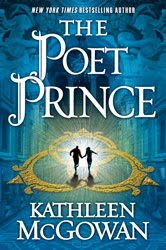
The Poet Prince by Kathleen McGowan

It is time for a FIRST Wild Card Tour book review! If you wish to join the FIRST blog alliance, just click the button. We are a group of reviewers who tour Christian books. A Wild Card post includes a brief bio of the author and a full chapter from each book toured. The reason it is called a FIRST Wild Card Tour is that you never know if the book will be fiction, non~fiction, for young, or for old…or for somewhere in between! Enjoy your free peek into the book!

You never know when I might play a wild card on you!


Today’s Wild Card author is:


and the book:


The Poet Prince

Touchstone; 1 edition (May 25, 2010)

***Special thanks to Mallika Dattatreya and Ashley Hewlett of Touchstone/Fireside Publicity Simon &Schuster, Inc. for sending me a review copy.***

ABOUT THE AUTHOR:


Kathleen McGowan is the New York Times bestselling author of The Expected One, an international bestseller published in more than 30 languages. She lives in Los Angeles with her husband and three sons.

Visit the author’s website.

Product Details:

List Price: $25.99
Hardcover: 407 pages
Publisher: Touchstone; 1 edition (May 25, 2010)
Language: English
ISBN-10: 0743299981
ISBN-13: 978-0743299985

AND NOW…THE FIRST CHAPTER:

Prologue


Rome, AD 161

The Roman emperor Antoninus Pius was not a butcher.

A scholar and philosopher, Pius did not want to be remembered by history as one of Rome’s cruel and intolerant tyrants. Yet here he stood, literally up to his ankles in the blood of Christians. While alive, the four brothers had been exceptionally beautiful young men. But after their terrible deaths brought about by beatings and torture, they were unrecognizable masses of blood and flesh. The sight made him want to retch, but he could not appear to be weak before his citizens.

Pius was, for the most part, tolerant of the irksome minority who called themselves Christians. He even found it stimulating to participate in debates with those who were educated and reasonable. However odd he personally found their beliefs–about the single messiah who rose from the dead and would come again–their ideas did appear to be spreading at an unnervingly steady pace throughout Rome. A number of Roman nobles had converted to Christianity openly, and their participation in Christian rituals was tolerated by his government. This growing sect was also finding particular popularity with highborn females; women were included as equals in all its rites and ceremonies. They could even be priests in this strange new world of Christian thought and practice.

The Roman priests who held court in the temples of Jupiter and Saturn were up in arms that these Christians were allowed to offend the gods with their ridiculous concept of a single deity. Emperor Pius generally ignored the priests’ wailings, and thus life in Rome went on in relative peace during much of his reign. It was only when some aberration developed to endanger lives in the Roman republic, some tragedy or natural disaster, that the Christians found themselves mortally threatened. The Roman priests, and their followers, were quick to blame the Christians for any and all misfortunes that might befall Rome. Surely it was their monotheistic insult to the true gods of the republic that caused divine retribution to fall on the other innocent and obedient citizens?

Emperor Pius had himself discovered in his debates that there were two types of Christians: the wild-eyed fanatics who often seemed anxious to die to prove their great piety, and the truly reasonable and compassionate adherents who were more devoted to helping the poor and healing the sick than they were to preaching and converting. Pius definitely preferred the latter type; they were making a positive contribution to their communities and were valuable citizens. These Christians, whom he called the Compassionates, were fond of telling stories of their messiah and his great healing ability and of quoting his very wise words about the need for charity. Most often, they spoke passionately about the power of love and its many forms. Indeed there were even some Christians here in Rome who claimed direct descent from their messiah himself, through his children who had settled in Europe. These claimants were the same Compassionates who worked tirelessly to help the suffering and the poor. Their undisputed leader was a stunning and charismatic noblewoman called Lady Petronella. The flame-haired Petronella was beloved by the people of Rome, despite her openly Christian practices, as she was the daughter and heiress of one of Rome’s oldest families. She used her wealth generously for the highest good of the republic and preached only of the need for love and tolerance. If Petronella and her Compassionates, had been the only kind of Christian in Rome, this onslaught of terrible bloodshed would likely never have begun.

But the group of Christians that Pius referred to as the Fanatics were another story altogether. In contrast to the Compassionates, who spoke of their messiah in warm and devoted tones as the great teacher of a spiritual path they called the Way of Love, the Fanatics screeched of the one true God who would eliminate all others and bring about a reign of terror for the unbelievers at a time of final judgment. The Romans were deeply offended by this perspective, and the Fanatics compounded the offense by insisting that life on earth did not matter and that only the afterlife was of importance. Such a philosophy, such a craven disregard for the gift of life that the gods bestowed upon mortals, was absolute sacrilege to the Roman priests and their followers. It was incomprehensible to a culture of people who celebrated the experience of the physical senses in their countless spiritual and civic festivals. To most Romans, the Fanatics were an enigma born out of madness, a group to be shunned if not feared.

Thus it was the Fanatics who raised the ire of the Roman people, even when there were no natural disasters to contend with. But when a deadly influenza outbreak struck an affluent Roman suburb, the priests of Saturn began to cry for the blood of Christians to appease their god.

In the center of this growing drama was a wealthy Roman widow, the Lady Felicita. Felicita had converted to Christianity when, overcome by grief following the sudden death of her noble and beloved husband, she had turned her back on the Roman gods. It was said that, left alone to raise seven sons without a father, she went mad with the anguish of her loss. Felicita was visited by Christians who offered her comfort in her mourning, and she ultimately found strength and solace in the Fanatics’ extreme perspective on the absolute importance of the afterlife. In this ideal, Felicita was consoled that her husband was in a better place where she would join him one day, and they would be together with their children as a family in heaven.

While Felicita burned with the passion of the newly converted, most of the nobles in her community were not overly upset by her behavior. Felicita would spend hours each day on her knees in prayer, but most felt that this was her own business. In addition, Felicita was charitable and generous, donating portions of her dead husband’s fortune to the building of a hospital and compelling her older sons to contribute physical labor to help the infirm. As a result, Felicita’s strong and beautiful children were very popular with the people of the Roman suburb in which they dwelled. The boys ranged in age from the golden-haired youngest, called Martial, who was in his seventh summer, to the tall and athletic eldest, Januarius, who was twenty years on earth.

The world in which Felicita and her sons lived remained relatively peaceful until the influenza swept into their town. It struck intermittently and at random, but those who were afflicted by it rarely survived the extreme fevers that accompanied the retching and convulsions. When the firstborn son of a Saturnian priest succumbed to the illness, the distraught man rallied the population to join him in accusing Felicita and her sons of bringing down the wrath of the gods upon them. Clearly, Saturn had punished his own priest to make his point clear: the Romans would need to be strong in their opposition to these Christian people who dared to regard their true gods as obsolete. The gods would not stand for it, and certainly not a god such as Saturn, who was the domineering and ruthless patriarch of the Roman pantheon. Hadn’t Saturn even devoured his own son when he found him to be disobedient?

Felicita and all seven of her children were subsequently brought before the regional magistrate, Publius. Because of Felicita’s noble status, they were not shackled by chains or tied but were allowed to enter the court of their own volition. Felicita was a handsome woman, tall and well built, with flowing dark hair and the walk of a queen. She stood straight and proud before the court, never wavering and showing no fear.

The proceedings began calmly and were carried out with due order. While Magistrate Publius was known to have a harsh streak when provoked, he was not as monstrous as some of the local jurists were known to be. He read out the charges against Felicita and her sons in measured tones.

“Lady Felicita, you and your children have been brought to this court today under suspicion. The citizens of Rome have grave concerns that you have angered our gods, most specifically, that you have offended Saturn, the great father of the gods. Saturn has taken vengeance upon your community, claiming the lives of a number of your neighbors, including innocent children, as a result. The laws of our people state that ‘refusal to accept the gods angers the gods and disrupts the forces of the universe. When the gods have been angered, those culprits who have caused their consternation must beg forgiveness by making sacrifices to them.’ Therefore you and your children are commanded to worship in the Temple of Saturn for eight days, making appropriate sacrifices as designated by the priests until the god has been appeased. Do you accept this as a fair and just sentence?”

Felicita stood mute before the court, her children standing in a line behind her, equally silent.

Publius repeated the question, adding,“You do understand that the alternative is death? Failure to appease the gods puts our entire nation at risk. Thus you will perform your sacrifices or you will die. The choice is yours.”

Publius’ exasperation grew as Felicita made him wait for what seemed an interminable amount of time. When it became clear that she did not have any intention of speaking, the magistrate eventually snapped. “You offend the authority of this court and the people of Rome with your silence. I demand your answer, or it will be beaten from you.”

Felicita raised her head to look directly at Publius. When she finally replied, it was with the fire of conviction in her eyes and in her words.

“Do not threaten me, heathen. The spirit of the One God is with me and will overcome every assault you make upon me and my family, as he can take us to a place where you will never go. I will not enter a pagan temple nor make sacrifices to your powerless gods. Nor will my children. Not ever. So do not waste your breath further with this request. If you would punish us, do so and be done with it. But I do not fear you, and my sons do not fear you. They are as strong in their conviction as I am, and will remain so.”

“Woman, do you dare to bring the lives of your children into jeopardy over your misguided ideals?”

Publius was dumbstruck by her response. The sentence he had passed upon this Christian family was unprecedented in its leniency by all Roman standards. He was certain she would breathe a sigh of relief and guide her brood of boys quietly to the temple to begin their shared penance. Was it possible that Felicita would risk the lives of her entire family over an eight-day temple requirement?

Publius continued, less measured now. His shock and growing irritation crept into his voice.“Beware before you speak again, as this court has the power to see all of you punished most severely for your crimes.”

Felicita very nearly spat her reply. “I said, do not threaten me, foul pagan. Your words are empty. You cannot punish me in any way that will change my mind, so spare your breath. If this means you must put me to death, then do so and be quick about it so that I may reach my God and be reunited with my husband. If my children must die with me, they will do so gladly, as they know what awaits them in the afterlife is far greater than anything you can imagine on this terrible earth.”

Publius was now utterly outraged. It was unnatural, even monstrous, for any mother to offer up her children for sacrifice. What twisted god was this that the Christians worshipped who would require the lives of seven children to appease his bloodlust?

The magistrate’s voice boomed through the court. “Unhappy woman, if you wish to die, so then die, but do not destroy your children in the process! Send them to the temple so that they may live.”

Felicita’s reply was a scream that shook the stones of the courtroom. “My children will live forever no matter what you do to them! You have no power over them or over me.”

Publius spluttered at her audacity before ordering Felicita to be placed in chains and sent into a holding cell. As she was dragged out of the court, she shouted to her sons, “My children, look up to heaven where Jesus Christ awaits you with the only true God. Be faithful and courageous so that we may all be united in heaven. If one of you falters, all is lost! Do not fail me!”

Once their mother had been removed, the magistrate spoke to the children. The youngest two were in tears but trying hard to keep them in check, chins buried in their chests and little bodies nearly convulsing with sobs. Publius, himself a father of boys, felt pity for these small ones, innocent victims of their mother’s madness. He addressed Fe-licita’s children as a group.

“Your mother is a misguided woman who would threaten the lives and security of all Rome with her offenses. You do not have to follow her terrible example. This court recognizes each of you individually and promises leniency and pardon to you. All you must do is renounce these words of your mother and agree to accompany the priests to the Temple of Saturn and make appropriate reparations to that god for having offended him. This will restore peace to the land and abolish the plague that has killed your innocent neighbors.”

He watched the silent seven, the younger ones all with eyes downcast, and addressed the final question to the elder four. “Do you not wish to see the end of suffering in your community? For this is in your power. Your actions have brought plague and death to your neighbors. You now have the opportunity to correct that and set things to right.”

The eldest son, Januarius, answered for all of them. He was the image of his mother both physically and spiritually. Januarius replied with her same fervor. He stated, voice steady and strong, that he would gladly die before entering a pagan temple and that he would take his brothers with him to heaven rather than see them corrupted by heathens. Further, he defended the honor of his pious mother, punctuating his last sentence by spitting on the shoes of the magistrate.

That final act of disrespect turned the heart of Publius to stone. He made his deadly decision in that moment. If Januarius was intent upon dying for his mother and her monster god, then he would be given the opportunity to do just that. Perhaps if Felicita was made to witness the gruesome death of her own firstborn son, she would recant and save the others.

This kind of flagrant disobedience to the Republic and its gods could not be allowed to go unpunished, particularly as it had been witnessed in a public forum. A bloody spectacle to warn other Christians against such crimes was most assuredly warranted and in the best interest of the peace and prosperity of Rome.

o

Januarius was dragged into the public forum and shackled to a whipping post. His mother and three older brothers were given seats near enough to be splattered by his blood with every blow that split his flesh. The younger children, still seen as victims by Publius and the other magistrates of the court, were held in custody away from the execution.

The first executioner was a huge man whose arm muscles bulged as he brought the whip down with all his strength across the prisoner’s back, over and over again. At intervals during this flogging of Januarius, the magistrates ordered the executioner to pause. They first asked the condemned if he would like to recant and accept his punishment–and live. Januarius spit on them the first three times. The fourth time he was closer to death than to life and was unable to respond. Thus the final appeal went out to his mother.

“Woman, this is your oldest child, the blood of your union with your husband. How can you watch his torment and not recant? If you accept your penance, he may still live and you will save your other children.”

Felicita refused to acknowledge the magistrates. She spoke only to Januarius, but her voice was loud and sure. “My son, embrace your father for me, for all of us, as he awaits you at the gates of heaven. Think no more about this earthly life which means nothing. Go to where God awaits, my child!”

It did not take many more lashes to end the life of Januarius. His blood seeped away into congealing pools as the lashes tore open what was left of his body. When he was declared dead, the executioner unshackled the corpse and dragged it just far enough to be out of the way yet still in sight of Felicita and her three elder sons.

This spectacle of horror repeated itself three more times as each of Felicita’s elder children refused to accept the judgment of the court. Several executioners had to be brought in, as the effort needed to beat each young man to death was too exhausting for any single man, regardless of his size and strength. By the fall of darkness, Felcitia had watched as four of her children were flogged to death. She had, in fact, encouraged their deaths by torture. There was no indication that she was going to recant, no matter how gruesome the methods used to kill her children. With each child lost, she appeared to be gaining strength in her twisted version of faith.

The magistrate Publius was now faced with a terrible dilemma. He had no desire to execute the younger boys, who were innocent victims of their mother’s madness. And yet Felicita, strangely, appeared to be winning in this battle. She had not broken during the execution of her children, not once. There were no tears and no wincing. Her condemnation of the court and of the pagan priests grew louder and more emphatic with each death. That she was mad was not in question. No mother in her right mind could endure what had occurred here today. Even the executioners were as horrified as they were exhausted by what they had done in the name of their father god, Saturn, and for the security of Rome.

But allowing Felicita’s three remaining little ones to live would show weakness. It would demonstrate that her will and faith were stronger than that of Rome and the gods.

This was how the emperor himself, Antoninus Pius, had come to be summoned to this affluent suburb for consultation, had come to be standing in the blood and gore that had once been Felicita’s elder sons. This matter had the potential to become a state crisis, and Magistrate Publius did not want the blood of the innocent younger children on his hands if such a thing went against the emperor’s will. Antoninus Pius was, himself, at a loss to determine the correct course of action in this hideous case. He considered the now infamous moment, generations earlier, when the Roman prefect Pontius Pilate had ordered the execution of Jesus the Nazarene, thereby creating the martyr around whom this strange cult was built. Pius did not want to create more martyrs whose ghosts would serve to weaken the might of Rome. He also did not want the blood of little children on his hands. But he was not certain how to avoid it. Indeed, the matter had already gone too far.

It was no doubt the most benevolent goddess of beauty and harmony, Venus herself, who smiled on him that evening by sending him an answer. When the alluring and graceful Lady Petronella arrived requesting an audience, Pius breathed a sigh of relief for the first time on that terrible day.

o

Lady Petronella did not have to plead her case with the emperor, although she had been fully prepared to do so. She was stunned that he seemed relieved to see her and to concede to her plan. Petronella was the popular wife of a senator, yet her status as an unapologetic, albeit gentle Christian could have made this mission difficult. Her beauty and elegance had gone far to win over the more hardened nobles of Rome, including this emperor, who was a great lover of attractive women. She came dressed in a simple cream gown, but one made from the highest-grade silk from the Orient. Her hair, the color of burnished copper in the sun, was plaited elaborately, strands of pearls woven through the coiffure. Around her long and delicate throat was an exquisite pendant with a large central ruby from which dangled three tear-shaped pearls. A smaller brooch, etched with the symbol of a rooster with ruby eyes, decorated one shoulder of her gown. To the uninitiated, Petronella’s adornments were merely the trappings of a rich woman. But those who knew her intimately understood that these precious stones were the symbols of her esteemed family. The rubies and pearls indicated descent from the ancestor they referred to as the Queen of Compassion–Mary Magdalene. The rooster emblem was the symbol of the other strand of her blood, that of her sanctified great-great-great-grandfather, who was no less than Saint Peter, the first apostle of Rome. She had, in fact, been called after the apostle Peter’s only child, given the name that was a feminized version of Peter.

According to the sacred family legend, Saint Peter’s only daughter, the first-century saint known as Petronella, had married the youngest son of the holy family, Yeshua-David. Mary Magdalene had been heavily pregnant at the time of the crucifixion, and was spirited away to safety in Alexandria immediately thereafter. In Egypt she gave birth to the son of Jesus, called Yeshua-David, whose own life was wondrous and powerful. It was said that on the day that Yeshua-David and the original Petronella first met as children, they became inseparable. They married and had many children, thus creating a legacy of pure Christian strength that preached the Way of Love throughout Europe. The women in this lineage subsequently married into powerful Roman families to protect their line. Staying alive to preserve the Way was their sole mission. It was their family legacy, as it had been delivered to their patriarch by Jesus Christ himself.

Jesus had given Peter his name, Petrus, meaning “the rock,” because he believed his friend the fisherman to be solid and unwavering in his commitment. He was the rock upon which Jesus could build a strong foundation for growth, one of the chosen successors to ensure that the teachings of the Way would not die. Jesus had commanded that Peter deny him so that he would escape persecution and live to preach another day. Sadly, Peter’s triple denial of Jesus was now infamous and often used to illustrate his weakness of character. It was just one of many injustices manufactured by the scribes who would twist Christian history for their own purposes. But Peter’s descendants knew the truth and remembered it with pride, adopting the rooster proudly as their family emblem. That Peter would deny Jesus three times before the cock crowed was their Lord’s own request. Contrary to the derogatory legend, Peter was showing his strength in following the sacred orders that Jesus had given to him.

The exact words, spoken privately by Jesus to Peter on that blessed night in Gethsemane, had been passed down and memorized by all Petrus children:

Live to preach another day. You must remain. Only then will the Way of Love survive.

The words of Jesus to Saint Peter, spoken in the Garden of Gethsemane, had been distilled into the sacred family motto:

I remain.

Lady Petronella was the remaining “rock” of the Christians, and as such she must now face this predicament that could prove dangerous to their Way of Love.

Indeed, Petronella hoped to represent the legacy of her most steadfast and compassionate ancestors today with this mission to the emperor to save Felicita and her remaining children. What concerned the lady now was how much confidence Pius appeared to have in her ability to reach Felicita and to turn this situation around for Rome. While she was determined to try, Petronella had deep reservations about the outcome of this venture. Felicita’s fanaticism was legendary among the Compassionate Christians, even before her inconceivable act of offering her children up for sacrifice. Would Felicita listen to her? It was hard to know. Petronella’s pedigree among Christians was pristine to the point that most nearly worshipped her. And beyond all else, she was the current guardian of the Libro Rosso, the sacred book that contained the true teachings and prophecies of the holy family. Her authority could not be argued by any reasonable Christian. But a woman who would cheer on the unspeakably brutal executions of her children as an act of faith was not a reasonable Christian.

Before requesting an audience with the emperor, Petronella had prayed long and hard for guidance. She prayed to her Lord for his strength and for the clarity to understand his will through the teachings of love. She invoked the Queen of Compassion and asked to be guided by her remarkable grace. She rubbed the central ruby of her pendant and said a final prayer.

“I remain,” she whispered aloud, then steeled herself for the inevitable confrontation to come.

o

“Good evening, sister.”

Petronella had been allowed, through intervention of the emperor, to meet with Felicita in one of the magistrate’s offices. It would have been unseemly for a lady of her status to descend into the depths of the dank, fetid cell where Felicita had been held. While the prisoner had been given a clean shift to wear during the visit, she was filthy and her skin was stained with the blood of her children. Petronella winced inwardly and prayed that her horror was not immediately apparent on the surface.

The two women greeted each other as all Christians did: as siblings of the spirit. After the formalities, Felicita asked with suspicion, “Why have you come?”

Petronella’s gaze was steady, her melodious voice soft. “I have come to offer my condolences for your loss and see if there is any comfort your community can provide for you in your time of grief.”

Felicita appeared not to hear her at first. Then she looked at the elegant woman in surprise. “Grief? What grief?” Petronella was taken aback. The woman must surely have lost whatever was left of her mind after what she had witnessed. “Lady Felicita, we are all heartbroken over the loss of your beautiful boys.”

Felicita was looking past Petronella now, as if she were not there– or as if it didn’t matter if she were. She shook her head slowly and replied as if entranced, “Heartbroken? Why, sister? I am joyous on this day as my brave children did not deny their God. Our Lord Jesus Christ will welcome them into heaven and celebrate their strength and faith. Don’t you see? This is a day for rejoicing! I can only hope that tomorrow the magistrates will give orders to take the rest of us, so that we may all be together in heaven by the time the sun goes down.”

Petronella cleared her throat to give herself a moment to think. This was worse than she had anticipated.

“Sister, while I understand your great faith in the power of the afterlife, if I may say so, Jesus taught us that we must celebrate the joy of life that we have here on earth. That it is God’s great gift to us. Your three youngest sons can and should be spared so that they may grow and live in this world that God has created for them.”

“Get thee behind me, Satan!” Felicita shrieked with a venom that caused Petronella’s head to snap back as if slapped. “You . . . ,” she spit at the calm woman standing before her as she continued to rage, “you stand here in your Roman finery, married to a foul pagan, and yet you dare to judge me? I will not betray my God for anyone or anything, and neither will any of my children. We are righteous and God will reward us for our courage. Our reward will be togetherness in heaven in the sight of that God.”

Petronella, praying inwardly that the blessed Magdalena would send her both patience and compassion, tried a different tactic. “Felicita, your death and the deaths of your remaining children will remove powerful voices from this earth, voices that can spread the good news of our teachings and serve to educate others. Do you not think that God wants this? These young boys will grow knowing that their brothers died for their beliefs, and it will make them strong in their resolve to continue our teachings. They must remain. They will be heroes for the Way. This is what God wants from them, and from you.”

“How dare you presume to tell me what God wants? I hear him clearly, and he tells me that he wants my children to be martyrs, not heroes. He requires them as a sacrifice to his greater glory. Just as Abraham was told to sacrifice Isaac.”

Petronella took a breath and explained patiently, “Yes, but Abraham was stopped before he could kill his own son. The Lord was testing him to determine his obedience, and yet once he was convinced of it, he sent the angel of mercy, Zadakiel, to stay the hand that was holding the sacrificial knife. For it is never God’s wish to see any of his children suffer. Felicita, the Lord is begging you to be that merciful angel who stays the hand of the executioner. Please, do not kill your remaining children. If you do, you will not be choosing the Way of Love. If Jesus were here with us now, he would not allow you to murder your babies. Of this, more than anything, I am most certain.”

Felicita turned feverish eyes on Petronella. “Jesus is waiting for me at the gates of heaven, waiting to embrace me and to reward my courage. It is you he will reject, you who married a pagan and who concedes to your heathen neighbors at every turn.” “I love and honor my neighbors as his commandment instructs. It is not concession, Felicita. It is the Way of Love. It is tolerance.”

“It is weakness!”

“There will be no Christians left if we do not embrace tolerance. Our Way will not survive if we do not learn how to live it in peace with others. The Way bids us to be patient with those who have not yet seen the light. Jesus tells us we must forgive those who do not see.”

“Then I pray he will forgive you, sister.” Felicita hissed the last word, making it clear that she no longer believed that Petronella was her sister. “I pray that God forgives you for your weakness and for your evil intent in coming here tonight. Only a devil would try to stop me from carrying out this ultimate sacrifice for the extreme glory of our Lord!”

Petronella had run out of patience, and there was no further need for it. It was clear that Felicita was too immersed in her twisted sacrificial fantasy to hear anything that resembled reason, or even sanity. How could she be anything else but completely invested, after sacrificing four of her children to that idea on this day?

Petronella stood to take her leave, saying quietly as she moved toward the door,“Then I shall pray for all of us, Felicita. And for everyone who dares to believe in the Way of Love.”

o

The following morning dawned dreary with a haze that covered the sun. The priests of Saturn were declaring it an evil omen even before the news came that the plague of influenza had continued to spread through the night, killing five more. Two of the dead were children of the temple priests.

The emperor Antoninus Pius was accosted by a cadre of angry holy men even before breakfast. They were certain that Felicita had caused this increased plague through her refusal to acknowledge the gods. She must be made to change her mind. They demanded that her surviving children be brought into court and threatened with execution one by one.

The pressure on the emperor grew more extreme as the day wore on, coming now from many regions of the republic as the legend of Felicita and her reign of terror began to spread. He finally succumbed to the weight of it, reconvening that terrible court of execution.

Felicita and her three remaining sons stood before the magistrate. She was a wild-eyed Medea now, completely diseased by the fevered fantasy in her brain, which had been fed by the blood of her eldest. The little boys were terrified, and the youngest cried openly, blond curls sticking to his wet cheeks. Pius had called Publius to his home and instructed him privately that these children must not suffer in death. If it was unavoidable for them to die, then so be it. They would die. But the torture of babies would not be his legacy.

One by one, each of the boys was called before the magistrates. Publius coaxed them, in his most gentle voice, to turn their backs on their mother and follow the priests to the temple. Felicita was chanting now, a terrible, high-pitched wail of a chant, over and over again. “Be not afraid, children. Your father and brothers await you in heaven.” One by one, the children shook their heads at the magistrates, as if under their mother’s hypnotic spell. As each was led forward to the chopping block, Felicita was asked if she would recant and save this child. Her response each time was a hideous laugh, a terrible parody of the sound of joy.

In the space of a single hour, three beautiful children, including one who was little more than a baby, lost their heads to the executioner’s sharpest sword. He was swift with each, ensuring that the boys did not feel any pain. But when it came to the death of their mother, he was not so lenient. He used an axe instead, and it took three blows to separate the lady from her head.

Emperor Antoninus Pius fled the hideous suburb that had been forsaken by the gods that same night, never to return to it. Felicita’s reign of terror was over. But he was certain that he would be forever haunted by the sound of her insane laughter and the images that accompanied it as that last, tiny, golden-haired child died on the chopping block under his command.

o

That evening, an exhausted Lady Petronella called a meeting of her closest brethren, the core group of Compassionates, in order to relate the terrible events of the day. She would need at least one to volunteer as a messenger, to be dispatched to Calabria. The Master of the Order of the Holy Sepulcher was in residence there, and they would need his sage guidance to navigate the storm that was about to descend upon the Christians in Rome.

Petronella explained to those gathered that she feared that Felic-ita’s reign of terror was just beginning, that it would mark danger to Christians throughout the empire and begin the terrible persecutions of previous generations anew. All the progress her family had made over a hundred years to be accepted as upstanding Roman citizens, to preserve the safety of Christians, may have just been washed away by the blood of Felicita’s children. The Fanatics would feed on it and become more outspoken, and the Romans would quash their uprising with the savagery that is born of fear.

She could see at the edge of her vision that something had been put into play here through these events, some terrible distortion of the teachings of their Lord that would take on a life of its own and grow into the future. It was a wicked vision, one that terrified her with the force of its darkness. She recounted it to the other Compassionates, all of whom shivered with the ring of truth in her sad prophecy.

“I fear it is the one we have called sister who has proven to be our greatest adversary. She has unleashed an unstoppable force for evil with these actions. The blood of those children will be used to rewrite the true teachings of our Lord. And words written in blood can only come from a place of utter darkness. The teachings of the Way of Love will drown in the blood of those innocents.”

Petronella shuddered as the words poured out, unbidden, from some secret place where the truth of the future is held in keeping. On a terrible night such as this, her family’s legacy of feminine prophecy was a most unwelcome gift.


Deceit by Brandilyn Collins

This week, the
Christian Fiction Blog Alliance
is introducing
Deceit
Zondervan (June 18, 2010)
by
Brandilyn Collins


ABOUT THE AUTHOR:

Brandilyn Collins is an award-winning and best-selling novelist known for her trademark Seatbelt Suspense®. These harrowing crime thrillers have earned her the tagline “Don’t forget to b r e a t h e…”® Brandilyn’s first book, A Question of Innocence, was a true crime published by Avon in 1995. Its promotion landed her on local and national TV and radio, including the Phil Donahue and Leeza talk shows. Brandilyn is also known for her distinctive book on fiction-writing techniques, Getting Into Character: Seven Secrets a Novelist Can Learn From Actors (John Wiley & Sons). She is now working on her 20th book.

In addition, Brandilyn’s other latest release is Final Touch, third in The Rayne Tour series—young adult suspense co-written with her daughter, Amberly. The Rayne Tour series features Shaley O’Connor, daughter of a rock star, who just may have it all—until murder crashes her world.

ABOUT THE BOOK:

Skip Tracer Joanne Weeks knows Baxter Jackson killed his second wife—and Joanne’s best friend—seven years ago. But Jackson, a church elder and beloved member of the town, walks the streets a free man.

The police tell Joanne to leave well enough alone, but Joanne is determined to bring Jackson down. Using her skip tracing skills, she sets out to locate Melissa Harkoff, now twenty-two, who lived in the Jackson home at the time of Linda Jackson’s disappearance.

As Joanne drives home on a rainy winter night, a hooded figure darts in front of her car. In her headlight beams she glimpses the half-concealed face of a man, a rivulet of blood jagging down his cheek. She squeals to a stop but clips him with her right fender. Shaking, she gets out of her car in the pouring rain. The man will not let her see his face. Before he limps off into the night he warns her not to talk to police.

As Joanne tries to find Melissa, someone seems to be after her. Who was the man she hit on the road. Is Baxter Jackson out to silence her? Or is some other skip she’s traced in the past now out for revenge?

If you would like to read the first chapter of Deceit, go HERE.

MY REVIEW:

A long-time fan of Brandilyn Collins, I have read all her previous novels (that is unless somehow one sneaked by me). I know I can count on her to keep me turning the pages in anticipation as I wait to find out “who done it”. Deceit has every element that has made her earlier books must reads. In fact, in my opinion she has raised the suspense level a notch in Deceit with several unexpected twists and surprises. No surprise here – Brandilyn has done it again. Be sure to pick up a copy for yourself soon.

Texas Roads by Cathy Bryant

It is time for a FIRST Wild Card Tour book review! If you wish to join the FIRST blog alliance, just click the button. We are a group of reviewers who tour Christian books. A Wild Card post includes a brief bio of the author and a full chapter from each book toured. The reason it is called a FIRST Wild Card Tour is that you never know if the book will be fiction, non~fiction, for young, or for old…or for somewhere in between! Enjoy your free peek into the book!

You never know when I might play a wild card on you!


Today’s Wild Card author is:


and the book:


Texas Roads

WordVessel Press (March 1, 2010)

***Special thanks to Cathy Bryant for sending me a review copy.***

ABOUT THE AUTHOR:


Cathy Bryant is a proud member of FIRST and a country girl at heart. Her debut novel, Texas Roads, was a 2009 finalist in the American Christian Fiction Writers’ Genesis competition. A Texas gal by birth, Cathy lives with her husband in a century-old Texas farmhouse, complete with picket fence, flowers, butterflies, and late summer mosquitoes the size of your fist.

Visit the author’s book website.
Visit the author’s website.
Visit the author’s blog.

Product Details:

List Price: $12.99
Paperback: 304 pages
Publisher: WordVessel Press (March 1, 2010)
Language: English
ISBN-10: 0984431101
ISBN-13: 978-0984431106

AND NOW…THE FIRST CHAPTER:

Chapter One ~ Longing For Home


Dani’s blue Honda Civic lurched and sputtered, drawing her attention to the neon-orange needle on the gas gauge. Empty. A frustrated growl rushed from her throat as she maneuvered onto the tufts of new spring grass at the side of the country road, turned off the ignition, and leaned her head back against the seat, berating herself for her forgetfulness. She’d love to blame this on the fight with her mother, but it wouldn’t explain the hundreds of times she’d made similar mistakes. One more to add to her collection.

She rubbed the dull ache building between her eyes, and stared at her surroundings on this Texas back road. Why did she choose today, of all days, to visit her aunt, a woman she knew only from chatty letters and a brief phone call?

Escape.

She longed to escape. To disappear, to travel so far away that painful memories became yesterday’s ashes.

A stray tear wandered down her cheek and she banished it with a swipe. Today marked the one-year anniversary of Richard’s death. Death had robbed her—not only of her husband, but of her dream—and stamped her heart’s one desire with angry red letters: REQUEST DENIED. Thanks to the life insurance and the inheritance of her father’s company, a ridiculous sum of money now graced her bank account, but not enough to buy what couldn’t be purchased. A house, yes—but not a home.

Stop wallowing, Dani. She grabbed her cell phone and flipped it opened. No signal. Of course. She climbed from the car to scan the horizon. Nothing but tree-dotted pastures and a few cows. Breathing deep to quell the rush of panic, she closed her eyes and envisioned a sweet grandmother-type driving up to offer a ride. Her eyes fluttered open. Yeah, right. She wasn’t Cinderella. Godmothers didn’t exist. And Prince Charming? The biggest fairy tale of all.

Her marriage was proof.

Waiting to be rescued just squandered precious hours of daylight. She snatched her purse from the passenger seat, slammed the car door, and stamped toward Miller’s Creek. Like a scratched CD, Mother’s hurtful words from the earlier phone conversation replayed in her mind, and none of it made sense. Why did her mother oppose this visit to see Aunt Beth? And what had caused a rift the size of Texas between the two sisters?

A cramp commenced in her toes and inched into her feet. With a frown, she eyed her shoes. Heels weren’t exactly the footwear of choice for hiking country roads. Balancing her discount-store purse in the crook of her arm, she rifled through its contents, searching for the keys as she marched back to the car. A sudden realization forced her into a stilted run, and a strangled sound ripped from her throat. “Please, no!”

The keys dangled from the ignition, teasing her like chocolate candy behind a counter of glass. With a guttural groan, Dani tilted her face toward the cloud-darkened sky. “What do You have against me?”

The isolated countryside responded with silence.

On the continued trek toward Miller’s Creek, the hush enveloped her, the only sound an occasional bird’s song and the rhythmic thud of her heels against the pavement. So peaceful. So unlike the city’s unending drone. The bluebonnets and Indian Blankets of early spring painted the countryside, stretching beyond the barbed-wire fence into open fields, and the breeze tangled her hair. As she breathed in the fresh air, her shoulder muscles unknotted. Then a low rumble pulled her gaze to the clouded sky.

Heavy raindrops pelted Dani’s face and dotted her consignment shop designer jacket. Within minutes she was drenched, the metallic taste of make-up dribbling into her mouth. She kicked at a rock, self-pity seeping through her like the rain through her dry-clean-only suit.

With a shiver she hunched over and pulled the soggy jacket closer in an effort to get warm. Burning pain in her left little toe hinted at the formation of a blister, but she hobbled on, her thoughts on her aunt. Could Aunt Beth provide the sense of family she so desperately needed? She attempted to toss the question from her mind. One thing was for certain. Her drowned-rat-appearance would make a memorable first impression. Just not in a good way.

The faint roar of an engine sounded behind her and intensified. Finally. She turned to see an older model pickup top the hill, and waved her arms in an effort to make herself seen in the rain and approaching nightfall. The beat-up truck slowed to a stop and the window lowered.

Dani tried to swallow, but her throat clamped shut. This was no grandmother. With one finger, a dusty cowboy pushed up his sweat-stained hat, his other arm draped over the steering wheel. “Can I give you a ride, ma’am?”

Dani brushed the drippy hair from her eyes, resisting the urge to correct his grammar. The word was may, not can. “I…uh…r-ran out of gas.”

The cowboy smiled, his teeth white against his dirt-smudged face. “That’s not what I asked.”

With a glance in the direction of her car, Dani’s brain accelerated into high gear. “Actually, if you’d be so kind as to get me some gas—”

A soft chuckle resonated from him, and his eyes twinkled.

She hoisted her chin. How dare he laugh at her.

“Look, ma’am.” His picture-perfect smile disappeared behind the long line of his lips, his voice laced with impatience. “I know you’re concerned about accepting a ride with someone you don’t know. Can’t say I blame you. But by the time I get to town, get gas and get back out here, it’s going to be dark. Then you’ll have plenty of reason to be afraid.”

She raised a hand to her lips. What he said made sense, but could she trust him?

His mouth curled at the corners. “Coyotes are pretty bad in these parts. Sure wouldn’t want to be out here after dark. Especially alone.”

Coyotes? Dani yanked on the door handle and hoisted herself onto the grimy seat. After one breath in, she wrinkled her nose and sniffed. What was that smell? Eau de Sweat? She swiveled her head toward him and found his gaze trained on her, his face lined with suppressed laughter.

He needn’t be so amused. Dani fidgeted with the seat belt, and held it with one hand to keep it from riding across her nose. “I think someone up there must not like me.”

“What makes you say that?” He stared at her like she was mentally unbalanced and put the truck in gear.

“It’s just been a rough day. Like God has it in for me or something.”

He raised one brow. “I think God must love you a lot, or I wouldn’t have come home this way. Not many people use this road anymore.”

Dani drew in a sharp breath. Did God love her? She gave her wet head a shake, sending droplets of water to the worn seat. Yeah, right. No one could love her. Not even God.

Conversation lapsed as the rain continued its steady stream, thundering against the roof, yet unable to drown out the hum of the truck’s engine. What would’ve happened to her if he hadn’t driven by? The only coyote she’d seen were the ones in science videos at school. A surprising shudder scuttled down her spine, followed by a shiver that rattled her teeth.

The cowboy shifted her direction, his dark eyes focused on her ruined jacket. “You must be cold.”

Brilliant deduction, Sherlock. Were all small-town people as intelligent as him? “What clued you in? My dripping clothes or blue lips?”

He laughed out loud, a hearty sound that made her somehow feel better. “Feeling a little testy, huh?” His eyes sparkled with amusement.

She hung her head, half in shame and partly to conceal the smile that crept onto her face without permission. “Sorry.”

Dani started as he reached toward her, but relaxed when he pulled a brown suede leather jacket from behind the seat. “Here. This ought to warm you up.”

“Thanks.” She gripped the stained coat with two fingers, and examined it for signs of vermin. None she could see. “Looks…uh…nice and cozy.” She snuggled into its warmth and breathed in the light scent of men’s cologne.

Richard.

Dani closed her eyes, the unwelcome memories and emotions clawing their way through her insides. The feelings still took her by surprise, crawling into her consciousness at unexpected times. Had she not been a good enough wife? Is that why he’d betrayed her?

“By the way, I’m Steve Miller.” The stranger’s silky baritone interrupted her thoughts.

She opened her eyes to find his hand extended toward her. “Dani.” She clasped his hand. Not as rough as she expected for a cowboy.

“You really shouldn’t be on the back roads without enough fuel, you know.” The look he gave her was stern, but kind.

Dani swallowed the sarcastic reply that popped into her head, and instead sent him a pasted-on smile.

His gaze rested on her wedding band. “Your husband not able to come along?”

The irony of his question made her grimace. At least the ring had served its purpose. She shook her head and focused on the passing terrain, some fields completely covered in wildflowers. How many more miles?

He leaned forward and made eye contact. “Been to Miller’s Creek before?”

“Once when I was little, but I don’t remember much about it.”

“It’s a nice place.” His voice held a hint of pride. “Any family there?”

She slid a hand over her wet hair and cleared her throat. Time to change the subject. Let him enjoy the hot seat for a while. “An aunt. What about you? Have you lived in Miller’s Creek long?”

His eyebrow cocked into a furry question mark. “All my life.”

“No surprise there,” she muttered to herself. She glanced at his filthy blue jeans and tattered shirt. It had probably been that long since he’d taken a bath. Immediate guilt rained over her. Ease up, Dani. At least he offered you a ride.

“Excuse the way I look. We had a fence to mend today at the ranch.”

Heat built up steam under her cheeks, and she averted her eyes. Okay, he wasn’t supposed to hear that.

His expression held nothing but friendliness. “I might know your aunt. What’s her name?”

She rubbed fingers against her damp pants. Was it wise to divulge that information?

“Never mind.” Steve held up a hand, a thin layer of black showing beneath his nails. “I know you city folks have to be careful about stuff like that.”

What was it with his ability to read her mind? “City folks? You make it sound like a disease or something.” She hugged her arms to her chest. “Besides, how do you know I’m from the city?”

“’Cause people from around here don’t dress up in such fancy duds.” His dark eyes glinted and her nerves unraveled more.

“True. They wear cowboy hats and drive beat-up trucks.”

His throaty laughter reverberated in the cab. “Guess I had that coming.”

Once again her cheeks fired up. Resting her elbow on the door, Dani leaned her hot face against her fist and wished for a punching bag.

“Which city?”

She stared at the tattered pickup cab ceiling and drew in a breath. “Dallas.” If they didn’t get to Miller’s Creek soon she was going to blow.

“Should-a guessed that.” Steve’s face scrunched up. “How can you stand living in the city with all that noise and traffic?”

“I suppose the same way you live with stinky old cows and a lack of civilization.” Her voice rose in frustration.

Dani wished the blurted-out words back in her mouth. Too late.

She started to apologize, but Steve spoke before she could get a word out. “You in business for yourself, or you work for a corporation?”

Where’d he get that idea? “I’m an elementary school teacher.”

“Really?” His brows notched up and he snickered.

Irritation seeped through the cracks of her frazzled nerves like floodwater penetrating a leaky dam. She twisted her head to glare at him. “Is that so difficult to believe?”

A smirky smile snaked across the cowboy’s face. “Guess not. It’s just that Miller’s Creek teachers don’t dress up like you. They get down on the floor with their kids.”

The dam burst wide open. “Well now it’s my turn to be amazed. I didn’t know small towns like Miller’s Creek had schools.” Dani huffed out the words then yanked her head around to clamp a hand over her mouth. What was wrong with her today?

Broken only by the swish of the windshield wipers and the pit-pat of rain drops, the silence hung between them, thick and sultry. Suffocating. She let out a slow breath and ducked her head to study him from beneath her lashes. Steve faced forward, the dark hair at the nape of his neck curling upward, his stubbled jaw locked. Most of her friends would classify him as handsome, but she wasn’t looking for a man. Not ever again.

He began to whistle, a shrill sound that chafed against her raw nerve endings. She pressed a hand to her temple. How much farther could it be? “Is there a convenience store in Miller’s Creek by any chance?” She tried to infuse her tone with kindness.

His cinnamon eyes turned on her—dry hot winds that withered everything in their path. “Of course. Right next to the community outhouse.”

A nervous giggle escaped before she could stifle it, but Steve’s daggered glare brought it to a quick halt. After a few minutes she peeked at his face, now chiseled from granite. Way to go, Dani. She’d already offended one member of Miller’s Creek, and hadn’t even made it to the city limits.

The rain ceased as they pulled into town, and Dani sat up straighter at the sight of country cottages lining the street. Homey. A little tired, but nothing a fresh coat of paint couldn’t fix. Tree branches arched across the road to create a living canopy. The sun, sandwiched between cloud and earth, changed the leaf-clinging raindrops to diamonds.

And children. Everywhere she looked. They splashed in puddles and chased each other across spring green lawns, their shouts and laughter a symphony of careless joy. So Mayberry RFD.

The hunger for home haunted her, and a familiar ache settled over her heart like ancient dust. “Unbelievable.” Dani whispered the word and relaxed into the seat, then glanced at Steve, his face impassive. She tried to push aside the fear of never finding a home, but it clung to her with razor-sharp talons.

In one deft movement, Steve jerked the pickup into a parking lot and came to a whiplash stop. She avoided eye contact and allowed the sign above the door to capture her interest. B & B Hardware? Dani peered to her right where two lanes of gas pumps stood, and a smile wiggled onto her face. A hardware-store-slash-gas-station. Only in a small town.

She plucked a hundred-dollar bill from her purse and offered it to him. “I appreciate—”

“Keep it.” Steve spat out the words and leaned away, his mouth a taut slash.

Surely he needed the money. His ragged jeans and this rattletrap he drove suggested as much. Dani squeezed her eyebrows together. For whatever reason, he wasn’t about to take the money, so she stuffed the bill back in her wallet, shrugged off the coat and handed it to him.

“Thanks for the ride.” With a release of the door she lowered herself to the ground.

Without looking her direction the cowboy put the truck in reverse, barely allowing her time to shut the door. As he tore out of the parking lot, his rear wheels spewed gravel.

Dani sucked in air and blew it out in a gush. Thank goodness that was over. Now to call Aunt Beth and end this nightmare. She faced the store, her heart pounding like a child on the first day of school.

MY REVIEW:

Anyone who has read as many books as I have knows that there are actually only a few basic plots when it comes to romance novels. The creativity and skill in how the author handles that plot can make or break the book. Unique characters and settings as well as clever tweaks are also essential. In my opinion, Cathy Bryant has achieved a perfect ten with her first novel Texas Roads, a fresh and appealing story that I couldn’t put down. The story captured perfectly Dani’s longing for home as well as the reason Miller’s Creek seemed to fulfill her desires. Plenty of drama, mystery, suspense and romance fills the pages of Texas Roads and Cathy skillfully communicates her point about where we can find our true home.

My son returned from a recent trip to Texas ready to move there. After reading Texas Roads, I am almost tempted to pull up my deep Tennessee roots and move there too. I grew to love Miller’s Creek and its residents and could well imagine life in a similar place. Fortunately I can revisit Miller’s Creek in the pages of Texas Roads and hope to revisit it again soon in a future book.