Back to Life by Kristin Billerbeck – CFBA

This week, the
Christian Fiction Blog Alliance
is introducing

Back To Life

Avon Inspire (September 16, 2008)
by

Kristin Billerbeck

ABOUT THE AUTHOR:

Kristin Billerbeck was born in Redwood City, California. She went to San Jose State University and gained a bachelor’s degree in Advertising, then worked at the Fairmont Hotel in PR, a small ad agency as an account exec, and then, she was thrust into the exciting world of shopping mall marketing.

She got married, had four kids, and started writing romance novels until she found her passion: Chick Lit. She is a CBA bestselling author and two-time winner of the ACFW Book of the Year for What A Girl Wants in 2004, and again in 2006 for With this Ring. Featured in the New York Times, USA Today, World Magazine, The Atlanta Journal Constitution, Kristin has appeared on the Today Show. She is credited with jump-starting the inspirational chick-lit phenomenon. Most recently she has been names as a finalist for the Christy Award in the Lits category for The Trophy Wives Club.

Her other recent books include: She’s All That.

ABOUT THE BOOK:


Lindsey realized when she married Ron, a man 17 years her senior, that the odds were he’d see heaven before her, but she never expected to be a widow at 35. There’s too much of life left for her to just sit around in mourning. But she can’t seem to kick start the rest of her life.

That is until she gets some help from Ron’s first wife, Jane, who shows up unexpectedly at her door one day as the executor of her husband’s estate. Jane is everything Lindsey’s not… independent, stubborn… and a lot older. Plus she has one surprise after another… including a son named Ron Jr. (she insists he’s not “really” Ron’s son). But an unlikely friendship develops as each woman begins to reevaluate what is really important, and owns up to the mistakes they’ve made in the past.

Told in the alternating voices of Jane and Lindsey, and with the return of many of the witty characters of The Trophy Wives Club, this book is a lighthearted, relatable read for when life goes in a direction you never planned. With faith and friends, there’s always light at the end of the tunnel.

If you would like to read an excerpt of chapter 1 of Back To Life, go HERE

MY REVIEW:

I did receive and read the book. However, I am buried under apples today and really don’t have the time to write a proper review. Hopefully once, the apples are all peeled and properly processed, I will have the opportunity to actually compose a proper review.

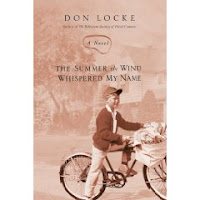
The Summer the Wind Whispered My Name By Don Locke

It is time for the FIRST Blog Tour! On the FIRST day of every month we feature an author and his/her latest book’s FIRST chapter!

The feature author is:

and his book:

The Summer the Wind Whispered My Name
NavPress Publishing Group (August 2008)

ABOUT THE AUTHOR:

Don Locke is an illustrator and graphic artist for NBC’s Tonight Show with Jay Leno and has worked as a freelance writer and illustrator for more than thirty years. He lives in Southern California with his wife, Susan. The Summer the Wind Whispered My Name, prequel to The Reluctant Journey of David Connors, is Don’s second novel.
Product Details:

List Price: $12.99
Language: English
Paperback: 355 pages
Publisher: NavPress Publishing Group (August 2008)
ISBN-10: 1600061532
ISBN-13: 978-1600061530

AND NOW…THE FIRST CHAPTER:

Preface

Until recently my early childhood memories weren’t readily available for recollection. Call it a defective hard drive. They remained a mystery and a void—a midwestern landscape of never-ending pitch-blackness where I brushed up against people and objects but could never assign them faces or names, much less attach feelings to our brief encounters.

But through a miraculous act of divine grace, I found my way back home to discover the child I’d forgotten, the boy I’d abandoned supposedly for the good of us both. There he sat beneath an oak tree patiently awaiting my return, as if I’d simply taken a day-long fishing trip. This reunion of spirits has transformed me into someone both wiser and more innocent, leaving me to feel both old and young.

And with this new gift of recollection, my memories turn to that boy and to the summer of 1960, when the winds of change blew across our rooftops and through the screen doors, turning the simple, manageable world of my suburban neighborhood into something unfamiliar, something uncomfortable. Those same winds blew my father and me apart.

One

Route 666

With a gentle shake of my shoulders, a kiss on my cheek, and the words It’s time whispered by my mom, I woke at five thirty in the morning to prepare for my newspaper route. Careful not to wake my older brother, Bobby, snoozing across the room, I slipped out of bed and stumbled my way into the hallway and toward the bathroom, led only by the dim glow of the nightlight and a familiarity with the route.

There on the bathroom floor, as usual, my mother had laid my clothes out in the shape of my body, my underwear layered on top. You’re probably wondering why she did this. It could have been that she severely underestimated my intelligence and displayed my clothes in this fashion in case there was any doubt on my part as to which articles of clothing went where on my body. She didn’t want to face the public humiliation brought on by her son walking out of the house wearing his Fruit of the Loom undies over his head. Or maybe her work was simply the result of a sense of humor that I missed completely. Either way, I never asked.

Mine was a full-service mom whose selfless measures of accommodation put the men of Texaco to shame. The fact that she would inconvenience herself by waking me when an alarm clock would suffice, or lay out my clothes when I was capable of doing so myself, might sound a bit odd to you, but believe me, it was only the tip of the indulgent iceberg. This was a woman who would cut the crust off my PB&J sandwich at my request, set my toothbrush out every night with a wad of Colgate laying atop the bristles, and who would often put me to sleep at night with a song, a prayer, and a back scratch. In the wintertime, when the wind chill off Lake Erie made the hundred-yard trek down to the corner to catch the school bus feel like Admiral Perry’s excursion, Mom would actually lay my clothes out on top of the floor heater before I woke up so that my body would be adequately preheated before stepping outside to face the Ohio cold. From my perspective my room was self-cleaning; toys, sports equipment, and clothes discarded onto the floor all found their way back to the toy box, closet, or dresser. I never encountered a dish that I had to clean or trash I had to empty or a piece of clothing I had to wash or iron or fold or put away.

I finished dressing, entered the kitchen, and there on the maroon Formica table, in predictable fashion, sat my glass of milk and chocolate long john patiently waiting for me to consume them. My mother, a chocoholic long before the word was coined, had a sweet tooth that she’d handed down to her children. She believed that a heavy dusting of white processed sugar on oatmeal, cream of wheat, or grapefruit was crucial energy fuel for starting one’s day. Only earlier that year I’d been shocked to learn from my third grade teacher, Mrs. Mercer, that chocolate was not, in fact, a member of any of the four major food groups.

Wearing a milk mustache and buzzing from my sugar rush, I walked outside to where the stack of Tribunes—dropped off in my driveway earlier by the news truck—were waiting for me to fold them.

More often than I ever cared to hear it, my dad would point out, “It’s the early bird that catches the worm.” But for me it was really those early morning summer hours themselves that provided the reward. Sitting there on our cement front step beneath a forty-watt porch light, rolling a stack of Tribunes, I was keenly aware that bodies were still strewn out across beds in every house in the neighborhood, lying lost in their dreamland slumber while I was already experiencing the day. There would be time enough for the sounds of wooden screen doors slamming shut, the hissing of sprinklers on Bermuda lawns, and the songs of robins competing with those of Elvis emanating from transistor radios everywhere. But for now there was a stillness about my neighborhood that seemed to actually slow time down, where even the old willow in our front yard stood like one more giant dozing on his feet, his long arms hanging lifeless at his sides, and where the occasional shooting star streaking across the black sky was a confiding moment belonging only to the morning and me.

From the porch step I could detect the subtle, pale peach glow rise behind the Finnegan’s house across the street. I stretched a rubber band open across the top of my knuckles, spread my fingers apart, and slid it down over the length of the rolled paper to hold it in place. Seventy-six times I’d repeat this act almost unconsciously. There was something about the crisp, cool morning air that seemed to contain a magical element that when breathed in set me to daydreaming. So that’s just what I did . . . I sent my homemade bottle rocket blasting above the trees and watched as the red and white bobber at the end of my fishing pole suddenly got sucked down below the surface of the water at Crystal Lake, and with my Little League team’s game on the line, I could hear the crack of my bat as I smacked a liner over the third baseman’s head to drive in the go-ahead run. Granted, most kids would daydream bigger—their rockets sailed to the moon or Mars, and their fish, blue marlins at least, were hooked off Bermuda in their yachts, and their hits were certainly grand slams in the bottom of the ninth to win the World Series for the Reds—but my dad always suggested that a dream should have its feet planted firmly enough in reality to actually have a chance to come true one day, or there wasn’t much point in conjuring up the dream in the first place. Dreaming too big would only lead to a lifetime scattered with the remnants of disappointments and heartbreak.

And I believed him. Why not? I was young and his shadow fell across me with weight and substance and truth. He was my hero. But in some ways, I suppose, he was too much like my other heroes: Frank Robinson, Ricky Nelson, Maverick. I looked up to them because of their accomplishments or their image, not because of who they really were. I didn’t really know who they were outside of that. Such was the case with my dad. He was a great athlete in his younger years, had a drawer full of medals for track and field, swimming, baseball, basketball, and a bunch from the army to prove it.

It was my dad who had managed to pull the strings that allowed me to have a paper route in the first place. I remember reading the pride in his eyes earlier in the spring when he first told me I got the job. His voice rose and fell within a wider range than usual as he explained how I would now be serving a valuable purpose in society by being directly responsible for informing people of local, national, and even international events. My dad made it sound important—an act of responsibility, being this cog in the wheel of life, the great mandala. And it made me feel important, better defining my place in the universe. In a firm handshake with my dad, I promised I wouldn’t let him down.

Finishing up folding and banding the last paper, I knew I was running a little late because Spencer, the bullmastiff next door, had already begun to bark in anticipation of my arrival. Checking the Bulova wristwatch that my dad had given me as a gift the morning of my first route confirmed it. I proceeded to cram forty newspapers into my greasy white canvas pouch and loop the straps over my bike handles. Riding my self-painted, fluorescent green Country Road–brand bike handed down from my brother, I would deliver these papers mostly to my immediate neighborhood and swing back around to pick up the final thirty-six.

I picked the olive green army hat up off the step. Though most boys my age wore baseball caps, I was seldom seen without the hat my dad wore in World War II. Slapping it down onto my head, I hopped onto my bike, turned on the headlight, and was off down my driveway, turning left on the sidewalk that ran along the front of our corner property on Willowcreek Road.

I rode around to where our street dead-ended, curving into Briarbrook. Our eccentric young neighbors, the Springfields, lived next door in a house they’d painted black. Mr. and Mrs. Springfield chose to raise a devil dog named Spencer rather than experiencing the joy of parenthood. Approaching the corner of their white picket fence on my bike, I could see the strong, determined, shadowy figure of that demon dashing back and forth along the picket fence, snarling and barking at me loudly enough to wake the whole neighborhood. As was my custom, I didn’t dare slow down while I heaved the rolled-up newspaper over his enormous head into their yard. Spencer sprinted over to the paper and pounced on it, immediately tearing it to shreds—a daily reenactment. The couple insisted that I do this every day, as they were attempting to teach Spencer to fetch the morning paper, bring it around to the back of the house where he was supposed to enter by way of the doggy door, and gently place the newspaper in one piece on the kitchen table so it would be there to peruse when they woke for breakfast.

Theirs was one of only two houses in the neighborhood that were fenced in, a practice uncommon in the suburbs because it implied a lack of hospitality. Even a small hedge along a property line could be interpreted as stand-offish. The Springfields’ choice of house color wasn’t helpful in dispelling this notion. And yet it was a good thing that they chose to enclose their property because we were all quite certain that if Spencer ever escaped his yard, he would systematically devour every neighborhood kid, one by one. The strange thing was that the picket fence couldn’t have been more than three feet high, low enough for even a miniature poodle to clear—so why hadn’t Spencer taken the leap? Could it be that he was just biding his time, waiting for the right moment to jump that hurdle? So I was thankful for the Springfields’ ineptitude when it came to dog training because it allowed me to buffer Spencer’s appetite, knowing that whenever he did decide to make his move, I would most likely be the first course on the menu.

The neighborhood houses on my route were primarily ranch style, third-little-pig variety, and always on my left. On my left so that I could grab a paper out of my bag and heave it across my body, allowing for more mustard on my throw and more accuracy than if I had to sling it backhand off to my right side. This technique also helped build up strength in my pitching arm. I always aimed directly toward the middle of the driveway instead of anywhere near the porch, which could, as I’d learned, be treacherous territory. An irate Mrs. Messerschmitt from Sleepy Hollow Road once dropped by my house, screaming, “You’ve murdered my children! You’ve murdered my children!” Apparently I’d made an errant toss that tore the blooming heads right off her precious pansies and injured a few hapless marigolds. From that day on I shot for the middle of the driveway, making sure no neighbors’ flowers ever suffered a similar fate at my hands.

I passed my friend Mouse Miller’s house, crossed the street, and headed down the other side of Briarbrook, past Allison Hoffman’s house—our resident divorcée. All my friends still had their two original parents and family intact, which made Mrs. Hoffman’s status a bit of an oddity. Maybe it was the polio scare that people my parents’ age had had to live through that appeared to make them wary of any abnormality in another human being. It wasn’t just being exposed to the drug addicts or the murderers that concerned them, but contact with any fringe members of society: the divorcées and the widowers, the fifty-year-old bachelors, people with weird hairdos or who wore clothing not found in the Sears catalogue. People with facial hair were especially to be avoided.

You didn’t want to be a nonconformist in 1960. Though nearly a decade had passed, effects of the McCarthy hearings had left some Americans with lingering suspicions that their neighbor might be a Red or something worse. So everyone did their best to just fit in. There was an unspoken fear that whatever social dysfunction people possessed was contagious by mere association with them. I had a feeling my mom believed this to be the case with Allison Hoffman—that all my mother had to do was engage in a five-minute conversation with any divorced woman, and a week or so later, my dad would come home from work and out of the blue announce, “Honey, I want a divorce.”

Likely in her late twenties, Mrs. Hoffman was attractive enough to be a movie star or at least a fashion model—she was that pretty. She taught at a junior high school across town, but for extra cash would tutor kids in her spare time. Despite her discriminating attitude toward Mrs. Hoffman, my mother was forced to hire her as a tutor for my sixteen-year-old brother for two sessions a week, seeing as Bobby could never quite grasp the concept of dangling participles and such. Still, whenever she mentioned Mrs. Hoffman’s name, my mom always found a way to justify setting her Christian beliefs aside, calling her that woman, as in, “just stay away from that woman.” Mom must have skipped over the part in the Bible where Jesus healed the lepers. Anyway, Mrs. Hoffman seemed nice enough to me when I’d see her gardening in her yard or when I’d have to collect newspaper money from her; a wave and smile were guaranteed.

I delivered papers down Briarbrook, passed my friend Sheena’s house on the cul-de-sac, and went back down to Willowcreek, where I rolled past the Jensens’ vacant house. The For Sale sign had been stuck in the lawn out front since the beginning of spring. I’d seen few people even stop by to look at the charming, white frame house I remember as having great curb appeal. Every kid on the block was rooting for a family with at least a dozen kids to move in to provide some fresh blood.

A half a block later, I turned the corner and was about to toss the paper down Mr. Melzer’s drive when I spotted the old man lying under his porch light, sprawled out on the veranda, his blue overall-covered legs awkwardly dangling down the front steps of his farm house. I immediately stood up on my bike, slammed on the brakes, fish-tailed a streak of rubber on the sidewalk, dumped the bike, and rushed up to his motionless body. “Mr. Melzer! Mr. Melzer!” Certain he was dead, I kept shouting at him like he was only asleep or deaf. “Mr. Melzer!” I was afraid to touch him to see if he was alive.

The only dead body I had touched up till then was my great-uncle Frank’s at his wake, and it was not a particularly pleasant experience. I was five years old when my mom led me up to the big shiny casket where I peered over the top to see the man lying inside. Standing on my tiptoes, I stared at Frank’s clay-colored face, which I believed looked too grumpy, too dull. While alive and kicking, my uncle was an animated man with ruddy cheeks who spoke and reacted with passion and humor, but the expression he wore while lying in that box was one that I’d never seen on his face before. I was quite sure that if he’d been able to gaze in the mirror at his dead self with that stupid, frozen pouting mouth looking back at him, he would have been humiliated and embarrassed as all get out. And so, while no one watched, I started poking and prodding at his surprisingly pliable mouth, trying to reshape his smile into something more natural, more familiar, like the expression he’d worn recalling the time he drove up to frigid Green Bay in a blizzard to watch his beloved Browns topple Bart Starr and the Green Bay Packers. Or the one he’d displayed while telling us what a thrill it was to meet Betty Grable at a USO function during the war, or the grin that always appeared on his face right after he’d take a swig of a cold beer on a hot summer day. It was a look of satisfaction that I was after, and was pretty sure I could pull it off. Those hours of turning shapeless Play-Doh into little doggies and snowmen had prepared me for this moment.

After a mere twenty seconds of my molding handiwork, I had successfully managed to remove my uncle’s grim, lifeless expression. Unfortunately I had replaced it with a hideous-looking full-on smile, his teeth beaming like the Joker from the Batman comics. Before I could step back for a more objective look, my Aunt Doris let out a little shriek behind me; an older gentleman gasped, which brought my brother over, and he let out a howl of laughter, all followed by a flurry of activity that included some heated discussion among relatives, the casket’s being closed, and my mother’s hauling me out of the room by my earlobe.

But you probably don’t really care much about my Uncle Frank. You’re wondering about Mr. Melzer and if he’s a character who has kicked the bucket before you even got to know him or know if you like him. You will like him. I did. “Mr. Melzer!” I gave him a good poke in the arm. Nothing . . . then another one.

The fact is I was surprised when Mr. Melzer began to move. First his head turned . . . then his arm wiggled . . . then he rose, propping himself up onto an elbow, attempting to regain his bearings.

“Mr. Melzer?”

“What?” He looked around, glassy-eyed, still groggy. “Davy?”

I suddenly felt dizzy and nearly fell down beside him on the porch. “Yeah, it’s me.”

“I must have dozed off. Guess the farmer in me still wants to wake with the dawn, but the old man, well, he knows better.” He looked my way. “You’re white as a sheet—you okay, boy?”

Actually I was feeling pretty nauseated. “Yeah, I’m okay. I just thought . . .”

“What? You thought what?”

“Well, when I saw you lying there . . . I just thought . . .”

“That I was dead?” I nodded. “Well, no, no, I can see where that might be upsetting for you. Come to think of it, it’s a little upsetting to me. Not that I’m not prepared to meet my maker, mind you. Or to see Margaret again.” He leaned heavily on his right arm, got himself upright, and adjusted his suspenders. “The fact is . . . I do miss the old gal. The way she’d know to take my hand when it needed holdin’. Or how she could make a room feel comfortable just by her sitting in it, breathing the same air. Heck, I even miss her lousy coffee. And I hope, after these two years apart, she might have forgotten what a pain in the rear I could be, and she might have the occasion to miss me a bit, too.”

Until that moment, I hadn’t considered the possibility of the dead missing the living. Sometimes when he wasn’t even trying to, Mr. Melzer made me think. And it always surprised me how often he would just say anything that came into his head. He never edited himself like most adults. He was like a kid in that respect, but more interesting.

“You believe in heaven?” I asked Mr. Melzer.

“Rather counting on it. How ’bout you?”

“My mom says that when we go to heaven we’ll be greeted by angels with golden wings.”

“Really? Angels, huh?”

“And she says that they’ll sing a beautiful song written especially for us.”

“Really? Your mother’s an interesting woman, Davy. But I could go for that—I could. Long as they’re not sitting around on clouds playing harps. Don’t care for harp music one bit. Pretty sure it was the Marx Brothers that soured me on that instrument.”

“How so?”

“Well, those Marx Brothers, in every movie they made they’d be running around, being zany as the dickens, and then Harpo—the one who never spoke a lick, the one with the fuzzy blond hair—always honking his horn and chasing some skinny, pretty gal around. Anyway, in the middle of all their high jinks, Harpo would come across some giant harp just conveniently lying around somewhere, and he’d feel obliged to stop all the antics to play some sappy tune that just about put you to sleep. I could never recover. Turned me sour on the harp, he did. I’m more of a horn man, myself. Give me a saxophone or trumpet and I’m happy. And I’m not particularly opposed to a fiddle either. But harps—I say round ’em up and burn ’em all. Melt ’em down and turn them into something practical . . . something that can’t make a sound . . . that’s what I say.”

See, I told you he’d pretty much say anything. I don’t think that Mr. Melzer had many people to listen to him. And just having a bunch of thoughts roaming around in his head wasn’t enough. I think Mr. Melzer chattered a lot so that he wouldn’t lose himself, so he could remember who he was.

“Yeah, well, anyway, I figure I’ll go home when it’s my time,” he continued. “Just hope it can wait for the harvest, seeing as there’s no one else to bring in the corn when it’s time.”

As far back as I could remember, Mr. Melzer used to drag this little red wagon around the neighborhood on August evenings, stacked to the limit with ears of corn. And he’d go door to door and hand out corn to everybody like he was some kind of an agricultural Santa.

“Do you know I used to have fields of corn as far as the eye can see . . . way beyond the rooftops over there?”

I did know this, but I never tired of the enthusiasm with which he told it, so I didn’t stop him. About ten years before, Mr. Melzer had sold off all but a few acres of his farmland to a contractor, resulting in what became my neighborhood.

“I still get a thrill when I shuck that first ear of corn of the harvest, and see that ripe golden row of kernels smiling back at me. Hot, sweet corn, lightly salted with butter dripping down all over it . . . mmm. Nothing better. Don’t nearly have the teeth for it anymore. You eat yours across or up and down?”

“Across.”

“Me too. Only way to eat corn. Tastes better across. When I see somebody munching on an ear like this”—the old man rolled the imaginary ear of corn in front of his imaginary teeth chomping down—“I just want to slap him upside the head.”

I was starting to run very late, and he noticed me fidgeting.

“Oh, yeah, here I am blabbering away, and you got a job to do.”

“I’ll get your paper.” I ran back to my bike lying on the sidewalk.

“So I see nobody’s bought the Jensen place yet,” he yelled out to me.

I grabbed a newspaper that had spilled out of my bag onto the sidewalk, and rushed back to Mr. Melzer. “Not yet. Whoever does, hope they have kids.” I handed the old man the newspaper.

“Listen, I’m sorry I scared you,” he said.

“It’s okay.” I looked over at a pile of unopened newspapers on the porch by the door. “Mind if I ask you something?”

“Shoot.”

“How come you never read the paper?”

“Oh, don’t know. At some point I guess you grow tired of bad news. Besides, these days all the news I need is right here in the neighborhood.”

“So why do you still order the paper?”

The old man smiled. “Well, the way I see it, if I didn’t order the paper, I’d miss out on these splendid little chats with you, now wouldn’t I?”

I told you you’d like him. I grinned. “I’m glad you’re not dead, Mr. Melzer.”

“Likewise,” he said, shooting a wink my way. When I turned around to walk back to my bike, I heard the rolled up newspaper hit the top of the pile.

MY REVIEW:

As a child of the 60’s (just gave away my age), I found The Summer the Wind Whispered My Name to be like a walk through my past. Don Locke has painted a visual image of a time of innocence tinged with the harsh awakening to the ugly truth of intolerance.

Davy and his friends will captivate the reader with their naivete and candor. The story is at times humorous and sometimes poignant as the young people fill the days of their summer vacation. When the first family of a different color moves into their neighborhood, tempers flare and friends and family suddenly manifest previously unknown behavior.


The Summer the Wind Whispered My Name contains so many excellent lessons about life, love, parenting, death, and tolerance. I would definitely recommend it.

A Passion Redeemed by Julie Lessman – CFBA

This week, the

Christian Fiction Blog Alliance
is introducing

A Passion Redeemed

Revell (September 1, 2008)
by

Julie Lessman

ABOUT THE AUTHOR:

Julie Lessman is a debut author who has already garnered writing acclaim, including ten Romance Writers of America awards. She is a commercial writer for Maritz Travel, a published poet and a Golden Heart Finalist. Julie has a heart to write “Mainstream Inspirational,” reaching the 21st-century woman with compelling love stories laced with God’s precepts. She resides in Missouri with her husband and their golden retriever, and has two grown children and a daughter-in-law. A Passion Most Pure was her first novel.

ABOUT THE BOOK

No man can resist her charms. Or so she thought. Charity O’Connor is a woman who gets what she wants. Her stunning beauty and flirtatious ways have always succeeded with men. Until Mitch Dennehy, that is.

Brilliant and dangerously handsome, Mitch is a no-nonsense newspaperman who wants nothing to do with her. Charity burned him once, destroying his engagement to the only woman he ever truly loved. He won’t play with matches again. But Charity has a plan to turn up the heat, hoping to ignite the heart of the man she loves. And she always gets what she wants–one way or another.

Or does she? Will her best-laid schemes win his love? Or will her seductive ways drive him away forever? Book 2 in the Daughters of Boston series, A Passion Redeemed will captivate your heart and stir your soul with a story of faith and redemption rising from the ashes of temptation, desire, and shame.

Praise for the first book in the series:

“Full of romance, humor, rivalry, and betrayal, A Passion Most Pure will captivate readers from the first page.” –Historical Novels Review “Superb! Incredible!

“I loved Julie Lessman’s A Passion Most Pure from the second I picked it up until the very last moment I stopped reading.” –Armchair Interviews

“I devoured this book and loved every single page. . . . This is a thick, juicy read, and one I would pick up again in a heartbeat.” –christianreviewofbooks.com

If you would like to read an excerpt from A Passion Redeemed, go HERE.

MY REVIEW:

When I read A Passion Most Pure, I really disliked Charity. I thought she was a spoiled and vindictive whose sole purpose and joy in life was to take away any man her sister Faith was interested in. Although I was assured by Julie that I would love Charity in this sequel, A Passion Redeemed, I was pretty skeptical because as I began reading, it looked like this mean girl had not changed one iota.

Nevertheless, I persisted and as I read, little by little I saw glimpses of the true Charity. But she was a stubborn one – the woundedness was so deep in her that she had a difficult time changing her behavior and continued to pay dearly for it.

Once again Julie Lessman has written story with realistic characters resplendent in all their flaws and virtues. These individuals wrestle with the same temptations that beset everyone – anger, jealousy, pride, sexual attraction – yet many of them show the fortitude to resist. Perhaps an indication of the author’s gift is that the characters are so authentic, the reader reacts strongly to their actions.

I would definitely recommend A Passion Redeemed to all who love a historical romance.

I have an extra copy of A Passion Redeemed to give away. I would like to generate more traffic to my blog so the person who refers the most people to this post by September 1 will win. To win, leave a comment on this post and have your friends leave comments telling me your name and that you referred them. We’ll see how this works.

Come visit some of those participating in the tour:

Abi at lighter side
Amber at A Fiction-Filled Life
Amy at Simple Folk Schoolhouse
Amy at My Life
Andie at frommipov
Angela at One Baby, Seven Dogs, and a Mommy
April at Projecting A
Barbara at Victoria Hill Farm
Beth at The Write Message
Betsy Ann at Betsy Ann “Writer at Large!”
Bonnie at Bonnie Writes
Brittanie at A Book Lover
Camy at Camy Tang
Cara at the law, books, and life
Carla at Carla’s Writing Café
Carol at Blogging With Carol
Carolyn at Serenity
Carolyn at Serenity
Carrie at The Random Thoughts Of Carrie
CeeCee at Book Splurge
Cheryl at Writing Remnants
Christy at Christy’s Book Blog
Christy at At Split Ends
Courtney at A Mom Speaks
Dave at Dave Rhoades
Dave at Novel Spotlight
Deborah at books, movies and chinese food
Deborah at Country At Heart
Deborah at Comfort Joy Designs
Debra at Soul Reflections
Deena at A Peek At My Bookshelf
Delia at Gatorskunkz And Mudcats
Dineen at Kittens Come From Eggs
Edyth at Great Reads by Jasmine
Erin at Life Around Here
Gina at Upon Reflection
Janis at The Nearsighted Bookworm
Janna at Cornhusker Academy
Jeni at Allen Family Circus
Jenn at Blessed is She…
Jennifer at Musings on This, That, & The Other Thing
Jennifer at So Many Books…So Little Time
Jenny at Jenny B. Jones
Jenny at Come Meet AusJenny
Jill at Christian Work At Home Moms
Joleen at timetotalk
Karen at Mommy of Three
Kelly at A Disciple’s Steps
Kim at Window To My World
Krista at Welcome To Married Life
Kristi at Stamped With Grace
LaShaunda at See Ya On The Net
Laura at Laura William’s Musings
Leah at Ponderings From My Heart
Leslie at A Little Bit Of Sunlight
Linda at Mocha With Linda
Linda at Reading For His Glory
Lynnae at Lynnae’s Bookshelf
Margaret at Creative Madness
Michelle at Edgy Inspirational Author
Myra at Writer at Random
Nora at Finding Hope Through Christian Fiction
Pam at A Writer’s Journey
Pam at Pam’s Private Reflections
Pam at Daysong Reflections
Peg at Sips ‘n Cups Cafeteria
Pepper at Great Christian Fiction
Rachelle at Stifled Squeal
Becky at Becky’s Christian Reviews
Rel at Relz Reviewz
Rulan at Fiction Showcase
Ruth at Booktalk & more…
Ryan at loves to read
Sherry at Everything Moms
Sunny at Life In The Estrogen Sea
Susan at His Reading List
Tabitha at 123pizza’s Weblog
Takiela at Beauty 4 Ashes
Tami at Tree Swing Reading
Tara at The Bee And Me
Tara at Tara’s View Of The World
Tracy at Pix-N-Pens
Victoria at Overlooked Orchid
Winter at Rodeo with A Twist Of Suspense

The Making of Isaac Hunt by Linda Leigh Hargrove

It is time to play a Wild Card! Every now and then, a book that I have chosen to read is going to pop up as a FIRST Wild Card Tour. Get dealt into the game! (Just click the button!) Wild Card Tours feature an author and his/her book’s FIRST chapter!

You never know when I might play a wild card on you!

Today’s Wild Card author is:

and her book:

The Making of Isaac Hunt

Lift Every Voice (June 1, 2007)

ABOUT THE AUTHOR:

Linda Leigh Hargrove blends suspense, humor, and faith into compelling stories about race and class in America. Her writings include two novels: The Making of Isaac Hunt (June 2007) and Loving Cee Cee Johnson (September 2008). The former environmental engineer currently resides in North Carolina with her husband and three sons where she occasionally designs a Web site.

Visit the author’s website and her blog.

Product Details:

List Price: $12.99
Paperback: 352 pages
Publisher: Lift Every Voice (June 1, 2007)
Language: English
ISBN-10: 0802462693
ISBN-13: 978-0802462695

AND NOW…THE FIRST CHAPTER:

Chapter One

Prologue

On an ordinary afternoon in late October I discovered the truth about me. Like fire, that single truth stirred a hunger and created a hurt, but in the end it opened the door to a wholeness beyond my wildest dreams. All in all, I don’t regret embracing that truth. I only regret the time I wasted in running from the freedom that came with it.

I was planning to drive to Richmond that Sunday afternoon a few hours ahead of my parents. I told them I wanted to visit old school friends before our Sunday visit to the rest home where granddaddy stayed.

“I know it’s kind of a last minute thing,” I said, hoping it didn’t sound like another one of my lame stories. “But I haven’t seen any of them in a couple years.”

“Oh?” was mom’s response. It had been a long ‘oh’. She had stared at me with those big brown eyes over her half glasses and brought her Eartha Kitt-like voice up a half dozen notches. “Sounds interesting, Isaac,” she added like she expected to be invited along. Then she winked and said, “Give Senator Holloman’s daughter our love.”

Dad gave my hair a once-over, wagged his head, and grunted. “Behave yourself. Your mother and I will meet you outside your granddaddy’s room around two. Don’t go trampling in bothering him before we get there. He needs his rest. You need a haircut. How can you even see to drive?” He screwed up his brown face and went back to rummaging through his briefcase. Making preparations for upcoming meetings at the 4th Circuit Court of Appeals took front seat to his concern over his only son’s dishonesty.

Later, I had sat in the Alzheimer’s wing outside my grandfather’s room for over an hour waiting for the woman I had lied for. A single white rose in my lap.

Her name was Rose. She had eyes the color of milk chocolate, skin like the choicest cream, and the pinkest lips. She was real and easy to be with. Every third Sunday for more than three months she’d dodge work at the front desk and meet me on the bench outside granddaddy’s room. We had a special spot in the woods.

I closed my eyes and leaned my head back against the mud colored cinderblock wall and pressed the rose to my lips. Then I placed the rose on the seat beside me and linked my hands behind my head.

Someone was walking toward me. The footsteps were muffled and slow. I kept my eyes closed, faking sleep. The footsteps stopped and someone poked me in the chest.

“Wake up, Isaac,” came the whisper.

Another poke to the chest. “Isaac.”

“Good afternoon, Mr. Patterson,” I said without opening my eyes.

He snorted and moved in closer. I felt his warm breath on my cheek. “We’ve been waiting all day, kid.”

He had been eating raw onions again. I coughed. “I’m not doing it anymore. That’s what I told you last time, Mr. Patterson.” I looked up into his blue-gray eyes “It’s over. Remember?”

He stuck out his bottom lip and gave me a squinty-eyed frown.

I shook the hair out of my eyes and looked at him hard. “I’m not doing it anymore.” I waved my arms like an umpire calling a man out. “No more.”

“What do you mean, you’re not doing it no more. Kid, it was your idea.”

“Well, it was a bad idea. And I don’t want to do it anymore. Besides, they know.”

Mr. Patterson sat down beside me and placed his silver cane across his lap. He stroked it with the heel of his hand. His age spots looked like coffee stains on white china. “They don’t know a thing we don’t let them know.”

He looked at me sideways and winked. “You know what I mean, bro.”

I couldn’t help but laugh. Little white men with canes should only say the word bro if they want to be laughed at. “They know.” I winked hard and tipped my head toward the surveillance camera down the hall.

“Playing checkers,” he whispered, “That’s all they think we’ve been doing. Nobody has to know it’s anything more.”

The squeak of a wheel cut Mr. Patterson short. He was looking over my shoulder with wide eyes. The scent of cheap aftershave rose around me.

“Yes, Isaac. It’s just a friendly game of checkers,” said the voice behind me.

I turned and nodded to the thin clean-shaven man in a wheelchair. “Good afternoon, Mr. Smith. Getting a little exercise?” I forced a smile. Sweat glistened on the loose skin of his neck. There was a bead of sweat on his upper lip that made his face look dirty. His eyes, as pale as mine, sparkled irony.

He was pulling at his black leather biking gloves. For a few seconds I couldn’t take my eyes off them. That’s when I noticed what he had tucked in the folds of the blanket spread across his legs – an envelope marked I. Hunt.

Mr. Smith finished looking me up and down then nodded back at me. “Mr. Hunt.” Then he gave Mr. Patterson a smile that did nothing to warm the air and barked, “Bye, George Patterson.”

Mr. Patterson stood and gulped. “Afternoon, Mick,” he said and left.

Mr. Smith stared at me some more. I stared back some more.

“You’re quite the young entrepreneur for a shaggy-headed college student, Isaac Ulysses Hunt.” He jerked his head toward my grandfather’s door. “Old Ulysses would be proud.”

I glared at his white face then clenched my teeth and looked away.

He wheeled himself closer to me and lowered his voice. “They don’t know. That note you received came from me.”

I looked at him. He was a thin pasty old man. His Aqua Velva or whatever it was was starting to burn my eyes. The insulated shirt he wore only concentrated the aroma. His blue eyes were set back under a heavy brow with wild salt and pepper eyebrows. He narrowed those eyes and smiled at me. I looked away.

“That’s a very nice rose you have.”

“What do you want from me?”

“Want?”

“Yeah. This is where you ask me for that little favor so you can keep my little secret.”

He sighed. “If I wanted to black mail you I would have done it a long time ago. Besides it was kind of interesting watching you operate. Getting all these old white folk to trust you with their money. It beat Bingo and reruns of Diagnosis Murder, that’s for sure. What’d you do with the money?”

I stared at him. That’s for me to know and you to find out. My turn to narrow my eyes and smile.

His smile faded. “Doesn’t matter, I guess. Push me.”

“I’m waiting for someone.”

“Rose? She’s not coming.”

I frowned.

He glanced down the hall past me. “I’ll tell you outside. Just push me, Isaac. Too many eyes here.”

I laid the rose across the back of his headrest and I pushed.

Mr. Smith directed me toward a back entrance and down a wide leaf-littered path to a clearing with stone benches overlooking a small pond. Dry leaves rattled in the breeze. A few squirrels frolicked on a log nearby. I knew the spot well. It felt empty without Rose.

Mr. Smith shifted in his chair and reached under his blanket. He pulled out a half empty bottle of whiskey.

“Here, hold this.”

I took the bottle and sat on the bench beside his chair.

He reached under his blanket again and pulled out two crinkled paper cups. He handed me one and took the bottle back. His clammy white fingers brushed mine. I flinched.

“Hold your cup closer.”

And you’re against me gambling? I almost said. I rolled my eyes and placed the empty cup on the bench beside me.

“I take it you don’t care to drink with me then.”

Mr. Smith shrugged and screwed the cap back on the bottle before tucking it under his blanket again.

“I need to get back. My parents should be here soon.” Upsetting my parents was only a distant thought, I still had Rose on the brain.

“She’s not coming back, Isaac. Rose, I mean.”

“You’re repeating yourself. How do you know that anyway?”

He slumped and looked out over the pond. “Yesterday, Rose and I sat here and we talked about you.”

I frowned at him.

“Rose was my daughter.”

I couldn’t help but gape.

He shrugged and with a smirk said, “She got her mother’s looks.”

Mr. Smith shifted in his chair and gulped the rest of the whiskey in his cup. He poured himself another and continued. “She’s a bright girl most of the time but put her in the same room with a handsome face and a single white rose and she turns into a naïve flighty little thing. I asked her what she knew about you. Your work. Your family. She said she thought you were in finance and came to visit your mother every month.” He looked at me.

I winced. “We haven’t exactly talked about …”

“She said she thought your mother was the widow Inez Hunt, a white woman that lives across the hall from me.”

I winced again.

“Then she went on and on about you. Your clothes. Your car. Your looks. ‘He has the most exquisite coloring, daddy.’ That’s what she said.”

Exquisite? She was one for strange words.

He shook his head. “That’s when I knew I had to tell her my little secret. Though I knew as soon as I opened my mouth that she’d do the same thing her mother did ten years ago. Leave me.”

He hung his head and stayed quiet for several minutes. He coughed and ran the back of his hand across his top lip. I stood up. Rose was a wash and I didn’t want to hear the rest of what this old white man had to suggest about me. “Mr. Smith, I …”

“You know what passing means, Isaac? Passing for white, I mean.”

A stiff breeze blew between us. I pulled the collar of my pea coat in tighter and leaned over him. “I’m not trying to pass, Mr. Smith.”

He tucked his cup and bottle away and stuffed his hands under the blanket. “My daddy was about like your folks. Real fair. My mother she could have passed. But she didn’t. She was a proud woman. Proud to be black. When I was seventeen, they were both killed in a car accident. Daddy’s brother took me in. I graduated high school. Enlisted Army. Did nine months in Korea. That’s where I was wounded.” He pointed at his legs. “And that’s where I discovered the benefits of passing. I came back. Conveniently forgot my uncle’s address. Fell in love with a white woman. Married her on her daddy’s front porch overlooking the Chesapeake. Had our lovely Rose. Made a nice living passing for white.

“My sweet Leslie thought the sun and moon rose and set at my command till the day my uncle shows up and I have to tell her my little secret. She took Rose and left. All these years I thought she’d told Rose. Yesterday, when I realized Rose didn’t know …

He shook his head and ran a shaky hand through his thinning hair. “You know what your granddaddy told me one day? He said ‘A lie is a lie is a lie. No matter how pretty you tell it or how long you live it, it’s still a lie and in the end when it’s brought to light, it breeds misery.’ Right out of the blue. That’s what he said. I was sitting in his room playing old Al Green and he kinda woke up and came to his senses just for a few seconds.”

He glanced at me and stopped short. I was trying hard not to roll my eyes. I’d heard that lie line many times from my grandfather. It was as tired as Mr. Smith’s blanket.

“‘I’m not black, daddy.’ That’s what my Rose said before she left me.”

He stretched out a hand, palm down, and looked at it. His hand started to tremble and he caught his breath. Tears dropped into his lap. I looked away then turned to go.

“Isaac. Wait.”

He handed me the envelope, “From Rose.”

I took it and stood there for a few seconds. Looking at that wilted rose and the shrinking old man. I remember thinking as I shifted on my cold feet that this talk had really been more for him than for me. It was obvious he didn’t care any more for me than the man in the moon but he needed to say these things to unload some guilt. He was old and guilt ridden. I knew the truth about who I was. I wasn’t living a lie, I told myself.

Man, I couldn’t have been more wrong.

# # #

“Where’s Betty’s boy?” came the scream a second time. It was my grandfather’s voice a few thousand decibels louder than anything I had heard coming out of him in a coon’s age, as he would say. And it was certainly louder than anyone at Glenbrook Rehabilitation Center would appreciate.

I chuckled and said something about his medication needing adjusting as I entered granddaddy’s room. My parents weren’t amused. Dad was hovering over his father’s bed. Mom was standing near the door wringing her hands.

When I walked in she pushed me back and pointed to the bench outside the room and said, “Sit.”

“I want to see Betty’s boy.” came another yell. “Can’t a dying man have a last request?”

Last request?

I pushed past my mother. “No, Mama. I want to talk with granddad.”

“Isaac …” my father started, then muttered, “Chloe, honey, stop him.”

Granddaddy’s eyes widened. He smiled and stretched his yellowing brown arms toward me. “There’s Betty’s boy. Come give me a hug, Isaac.”

I studied the old man from where I stood. His light brown eyes didn’t look like they had three months ago – wild and glassy like those of an animal in pain. During that visit, he’d talked endlessly to an invisible person named Mimi. The woman, I found out later, had been his secretary for a few months during his many years at the Department of Justice in D.C. Their affair had lasted for several years.

“Guilt will do that to a man in his last days,” Ricky Hunt, my father the wise judge had pronounced on the ride back to Raleigh.

Granddaddy had on one of those 9/11 tee shirts with a large bald eagle and flag enfolding the Twin Towers, and the words ‘In God We Trust’ across the top. I stared at it for a few seconds, not sure what to make of the words. God and Granddaddy? I chalked it up to another slip in reality for him.

I glanced behind me to where my parents stood – their eyes stretched wide. Dad shifted toward me a bit but stopped short when his foot hit the corner of a bulging duffle bag propped against the wall.

My mind went briefly to Mr. Smith out there crying in the woods. Racked with guilt and regrets. Weighed down with the burden of lying all his life.

What kind of burdens were weighing on my grandfather I wondered?

I stepped closer to the bed. His blue bathrobe, the one I had given him when I was twelve, was stretched over his thighs. I placed my hand on the worn terry cloth and leaned in. “Who’s Betty, granddaddy?”

“Your mama, Betty Douglas. She lives in North Carolina. In Pettigrew.”

The two adults behind me descended on the old man like an ER team, doing everything but cover his mouth with their hands. Looking back on that day, I think if they hadn’t been so obvious I wouldn’t have gotten so suspicious. I would have marked it up to another Mimi incident. Maybe he had had more than one tryst. He was a handsome old guy with those eyes and that square jaw, and probably had played the field as a younger man.

“What’s going on, Chloe?” asked granddaddy. His body fell back onto his pillow and he gasped, “Good Lord, help us all.”

Ulysses Hunt, the man I had grown to love and trust and learned to call Granddaddy Ulysses, died the next morning. Two days later, I hired a private investigator to help me find this Betty of Pettigrew.

MY REVIEW:

I began reading The Making of Isaac Hunt with no preconceived expectations as Hargrove was an unknown author to me. I have since learned that this is her first novel. Wow – quite impressive for a first novel!

Isaac Hunt has always felt caught between two worlds – too white for the blacks and too black for the whites. When his dying grandfather reveals the name of his birthmother and her location, Isaac began a quest to find out his true identity. As he gets closer to finding the truth, Isaac discovers that nothing is as it seems and that someone desperately wants him out of the way.

The Making of Isaac Hunt is a book about a small town riddled with rascism and those of both races who have taken a stand against it. It is a story of both love and unbridled hate; desperation and redemption. The Making of Isaac Hunt is filled with twists and surprises around every corner, action and suspense. But most important, it is a book that will make you stop and think.