The Key to the Kingdom by Jeff Dixon

It is time for a FIRST Wild Card Tour book review! If you wish to join the FIRST blog alliance, just click the button. We are a group of reviewers who tour Christian books. A Wild Card post includes a brief bio of the author and a full chapter from each book toured. The reason it is called a FIRST Wild Card Tour is that you never know if the book will be fiction, non~fiction, for young, or for old…or for somewhere in between! Enjoy your free peek into the book!

You never know when I might play a wild card on you!

Today’s Wild Card author is:


and the book:


The Key to the Kingdom: Unlocking Walt Disney’s Magic Kingdom

Deep River Books (December 1, 2010))

***Special thanks to Arielle Roper of Bring It On! Communications for sending me a review copy.***

ABOUT THE AUTHOR:

Jeff Dixon was raised in Florida and has always been fascinated with the man Walt Disney and the theme park he created. Dixon feels that any guest who would take the time to look would discover a story that will never be completed. It is against this canvas that Dixon paints this mystery, adventure, and thriller.

Visit the author’s website.

SHORT BOOK DESCRIPTION:

Grayson Hawkes learns how imaginative and elaborate Walt Disney World is when he accepts an invitation from a trusted friend landing him in a world he never knew existed. Suddenly unraveling a perplexing puzzle and trying to solve a mysterious disappearance, Hawkes navigates through the kingdom where knowledge of seemingly unimportant Disney facts and some divine help are the only way he can discover the answers and get out. In this world Disney trivia is no game…And the ancient key is the only way out.

Soon the lines between right and wrong begin to blur, and telling the difference between real and unreal become nearly impossible. Loyalty to faith, family and friends are stretched to the extreme in the pulse quickening adventure through a magical place where dreams really do come true.


Key to the Kingdom: A Real Treasure Hunt at Walt Disney World from Marc Percy on Vimeo.


Key To The Kingdom Trailer from Marc Percy on Vimeo.

Product Details:

List Price: $15.99
Paperback: 272 pages
Publisher: Deep River Books (December 1, 2010)
Language: English
ISBN-10: 1935265245
ISBN-13: 978-1935265245

AND NOW…THE FIRST CHAPTER:


Day One

Night

Halogen headlamps pierced the darkness of the cool central Florida night. The GPS guided the Mustang surging toward the coastal community of Port Orange. Racing along Taylor Road, Dr. Grayson Hawkes approached an unknown destination. Questions swirled in the tornado of curiosity whipping through the preacher’s mind. The glow of the dashboard light illuminated the business card propped against the gearshift; “1819 Taylor Road, Port Orange” had been neatly printed in blue ink. Flipping the card he read the name on the other side.

Farren Rales

Imagineering Ambassador

Walt Disney Company

Reading the name of his dear friend brought a slight smile to his face. Rales had been hired by the late Walt Disney himself as an animator at the Walt Disney Studios on Rales’s thirtieth birthday. In the years that followed he had worked on animated features, been involved in projects at Disneyland, and eventually became a part of that exclusive group of creative Walt Disney Company designers known as Imagineers. Rales was part Disney historian, part Disney philosopher, and a modern day keeper of the dream that Walt himself had begun.

Farren Rales had given him the business card with an invitation to meet the old Imagineer at ten o’clock this evening. The GPS announced a turn seconds before an inconspicuous dirt road veered to the right. Hawk responded sluggishly and shot past it. He instantly banked his ride into a U-turn that corrected his course. Slowly navigating the heavily wooded, chassis-jarring dirt road, he watched for signage. The headlights threw a glow on a sign that read Gamble Place Parking with an arrow that pointed right. He turned the wheel. A gate immediately came into view, blocking forward progress. Hawk looked over the steering wheel trying to decide whether he had managed to bungle the directions and gotten hopelessly lost. With the car idling, he got out and walked to the gate. Grasping the chain that held the gate closed, he saw the lock had been secured to the chain, but the chain was not fastened. When he dropped the chain, the gate lazily swung open. Hawk slid back behind the wheel of the car and it crawled forward as the dirt became softer below the tires. The Mustang eased up to a parking barrier, above which the headlights shone on a yellow house trimmed in green.

Exiting the automobile, Hawk left the parking area and made his way toward the house. There was a display in front of the walkway to the house that probably explained where he was. The automatic timer for the headlamps clicked off, leaving him standing in darkness. Sensing his eyes would never adjust in the moonless night to read the display, he remembered a flashlight that was hopefully still in the trunk of the car. He retraced his steps. In addition to the soft sound of his shoe steps in the sand, Hawk thought he heard something else moving near him. He came to an abrupt halt. Rales? Listening closely, he now only heard the sounds of the outdoor evening. The trunk popped open, producing a blast of light that momentarily blinded him. He fumbled for the flashlight and flicked the switch. The beam shone strongly as he slammed the trunk shut. He again moved toward the house. Sweeping the beam around him, he saw a large historical marker looming in the dark, over his left shoulder. He refocused the attention of the light on this newly discovered sign.

Gamble Place

In 1898, James N. Gamble, of the Proctor and Gamble Company and a longtime winter resident of Daytona Beach, bought this land on Spruce Creek for use as a rural retreat. In 1907 he built a small cracker cottage with an open front porch and a breezeway connecting a separate kitchen and dining room . . . In 1938, Gamble’s son-in-law, Alfred K. Nippert, completed the “Snow White House,” a Black Forest style cottage inspired by the Disney animated film classic, Snow White and the Seven Dwarfs. The house is surrounded by a Witch’s Hut, the Dwarfs’ Mine Shaft, and an elaborate network of rock gardens. Collectively these buildings and grounds form a historic landscape now known as Gamble Place. This property was listed in the National Register of Historic Places in 1993.

Obviously Rales had asked Hawk here because of the Disney connection. It had been a Disney connection that had started the friendship between the two men. Hawk had been introduced to Rales and asked the Imagineer if he would meet with him and his church staff to teach them the art of storytelling. The first meeting had gone so well it turned into a standing appointment each month. However this evening the invitation was for Hawk alone. Sighing deeply in an attempt to relax, Hawk listened closely and his ears tuned in to the sound of water gently playing along an unseen shoreline. The unexpected snap of a branch unleashed a wave of adrenaline spinning him in the direction of the noise. He peered into the blackness of the trees, searching for the maker of the sound, but heard nothing.

“Farren, is that you?” Hawk spoke with a bit more edge than he anticipated.

Silence confirmed Rales was not the source of the sound. “So when did you get so scared of the dark?” he muttered to himself. “And when did you start talking to yourself?”

Out of the corner of his vision he noticed a glimmer of light across the wooded darkness. With a bit of reservation he moved toward it. His shoes cracked sticks and crushed leaves, creating a symphony of sound that shattered the haunting noises of nature that had moments ago surrounded him. His flashlight began to dim. Shaking it violently he resurrected the brilliance of the beam, only to watch it fade into a momentary glow, and then disappear completely.

“Tremendous,” he said in frustration at the malfunctioning light. “Still talking to . . . and answering yourself.”

The point of light he had been moving toward disappeared as well. Pressing onward, he drew nearer to where it had been. Once again it appeared and this time looked brighter and stronger. Hawk’s trudging through the undergrowth yielded to softer ground as he heard a familiar voice cut quietly through the night.

“I began to think you weren’t going to make it.”

“I was starting to think you were playing a practical joke on me,” Hawk whispered back.

“Now, would I do that to you?” Rales laughed softly.

Hawk could now see much better as he approached the place where Rales stood. Farren had brought a lantern that illuminated the place he was standing and cast long shadows in multiple directions. Hawk descended the steps to join Rales on what appeared to be a recently created platform. The sound of the creek was closer and Hawk assumed they were now on the edge of the river. Rales was dressed in a pair of black slacks with a lightweight black windbreaker. Hawk did not miss the stealth attire and was getting ready to comment on it when Rales again spoke in a hushed tone.

“Any trouble finding the place?”

“I suppose not, since it’s out in the middle of nowhere!” Hawk decided to satisfy his curiosity. “And could you tell me why we’re whispering?”

“Didn’t you read the sign? We’re in a state park. It closed at dusk. We could get arrested for being here.”

“Then why didn’t we come here in the daylight?”

“Now, that wouldn’t be as much fun, would it?”

“Farren, we should clarify our definitions of fun.”

“Breaking into a state park is a story you’ll be able to tell for years!”

“I didn’t break in, the gate was unlocked.”

“So you opened it and drove on in.”

“You invited me.”

“Shhh,” Rales interrupted.

Hawk grew quiet and strained to hear sounds coming out of the darkness. He studied Rales’s tense features, trying to decide whether the old man was toying with him or was actually concerned that they might be caught after hours in the park. Rales’s face softened and he turned away from Hawk, letting his lantern shine toward a nearby wooden cottage that looked as if it had been plucked off of an animation cell from an antique piece of film. Hawk’s mouth opened slightly. Rales moved forward and panned the light across the front of this cottage that did not belong in this time or any other. It was recognizable as the cottage in the Black Forest of the classic cartoon Snow White and the Seven Dwarfs. Hawk’s eyes followed the movement of the lantern to the carved lintel and a stone trough. Rales moved toward the front door, fumbled with the handle, and then opened it. Looking back to Hawk, he motioned for him to follow him inside. Hawk entered, feeling like he was stepping into a fairy tale as Rales silently closed the door behind them.

The Key to the Kingdom: Unlocking Walt Disney’s Magic Kingdom

© 2010 Jeff Dixon

All rights reserved. This book or any portion thereof may not be reproduced or used in any manner whatsoever without the express written permission of the publisher except for the use of brief quotations in a book review.

MY REVIEW:

The Key to the Kingdom is a uniquely different story that takes place primarily within the  confines of Disney World. The author uses his intimate knowledge of the park and its history to concoct a page-turning mystery filled with fun facts, many in the form of clues leading Grayson Hawkes on a quest to solve the puzzle left by his missing friend. As his time grows short, Hawkes finds it more and more difficult to separate friends from foes.

I found The Key to the Kingdom to be an entertaining and interesting read and even began to interpret some of the clues before the book ended. The story is suitable for most ages and contains no graphic violence or objectionable language.  Other than the fact that the primary character is a pastor with the expected morals, there is little spiritual content. If you are looking for a bit of a change in your usual reading fare, this might be the book for you.

Fatal Judgment by Irene Hannon


MY REVIEW:

I have read and enjoyed Irene Hannon’s books in the Steeple Hill line for several years but they were all fairly typical romantic fiction. Then along came her Heroes of Quantico series and took her writing to a new level. Each new volume got just a little bit better. Her new offering, Fatal Judgment, first book in the Guardians of Justice series, meets or exceeds the standards set by the previous series.

With a suspenseful plot that could be taken from current news events, superb character interaction, a touch of humor, surprises around every corner, and of course romance, Fatal Judgment kept me turning the pages until the very end. Spiritual content was subtle but particularly evident in the character of Liz Michaels.

For those who enjoy their romance mixed with a little crime and suspense, Fatal Judgment might just be the book for you.


This book was provided for review by Revell, a division of Baker Publishing Group.

Available January 2011 at your favorite bookseller from Revell, a division of Baker Publishing Group.


ABOUT THE BOOK:

Fatal Judgment is the first novel in the new romantic suspense series “Guardians of Justice” by acclaimed author Irene Hannon, who has been recognized with accolades including RITA and Romantic Times Reviewer’s Choice awards.

Author Dee Henderson has praised Hannon’s latest book, saying, “Fatal Judgment is Irene Hannon’s storytelling at its best. I enjoyed every minute.”

In Fatal Judgment, U.S. Marshal Jake Taylor has seen plenty of action during his years in law enforcement. But he’d rather go back to Iraq than face his next assignment: protection detail for federal judge Liz Michaels. His feelings toward the coldhearted workaholic haven’t warmed in the five years since she drove her husband–and Jake’s best friend–to despair . . . and possible suicide.

As the danger mounts and Jake gets to know Liz better, he’s forced to revise his opinion of her. And when it becomes clear that an unknown enemy may want her dead, the stakes are raised. Because now both her life–and his heart–are in danger.

Full of suspense and romance, Fatal Judgment is a thrilling story that will keep you turning the pages late into the night.

ABOUT THE AUTHOR:

Irene Hannon is the author of more than 25 novels, including the CBA bestsellers Against All OddsAn Eye for an Eye, and In Harm’s Way. Her books have been honored with the coveted RITA Award from Romance Writers of America, the HOLT Medallion, the Daphne du Maurier award, and the Reviewer’s Choice Award from Romantic Times BOOKreviews magazine. She lives in Missouri.

www.irenehannon.com.

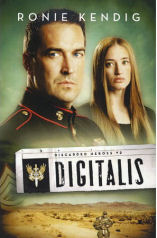
Digitalis by Ronie Kendig

This week, the

Christian Fiction Blog Alliance

is introducing

Digitalis

Barbour Publishing, Inc.(January 1, 2011)

by

Ronie Kendig

ABOUT THE AUTHOR:

Ronie has been married since 1990 to a man who can easily be defined in classic terms as a hero. She has four beautiful children. Her eldest daughter is 16 this year, her second daughter will be 13, and her twin boys are 10. After having four children, she finally finished her degree in December 2006. She now has a B.S. in Psychology through Liberty University in Lynchburg, VA. Getting her degree is a huge triumph for both her and her family–they survived!!

This degree has also given her a fabulous perspective on her characters and how to not only make them deeper, stronger, but to make them realistic and know how they’ll respond to each situation. Her debut novel, Dead Reckoning released March 2010 from Abingdon Press. And her Discarded Heroes series began in July 2010 from Barbour with the first book entitled Nightshade.

This is the second book in the series.

ABOUT THE BOOK:

Step into the boots of a former Marine in this heart-pounding adventure in life and love. Colton “Cowboy” Neeley is a Marine trying to find his footing as he battles flashbacks now that he’s back home. Piper Blum is a woman in hiding—from life and the assassins bent on destroying her family. When their hearts collide, more than their lives are at stake. Will Colton find a way to forgive Piper’s lies? Can Piper find a way to rescue her father, trapped in Israel? Is there any way their love, founded on her lies, can survive?

If you would like to read an excerpt of Digitalis, go HERE.

Learn more about Ronie and her books on her Website.


MY REVIEW:

If you like intense, action and suspense filled books that feature members of elite special ops forces and the women strong enough to love them, then Digitalis is probably one book you don’t want to miss.The second book in the Discarded Heroes series, Digitalis features former marine Colton Neeley aka “Cowboy” and Piper Blum, a sales clerk Colton just can’t resist. Afraid Piper will reject him if she learns of his true occupation and his unpredictable and devastating flashbacks, Colton is unaware that Piper has some heavy duty secrets of her own. When their worlds collide, the intensity of the story escalates.

Truthfully, I never thought I’d become a fan of military themed novels but Ronie Kendig has changed my mind. Her books teem with the type of action and suspense that keep me turning the pages, unwilling to stop reading until I know how things are resolved. Although fiction, the threats and crises in each story could easily be seen in current news. Digitalis is very well written with realistic characters and a perfectly paced plot. Dialogue and character relationships seem genuine. A strong message of faith is woven into the story in a natural and unobtrusive manner.

To reveal much more would spoil the story. Take my word for it, this is one book and series you don’t want to miss. I can’t wait for the next volume myself.

The Black Madonna by Davis Bunn

It is time for a FIRST Wild Card Tour book review! If you wish to join the FIRST blog alliance, just click the button. We are a group of reviewers who tour Christian books. A Wild Card post includes a brief bio of the author and a full chapter from each book toured. The reason it is called a FIRST Wild Card Tour is that you never know if the book will be fiction, non~fiction, for young, or for old…or for somewhere in between! Enjoy your free peek into the book!

You never know when I might play a wild card on you!


Today’s Wild Card author is:


and the book:


The Black Madonna

Touchstone; 1st edition (September 7, 2010)

***Special thanks to Libby Reed, Publicity Assistant, HOWARD BOOKS, a division of Simon & Schuster for sending me a review copy.***

ABOUT THE AUTHOR:

Davis Bunn is an award winning author who serves as writer in residence at Regent’s Par College, Oxford University. His novels have sold more than six million copies in sixteen languages.

Photograph by I.D. Bunn

Visit the author’s website.


Product Details:

List Price: $14.99
Paperback: 336 pages
Publisher: Touchstone; 1st edition (September 7, 2010)
Language: English
ISBN-10: 1416556338
ISBN-13: 978-1416556336

AND NOW…THE FIRST CHAPTER:

FROM THE CREST OF THE Herodium dig, Harry Bennett could look out and see three wars.

The isolated, cone-shaped hill rose two thousand feet over the Judean Desert. Herodium, the palace-fortress built by Herod the Great, had been erected on the site of his victory against the Parthians in 40 BCE. Herod had then served as king of Judea under his Roman masters, but he had been utterly despised by the Judeans. When Herod’s sons were finally vanquished, Herodium had been evacuated. Over the centuries, the city became a legend, its location a myth.

Modern excavations had begun in the sixties, only to be interrupted by wars and intifadas and disputes over jurisdiction. Harry Bennett was part of a group excavating the original palace fortress. The current project was supervised by a woman professor from the Sorbonne. She had fought for six years to gain the license, and nothing so minor as somebody else’s war was going to stop her work.

The volunteers came from a dozen nations, to dig and learn and bury themselves in history. Most were in their twenties and tried to keep up a brave face despite the rumbles of conflict and the brutal heat. The day Harry arrived at Herodium, three Scandinavian backpackers had perished hiking above the Ein Gedi National Forest. With water in their packs. Just felled by the ferocious heat.

And here Harry was, huddled under the relentless glare of that same deadly sun, using his trowel and his brush to scrape two thousand years of crud off a stone.

Officially Harry and the other volunteers were restricted to the dig and their hilltop camp. With Hamas missiles streaking the nighttime sky, none of the other unpaid staff were much interested in testing their boundaries. But twice each week the Sorbonne professor traveled to Jerusalem and delivered her finds to the ministry. When she departed that particular afternoon, Harry signaled to the Palestinian operating the forklift. Ten minutes later, they set off in Hassan’s decrepit pickup.

The angry wind blasting through his open window tasted of sand as dry as volcanic ash. Hassan followed the pitted track down an incline so steep Harry gripped the roof and propped one boot on the dashboard. He tried to ignore the swooping drop to his right by studying the horizon, which only heightened his sense of descending into danger. North and east rose the Golan hills and sixty years of struggle with Syria. Straight north was the Lebanese border, home to the Hezbollah hordes. To the southwest lay Gaza, provider of their nightly firework displays.

All West Bank digs were required to employ a certain number of locals. Hassan was one of the few who arrived on time, did an honest day’s work, and showed a keen interest in every new discovery. On Harry’s first day at the site, he had put the man down for a grave robber and a smuggler.

The West Bank was the richest area for artifacts in all Judea. There were thousands of sites, many dating from the Iron Age, others from the Roman era, and more still from Byzantium. Many sites remained undiscovered by archeologists but were well known to generations of Palestinians, who fiercely guarded their troves and passed the locations down from generation to generation.

Hassan’s former job wouldn’t have sat well with the Israeli authorities. But people like Hassan took the long view. Eventually things would settle down, and when they did, Hassan would return to his real trade. In the meantime, Hassan hid his profession from the Israeli authorities, lay low, and remained open to a little persuasion. In Harry’s case, that amounted to a thousand dollars.

They arrived in Hebron three hours later. The city crawled up the slopes of two hills and sprawled across a dull desert bowl. Entering Hebron around sunset, in the company of a Palestinian smuggler, was an act of total lunacy.

Harry Bennett wouldn’t have had it any other way.

Clustered on hilltops to the north of the old city rose the UN buildings, the university, and a huddle of government high-rises built with international relief funding. Other hills were dominated by Jewish settlements. These were rimmed by fences and wire and watchtowers that gleamed in the descending light. The rest of Hebron was just your basic war zone.

Sunset painted Hebron the color of old rust. The city held the tightly sullen feel of a pot that had boiled for centuries. Even the newer structures looked run-down. Most walls were pockmarked with bullet holes and decorated with generations of graffiti. Harry saw kids everywhere. They bore such tight expressions they resembled old people in miniature. Looking into their eyes made Harry’s chest hurt.

The streets were calm, the traffic light. Which was good, because it allowed them to make it to the city center early. It was also bad, because the Israel Defense Forces soldiers had nothing better to do than watch Hassan’s truck. Two IDF soldiers manning a reinforced guard station tracked the pickup with a fifty-caliber machine gun.

Hassan said, “This idea is not so good, maybe.”

Harry nodded slowly. He smelled it too, the biting funk of cordite not yet lit. But he would trust his driver. “You say go, we go.”

Hassan’s gaze flitted over to Harry. “You pay?”

“The deal’s the same. You get the other five hundred when we’re done.”

Hassan wiped his face with a corner of his checkered head-kerchief. “We stay.”

Harry halfway wished the man’s nerve would fail and he would turn his rattling truck around. “Better to come in twice than not go home at all.”

“You know danger?”

“Some.”

“I think maybe more than some. I think you see much action.”

“That was then and this is now,” Harry replied. “You’re my man on the ground here. I’m relying on your eyes and ears. I can’t tell what’s real and what’s just your normal garden-variety funk.”

Hassan skirted a pothole large enough to swallow the neighboring Israeli tank. “Say again, please.”

“Let’s assume for a second that you and I can do business together.”

Hassan pointed at Harry’s shirt pocket holding the five bills—the rest of his fee. “This is not business?”

“I’d call it a first step. Say your man shows up like you promised. Say he’s got the goods and the buy goes well. What happens next?”

“If the first buy goes well, you trust me for more.”

“Right. But I need someone who can sniff out traps and see through walls. There’s so much danger around here, my senses are on overload.”

The man actually smiled. “Welcome to Hebron.”

“I didn’t go to all this trouble for just one item, no matter how fine this guy’s treasure might be. I need you to tell me if we’re safe or if we should pull out and return another time.”

Hassan did not speak again until he parked the truck and led Harry into a cafÉ on Hebron’s main square. “What you like?”

“You mean, other than getting out of here with my skin intact? A mint tea would go down well.”

Hassan placed the order and settled into the rickety chair across from Harry. “There are many Americans like you?”

“I’m one of a kind.”

“Yes. I think you speak truth.” Hassan rose to his feet. “Drink your tea. I go ask what is happening.”

All Harry could do was sit there and watch the only man he knew in Hebron just walk away. From his spot by the bullet-ridden wall, isolated among the patrons at other tables who carefully did not look his way, Harry felt as though he had a bull’s-eye painted on his forehead. Even the kid who brought his tea and plate of unleavened bread looked scared. Harry stirred in a spoonful of gray, unrefined sugar and lifted the tulip-shaped glass by its rim. All he could taste was the flavor of death.

AFTER SUNSET, THE HEBRON AIR cooled at a grudging pace. Harry watched as the city square filled with people and traffic and shadows. The cafÉ became crowded with people who avoided looking Harry’s way. Across the plaza, the Tomb of the Patriarchs shone pearl white. Beside the cave complex stood the Mosque of Abraham, a mammoth structure dating back seven hundred years.

The caves had been bought by the patriarch Abraham for four hundred coins, such an astronomical sum that the previous owner had offered to throw in the entire valley. But Abraham had insisted upon overpaying so that his rightful ownership would never be questioned. He had wanted the caves as his family’s burial site because supposedly they were also where Adam and Eve had been laid to rest. Besides Abraham himself, the caves also held the remains of his wife, Sarah, along with Rebecca, Isaac, and Jacob.

The guy who made his way toward Harry’s table resembled an Arab version of the Pillsbury Doughboy. The man waddled as he walked. His legs splayed slightly from the knees down. His round face was topped by flattened greasy curls that glistened in the rancid lights of the cafÉ. He walked up, slumped into the chair across the table from Harry, and demanded, “You have money?”

Harry kept his gaze on the square and the crawling traffic. “Where’s Hassan?”

“Hassan is not my business. He is your business. You must answer my question. You have money?”

Harry was about to let the guy have it when he spotted Hassan returning across the plaza. When he reached the cafÉ’s perimeter, Hassan seated himself at an empty table, facing outward toward the plaza, placing himself between Harry and any incoming threat. Harry relaxed slightly. It was always a pleasure doing business with a pro.

Harry said, “Let’s take this from the top. I’m—”

“I know who you are. Harry Bennett seeks treasure all over the world. You see? We meet because I check you out.”

“What’s your name?”

“Wadi Haddad.”

“Wadi, like the word for oasis?”

“Yes, is same.” He wore a rumpled linen jacket, its armpits wet and darkened with sweat. He reached in a pocket and came up with a pack of filterless Gitanes. “You want?”

“Never learned to use them, thanks.”

Wadi Haddad lit the cigarette with a gold lighter. The stench of black tobacco encircled the table. “I have much interesting items. Very nice.”

“I didn’t come to Hebron for nice, Mr. Haddad. I came for exceptional. You understand that word?”

“Exceptional is also very expensive.”

“One of a kind,” Harry went on. “Unique. Extremely old. And I have always been partial to gold.”

Wadi Haddad revealed a lizard’s tongue, far too narrow for his globular face. It flitted in and out several times, tasting the air. “How much money you have?”

“Not a cent with me.”

“Then I also have nothing. Business is finished.” But Wadi Haddad did not move.

“Here’s how it’s going to work,” said Harry. “You show me the item. I photograph it.”

“No. Photographs absolutely not to happen.”

“I show the photographs to my clients. If they like, they transfer the money to an escrow account at the Bank of Jordan in Amman. You understand, escrow?”

“I know.”

“Good. Then you bring the item to Jerusalem and we make the exchange.”

“Not Jerusalem. Too much police everyplace.”

“Okay, Mr. Haddad. Where would you prefer?”

“Petra.”

“Too small. I like bright lights, big city.”

“Then Amman.”

Which had been Harry’s choice all along. Even so, he pretended to give that some thought. “Okay, Amman. Hotel Inter-Continental. You got an account at the Bank of Jordan?”

“I make one happen.”

“Then we’re ready to roll. All we need is the merchandise.”

“No photographs.”

“Then no business. Sorry, Charlie.”

“My name is Wadi.”

“Whatever. I don’t shoot, I don’t buy.”

“Photographs cost you a thousand dollars.”

Suddenly Harry was very tired of this two-step. “Fine. But I take the thousand from the final purchase price. And don’t even think of arguing.”

Wadi Haddad did not rise so much as bounce from the seat. “Okay, we go. Not your man.” He nodded toward Hassan. “Just you.”

“Be right with you.” Harry walked to Hassan’s table and squatted down beside the man’s chair. “You find anything?”

“Hebron is one tense city. People very worried.”

“Yeah, I caught that too.” Harry liked how the guy never stopped searching the shadows. “Where’d you see action, Hassan?”

“Nowhere. I see nothing, I do nothing. In the West Bank there is only IDF and terrorists.”

“Wadi’s taking me to check out the merchandise. He says I’ve got to do this alone. You think maybe you could watch my back?”

“Is good.” Hassan held to a catlike stillness. “I see something, I whistle. I can whistle very loud.”

Harry rose to his feet, patted the guy’s shoulder, and said, “You just earned yourself another five bills.”

WADI HADDAD MOVED SURPRISINGLY FAST on his splayed legs. He led Harry deep into the old city. The West Bank crisis was etched into every Hebron street, every bullet-ridden wall, every building topped by an IDF bunker. The streets were either dimly lit or not at all. But walking behind the wheezing Haddad, Harry had no trouble picking his way through the rubble. Behind him, the mosque and the cave complex shone like beacons. And up ahead loomed the wall.

The barrier separating the Jewish sector from Hebron’s old city was thirty feet high and topped with razor wire. Searchlights from the guard towers and nearby IDF bunkers serrated the night. The wall gleamed like a massive concrete lantern.

Somewhere in the distance a truck backfired. Wadi Haddad froze. A searchlight illuminated the man’s trembling jowls. Harry said, “You’re not from here.”

“My mother’s family only. I live sometimes Damascus, sometimes Aqaba.”

Aqaba was Jordan’s portal to the Red Sea, a haven for tourists and smugglers’ dhows. “Must be nice.”

Wadi Haddad started off once more, Harry following close. But when Haddad entered a dark, narrow alley, Harry dug in his heels. “Hold up there.”

“What’s the matter, treasure man?”

The buildings to either side reached across to form a crumbling arch. The windows fronting the street were both barred and dark. The alley was black. Harry had spent a lifetime avoiding alleys like this. Then he saw a cigarette tip gleam. “That your buddy down there?”

“Is guard, yes. In Hebron, many guards.”

“Ask him to step out where I can see him.”

Wadi didn’t like it, but he did as Harry said. The man emerged and flipped on a flashlight. In the dim rays reflected from the walls, Harry could see a face like a parrot, with too-narrow features sliding back from a truly enormous nose. The man’s eyes were set very close together and gleamed with the erratic light of an easy killer.

“Ask him to light up that alley for us.”

The man smirked at Harry’s nerves but did not wait for Wadi’s translation. The flashlight showed an empty lane that ended about eighty feet back with double metal doors. “What’s behind the doors, Wadi?”

“Where we go. My mother’s cousin’s house.”

Harry motioned to the man holding the light. “Lead on, friend.”

The guard spoke for the first time. “You have guns?”

Harry lifted his shirt and turned around. “Make business, not war. That’s my motto.”

“He can search you?”

“Sure thing.” Harry gestured at the doors. “Inside.”

• • •

THE DOORS RATTLED IN ALARM as the guard pushed them open. Wadi called out and, on hearing no response, stepped into a neglected courtyard with Harry close behind. The dusty compound appeared empty. A pair of plastic chairs sprawled by a rusty outdoor table, their upended legs jutting like broken teeth. From inside the house a dog barked. In the distance Harry both heard and felt the grinding tremor of an IDF tank on road patrol.

Wadi led Harry to a flat-roofed side building of unfinished concrete blocks and opened a door with flaking paint. The interior was an astonishment. The front room was a well-appointed display chamber about twelve feet square. Two walls were stuccoed a light peach. A third wall was covered by a frieze of mythical birds carved from what Harry suspected was olive wood. The fourth wall held a narrow steel door with a central combination lock.

“Looks like I found the guy I’ve been looking for,” Harry said.

Wadi held out his hand. “Thousand dollars.”

Harry was about to insist he see the item first, then decided there was no reason to get off on the wrong sandal.

Wadi counted in the Arab fashion, folding the bills over and peeling the oily edges with his thumb and forefinger. He slipped the money into his pocket and motioned with his chin to the guard.

The steel door swung open on greased hinges. The guard stepped inside and emerged with a black velvet stand shaped like a woman’s neck. What was draped on the stand took Harry’s breath away.

The concept of women’s ornamentation was as old as civilization itself. The earliest forms were fashioned as temple offerings and were considered to have magical properties. Many ancient cultures revered such jewelry for its talismanic power either to ward off evil or bring good health and prosperity.

In the very earliest days of Christianity, new believers drawn from Hellenistic temple cults often brought with them such ideas about the powers of jewelry. The necklace dated from the second century AD. The chain was a series of gold tubes, each stamped with a Christian design. It ended in an emerald the size of Harry’s thumb. The gemstone had been sanded flat and carved with the Chi-Rho symbol.

Without asking, Wadi handed Harry a pair of white gloves and a jeweler’s loupe. Closer inspection only confirmed Harry’s first impression. This was a museum-quality piece.

The problem was, Harry could not identify it as a fake. Which was troubling, because Harry knew for a fact the item was not genuine.

Harry Bennett had nothing against a little smuggling. He would certainly not have helped anyone track down another treasure dog.

Counterfeiters, though, were a different breed of lice.

After nearly three years of roiling conflict, the Israeli Antiquities Authority had basically lost control of smuggling in the West Bank. In the past, the IAA had nabbed about ninety thieves each year for pilfering tombs, ruined cities, palaces, and forts. Since the latest political troubles began, however, arrests had slumped to almost nothing. The IAA knew without question that the worst culprits were getting away. The international arts market was being flooded with ancient Hebrew treasure. What was more, a growing number of these items were bogus. Extremely well crafted, their workmanship often able to fool museum directors and other supposed experts, but phony just the same.

The Israeli government had needed somebody with Harry Bennett’s credentials, known throughout the world as a dedicated treasure dog. Somebody capable of infiltrating the system and identifying the source of the fake artifacts.

Only when Harry looked up did he realize he had been holding his breath. He handed the loupe and gloves back to Wadi and unsnapped the case of his pocket camera. “Okay if I shoot a few?”

Wadi smirked as he pulled the cigarettes from his pocket. The man knew a buyer’s lust when he saw it. “Sure, sure, many as you like. You want tea?”

DICKERING OVER PRICE TOOK UNTIL well after midnight. Even so, when Harry stepped through the compound’s steel door, the city remained noisily alive. Such was the manner of every Middle Eastern city Harry had ever visited, and it was one of the reasons why he relished the Arab world. These lands were full of pirates and their love of dark hours.

Wadi Haddad wore his sourest done-in-by-the-deal frown. “You give me no profit. My daughters starve.”

Harry clamped down on his first thought, which was that this guy definitely hadn’t missed a lot of meals. “Phone you in four days, right?”

“Four, maybe five. These days the border is very tight.”

“Then maybe you ought to bring out the other items you’re holding here for sale.”

“You buy more?”

“If they’re as fine as what you just showed me, sure, I think I can find buyers.”

“Not same price,” Wadi complained. “Too much hard bargain.”

Harry was about to say what he thought of Wadi’s poor-boy tactic when, from the distance, he heard a shrill whistle pierce the night.

The guard stood at the alley’s mouth, searching in all directions. Wadi remained intent upon business, sucking on his cigarette and grumbling through the smoke as he walked past where Harry stood tense and rooted to the dusty earth. “Next time your price plus thirty percent. You pay or I go find—”

Harry leaned forward and gripped Wadi’s shoulder and pulled him back. He slammed Wadi onto the alley wall, placing himself between the trader and the road. Wadi’s breath whooshed out in a fetid cloud. His eyes registered surprise and rising protest. But Harry kept him pinned where he was.

Then the world of Hebron roared in rage and flames.

© 2010 T. Davis Bunn

For more information please visit www.SimonandSchuster.com

MY REVIEW:

The Black Madonna is a fast paced, suspense filled tale that takes the reader on a whirlwind journey through the world of antiquities along with primary characters Storm Syrrell, Emma Webb, and Harry Bennett. From the mideastern desert, to a monastery in Poland, to the streets of London, to the mountains of Switzerland, and other locations along the way, the three friends seek to unravel the mystery surrounding an escalating bidding war for religious artifacts and the possibly related counterfeiting of similar relics. As the danger escalates and others become involved, they realize that everything revolves around a stolen icon known as the Black Madonna and that international repercussions could result if it is not recovered.

I thoroughly enjoyed The Black Madonna. I do hope that the unresolved relationship of a certain two characters will continue in another installment of this series.

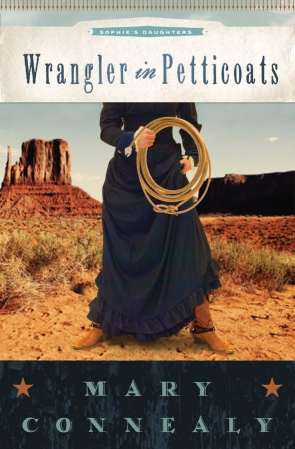
Wrangler in Petticoats by Mary Connealy


MY REVIEW:

Mary Connealy has penned another rip roaring western romance full of action, drama, and fun. As usual, the women carry the story with heroine Sally McClellen whose ambition has been to be the best cowboy ever, her sister Mandy, known as the best shot in the west, and Wise Sister, an older Shoshone woman who can do everything from hunting for meat to cooking it. What man has a chance against strong women like these?

Artist Logan McKenzie has his hands full when  he rescues Sally after witnessing her fall over the edge of a cliff. He quickly realizes that she is the love of his life but their obvious differences convince him that a relationship is virtually impossible. Sally fights her growing attraction to Logan because she is determined not to make the same mistakes her mother and sister have made by marrying ‘no account’ men. There is just no way an artist can be the man she needs.

I thoroughly enjoyed reading Wrangler in Petticoats as well as most of Mary’s other books. I am beginning to wonder if she has a problem with men – there are so many ‘no account’ ones who show up in her books. Her heroines are all strong, self-sufficient women, almost to a fault. Even the manly men sometimes come across a little less than ideal – but maybe that’s what makes Mary’s books work. I still buy them – can’t resist a western romance with humor.


A digital copy of this book was provided for review by Barbour Books through NetGalley.


ABOUT THE BOOK:

Sally McClellen finds herself injured and in the care of the biggest wimp she’s ever met. Logan McKenzie paints pictures of the wild west—and claims he makes a living doing it. When the two of them see an elk she reaches for her rifle, he reaches for a sketch pad. The word DRAW means completely different things to them.

When Sally falls off a cliff practically into his arms, he decides he’s keeping her. So far her broken leg is keeping her close, but she’s a quick healer and she needs to get some tougher help, because outlaws are hunting hard for the one witness to their crime.


ABOUT THE AUTHOR:

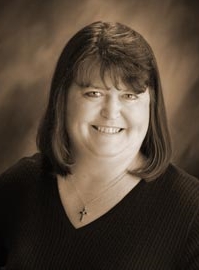
Mary Connealy is an author, journalist, and teacher. She lives on a Nebraska farm with her husband, Ivan, and has four mostly grown daughters. If you hunt hard enough, you can find Mary on the Internet like a middle-aged, female “Where’s Waldo” at www.maryconnealy.com .

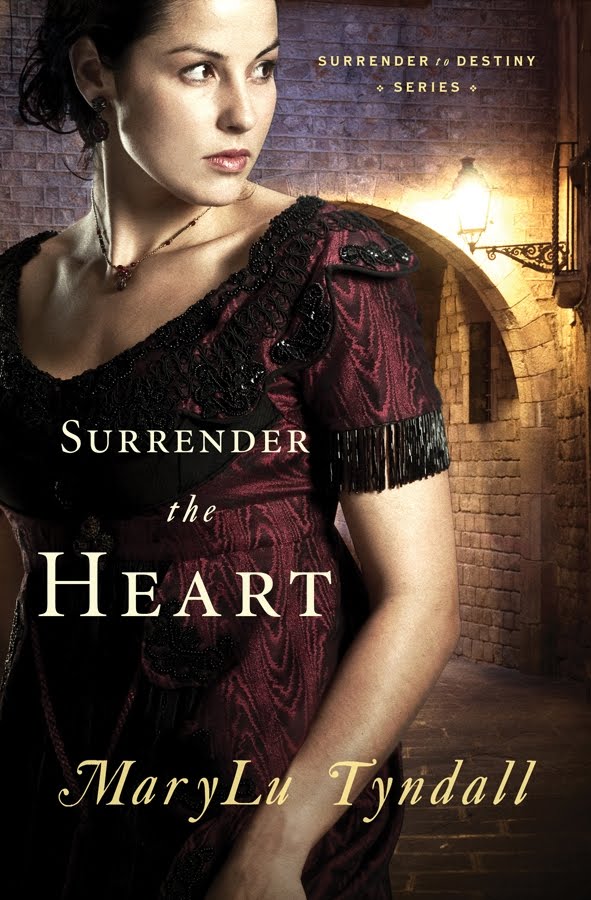
Surrender the Heart by MaryLu Tyndall – FIRST Wild Card Tour

It is time for a FIRST Wild Card Tour book review! If you wish to join the FIRST blog alliance, just click the button. We are a group of reviewers who tour Christian books. A Wild Card post includes a brief bio of the author and a full chapter from each book toured. The reason it is called a FIRST Wild Card Tour is that you never know if the book will be fiction, non~fiction, for young, or for old…or for somewhere in between! Enjoy your free peek into the book!

You never know when I might play a wild card on you!


Today’s Wild Card author is:


and the book:


Surrender the Heart

Barbour Books (August 1, 2010)

***Special thanks to MaryLu Tyndall and Camy Tang for sending me a review copy.***

ABOUT THE AUTHOR:

M.L. Tyndall, a Christy Award Finalist, and best-selling author of the Legacy of the King’s Pirates series is known for her adventurous historical romances filled with deep spiritual themes. She holds a degree in Math and worked as a software engineer for fifteen years before testing the waters as a writer. MaryLu currently writes full time and makes her home on the California coast with her husband, six kids, and four cats. Her passion is to write page-turning, romantic adventures that not only entertain but expose Christians to their full potential in Christ. For more information on MaryLu and her upcoming releases, please visit her website or her blog.

Visit the author’s website.
Visit the author’s blog.

Product Details:

List Price: $12.99
Paperback: 368 pages
Publisher: Barbour Books (August 1, 2010)
Language: English
ISBN-10: 1602601658
ISBN-13: 978-1602601659

AND NOW…THE FIRST CHAPTER:

June 18, 1812, Baltimore, Maryland


“I would rather boil in oil than marry Noah Brenin.” Marianne tossed the silver brooch onto her vanity.

“Hold your breath and stay still.” Rose said from behind her. “Besides, it is only an engagement party, not a wedding.”

“But it is one more step to that horrid destination.” Marianne sucked in her breath as Rose threaded the laces through the eyelets on her stays. “Why must women wear these contraptions?”

“To look our best for the gentlemen in our lives.” Cassandra appeared on Marianne’s left, a lacy petticoat flung over one arm. With shimmering auburn hair and eyes the color of emeralds, Cassandra had no trouble looking her best for anyone.

Marianne huffed. “I have no care what any gentleman thinks of my appearance.”

“Which is why you are still unmarried at five and twenty.”

“Then what is your excuse at three and twenty?” Marianne arched a brow, to which Cassandra responded with a shrug. “I have not yet met a man worthy of me.” She grinned.

“Where on earth is your chambermaid?” Rose grunted as she squeezed Marianne’s rounded figure into the stays and tied the final lace tight. “Shouldn’t she be doing this?”

“I dismissed her.” Marianne waved a hand through the air. “I prefer to dress myself.” She hoped they didn’t hear the slight quaver in her voice. If only they knew that her mother had been forced to let the entire staff go and the ones here today were hired just for her betrothal party.

“There.” Rose finished her work and stepped back as Marianne took the petticoat from Cassandra and slipped it over her head.

“Truth is, I do not wish to marry—ever.” Marianne squared her shoulders as Cassandra slid behind her and latched the petticoat hooks.

Rose put her hands on her waist. “Noah Brenin is a fine man and a good catch.”

Marianne gazed at her friend and couldn’t help but smile at the motherly reprimand burning in her crystal blue eyes. Tall and slender, with honey blond hair, Rose turned many a head in Baltimore. Just like Cassandra.

But not like Marianne.

“He is a boor.”

“Why so low an opinion of him? Haven’t you and he been friends since childhood?” Rose cocked her head and gave Marianne a look of censure.

“I wouldn’t call it friendship, more like forced acquaintance. And my knowledge of him is precisely why I know him for the churlish clod he is.”

Gathering a cream-colored silk-embroidered gown from Marianne’s bed, Rose and Cassandra tossed it over her head and assisted her as she wiggled into it. She adjusted the ruffled lace bordering her neckline and circling her puffy sleeves. Cassandra handed her a jeweled belt which Marianne strapped around her high waist and buckled in front. She pressed down the folds of her gown, admiring the pink lace trailing down the front and trimming the hemline. After slipping on her white satin slippers, Marianne moved to the full length looking glass and paused to eye her reflection.

Plain. Despite the shimmering, glamorous dress, plain was the first word that came to her mind. Perhaps because that was how she had always been described. Brown hair, brown eyes, average height, a bit plump. Nothing remarkable, nothing to catch an eye.

Simply plain.

Which was precisely why, when the other girls her age were being courted, Marianne had preferred to spend her time caring for her ailing mother and younger sister, particularly after their father died. No whirlwind romances, no soirees, no grand adventures lit up the horizon for her. She had resigned herself to lead an ordinary life. An ordinary life for an ordinary girl.

“Come now, it won’t be so bad.” Rose brushed a lock of hair from Marianne’s forehead and then straightened one of the curls dangling about her neck. “You look as though you were attending your own funeral.”

“I dare say I feel as though I am.” Tired of staring into the mirror with the hope her reflection would transform into that of a beautiful woman, Marianne turned aside, picked up her silk gloves from the vanity and sauntered toward the window.

“I, for one, cannot wait to get married,” Rose said. “To the right man of course. He must be a good, honest, god-fearing man. A man who stays home, not a seaman. And he must be agreeable in all respects.”

“What about handsome?” Cassandra asked, and Marianne turned to see a blush creep up Rose’s neck.

“Well, yes, I suppose I would not be opposed to that.” Her blue eyes twinkled.

Facing the window, Marianne slid the white gloves onto her hands and tugged them up her arms. Shouts echoed from the street below, accompanied by the clip clop of horse hooves and the grating of carriage wheels. She brushed aside the curtain to see people running to and fro darting between carriages. A warm breeze, heavy with moisture and the smells of the sea, stirred the curtains. A bell rang in the distance, drawing Marianne’s attention to the maze of ship’s masts thrusting into the blue sky like iron bars of a prison. A prison that could not constrain the ravenous blue waters from feeding upon the innocent—an innocent like her father.

Rose and Cassandra joined her at the window as more shouts blasted in with the wind. “What is all the commotion about?” Cassandra pushed back the other side of the curtains.

“There have been rumors that President Madison will soon declare war on Britain,” Marianne said.

“I hope it doesn’t come to that.” Rose peered over Marianne’s shoulder. “War is such horrid business.”

“But necessary if the British insist on stealing our men from land and sea and impressing them into their Navy.” Marianne felt her ire rising. “Not to mention how they rouse the Indians to attack us on the frontier.”

“They want their colonies back, I suppose.” Afternoon sunlight set Cassandra’s red hair aflame in ribbons of liquid fire. “England never was good at losing.”

“Well they can’t have them.” Marianne’s voice rose with a determination she felt building within. Though she’d been born after the Revolution, she had heard the stories of oppression and tyranny enforced upon them by a nation across the seas whose king thought he had the right to dictate laws and taxes without giving the people a voice. But no more. “We won our freedom from them. We are a nation now. A new nation that represents liberty to the entire world.”

“I couldn’t agree more.” Cassandra nodded with a smile. “Perhaps you should run for mayor?”

“A woman in public office?” Marianne chuckled. “That will never happen.”

The door creaked open, and Marianne turned to see her mother and younger sister slip inside.

Lizzie’s eyes widened and she rushed toward Marianne. “You look so beautiful, Marianne!”

Kneeling, Marianne embraced her sister. She held her tight and took a big whiff of the lavender soap with which their mother always scrubbed the little girl. “Thank you, Lizzie. I can always count on you for a compliment.”

“Now, Lizzie, don’t wrinkle your sister’s dress.” Marianne’s mother sank into one of the chairs by the fireplace and winced. The slight reminder of her mother’s pain caused Marianne’s heart to shrink. She squeezed her little sister again—the one beacon of joy in their house these past three years since Father died—and kissed her on the cheek. “You look very beautiful too.”

The little girl clutched her skirt and twirled around. “Do you really think so?” She drew her lips into a pout. “But when can I wear a dress like yours?”

“Come now, Lizzie,” Mother said. “You are only six. When you are a grown woman like Marianne, you may wear more elaborate gowns.” She gestured toward Rose and Cassandra. “Ladies, would you take Lizzie downstairs for a moment? I need a word with Marianne.”

“Of course, Mrs. Denton.” Rose took Lizzie’s hand. “Come along little one.”

Cassandra followed after them and closed the door.

Marianne sat in the chair beside her mother and gently grasped her hands. She flinched at how cold and moist they were. “How are you feeling, Mama?”

“Very well today, dear.” She looked down as if hiding something..

But Marianne didn’t need to look in her mother’s eyes to know she was lying. The sprinkles of perspiration on her forehead, the paleness of her skin, and the tightening of her lips when the pains hit spoke more clearly than any words.

Marianne squeezed her mother’s hands. “The medicaments are not working?”

“They will work. It takes time.” Her mother attempted a smile. “But let us not talk of that now. I have something more important to discuss with you.” She released a heavy sigh then lifted her gaze to Marianne’s. Though illness had stolen the glimmer from her eyes, it could not hide the sweet kindness of her soul. “You don’t have to do this, you know.”

The truth of her words sliced through Marianne. She stared at the floral pattern woven into the carpet. “You know I do.”

“It isn’t fair of me to ask this of you.” Her mother’s voice rang with conviction and deep sorrow.

“You didn’t ask, Mama. I want to do this.” A truth followed by a lie. Marianne hoped the good canceled out the bad.

“Come now. You cannot fool me.” Mama said. “I know this is not the match you would choose.”

Releasing her mother’s hands, Marianne rose from the chair and sauntered toward the window. The rustle of her gown crackled through the air with conviction. “In truth, I would choose no match.” She turned and forced a smile. “So if I must marry, why not this man?”

Her mother gazed at her with such love and sorrow that Marianne felt her heart would burst. Once considered the most beautiful woman in Baltimore, Jane Denton, now withered away with the sickness that robbed her of her glow and luster and stole the fat from her bones, leaving her but a frail skeleton of what she once had been. The physicians had no idea what ailed her save that without the medicaments they administered, she would die a quicker and more painful death.

Tearing her gaze from the tragic vision, Marianne glanced out the window where it seemed as though the approaching evening only heightened the citizens’ agitation. “Marrying Noah Brenin will save us. It will save you.”

“But what of saving you?” Her mother’s sweet plea caressed Marianne’s ears, but she forced down the spark of hope that dared to rise at her mother’s question. There was no room for hope now, only necessity.

“You know if we continue as is, all that is left of our fortune will be spent in one year on your medicaments. Then what will we do? Without my dowry, no man will look my way, since that and our good name is all that has caught this particular fish upon the hook.” And without a husband to unlock her inheritance, her father had ensured that the seven thousand dollars would remain as far from her reach as if she did not own it at all.

“Perhaps you will meet another man—someone you love?” Her mother said.

“Mama, I am five and twenty.” Marianne turned and waved her hands over herself. “And plain to look at.” She gave a bitter laugh. “Do you see suitors lining up at our door?”

“You are too beautiful for words, dearest.” Her mother’s eyes beamed in adoration. “You just don’t know it yet.”

Shrugging off her mother’s compliment as the obligation of a parent, Marianne stiffened her back before she attempted to rekindle an argument long since put to death. “We could take what’s left of our money and fund a privateer, Mama.” Marianne glanced out the window at a mob that had formed down the street. “War is certain and our fledgling navy will need all the help it can get.”

Her mother’s nervous huff drew Marianne’s gaze. “It is far too much of a gamble. And gambling destroys lives”—a glaze covered her mother’s eyes as she stared into the room—“and families.”

Marianne grimaced. “I am not like Papa. I have heard these privateers can make a fortune while helping to defend our country.”

A breeze stirred a curled wisp of her mother’s hair as she gazed at Marianne with concern.

Marianne twisted the ring on her finger. “Down at the docks, merchantmen are already outfitted their ships as privateers. The call for investors goes out daily.” If only she could convince her mother, not only would Marianne not have to marry that clod, Noah, but she could do something to help this great nation of hers.

Her mother’s boney hands perched in her lap began to tremble. “We could lose everything. And what of Lizzie? I could not bare it.”

Shame drummed upon Marianne’s hopes. She had upset her mother when the doctor strictly instructed her to keep her calm.

“Perhaps a trade of some sort?” Mama offered. “I hear that Mrs. Pickersgill makes a decent living sewing ensigns.”

A blast of warm wind stirred the gauzy curtains and cooled the perspiration forming on Marianne’s neck. “Mama you know I have no skills. I’m not like other ladies. The last gown I attempted to sew fell apart. My cooking would drive the hardiest frontiersman back to the woods, and the pianoforte runs when it sees me coming.”

Mother chuckled. “You exaggerate, dearest.”

But Marianne could tell by the look in her mother’s eyes that despite the humorous delivery, her words rang true. Though a governess in her younger years and her mother in her later years had strived to teach Marianne the skills every proper lady should acquire, she had found them nothing but tedious. She possessed no useful skills, no talents. As her father had so often declared before his death. In essence, Marianne had nothing to offer. If her mother would not agree to fund a privateer, Marianne would have to accept her fate in marriage.

“I’m an old woman and will die soon anyway,” Mama said with a sigh. “But I must ensure you and Lizzie are cared for.”

Gathering her skirts, Marianne dashed toward her mother and knelt at her feet. “You must never say such a thing.”

“Do not soil your beautiful gown.” Her mother smiled and wiped a tear from Marianne’s cheek. “Perhaps we should simply trust God with my health and let His will prevail.”

Marianne laid her head on her mother’s lap like she used to do as a child. She had trusted her father, she had trusted God.

And they had both let her down—her and her mother.

Trust no longer came so easily. “I will not let you die, Mother. I cannot.” Her eyes burned with tears. “As long as I have my inheritance and a man who is willing to marry me, I promise you will be well cared for. And Lizzie too. That is all that matters, now.” Marianne lifted her gaze to her mother’s, feeling strength surge through her.

“And mark my words, Mama. Nothing will stand in my way. Especially not Noah Brenin.”

MY REVIEW:

Surrender the Heart is another of Tyndall’s nautical adventures written with such vivid imagery  that you would swear you could hear the seagulls and waves and smell the briny sea. (BTW, if you visit her website, you will get the full audio experience.) Set primarily aboard ship on the high seas, the story takes the hero and heroine through danger, discouragement, fear, sacrifice, love, hate, forgiveness, and triumph.

Both Marianne and Noah have distanced themselves from God because of past circumstances in their lives. Noah’s guilt over his brother’s death and his inability to please his father has caused him to continuously strive to prove himself. The death of Marianne’s father and the lack of provision left for his family has resulted in Marianne’s inability to believe in herself or God’s love for her. As they experience trials and hardship aboard the British warship that holds them hostage, they begin to see themselves and each other in a different light. And as God breaks through their defenses, they each discover the destiny He has in store for them.

Surrender the Heart is a must read for anyone who loves historical fiction, a good adventure story, and a satisfying romance.