Dr. Colbert’s “I Can Do This” Diet

It is time for a FIRST Wild Card Tour book review! If you wish to join the FIRST blog alliance, just click the button. We are a group of reviewers who tour Christian books. A Wild Card post includes a brief bio of the author and a full chapter from each book toured. The reason it is called a FIRST Wild Card Tour is that you never know if the book will be fiction, non~fiction, for young, or for old…or for somewhere in between! Enjoy your free peek into the book!

You never know when I might play a wild card on you!


Today’s Wild Card author is:


and the book:


Dr. Colbert’s “I Can Do This” Diet
Siloam Press (January 5, 2010)

***Special thanks to LeAnn Hamby | Publicity Coordinator, Book Group | Strang Communications for sending me a review copy.***

ABOUT THE AUTHOR:


Don Colbert, MD, is board-certified in family practice and anti-aging medicine. He has also received extensive training in nutritional and preventative medicine, and he has helped millions of people to discover the joy of living in divine health. In addition to speaking at conferences, he is the author of the New York Times best-selling book The Seven Pillars of Health, along with best sellers Toxic Relief, the Bible Cure series, Living in Divine Health, Deadly Emotions, and What Would Jesus Eat?

Visit the author’s website.

Product Details:

List Price: $24.99
Hardcover: 320 pages
Publisher: Siloam Press (January 5, 2010)
Language: English
ISBN-10: 1599793504
ISBN-13: 978-1599793504

AND NOW…THE FIRST CHAPTER:

The Obesity Epidemic:
What We’re Up Against


A few years ago a thirty-two-year-old man named Morgan Spurlock became Ronald McDonald’s worst nightmare. Intent on correlating the rise of obesity in our nation with the fast-food giant, the independent filmmaker conducted a personal experiment—using himself as the guinea pig. For thirty days he ate nothing but McDonald’s food. He downed three meals a day, sampling every item on the Golden Arches’ menu. And whenever he was asked if he wanted his meal supersized, he accepted.

With cameras rolling the entire time, Spurlock transformed his body into a flab factory while consuming an average of 5,000 calories a day and gaining almost 25 pounds in a single month. He also turned his Academy Award–nominated documentary, Super Size Me, into a statement heard around the world.1

The jury is still out on whether Americans were actually paying attention. Though recent statistics indicate that the obesity rates in the United States may be stabilizing, they’re still at unprecedented, staggering levels.2 Since the 1960s, the proportion of obese Americans—now an astounding 34 percent—has more than doubled.3 Obesity currently kills an estimated four hundred thousand Americans each year and is the second-leading cause of preventable deaths in this country.4 The number one avoidable killer? Cigarette smoking.5 That means maintaining a healthy weight is up there with quitting smoking as the most crucial lifestyle change you could ever make. Because we’re seeing a trend of people deciding to quit smoking, I predict that obesity will soon pass smoking as the number one avoidable killer of Americans.

Unfortunately, many doctors, nutritionists, and dietitians seem to completely miss or ignore this fact. They love to offer topical “Band-Aids” that alleviate patients’ symptoms yet fail to tackle the root issues or consider the long-term ramifications of neglecting their patients’ weight. One recent report from the Centers for Disease Control and Prevention (CDC) found that about a third of obese adults have never been told by a doctor or health-care provider that they were obese.6 Unbelievable! The results speak for themselves. In fact, they’re screaming while most practitioners turn the other way.

As our nation faces the biggest health-care crisis in its history, it’s time for us to realize that the answer isn’t going to come from doctors, clinics, or the U.S. government. It’s going to come from each person taking responsibility for their own health. And because obesity and overweight are at the root of so many health conditions, it only makes sense to start by getting yourself to a healthy weight.

Defining the Problem

Before we delve into what has so many people visiting the plus-size department, let’s clarify the terms overweight and obese. Many people have a general sense as to how these words are different, yet in recent years the delineation has become clearer. Various health organizations, including the CDC and the National Institutes of Health (NIH), now officially define these terms using the body mass index (BMI), which factors in a person’s weight relative to height. Most of these organizations define an overweight adult as having a BMI between 25 and 29.9, while an obese adult is anyone who has a BMI of 30 or higher.7

It’s worth mentioning that a very small portion of individuals are overweight or obese according to their BMI (over 30) yet have a normal or low body fat percentage. Professional athletes, for instance, often have a high-muscle, low body fat makeup that causes them to weigh more than the average person, yet they are not truly obese (some football linemen and sumo wrestlers excluded, of course).

However, I have found that most of the people who come to me seeking help are not just overweight but technically obese, with a body fat percentage greater than 25 percent for males and greater than 33 percent for females.8 Throughout this book when I discuss having a high BMI (over 30), I will be referring to obese people and not those few muscular types with high BMI but a normal or low body fat percentage.

The Fat Cost of Obesity

When all is considered, obesity comes with a fat price tag (pun intended) of nearly $122.9 billion each year.10 Recently William L. Weis, a management professor at Seattle University, calculated the total annual revenue from the “obesity industry”—which includes fast-food restaurants, obesity-related medical treatments, and diet books—as more than $315 billion. That amounts to nearly 3 percent of the United States’ overall economy!11 As shocking as that sounds, no dollar amount can do justice to the real damage being done.

If you are overweight or obese, you increase your risk of developing thirty-five major diseases, including (take a deep breath) heart disease, stroke, arthritis, type 2 diabetes, sleep apnea, gastroesophageal reflux disease, hypertension, high cholesterol, high triglycerides, Alzheimer’s disease, infertility, erectile dysfunction, gallstones, gallbladder disease, adult-onset asthma, and depression. In fact, we now know that being overweight or obese increases your odds of developing more than a dozen forms of cancer. After reviewing more than seven thousand medical studies over the course of five years, a team of highly respected scientists from around the world concluded in 2007 that diet and weight have a direct effect on the chances of developing cancer. With help from the World Cancer Research Fund and the American Institute for Cancer, they listed the top ten recommendations for cancer prevention; body fat came in at number one. Their report also strongly recommended maintaining a normal range of body weight, which they identified as a body mass index between 18.5 and 24.9, to assist in cancer prevention.12

If you are an obese woman, you have a significantly higher risk of postmenopausal breast cancer—one and a half times more than a woman with an average healthy weight, to be exact. You also increase your chances of developing uterine cancer because of your weight. For pregnant mothers, the risk of delivering a baby with a serious birth defect is doubled if you are overweight and quadrupled if you are obese.13 Men, your chances of developing prostate cancer are almost double if you are overweight, and even greater if you are obese.14 (Prostate cancer is the second-most common cancer among men behind skin cancer.) A separate new study indicates that the greater a man’s weight, the greater his chances of dying from a stroke.15 Finally, for both men and women the odds of getting colon and kidney cancer increase with weight. And being obese triples your risk of developing Alzheimer’s disease.

This is just a sampling of the physical implications of obesity. There are social and psychological ones too. Obese individuals generally contend with more rejection and prejudice than the average person. Often they are overlooked for promotions or not even hired because of their physical appearance. Most obese people struggle daily with self-worth and self-image issues. They feel unattractive and unappreciated and are at an increased risk of depression. Many of us have experienced the humiliating experience of an obese person trying to fit in an airplane, stadium, or automobile seat that is too small. Maybe you have been that person. If you have, you are well acquainted with how obesity can affect the way others treat you, as well as how you treat yourself.

Globesity and a Culprit

Tragically, millions of others outside the United States struggle with the same issues. The World Health Organization calls obesity a worldwide epidemic. Obesity, along with its expanding list of health consequences, is now overtaking infection and malnutrition as the main cause of death and disability in many third-world countries. Globesity, as it has been termed, has officially arrived. And it seems Morgan Spurlock was on the right track in discovering a major reason why.

In Fast Food Nation, author Eric Schlosser reports that in 1970, Americans spent about $6 billion on fast food; in 2000, we spent more than $110 billion. Because corporate America is a global trendsetter, other countries have followed suit. Between 1984 and 1993, the number of fast-food restaurants in Great Britain doubled, as did the obesity rate among adults. Fast-forward fifteen years, and you will find the British currently eat more fast food than any other nation in Western Europe.

Meanwhile, the proportion of overweight teens in China has roughly tripled in the past decade. In Japan, the obesity rate among children doubled during the 1980s, which correlated with a 200 percent increase in fast-food sales. This generation of Japanese has gone on to become the first in the nation’s history known for its bulging waistlines. Approximately one-third of all Japanese men in their thirties are now overweight.16 Yes, the entire world is beginning to look more like Americans by adopting our fast-food eating habits.

A Child Shall Lead Them

How has an entire generation of hefty eaters changed the face of the world? By starting young. And once again, this unflattering trend originated in America. In the United States, one-fifth of our children are now reported to be overweight, and one out of ten (24 million adults) have diabetes. The CDC predicts that one out of three children born in the United States in 2000 will develop type 2 diabetes at some point in their life.18

As a result of childhood obesity, we are seeing a dramatic rise in children with type 2 diabetes throughout the country. And because of the connection obesity has with hypertension, hypercholesterolemia (high cholesterol), and heart disease, experts are predicting a dramatic rise in heart disease as our children become adults. The CDC reports that overweight teens stand a 70 percent chance of becoming overweight adults, and that is increased to 80 percent if at least one parent is overweight or obese. Because of that, heart disease and type 2 diabetes are expected to begin at a much earlier age in those who fail to beat the odds.19 Overall, this is the first generation of children that is not expected to live as long as their parents, and they will be more likely to suffer from disease and illness at an earlier age.

If you do not lose weight for yourself, at least do it for your children. Children follow by example, by mirroring the behavior of their parents. Don’t tell them to lose weight without doing it yourself. I’m sure most of you love your children and are good parents. But ask yourself: Do you love your children enough to lose weight? Do you love them enough to educate them on what foods to eat and what foods to avoid? Do you love them enough to keep junk food out of your house and instead make healthy food more available? Do you love them enough to exercise regularly and lead by example?

If you answered yes to those questions, it is important that you not only take action for your children’s sake but also that you make changes for them that last. I am ecstatic that you have picked up this book. I believe you now hold the key to truly changing your life. But let me be honest; this is not an easy fight when it involves your children’s lives. The culture in which they are growing up is saturated with junk food that is void of nutrition but high in toxic fats, sugars, highly processed carbohydrates, and food additives. Consuming these foods has become part of childhood. For example, in 1978, the typical teenage boy in the United States drank seven ounces of soda a day; today he drinks approximately three times that much. Meanwhile, he gets about a quarter of his daily servings of vegetables from french fries and potato chips.24

If you’re planning on taking a stand against this garbage-in, garbage-out culture, expect some opposition from every front. During the course of a year, the typical American child will watch more than thirty thousand television commercials, with many of these advertisements pitching fast food or junk food as delicious “must-eats.” For years, fast-food franchises have enticed children into their restaurants with kids’ meal toys, promotional giveaways, and elaborate playgrounds. It has obviously worked for McDonald’s: about 90 percent of American children between the ages of three and nine set foot in one each month.25 And when they can’t visit the Golden Arches, it comes to them. Fast-food products—most of which are brought in by franchises—are sold in about 30 percent of public high school cafeterias and many elementary cafeterias.26

These fast-food establishments spend billions of dollars on research and marketing. They know exactly what they are doing and how to push your child’s hot button. They understand the powerful impact certain foods can have on you at a young age. Have you ever thought of when you first started liking certain foods? For the majority of people, those preferences were formed during the first few years of life. That is why comfort foods often do more than just fill the stomach; they bring about memories of the fair, playgrounds, toys, backyard birthday bashes, Fourth of July parties, childhood friends?.?.?.?the list goes on. The aroma of foods such as onion rings, doughnuts, or fried hamburgers can instantly trigger these memories, and as adults, we are often unconsciously drawn to these smells. Advertisers have keyed into this and learned to use the sight of food to stimulate the same fond childhood memories.

In the Genes or in the Water?

For every obese person, there is a story behind the excessive weight gain. Growing up, I would often hear it said of an obese person that “she was just born fat,” or “he takes after his daddy.” There’s some truth in both of those. Genetics count when it comes to obesity.

In 1988, the New England Journal of Medicine published a Danish study that observed five hundred forty people who had been adopted during infancy. The research found that adopted individuals had a much greater tendency to end up in the weight class of their biological parents rather than their adoptive parents.28 Separate studies have proven that twins raised apart also reveal that genes have a strong influence on gaining weight or becoming overweight.29 There is a significant genetic predisposition to gaining weight.

Still, that does not fully explain the epidemic of obesity seen in the United States over the past thirty years. Although an individual may have a genetic predisposition to become obese, environment plays a major role as well. I like the way author, speaker, and noted women’s physician Pamela Peeke said it: “Genetics may load the gun, but environment pulls the trigger.”30 Many patients I see come into my office thinking they have inherited their “fat genes,” and therefore there is nothing they can do about it. After investigating a little, I usually find that they simply inherited their parents’ propensity for bad choices of foods, large portion sizes, and poor eating habits.

If you have been overweight since childhood, you probably have an increased number of fat cells, which means you will have a tendency to gain weight if you choose the wrong types of foods, large portion sizes, and are inactive. But you should also realize that most people can override their genetic makeup for obesity by making the correct dietary and lifestyle choices. Unfortunately, many of us forget that to make these healthy choices, it helps to surround ourselves with a healthy environment.

That is becoming more difficult than ever as families give way to their hectic routines by grabbing breakfasts-on-the-go, ordering fast-food lunches, dining out for dinner, and skipping meals. After years of this, it is catching up to us. The average American adult gains between 1 to 3 pounds a year, beginning at age twenty-five. That means a twenty-five-year-old, 120-pound female can expect to weigh anywhere from 150 to 210 pounds by the time she is fifty-five years of age. Is there any wonder why we have an epidemic of heart disease, type 2 diabetes, hypertension, high cholesterol, arthritis, cancer, and other degenerative diseases? We have to put the brakes on this obesity epidemic—and a lifestyle approach to eating is the answer!

Adding Culture to the Mix

Just as environment often shapes your health habits, so does culture. The two walk hand in hand when it comes to causing obesity. As children, we develop our food preferences and habits based on our family environment. Yet every family is influenced by its surrounding culture, and culture often shapes the types of foods, recipes, and ingredients we choose on a regular basis.

I was raised in Mississippi. Ever since I was a child I remember how my mother’s coffee cup always sat on the stove in the kitchen. But instead of coffee, it was filled with bacon grease. Whenever she cooked vegetables—any kind—she would add a few tablespoons of that bacon grease to add flavor. She fried almost everything: fried chicken, fried hamburgers, fried salmon, fried fish sticks, chicken fried steaks, fried chicken livers, fried ham, fried pork chops, fried bacon?.?.?.?you name it. Why did she do this? Because her mother had taught her to fry virtually any meat.

Mom also usually made gravies, all of which were grease-based. Most meals were served with corn bread or biscuits, either of which contained a hefty amount of Crisco shortening. We rarely ate grilled food, and when we did, it was a fatty cut of meat. I still remember my father making me eat all the fat on my steak. Since I was a skinny kid, he would say, “Son, that fat is good for you—it will help to fatten you up.” I recall almost puking as I tried to get the fat down.

We were a typical Southern family. My brother, sister, and I were all raised to eat fried foods, greasy foods, biscuits, and corn bread—and top it all off with a large piece of cake or pie for dessert. Today, I see a similar thing happening in the southwestern part of the United States. This Southwest culture, which is in part defined by its Tex-Mex and Mexican eating habits, is helping to fuel the obesity epidemic. Most of these people are being raised on highly processed white breads or corn tortillas, white rice and fried white rice, corn chips, refried beans, fried tacos, enchiladas, nachos?.?.?.?the list goes on. Their diet typically contains a lot of fats, a lot of grease, a ton of highly processed carbohydrates, and a lot of sugar.

It is no coincidence that almost every year some Texas city has the unflattering distinction of having the largest number of obese individuals in the country. After Houston was named the “fattest city” multiple times in past years, 2008 saw Arlington, San Antonio, Fort Worth, El Paso, and Dallas all place among the top ten fattest cities of Men’s Fitness magazine’s “Annual Fattest and Fittest Cities in America Report.” The year before, four of those cities made the dubious honor.31 Not only do these overweight hot spots feature some of the country’s best Tex-Mex and Mexican style foods, but they also offer extra large Texas portions with a blend of some of the most calorie-dense cultural foods around. Is there any wonder why Texans have a major obesity problem?

Eating With the Head and Not the Heart

We have discussed how genetics can sometimes, though rarely, prompt an individual’s obese state. We have also talked about how the overwhelming majority of obesity cases are a direct result of environment and culture. These can be discouraging factors in light of the gloomy statistics and the ongoing epidemic. However, I want to end this chapter on a positive note by reminding you of a simple truth. In fact, it is what this book is all about.

Regardless of how difficult it sounds, your cultural tastes and foods can be changed over time with education, practice, and discipline. You can learn how to choose similar foods that have not been excessively processed as well as lower-fat alternatives. It’s possible to discover—or rediscover—portion control and healthy cooking methods. Sure, you may still love your fried chicken, mashed potatoes and gravy, and chocolate cake. But soon you will be able to enjoy the same foods with just a fraction of the fat, sugars, and calories.

When I wrote the book What Would Jesus Eat? about the Mediterranean diet, I learned that most Middle Easterners ate differently than the typical American. That sounds obvious, but what distinguishes the two isn’t. I found that those who are used to a Mediterranean diet typically would not leave the dinner table stuffed as most Americans do. Generally, they ate anything they wanted—but in moderation. They enjoyed their food and socialized while eating. They had the uncanny ability to enjoy just a few bites of their favorite foods such as wine, dark chocolate, or even chocolate ice cream. Unlike most Americans, who scarf down a dessert as if they were inhaling it, those eating a Mediterranean diet actually savored just a few bites.

The real pleasure in most foods is in the first few bites. We will discuss this later, but for now, know that you can break out of your old cultural eating patterns. You do not have to follow a parent’s poor food choices, and you can overcome your family’s eating cultural patterns. (I certainly did!) And in the process, you will discover the true joy of eating.

MY REVIEW:

I need to spend more time with this book to see if I can make it work for me. Dr. Colbert seems to have a somewhat different approach to weight loss in that he believes it begins in the mind. If so, I need to get my mind around it. At this point, I have a hard time believing that I can do it. Everything he says makes sense. The suggested foods, etc. sound sensible. So – the only problem is me.

I plan to dig deeper into Dr. Colbert’s “I Can Do This” Diet and see if I truly can do this. If I am successful, I will letyou know.

On the Road Home by Terry Burns

This week, the
Christian Fiction Blog Alliance
is introducing
On The Road Home
Port Yonder Press; 1st edition (March 3, 2010)
by
Terry Burns


ABOUT THE AUTHOR:
Terry has over 30 books in print, including work in a dozen short story collections and four non-fiction books plus numerous articles and short stories.

His last book Beyond the Smoke is a 2009 winner of the Will Rogers Medallion for best youth fiction and a nominee for the Spur Award from the Western Writers of America. He has a three book Mysterious Ways series out from David C Cook, and Trails of the Dime Novel from Echelon Press.

A graduate of West Texas State he did post graduate work at Southern Methodist University. Terry plans to continue writing inspirational fiction as well as working as an agent for Hartline Literary Agency. Terry is a native Texan Living in Amarillo, Texas with his lovely wife Saundra.

ABOUT THE BOOK :

In our sound-byte society, short stories and poems will always have a place, especially when they’ve been penned by the likes of Terry Burns. This, the first of four in The Sagebrush Collection, is a compilation of fictional, autobiographical, and fiction-based-on-fact shorts and poems.

Through fluent cowboy-speak, author Terry Burns shares his heart with these sometimes somber, often humorous, always engaging glimpses of life. From short stories about time machines and troubled marriages to poems of roses and hauntingly cold winds, you’ll find much to savor on the pages within.

A born storyteller, Burns style is natural, conversational, and above all real. He’s a fifth generation Irish tale-weaver and a fourth generation Texas Teller of Tall Tales. Storytelling comes as natural to him as breathing.

Come along with Terry as he journeys “On the Road Home”. You’ll be glad you did.

If you would like to read the first chapter of On The Road Home, go HERE.

Heart of Stone by Jill Marie Landis

This week, the
Christian Fiction Blog Alliance
is introducing
Heart Of Stone

Zondervan (March 1, 2010)
by
Jill Marie Landis

ABOUT THE AUTHOR:

Jill Marie Landis is the bestselling author of over twenty novels. She has won numerous awards for her sweeping emotional romances, such as Summer Moon and Magnolia Creek. In recent years, as market demands turned to tales of vampires, erotica, and hotter, sexier historical romances, Jill turned to writing Inspirational Western Romances for Steeple Hill Books. She truly feels back in the saddle again, working on stories that are a joy to write. With her toes in the sand and head in the clouds, Jill now lives in Hawaii with her husband, Steve.

ABOUT THE BOOK:

Laura Foster, free from the bondage of an unspeakable childhood has struggled to make a new life for herself. Now the owner of an elegant boardinghouse in Glory, Texas, she is known as a wealthy, respectable widow. But Laura never forgets that she is always just one step ahead of her past.

When Reverend Brand McCormick comes calling, Laura does all she can to discourage him as a suitor. She knows that if her past were discovered, Brand’s reputation would be ruined. But it’d not only Laura’s past that threatens to bring Brand down?it’s also his own.

When a stranger in town threatens to reveal too many secrets, Laura is faced with a heartbreaking choice: Should she leave Glory forever and save Brand’s future? Or is it worth risking his name – and her heart – by telling him the truth?

If you would like to read the first chapter of Heart Of Stone, go HERE

MY REVIEW:

Prim and proper Laura Foster has created a new and respectable life for herself as owner of an exclusive boardinghouse. Unfortunately she can’t relax and enjoy it for fear that the truth about her past will surface. When pastor Brand McCormick sets his hat for her, she attempts to discourage his attentions because she knows that involvement with her could destroy his reputation if her past became known. Much to everyone’s surprise, Brand is confronted by his own past in front of his congregation. Now the big question is “Will there be any chance of a future together for Brand and Laura?”

Heart of Stone is truly a gripping, page turner. Although Laura’s past is so unthinkable that it would be difficult to imagine that she not only survived but escaped it, her character is realistic and believable. Brand is portrayed as a compassionate man with human frailties and desires even if he is a pastor. All other characters from the good-hearted to the immoral are convincing and contribute to the enjoyment of the story. Forgiveness is an important theme woven throughout the story, especially the need to forgive self in order to move on with life. Heart of Stone may just be a fictional story but I found plenty of truth in it to make me examine my own heart.

I enthusiastically recommend Heart of Stone and look forward to the next installment of the Irish Angel series.

Deliver Us From Evil by Robin Caroll

It is time for a FIRST Wild Card Tour book review! If you wish to join the FIRST blog alliance, just click the button. We are a group of reviewers who tour Christian books. A Wild Card post includes a brief bio of the author and a full chapter from each book toured. The reason it is called a FIRST Wild Card Tour is that you never know if the book will be fiction, non~fiction, for young, or for old…or for somewhere in between! Enjoy your free peek into the book!

You never know when I might play a wild card on you!


Today’s Wild Card author is:


and the book:


Deliver Us From Evil

B&H Academic (February 1, 2010)

***Special thanks to Julie Gwinn of B&H Publishing Group for sending me a review copy.***

ABOUT THE AUTHOR:

Robin Caroll has authored eight previous books including Bayou Justice and Melody of Murder. She gives back to the writing community as conference director for the American Christian Fiction Writers organization. A proud southerner through and through, Robin lives with her husband and three daughters in Little Rock, Arkansas.

Visit the author’s website.

Product Details:

List Price: $14.99
Paperback: 320 pages
Publisher: B&H Academic (February 1, 2010)
Language: English
ISBN-10: 0805449809
ISBN-13: 978-0805449808

AND NOW…THE FIRST CHAPTER:

Tuesday, 3:30 p.m.
FBI Field Office
Knoxville, Tennessee


Jonathan’s throat closed as he stared at the building from the parking lot. He gripped the package tight in his arthritic hands. Could he do this? Turn over evidence that would implicate him?

His heart raced and he froze. Not the best time for his atrial fibrillation to make an appearance. Despite being on the heart transplant list for eight months, it looked like his progressed heart disease would do him in. The most important reason he couldn’t go to prison—he’d never get a heart and would die. While Carmen wanted him to confess his crimes, she wouldn’t want him to die. The memory of saying good-bye to his beloved mere hours ago scorched his soul.

Her eyes fluttered open. Those blue orbs, which had once sparkled even in the absence of light, now blinked flat and lifeless.

He swallowed hard.

“Jonathan,” her voice croaked, “it’s time.”

Tears burned the backs of his eyes, and he rested his hand over her parchmentlike skin. “No, Carmen. Please, let me get the medicine.”

Her eyelids drooped and she gasped. Air wheezed in her lungs. “Sweetheart, the fight’s . . . gone from me.” She let out a hiss, faint and eerie. “The cancer’s . . . won.”

Jonathan laid his lips against her cheek, her skin cold and clammy, as if in preparation for the morgue. How could she continue to refuse the medicine? Even though she didn’t approve of his means of acquisition, the drugs had kept her alive for five years. Five years he cherished every minute of. He’d do anything to keep her alive and the pain at bay—the intense pain that had become her constant companion these last two weeks. It killed him to witness her agony.

She licked her bottom lip, but no moisture soaked into the cracked flesh. “You’ve done . . . your best by me, Jonathan. I know . . . you meant . . . no harm to . . . anyone.” Her eyes lit as they once had. “Oh, how I’ve enjoyed loving you.”

His insides turned to oatmeal. Stubborn woman—she’d allow herself to die, all because she discovered how he’d gotten the money.

“Promise me . . . you’ll . . . tell the . . . truth. Admit what . . . you’ve done.” Her breath rattled. “What you’ve . . . all done.”

Pulling himself from the wretched memory, Jonathan breathed through the heat tightening his chest. He’d secure himself the best deal possible—immunity—or he wouldn’t decipher the papers. And without him no one could make sense of the accounting system he’d created more than five years ago. Officials hadn’t a clue.

With a deep breath he headed to the guardhouse in front of the fenced FBI building. His legs threatened to rebel, stiffening with every step. He forced himself to keep moving, one foot in front of the other.

At the guardhouse, a man behind bulletproof glass looked up. “May I help you?”

“I need to . . . see someone.”

“About what, sir?”

“I have some information regarding a crime.” He waved the file he held.

“One moment, sir, and someone will be with you.”

Jonathan stared at the cloudy sky. He could still turn back, get away scot-free. His heartbeat sped. The world blurred. No, he couldn’t lose consciousness now, nor could he go back on his promise. He owed it to Carmen. No matter what happened, he’d honor Carmen’s dying wish.

“Sir?” A young man in a suit stood beside the fenced entry, hand resting on the butt of his gun. “May I help you?”

Jonathan lifted the file. “I have some evidence regarding an ongoing crime ring.”

The agent motioned him toward a metal-detector arch. “Come through this way, sir.”

Jonathan’s steps wavered. He dragged his feet toward the archway.

A car door creaked. Jonathan glanced over his shoulder just as two men in full tactical gear stormed toward them. He had a split second to recognize one of the men’s eyes, just before gunfire erupted.

A vise gripped Jonathan’s heart, and he slumped to the dirty tile floor, the squeezing of his heart demanding his paralysis.

Too late. I’m sorry, Carmen.

Two Weeks Later—Wednesday, 3:45 p.m.
Golden Gloves Boxing of Knoxville

Ooof!

Brannon Callahan’s head jerked backward. She swiped her headgear with her glove.

“You aren’t concentrating on your form. You’re just trying to whale on me.” Steve Burroughs, her supervisor and sparring partner, bounced on the balls of his feet.

“Then why am I the one getting hit?” She threw a right jab that missed his jaw.

He brushed her off with his glove. “Don’t try to street fight me. Box.”

She clamped down on her mouthpiece and threw an uppercut with her left fist. It made contact, sending vibrations up her arm.

He wobbled backward, then got his balance. “Nice shot.”

It felt good to hit something. Hard. Sparring with Steve was the best form of venting. The energy had to be spent somehow—why not get a workout at the same time? She ducked a right cross, then followed through with a left-right combination. Both shots made full contact.

Steve spit out his mouthpiece and leaned against the ropes. “I think that’s enough for today, girl. I’m an old man, remember?”

She couldn’t fight the grin. Although only in his late forties, the chief ranger looked two decades older. With gray hair, hawk nose, and skin like tanned leather, Steve had already lived a lifetime.

She removed her mouthpiece, gloves, and headgear before sitting on the canvas. “Old? You’re still kickin’ me in the ring.”

He tossed her a towel and sat beside her. “So you wanna tell me what’s got you all hot and bothered this afternoon?”

She shrugged.

“Come on, spit it out. I know something’s gnawing at you, just like you were picking a fight with me in the ring. What’s up?”

How could she explain? “I’m not exactly keen that the district feels there’s a need for another pilot in the park.” She tightened the scrunchie keeping her hair out of her face.

“That’s a compliment—having you on staff has been so successful they want to expand.”

“But I have to train him. Did you notice his arrogance?” She ripped at the tape bound around her knuckles. “He’s nothing more than a young upstart with an ego bigger than the helicopter.” While only thirty-six, she often felt older than Steve looked.

“You’re so good, you can come across a bit intimidating at first, girl.” Steve grabbed the ropes and pulled to standing, then offered her a hand. “Give him a chance.”

She let Steve tug her up. “Yeah, yeah, yeah. Even if he had maturity, I still have to train him. With all the rescues we’ve been called out on of late . . . well, I really don’t have the time.” She exited the ring. “Like those kids yesterday.” She shook her head as she waited for Steve to join her on the gym floor. “Their stupidity almost cost them their lives.”

“They were young, Brannon.”

“Please. Any amateur with half a brain should know better than to try to climb Clingmans Dome in winter.” Didn’t people realize if something happened to them they’d leave behind devastated family and friends? Loved ones who would mourn them forever? She fought against the familiar pain every time she participated in a search and rescue. All because people hadn’t taken necessary precautions.

“They didn’t know any better.”

“It takes a special kind of stupid not to have researched your climb.” Most SARs could be avoided if people planned a little more. It ripped her apart that so many parents, grandparents, siblings . . . fiancées . . . survived to deal with such grief. She’d tasted the bitterness of grief—twice—and the aftertaste still lingered.

Steve paused outside the locker rooms and shifted his sparring gear to one hand. “I agree, but most people don’t see the dangers we do every day.” He tapped her shoulder. “Hit the showers, champ. You stink.”

She laughed as she headed into the ladies’ locker room. Maybe Steve was right and the new pilot just made a lousy first impression. Maybe he’d be easy to train.

Please, God, let it be so.

Friday, 2:15 p.m.
US Marshals Office, Howard Baker Federal Courthouse
Knoxville, Tennessee

“You want me to escort a heart?” Roark struggled to keep his voice calm. He tapped the butt of his Beretta, welcoming it back to its rightful place on his hip.

Senior US Marshal Gerald Demott glared. “Look, I know you think this is a slight, but it’s important. And for your first assignment back on the job . . .”

“IA cleared me of all wrongdoing. I’m seeing the shrink and everything.” He gritted his teeth and exhaled. “I’ve been released to return to active duty.”

“This is active. It’s a field assignment, and it’s important. Here’s the case information.” Demott passed him a folder, then glanced at his watch. “You’d better hurry or you’ll miss your flight.”

Roark grabbed the file and turned to go.

“Holland.”

He looked back at his boss. “Yeah?”

Demott held out Roark’s badge. “You might want to take this with you, too.”

Roark accepted the metal emblem, then clipped it to his belt before marching out of Demott’s office. A heart. His job was to escort a human heart from North Carolina to Knoxville. Any rookie could handle that. But no, they still didn’t trust him enough to handle a real assignment.

He’d done everything they asked—took a medical leave of absence while Internal Affairs went over every painful minute
of his failed mission, saw the shrink they demanded he speak to every week since Mindy’s death, answered their relentless questions. The shrink reiterated he’d been forgiven for acting on his own.

Maybe one day he’d forgive himself. How many innocent lives would he have to save for his conscience to leave him be?

Roark slipped into the car, then headed to the airport. But to be assigned a heart transport? Not only was it wrong, it was downright insulting. After almost fifteen years as a marshal, he’d earned the benefit of the doubt from his supervisors. Especially Demott. His boss should know him better, know he’d only disregard orders if it was a matter of life and death.

But Mindy Pugsley died. They’d all died.

He pushed the nagging voice from his mind. Even Dr. Martin had advised him not to dwell on the past. On what had gone wrong. On disobeying a direct order.

If only Mindy didn’t haunt his dreams.

Roark touched the angry scar that ran along his right cheekbone to his chin. A constant reminder that he’d failed, that he’d made a mistake that took someone’s life. He’d have to live with the pain for the rest of his life.

He skidded the car into the airport’s short-term parking lot. After securing the car and gathering the case folder, Roark grabbed his coat. Snowflakes pelted downward, swirling on the bursts of wind and settling on the concrete. The purple hues of the setting sun streaked across the mountain peaks beyond the runways, making the January snow grab the last hope of light.

Yes, he’d handle this mundane assignment, then tell Demott he wanted back on real active duty. Making a difference would be the best thing for him. Would make him feel whole again.


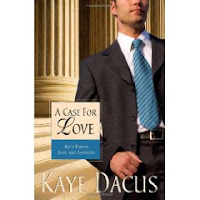
A Case for Love by Kaye Dacus

It is time for a FIRST Wild Card Tour book review! If you wish to join the FIRST blog alliance, just click the button. We are a group of reviewers who tour Christian books. A Wild Card post includes a brief bio of the author and a full chapter from each book toured. The reason it is called a FIRST Wild Card Tour is that you never know if the book will be fiction, non~fiction, for young, or for old…or for somewhere in between! Enjoy your free peek into the book!

You never know when I might play a wild card on you!


Today’s Wild Card author is:


and the book:


A Case for Love

Barbour Books (February 1, 2010)

***Special thanks to Angie Brillhart, Publicist, of  Barbour Publishing
for sending me a review copy.***

ABOUT THE AUTHOR:


Author Kaye Dacus enjoyed her visits to a local television station while researching this book. She likes to say she writes “inspirational romance with a sense of humor.” She lives in Nashville and graduated from Seton Hill University’s Master of Arts in Writing Popular Fiction program. She is an active member and former Vice President of American Christian Fiction Writers (ACFW).

Visit the author’s website.

Product Details:

List Price: $10.97
Paperback: 320 pages
Publisher: Barbour Books (February 1, 2010)
Language: English
ISBN-10: 1602604568
ISBN-13: 978-1602604568

AND NOW…THE FIRST CHAPTER:

“You did what?”


Forbes Guidry sank into the tall-backed leather chair, extremities numb, and stared at the couple sitting across the desk from him. As a partner in the largest law firm in Bonneterre, Louisiana, he’d heard a lot of shocking things over the fourteen years he’d been practicing. But nothing had hit him quite like this.

“We eloped.” His sister held up her left hand where a diamond wedding band had been added below the antique engagement ring she’d sported for the past three months. “I know you were looking forward to being Major’s best man, which is why we’re telling you before breaking it to the rest of the family.”

He hardly spared a glance at his best friend—now his brother-in-law—before pinning his gaze on his sister. “Meredith, this is a joke, right? What about the meeting Monday with Anne—the plans we discussed?” Sure, Meredith had been a little too quiet during that meeting, had voiced concerns about how big the wedding seemed to be growing, but she’d been coming off working a huge event that weekend and had been tired. . .hadn’t she?

“Things were getting out of hand—had already gone too far.”

“Stop.” Forbes fought the urge to press his hands over his ears. “Way too much information.”

Major chuckled; Meredith frowned at both of them. “Oh, for mercy’s sake. I’m talking about the wedding plans. Neither of us wanted a big wedding, but every time we met with Anne—or you, or anyone in the family—it grew exponentially. Especially once Mom and Dad stuck their oars in and started making lists of all of their business acquaintances that needed to be invited.”

Forbes stared at his sister, dumbfounded. He prided himself on knowing exactly what each member of his family was thinking before they ever thought it. How had this blindsided him so completely?

He finally turned his attention on Major. “When you came in Tuesday to talk about the restaurant, did you already have this planned?”

“No. Not planned. We’d discussed it, but it wasn’t until that night when we made the decision.” Major had the good grace to look abashed.

And you didn’t call me? Forbes reined in the childish words with a tight fist of control. He faced his sister again. “When and where did you get married?”

“Yesterday, when Mom and Dad met us at Beausoleil Pointe Center for lunch with Major’s mom. We’d asked the chaplain to perform the ceremony, and we got married in the pavilion where Major proposed to me.”

Forbes turned away from the dewy-eyed look Meredith gave her new husband, feeling ill. That would explain why Meredith hadn’t shown up for dinner with the siblings and cousins last night. He’d just assumed she was working overtime preparing for an event this weekend.

When the silence stretched, Forbes looked at them again.

Meredith’s eyes narrowed speculatively at Forbes. “Major, would you mind if I had a private word with my brother?”

“Sure. No problem.” Major stood, smoothing the front of his chinos. “I–I’ll wait for you out in the car.”

“Thanks.” Meredith never pulled her gaze away from Forbes—giving him the look that had always been able to make him squirm.

Forbes watched his friend leave the office, then pressed his lips together and faced his sister again.

“What is it that bothers you most? That you aren’t going to be best man, that you don’t get to be involved and have a say in the wedding plans, or that you didn’t see this coming?” Meredith crossed her legs and clasped her hands around her knee, her expression betraying smugness and amusement.

What bothered him most was that over the past six or eight months, Meredith had slowly been pulling away from the family. Ever since she’d bought that house against his—and their parents’—advice, she’d started keeping secrets, spending less time with them. As the oldest, it was his responsibility to keep his six brothers and sisters in line, to watch out for and protect them, and to guide them in making their decisions. Mom and Dad had laid that burden on him early in life, and he’d gladly carried it. But how could he express that to Meredith without coming across sounding like a little boy who hadn’t gotten his way?

“I’m not bothered, just surprised. You’re the last person in the family I’d expect to do something without planning it out well in advance.” He gave her his most charming grin. “It is what you do for a living, after all.”

She responded with a half smile. “And thus the reason for eloping. Between the busiest event-load we’ve ever had, the Warehouse Row project, and Major getting ready for the groundbreaking on the restaurant, we were just tired of schedules and checklists and menus and seating charts. Now Marci won’t feel like her wedding is being overshadowed by her oldest sister’s, since she decided to plan a Christmas wedding and we didn’t want to wait that long.”

He could see her point, but. . . “Don’t you feel like you’ve cheated yourself out of the wedding you always wanted? Growing up, you and Anne used to talk about your dream weddings.”

Meredith shrugged. “Anne always had the ideas. I guess that’s why she’s been such a great success as a wedding planner—every week she had bigger and grander ideas. Whenever I really thought about it, I couldn’t imagine myself in the big dress, my hair all done up, standing there in front of that many people. I guess I never dreamed about a wedding—I just dreamed about falling in love and being married.”

Come to think about it, Forbes couldn’t picture his jeans–and–T-shirt sister in a fluffy white gown, either. He ran his finger along the edge of the desk blotter.

“And look at the bright side: Now you don’t have to find a date for the wedding.”

He released a derisive sound in the back of his throat. “Yes, since that worked out so well at Anne’s wedding—for my date, anyway.”

“How do you always manage to find these women who’re just trying to make their boyfriends jealous?”

He shrugged.

“You know, I know someone I think would be perfect for you, if you’d like me to see if she’d be agreeable to being set up on a blind date with you.”

His insides quivered at the idea. “Thank you kindly, but I’ll have to pass and just leave it up to chance. As I told George Laurence a long time ago, when God’s ready for me to fall in love, He’ll throw the right woman into my path.”

“Uh, did you think that maybe your sisters’ and cousins’ attempts to set you up on dates might be God’s way of throwing the right woman in your path?”

“Not unless He’s shared something with you He hasn’t told me.” Forbes rounded the desk and held out his hand to his sister. She rose, and he pulled her into a hug. “Congratulations, Sis. I’m confident that you and Major will be happier together than you can even imagine.”

“I know we will be.”

“I’ll walk you out.”

Halfway down the stairs, he paused. “What about a honeymoon? Don’t tell me you’re going to just drop everything and take a two-week vacation that hasn’t been on the schedule for the past six months.”

“No. Since the events next week can be handled by our assistants, we’re leaving next Wednesday for a long weekend in Colorado. Amazing how this managed to coincide with the Aspen Food and Wine Classic that Major’s always wanted to go to, huh?” But from the smile on her face, he could tell she didn’t begrudge indulging Major’s wishes in the least.

Heading back to his office after seeing his sister and brother-in-law off—would he ever get used to that?—Forbes feigned harriedness to keep anyone from trying to stop him for a chat.

“Samantha, no calls for the next half hour, please,” he told his secretary on his way past her desk.

“Yes, Mr. Guidry.”

He leaned against his door after closing it. His office, with its walls of built-in, dark wood cabinets and bookcases, seemed to press in around him.

What he’d told Meredith was true; he was absolutely certain that she and Major would have a happy marriage. Both of them were easygoing, almost too eager to give up what they wanted to make someone else happy. Forbes had learned a long time ago that he didn’t have the right personality to get married. Every girl he’d dated in high school or college had wanted to go out with him because of his looks. And every one of them had eventually broken up with him for one of two reasons: Either she thought he was selfish and didn’t pay enough attention to her, or she thought he was too controlling and tried to smother her.

He’d completely given up on dating after his ten-year high school class reunion, at which he’d overheard two of his ex-girlfriends having a laugh about how it was no surprise to them that he wasn’t married yet.

He crossed to the window behind his desk and leaned against the frame, staring down at the visitor parking lot. His twenty-year reunion was coming up in the fall. And while he’d love to find some ravishing beauty to take to it to shut up all those exes, he didn’t want the hassle of expectations that came from taking someone out on a date.

When the thirty minutes he’d given himself to brood expired, he opened the office door and asked Samantha to come in to review his schedule for the remainder of the day.

He made several notes in his PDA while she reviewed the afternoon’s appointments and meetings. When she finished and closed her planner, she hesitated, biting her lips.

“What is it?” He leaned back in his chair, curious. She’d never acted in the least intimidated or scared of him before. She’d worked for him a little less than a year, but she was the first secretary he’d had who didn’t seem to mind a boss others had called a micromanager—had even stood up to him a time or two.

“Someone from Bonneterre Lifestyles called a little while ago. It seems you didn’t RSVP for the dinner tonight.”

Forbes groaned. Ever since he’d assisted in partner Tess Folse’s run for city council five years ago—during which he’d given many speeches, appeared on all the local channels’ news broadcasts, and had his photo in the paper multiple times—he’d been a fixture on the magazine’s beefcake list, having garnered enough votes to win and get his face on the front cover twice.

“I suppose it’s black tie?”

Samantha nodded. “That’s what the gal said.”

“Seven o’clock?”

“They offered a car—a limo—for you, if you want.”

He pressed his thumb and forefinger to the bridge of his nose. The three other partners—all women—were thrilled every year when he told them of his inclusion on the list. The articles enumerating his accomplishments were good exposure for the firm, they’d say. Up until now, he’d found some excuse or another to avoid the dinner. This year, Tess, Sandra, and Esther had strongly suggested he make an appearance at the magazine’s big publicity event at which the magazine’s cover would be revealed and the top five bachelors named and recognized with awards.

He glanced over Samantha’s head at the three plaques and two glass trophies on a display shelf. Maybe they needed to give him a new award—Bonneterre’s Most Perpetual Bachelor. He hoped this year he wasn’t again the oldest man on the list.

“Call them back and tell them I’d be delighted to attend, but I’ll drive myself.”

“Will do, boss.” Samantha scooped up her planner and the folders Forbes had given her to refile, and crossed to the door. “And Mr. Guidry?”

“Yes, Samantha?”

“Do try to have fun tonight, okay?”

“Uh-huh. As fun as jumping into a pool full of thumbtacks.”

Samantha’s laughter followed her out of the room.

His gaze flickered back to the emblems of his perpetual singleness. He’d heard the magazine always invited the year’s Most Eligible Bachelorettes to the dinner—possibly hoping to set up a relationship and eventual wedding they could report in their pages. Maybe he could find someone there to take to the reunion—so long as she understood there were no strings attached.


Alaine Delacroix scrubbed off her on-air makeup. “Matt, have you seen Pricilla since I went off air? I need to talk to her about the event tonight.”

The intern frowned. “I thought you were a guest at the thing, not covering it.”

“Who else is going to cover something like that other than me? I’m the only reporter at this station who covers the social scene.” Not that she wanted to anymore. But until the news director actually looked at the hard-news pieces she’d been doing on her own time, she’d be stuck covering the fluff stories as she had for the past decade of her life.

“If I see her, I’ll tell her you need to talk to her.” The college student waved and left the small prep room.

Alaine turned to check her appearance in the large mirror to make sure she didn’t have mascara smeared down her cheeks. She made the inspection as quick as possible, hating to see her own reflection with no makeup. Even with her shoulder-length black hair still styled from her noon broadcast, with no makeup on, all she saw in the mirror were flaws—dark circles under her eyes, freckles scattered across her nose and cheeks, and the bumps on her forehead that never seemed to go away.

She applied concealer under her eyes, powder all over her face, and a touch of eye makeup, blush, and lip gloss before returning to her desk in the newsroom. Once upon a time, Alaine Delacroix would have thought nothing of walking around with no makeup on. But that had been a very long time ago; she’d been a different person then.

An envelope with the station’s logo and return address in the top left corner sat on her chair when she got back to her cubicle, bearing her name in handwriting she didn’t recognize. She opened it—and smiled. She’d hoped the marketing director would be able to come through for her.

She picked up her phone and dialed a number from memory.

“Boudreaux-Guidry Enterprises, Events and Facilities, this is Meredith.”

“Hey, girl. It’s Alaine.”

“Oh—hi.” Meredith sounded funny. “What’s up?”

Alaine laughed. “I can’t believe you’re going to pretend you don’t know why I’m calling you.”

“You—how did you find out?”

All traces of amusement evaporated, her reporter’s instincts kicking in. Meredith sounded like someone who had a secret. “You know a journalist can’t reveal her sources. So? Spill it. I want details.”

“I haven’t told most of my family yet. If I give you details, you have to promise you won’t say anything to anyone until after Sunday. We’re telling the family at dinner after church.”

“Strictly off the record.” Alaine picked up a pen and steno pad, but forced herself to put them down again and rotate in her chair so that her back was to the desk.

“We had the chaplain at Beausoleil Pointe Center marry us yesterday afternoon. We surprised our parents.”

All the air in Alaine’s lungs froze solid. Meredith Guidry and Major O’Hara had eloped? “But I thought you were having your cousin Anne plan a big wedding for you. I was hoping to cover it, since Major has become quite the celebrity, what with his cooking segments on my show.”

“We decided we were just too busy to try to plan a big wedding. And we’ve already wasted eight years. Why put it off any longer?”

A flash-fire of jealousy forced the air out of Alaine’s lungs. Meredith had been one of her few friends who was still unmarried—and the only true friend Alaine had had in years. She hated being single; even more than becoming a serious journalist, getting married was the one thing she wanted most in life. Yet at thirty-two years old, she was starting to worry that the chances of either dream coming true were not just slipping, but sprinting, away.

Alaine had to swallow past the huge lump in her throat to make her voice work. “Congratulations, Mere. I’m really happy for you.” She glanced down at the envelope crumpled in her fist. “Oh, I got the passes for the Art without Limits exhibit preview and fundraiser at the Beausoleil Fine Arts Center, if you’re still interested in going.”

“Of course I am. And since Major’s catering it, I won’t have to feel guilty about going off and leaving him home alone. Thanks again for thinking of me.”

“I don’t know anyone else who likes art, and I hate going to those things by myself.” She twisted the spiral cord around her finger tightly, trying to see if the slight pain would help squeeze out her envy.

“Same here—oh, my other line just lit up. I’ll talk to you later.”

“Okay. Bye.” Alaine turned around to hang up the receiver, then put her head down on her folded arms atop the desk. God, why is everyone I know married or engaged? Am I the last old maid left in Bonneterre?

She knew the answer to that, of course. Twenty-four other “eligible bachelorettes” would be at the Bonneterre Lifestyles dinner along with her, if they all showed up. And who wouldn’t, when they’d have VIP access to the handsomest, wealthiest, highest-profile single men in town for the evening?

Mother’s constant harping on her to get married—and soon—was starting to make Alaine feel like something was wrong with her for still being single at her age. The facts that Joe and his wife couldn’t have kids and that Tony, at age twenty-six, wasn’t anywhere near ready to settle down put all the pressure of producing grandchildren anytime soon on Alaine. And she wasn’t even sure she wanted kids.

She sat up and tried to run her fingers through her hair—before remembering it was still shellacked with hair spray.

Maybe tonight she’d give those bachelors more than just a professional glance. Maybe it was time to get a little arm candy to show her parents—and anyone else who might be looking—that she was at least trying. And she never knew: Mr. Right could be Bachelor Number One, Two, or Twenty-Five.

MY REVIEW:

Chosen by Ginger Garrett

It is time for a FIRST Wild Card Tour book review! If you wish to join the FIRST blog alliance, just click the button. We are a group of reviewers who tour Christian books. A Wild Card post includes a brief bio of the author and a full chapter from each book toured. The reason it is called a FIRST Wild Card Tour is that you never know if the book will be fiction, non~fiction, for young, or for old…or for somewhere in between! Enjoy your free peek into the book!

You never know when I might play a wild card on you!


Today’s Wild Card author is:


and the book:


Chosen

David C. Cook; New edition (March 1, 2010)

***Special thanks to Audra Jennings, Senior Media Specialist, of The B&B Media Group for sending me a review copy.***

ABOUT THE AUTHOR:


Focusing on ancient women’s history, critically acclaimed author Ginger Garrett creates novels and nonfiction resources that explore the lives of historical women. In addition to her writing, Garrett is a frequent radio and television guest. A native Texan, she now resides in Georgia with her husband and three children.

Visit the author’s website.

Chosen, by Ginger Garrett from David C. Cook on Vimeo.

Product Details:

List Price: $14.99
Paperback: 304 pages
Publisher: David C. Cook; New edition (March 1, 2010)
Language: English
ISBN-10: 1434768015
ISBN-13: 978-1434768018

AND NOW…THE FIRST CHAPTER:

Prologue


Fourth Day of the Month of Av

Year 3414 after Creation

If you have opened this, you are the chosen one.

For this book has been sealed in the tomb of the ancients of Persia, never to be opened, I pray, until G-d1 has put His finger on a new woman of destiny, a woman who will rise up and change her nation. But we will not talk of your circumstances, and the many reasons this book may have fallen into your hands. There are no mistakes with prayer. You have indeed been called. If this sounds too strange, if you must look around your room and question whether G-d’s finger has perhaps slipped, if you are not a woman with the means to change a nation, then join me on a journey. You must return with me now to a place without hope, a nation that had lost sight of G-d, a girl with nothing to offer, and no one to give it to.

I must introduce myself first as I truly am: an exiled Jew, and an orphan. My given name was Hadassah, but the oppression of exile has stripped that too from me: I am now called Esther,2 so that I may blend in with my captors. My people, the Hebrew nation, had been sent out of our homeland after a bitter defeat in battle. We were allowed to settle in the kingdom of Persia, but we were not allowed to truly prosper there. We blended in, our lives preserved, but our heritage and customs were forced underground. Our hearts, once set only on returning to Jerusalem, were set out to wither in the heat

of the Arabian sun. My cousin Mordecai rescued me when I was orphaned and we lived in the capital city of Susa, under the reign of King Xerxes.3 Mordecai had a small flock of sheep that I helped tend, and we sold their fleece in the market. If times were good, we would sell a lamb for someone’s celebration. It was always for others to celebrate. We merely survived. But Mordecai was kind and good, and I was not forced into dishonor like the other orphans I had once known. This is how my story begins, and I give you these details not for sympathy, but so you will know that I am a girl well acquainted with bitter reality. I am not given to the freedom in flights of fantasy. But how can I explain to you the setting of my story? It is most certainly far removed from your experience. For I suspect that in the future, women will know freedom. And freedom is not an easy thing to forget, even if only to entertain an orphan’s story.

But you must forget now. I was born into a world, and into this story, where even the bravest women were faceless specters. Once married, they could venture out of their homes only with veils and escorts. No one yet had freed our souls. Passion and pleasure, like freedom, were the domain of men, and even young girls knew the wishes of their hearts would always be subject to a man’s desire for wealth. A man named Pericles summed up my time so well in his famed oration: “The greatest glory of a woman is to be least talked about by men, whether they are praising you or criticizing you.” Our role was clear: We were to be objects of passion, to receive a man’s attention mutely, and to respond only with children for the estate. Even the most powerful woman of our time, the beautiful Queen Vashti, was powerless. That was my future as a girl and I dared not lift my eyes above its horizon. That is how I enter this story. But give me your hand and let us walk back now, past the crumbling walls of history, to this world forgotten but a time yet remembered. Let me tell you the story of a girl unspared, plunged into heartache and chaos, who would save a nation. My name is Esther, and I will be queen.

1 Out of respect for God, Jews write the name of God without the vowels, believing that the name of God is too holy to be written out completely by a human. God is referred to as either “G-d” or “YHVH.”

2 The name Esther is related to the Persian name of Ishtar, a pagan goddess of the stars.

3 Esther refers to the king by his Persian name. In the Hebrew texts of antiquity, he is also referred to as Ahasuerus.

1

Eleventh Day of Shevat

Third Year of the Reign of Xerxes

Year 3394 after Creation

Was it today that I became fully awake, or have I only now begun to dream? Today Cyrus saw me in the marketplace haggling gently with my favorite shopkeeper, Shethana, over the price of a fleece. Shethana makes the loveliest rugs—I think they are even more lovely than the ones imported from the East—and her husband is known for his skill in crafting metals of all kinds. When I turned fifteen last year, he fashioned for me a necklace with several links in the center, painted various shades of blue. He says it is an art practiced in Egypt, this inlaying of colors into metal shapes. I feel so exotic with it on and wear it almost daily. I know it is as close to adventure as Mordecai will ever allow.

But as Shethana and I haggled over the fleece, both of us smiling because she knew I would as soon give it to her, Cyrus walked by eating a flatbread he had purchased from another vendor. He grimaced when he took a bite—I think he might have gotten a very strong taste of shallot—and I laughed. He laughed back, wiping his eyes with his jacket and fanning his mouth, and then, oh then, his gaze held my eyes for a moment. Everything in my body seemed to come alive suddenly and I felt afraid, for my legs couldn’t stand as straight and steady and I couldn’t get my mouth to work. Shethana noticed right away and didn’t conceal her grin as she glanced between Cyrus and me. I should have doubled the price of her fleece right then!

Cyrus turned to walk away, and I tried to focus again on my transaction. I could not meet Shethana’s eyes now—I didn’t want to be questioned about men and marriage, for everyone knows I have no dowry. To dream of winning Cyrus would be as foolish as to run my own heart straight through. I cannot dream, for it will surely crush me. And yet I can’t stop this warm flood that sweeps over me when he is near.

I haven’t told you the best part—when Shethana bought her fleece and left, I allowed myself to close my eyes for a moment in the heat of the day, and when I opened them again, there was a little stack of flatbread in my booth. I looked in every direction but could see no one. Taking a bite, I had to spit it out and started laughing. Cyrus was right—the vendor used many bitter shallots. The flatbread was a disaster.

©2010 Cook Communications Ministries. Chosen by Ginger Garrett. Used with permission. May not be further reproduced. All rights reserved.