Heart of the Lonely Exile by B. J. Hoff

.It is time for a FIRST Wild Card Tour book review! If you wish to join the FIRST blog alliance, just click the button. We are a group of reviewers who tour Christian books. A Wild Card post includes a brief bio of the author and a full chapter from each book toured. The reason it is called a FIRST Wild Card Tour is that you never know if the book will be fiction, non~fiction, for young, or for old…or for somewhere in between! Enjoy your free peek into the book!
You never know when I might play a wild card on you!


Today’s Wild Card author is:


and the book:

Heart of the Lonely Exile (Book Two in The Emerald Ballad series)

Harvest House Publishers (July 1, 2010)

***Special thanks to Karri James of Harvest House Publishers for sending me a review copy.***

ABOUT THE AUTHOR:

BJ Hoff’s bestselling historical novels continue to cross the boundaries of religion, language, and culture to capture a worldwide reading audience. Her books include Song of Erin and American Anthem and such popular series as The Riverhaven Years, The Mountain Song Legacy, and The Emerald Ballad. Hoff’s stories, although set in the past, are always relevant to the present. Whether her characters move about in small country towns or metropolitan areas, reside in Amish settlements or in coal company houses, she creates communities where people can form relationships, raise families, pursue their faith, and experience the mountains and valleys of life. BJ and her husband make their home in Ohio.

Visit the author’s website.

Product Details:

List Price: $14.99

Paperback: 384 pages

Publisher: Harvest House Publishers (July 1, 2010)

Language: English

ISBN-10: 0736927891

ISBN-13: 978-0736927895

AND NOW…THE FIRST CHAPTER:

Friends Old and New


Youth must with time decay…

Beauty must fade away…

Castles are sacked in war…

Chieftains are scattered far…

Truth is a fixed star….

From “Aileen Aroon” GERALD GRIFFIN (1803–1840)

New York City

August 1847

It was a fine summer evening in the city, the kind of sweet, soft evening that made the young delight in their youth and the elderly content with their lot.

On this evening Daniel Kavanagh and Tierney Burke were indulging in one of their favorite pastimes—stuffing themselves with pastries from Krueger’s bakery as they lounged against the glass front of the building. As usual, Tierney was buying. Daniel as yet had no job and no money. But Tierney, with a week’s pay in his pocket from his job at the hotel and a month’s wages due from his part-time job at Patrick Walsh’s estate, declared he felt rotten with money and eager to enjoy it.

It had been a good day, Daniel decided as he polished off his last sugar kucken. His mother was visiting, as she did every other Saturday, delivered as always by one of the Farmington carriages. Every Saturday without fail, a carriage either brought her to the Burkes’, or came to collect Daniel for a visit at the Farmington mansion uptown, where his mother worked.

In truth, Daniel thought he preferred the Saturdays he spent at the Farmingtons’, for then he could visit with his friend, Evan Whittaker, and the Fitzgerald children, as well as his mother. He enjoyed his temporary living arrangement with Uncle Mike and Tierney, but often he found himself missing the daily contact with his mother and the Fitzgeralds—especially Katie.

The thought of Katie brought a smile to his face and a sting of worry to his mind. Katie was both his friend and his sweetheart; they would marry when they were of age—that had been decided long ago.

So committed to their future plans was he that Daniel paid little heed to Tierney’s relentless teasing about his “lassie.” The fact was that Katie Fitzgerald had been his girl from the time they were wee wanes back in the village, and he did not mind who knew it. But Katie had ever been frail, and the famine and the long, horrific ship crossing had taken a fierce toll on her.

Daniel could not help but fret about her health. He would have thought the good, plentiful food and proper medical attention she was receiving at the Farmingtons’ would be enough to have her feeling fit by now. Instead, she scarcely seemed improved at all.

Still, as his mother had reminded him just today, three months was not really so long a time—not with all the troubles Katie had been through. “You must be patient, Daniel John,” she had cautioned him. “You must be patient and faithful with your prayers.”

He was trying to be both, but it was hard, all the same, not to worry.

Shifting his weight from one foot to the other, Daniel turned his attention to Pearl Street. Although darkness was gathering, most of the neighborhood seemed to be in no hurry to return to their cramped living quarters. The sultry August atmosphere carried the sounds of children playing, mothers scolding, dogs barking, and men arguing. Most of the voices were thick with Irish brogue, although German and an occasional stream of Italian could also be heard.

Almost as thick as the cacophony of immigrant voices were the odors that mingled on the night air. The ever-present stench of piled-up garbage in the streets had grown worse with the recent warm temperatures; the fumes from sewage and animal droppings were more noxious than ever.

Still, there was no spoiling the pleasure of such a fine evening. Besides, Daniel was growing accustomed to the aroma of New York. Indeed, the smell rarely bothered him at all these days; it was negligible compared to the stench of Ireland’s rotten potato fields and the countless dead bodies lying alongside the country’s roads.

“So, then,” Tierney said, downing a nut kipfel in one bite before wiping his mouth with the back of his hand, “will they tie the knot soon, do you think? Your mum and my da?”

It was a question Tierney seemed bent on asking at least once a week, a question that continued to make Daniel feel awkward—almost as if his mother were somehow under an obligation to marry Uncle Mike. More and more Tierney’s prodding put Daniel on guard, made him feel the need to defend his mother—never mind that he secretly harbored the same question.

“I don’t suppose it’s for either of us to guess,” he muttered in reply. “Sure, and Mother does care a great deal for Uncle Mike.”

Tierney gave a curt, doubtful nod, turning the full intensity of his unnerving ice-blue stare on Daniel. “If that’s so,” he said, “then why is she still holding out?”

Daniel bristled. “It’s not that she’s holding out,” he protested. “She just needs more time, don’t you see? They haven’t seen each other for more than seventeen years, after all! She can hardly be expected to jump into marriage right away!”

Tierney regarded him with a speculative look, then shrugged. “You’re right, of course,” he said cheerfully, shoving his hands into his pockets. As if no friction whatever had occurred between them, he tilted a quick grin at Daniel. “I expect I’m just impatient because I’m wanting to see them wed.”

Not for the first time, Daniel found himself disarmed by his quicksilver friend. The older boy had a way of making abrasive, outrageous remarks, then quickly backing off, as if sensing he had caused Daniel discomfort.

Tierney had an incredible energy about him, a tension that sometimes made it seem that any instant he might leap from the ground and take off flying. He was impatient and blunt, decisive and headstrong. Yet he had an obvious streak of kindness, even gentleness, that could appear at the most unexpected moments.

Living with him was akin to keeping company with a hurricane. Wild and impetuous one moment, eager and conciliatory the next, he was entirely unpredictable—and a great deal more fun than any boy Daniel had ever known.

He liked Tierney immensely. In truth, he wished his mother would marry Uncle Mike so they could be a real family.

“If they do get married,” Tierney was saying, watching Daniel with a teasing grin, “you and I will be brothers. How do you feel about that, Danny-boy?”

Daniel rolled his eyes, but couldn’t stop a smile of pleasure. “Sure, and won’t I be the lucky lad, then?”

Tierney wiggled his dark brows. “Sure, and won’t you at that?” he shot back, perfectly mimicking Daniel’s brogue.

Avoiding Michael’s eyes, Nora stared at the flickering candle in the middle of the kitchen table.

The silence in the room, while not entirely strained, was awkward, to say the least. Nora had sensed Michael’s impatience early in their visit. She thought she understood it; certainly, she could not fault the man for wanting more of a commitment than she’d been able to grant him thus far.

On the other hand, she didn’t know how she could have handled things between them any differently. From the day of their reunion—Nora’s first day in New York City—she had done her best to be entirely honest with Michael. She had told him then—and on other occasions since—that she cared for him deeply but could not marry him for a time, if ever.

In the weeks and months that followed her arrival in New York, Nora’s life had changed radically. All that she had once held dear, everything familiar, had been mercilessly torn away from her. She had lost her home and her entire family except for Daniel John. Yet much had been given to her as well.

God had been good—and faithful. Daniel John had a home with Michael and Tierney, and she and the orphaned Fitzgerald children were safe and snug in the Farmington mansion with Lewis Farmington and his daughter, Sara—people who must be, Nora was certain, the kindest human beings God ever created.

Aye, she had fine lodgings—even a job—and she had friends, good friends: Michael, Evan Whittaker, Sara and Lewis Farmington, and Ginger, the Farmingtons’ delightful housekeeper. There was more food on her plate than she could eat, and a fire to warm her bones for the coming winter. Had any other penniless widow-woman ever been so blessed?

Yet when it came to Michael, something deep within her warned her to wait, to go slowly. There were times when she wanted nothing more than to run to the shelter of the man’s brawny arms and accept the security he seemed so set on offering—the security of a friendship that dated back to their childhood, the security of marriage and a home of her own. But in the next instant she would find herself drawing back, shying away from the idea of Michael as the solution to her problems.

She needed time, perhaps a great deal of time. Of that much, at least, she was certain. Time to heal, time to seek direction for her life. God’s direction.

And time to forget Morgan Fitzgerald…

“The Farmingtons seem more than pleased with your work for them,” Michael said, breaking the silence and jarring Nora back to her surroundings. “They cannot say enough good things about you.”

Struggling to put aside her nagging melancholy, Nora smiled and made a weak dismissing motion with her hand. “Sure, they are only being kind,” she said. “?’Tis little enough they allow me to do. I suppose they still think me ill, but in truth I’m feeling much stronger.”

“I can believe that,” Michael said, studying her with open approval. “You’re looking more fit each day. I think you might have even gained a bit at last.”

Surprised, Nora glanced down at her figure. She did feel stronger physically, stronger than she had for months. “Indeed. Perhaps with all this fine American food, I’ll grow as round as Pumpkin Emmie,” she said, trying to ease the tension between them with reference to daft Emmie Fahey, one of the terrors of their youth.

“You’ve a ways to go, there,” Michael said, meeting her smile. “But you are looking more yourself, lass, and that’s the truth.”

Unnerved by the way he was scrutinizing her, Nora glanced away. “Our sons are becoming good friends, it seems.”

Michael, too, seemed relieved to move to safer ground. “Aye, they are,” he answered eagerly. “And I couldn’t be happier for it. Your Daniel is a fine boy—a good influence on that rascal of mine.”

“Oh, Michael,” Nora protested, “I think you’re far too hard on Tierney! He doesn’t seem nearly the rogue you paint him to be.”

With a sigh, Michael rose from the table to put the kettle on for more tea. “I’m the first to admit Tierney’s not a bad boy. Nevertheless, he can be a handful. And unpredictable—” He shook his head as he started for the stove. “Why, I don’t know what to expect from the lad one minute to the next, and that’s the truth.”

“It’s not an easy age for him, Michael. Don’t you remember how it was, being more grown-up than child, yet not quite either?”

Nora could have answered her own question. Michael had never seemed anything but a man grown, had never appeared to know the meaning of childishness or uncertainty, at least not in the time she had known him.

Returning with the kettle, he offered Nora more tea. When she declined, he proceeded to pour himself a fresh cup. “What I remember most about being a boy,” he said with just the ghost of a smile, “was trying to keep you and our lad, Morgan, out of the soup.”

Nora glanced quickly away. “Aye, you were like a brother to the both of us,” she said quietly.

“It wasn’t a brother I wanted to be to you, Nora,” he said pointedly, pausing with the kettle suspended above his cup. “That was your choice, not mine.”

“Michael—”

He looked at her, setting the kettle down between them. “Is it still Morgan, then?” A muscle at the side of his mouth tightened. “Is he the reason you cannot bring yourself to marry me?”

“No! No, Michael, it is not Morgan! I’ve tried to explain all this before. I thought you understood…”

His gaze on her didn’t waver. “Nora, I have tried. But I’m not blind, lass. I see the way things are.”

Nora looked away, but she could still feel his eyes on her. “What do you mean?”

“I mean that Morgan Fitzgerald still occupies a large space in your heart—perhaps so great a space there will never be room for another.”

“Michael—”

He waved away her protest, saying nothing. Instead, he went to stand at the window, his back to her. He stood there for a long time in silence. At last, he drew in a deep sigh and said quietly, “We’d be good together, I think. We could build a fine life, a good home—watch our boys grow to manhood.” Stopping he turned to face her. “Perhaps we could even have more children…”

He let his words drift away, unfinished. As he stood there, his gaze fixed on her face, the frustration that had hardened his expression earlier faded, giving way to a rare tenderness. The grim lines about his mouth seemed to disappear, and his eyes took on a gentle smile.

“We go back a long way, you and I,” he said softly. “And our boys—why, they’re well on their way to being brothers already. Ah, it could work for us, Nora! You must see that.” Shoving his hands down deep into his pockets, he stood watching her. “I know I cannot offer you much in the way of material things just yet, but we’d have enough, enough for us all. And things will improve, I can promise you that. I have prospects on the force—”

“Oh, Michael, you know none of that matters to me!”

With three broad strides he closed the distance between them. Bracing both hands palms down on the tabletop, he brought his face close to hers, his eyes burning. “What, then, Nora? What does matter? Tell me, lass, for I’ll do whatever I can to make this work for us. I swear I will! Tell me what I can do to convince you to marry me.”

Nora remembered he had asked her that same question once before, when he was still a young man preparing to go to America. He had done his best then, too, to convince her to be his wife.

That had been seventeen years ago. Seventeen years, and her answer was still not what he wanted to hear.

“Michael, you know you have ever been…special…to me.”

He said nothing, simply went on searching her eyes, his large, blunt hands now clenched to fists atop the table.

“I do care for you…” She did. She was not immune to Michael’s appeal, his almost arrogant handsomeness, the strength that seemed to pulse from him. But more than that, and far deeper, were the memories that bound them, the friendship that even today anchored their affection for each other. She could not bring herself to hurt him, but neither could she lie to him!

Suddenly, he stunned her by grasping both her hands in his and pulling her up from the chair to face him. Holding her hands firmly, he drew her to him. “And I care for you, Nora,” he said, his voice gruff. With one hand he lifted her chin, forcing her to meet his relentless gaze. “I have always cared for you, lass, and that’s the truth.”

Trembling, Nora held her breath as he bent to press his lips to hers. Irrationally, she almost wished Michael’s kiss would blind her with love for him, send stars shooting through her. Instead, she felt only the gentle warmth, the same sweet, sad affection she had felt for him all those years so long ago when he had kissed her goodbye, regret brimming in his eyes, before sailing for America.

He knew. He said nothing, but she felt his knowing as she stood there, miserable beneath those dark, searching eyes that seemed to probe her very soul. Gradually he freed her from his embrace, setting her gently away from him with a sad smile.

“You have been through a great sorrow,” he said huskily. “And I am asking too much of you, too soon. I’m sorry, lass. Perhaps it’s just that I’m anxious for you to realize that when you’re ready, I will be here. I will wait.”

“Oh, Michael, please—don’t…”

He put a finger to her lips to silence her. “Enough sober talk for tonight. Why don’t we have us a stroll? We’ll go and find the lads and see what they’re up to.”

Relieved, Nora nodded, managing a smile. “Aye, I’d like that.”

Michael smiled, too, watching her with infinite tenderness. Framing her face between his calloused hands, he brushed his lips over her forehead. “Remember that I am still your friend, Nora Ellen. No matter what happens—or does not happen—between us, I will always be your friend.”

Nora could have wept for gratitude at his understanding, his gentleness. “Thank you, Michael,” she whispered. “Thank you for being the man you are. And thank you,” she added fervently, “for being my friend.”


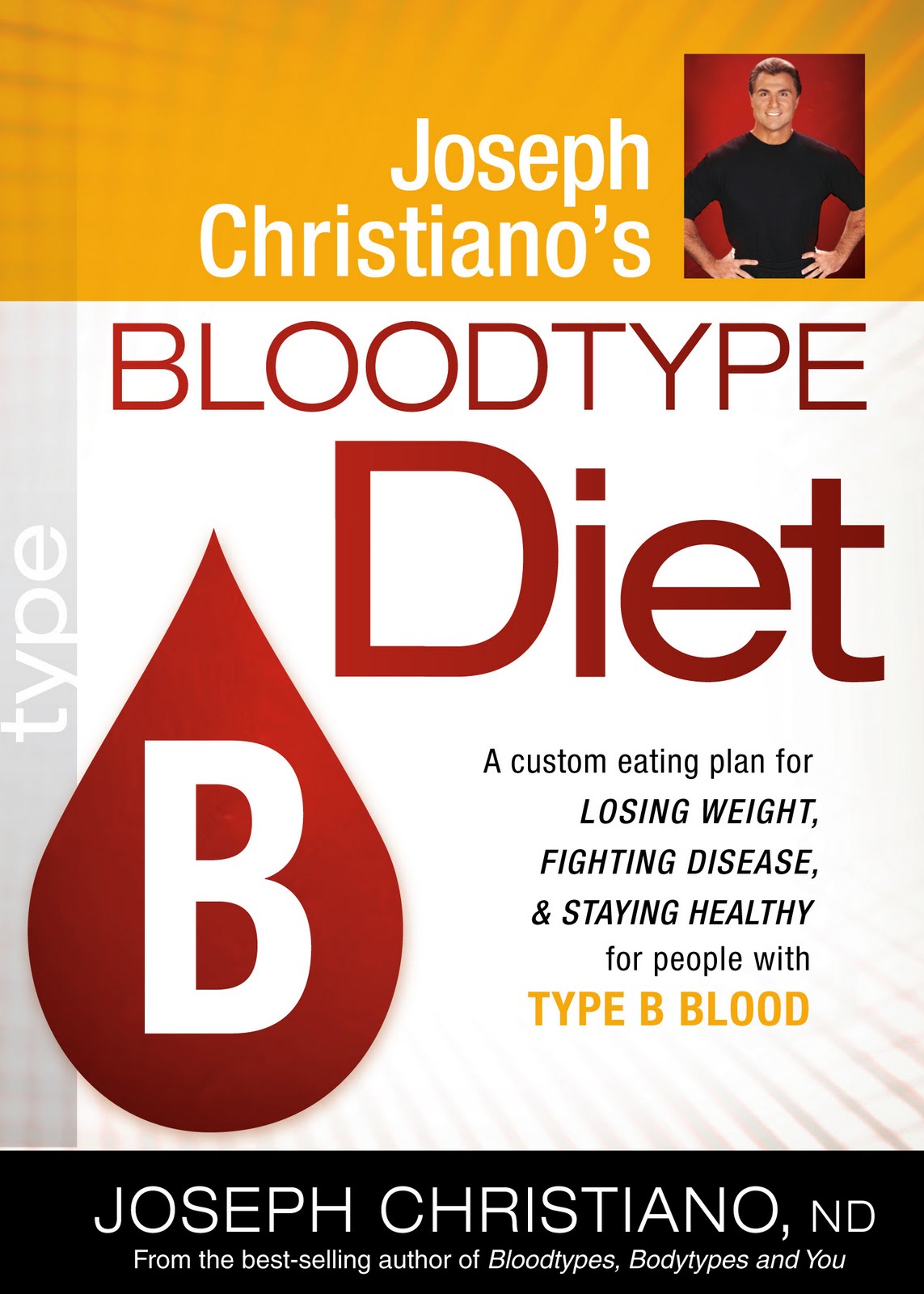
Joseph Christiano’s Bloodtype Diet: Type A

It is time for a FIRST Wild Card Tour book review! If you wish to join the FIRST blog alliance, just click the button. We are a group of reviewers who tour Christian books. A Wild Card post includes a brief bio of the author and a full chapter from each book toured. The reason it is called a FIRST Wild Card Tour is that you never know if the book will be fiction, non~fiction, for young, or for old…or for somewhere in between! Enjoy your free peek into the book!

You never know when I might play a wild card on you!


Today’s Wild Card author is:


and the book:


Joseph Christiano’s Bloodtype Diet:

Type A

Type B

Type AB

Type O

Siloam (September 7, 2010)

***Special thanks to Anna Silva of Strang for sending me a review copy.***

ABOUT THE AUTHOR:

Joseph Christiano, ND, CNC, a naturopathic doctor and certified nutritional counselor, has spent forty years developing individualized diet and exercise programs for Hollywood celebrities. Trainer of Miss America, Miss USA, and Mrs. America pageant winners, Joseph is a former Mr. Florida and award winner in the Mr. America bodybuilding championships. His health and fitness coaching expertise has resulted in helping school aged kids be more physically fit. He is the author of several books, including the best-selling Bloodtypes, Bodytypes, and YOU.

Visit the author’s website.

Product Details:


Type A:


List Price: $12.99
Paperback: 192 pages
Publisher: Siloam (September 7, 2010)
Language: English
ISBN-10: 1616380004
ISBN-13: 978-1616380007

Type B:


List Price: $12.99
Paperback: 192 pages
Publisher: Siloam (September 7, 2010)
Language: English
ISBN-10: 1599799995
ISBN-13: 978-1599799995

Type AB:


List Price: $12.99
Paperback: 192 pages
Publisher: Siloam; 1 edition (September 7, 2010)
Language: English
ISBN-10: 1599799820
ISBN-13: 978-1599799827

Type O:


List Price: $12.99
Paperback: 192 pages
Publisher: Siloam; 1 edition (September 7, 2010)
Language: English
ISBN-10: 1599799626
ISBN-13: 978-1599799629


AND NOW…THE FIRST CHAPTER: (All the first chapters of the Blood Type Diet are the same)

Blood Types: Your Foundation For Health


DNA. Genome. Cellular profiling. Stem cells. Cloning. Blood types. What is it all about? Is the existence and physiological makeup of humankind just a mixture of theories, personal points of view, and yet-to-be proven truths? Are we dabbling into mysterious areas that should be left alone, or are we finally beginning to learn more about ourselves?

In man’s conquest to survive, questions arise every day: What role do genes play in determining health, disease, longevity, bodily function, and performance? What is the origin of man—where did he come from? Do we all come from one main gene pool, or are we descendants of individual generational ancestry? Did we evolve from nothing to crawling on all fours to an eventual upright position, or did Yahweh (God’s proper and personal name) create us? Is man degenerating because of cellular mutation, becoming less than what he started out as, or is he a result of an evolutionary process, making him far superior to what he was at the beginning of time? Why do some people enter life with blue eyes and blond hair and others with brown eyes and brown hair? Are certain body genetics designed for physical and athletic superiority while other body genetics determine the run-of-the-mill hopefuls? Do the ABO blood types react differently to the same foods? Is there a link between red blood cells and your health?

Although phenomenal advancements have been made through modern-day discoveries in technology, science, and medicine, it will still take eternity to unravel the amazing intricacies of man. The world’s best scientific minds have made amazing discoveries, but in the light of all that we still do not know about ourselves, technology seems to move at a snail’s pace.

Whether you believe that Yahweh created every human being or that our existence is a result of some theoretical development of nothingness into something, the answers to our questions lie far beneath the surface—with our genetic foundation.

Our genetic makeup is the foundation of all that is life. Nothing relating to our ability to survive our environment; to fight off illness, infection, or stress; to supply our bodies with nutrition; or to make physiological adaptation is a matter of happenstance. It is no coincidence that our bodies are programmed with the innate ability to defend us from uninvited invaders such as parasites, viruses, and bacteria by creating an army of antibodies.

Our genetic foundation is a mixture of trillions of cells with codes that identify, program, and link everything in our existence—the color of our hair, our bodies’ susceptibility to disease, and foods that are compatible to our potential life span and capability to survive.

Some people would rather merely swim in shallow water than go below the surface to discover answers to the questions and issues of life. But there is a bottomless sea to dive into for the inquisitive and health-conscious individual who seeks knowledge of the role genetics play in our lives.

For example, did you know that . . .

Gene therapy is now being researched intensively in most developed countries—for a host of very good reasons. Instead of treating deficiencies by injecting drugs, doctors will be able to prescribe genetic treatments that will induce the body’s own protein-making machinery to produce the proteins needed to combat illness.

Researchers succeeded in making artificial copies of human genes that could be manipulated to produce large amounts of specific proteins. Such genes can be introduced into the human body where, in many cases, they substitute for a defective gene.

In a study that could lead to new treatments for diabetes and provide guidance on the use of genes in treating disease, scientists show that a common genetic variation increased the risk of contracting type 2 diabetes.

Australian scientists have identified a new gene responsible for controlling appetite in humans—a discovery experts say could lead to the first gene-based drug to treat obesity and diabetes.

In the not-too-distant future, scientists may be able to grow replacement organs and new blood vessels to replace clogged ones, eradicate diseases as diverse as Alzheimer’s and cystic fibrosis, and tell which medication to prescribe.

Gaining more knowledge and understanding about the complexities of our genetics humbles me—and convinces me of the existence of One much greater than man, with infinite creative wisdom that stretches far beyond the finite knowledge of man. The fact that man has the ability to make scientific advancements and acquire information about the genome of man serves only to prove how much greater his Creator must be.

The Discovery of Blood Groups

I also find it amazing that what the majority of us now know about our genetic makeup has only been discovered in recent decades. Experiments with blood transfusions began centuries ago, but without an understanding that there are different blood groups (also called blood types) many people died. At that time, no one knew that the blood clumping (agglutination), which caused toxic reactions and even death after some transfusions, was the result of mixing blood from two people with different blood types.

Then in 1901, an Austrian named Karl Landsteiner discovered that blood clumping was an immune system reaction that occurs when the receiver of a blood transfusion has antibodies that war against the donor’s blood cells. His discovery led to the classification of different blood groups, making it possible to conduct blood transfusions much more safely. Landsteiner was awarded the Nobel Prize in 1930 for making this remarkable, life-saving discovery.

So, what is it about the blood that makes one blood group different from another? The differences in our blood are based on the presence or absence of antigens and antibodies. Antigens are located on the surface of the red blood cells, and antibodies are in the blood plasma. People have different types and combinations of these molecules, which are inherited from their parents.

There are more than twenty blood group systems known today, but since the ABO system is the one most people are familiar with, I’ll stick with the ABO blood group system for our discussion of blood types in this book. As you’re probably aware, according to the ABO system, there are four different kinds of blood groups: A, B, AB, and O.

Blood group A

Since you purchased this book, I assume you belong to blood group A. As a member of this blood group, you have A antigens on the surface of your red blood cells and B antibodies in your blood plasma.

Blood group B

People in this blood group have B antigens on the surface of their red blood cells and A antibodies in their blood plasma.

Blood group AB

People in this blood group have both A and B antigens on the surface of their red blood cells and no A or B antibodies at all in their blood plasma.

Blood group O

People in this blood group have neither A nor B antigens on the surface of their red blood cells, but they have both A and B antibodies in their blood plasma.

How Did Different Blood Types Occur?

People who believe in Creation often ask: How did such a variety of ethnic groups and diverse races arise from one human pair?

Research is revealing more and more about the origin of blood types. Much of this research points out the possibility of the emergence of all known blood types from our common ancestors, Adam and Eve. In his dissertation titled “Blood Types and Their Origin (Answering the Critics),” Jonathan Sarfati tells us:

There is one gene in humans that controls the ABO blood type. There are three versions of the gene, or alleles: A, B, or O….For a husband and wife to pass on all alleles to their children, they need to, between them, have the A, B, and O alleles. . . . If Adam and Eve were genetically AO and BO, for example, their children could have had AB, AO, BO, or OO genetic makeup, giving AB, A, B, or O blood types. Indeed, about 25 percent of their children would have been of each type.

There is so much more to be discovered about man and our genetic makeup—birthed in us at the moment of conception. Although scientists are discovering new things about our genetic structure daily, there is much more that remains unknown. One scientist has observed:

Data supporting the complexity and design of life at all levels, and especially that of man, loom larger than was previously supposed—as large in fact as the enormous “gaps” in the fossil record. . . . The further we look into the complexity to the real world of man and his living companions, the more baffling and unexplainable, at least in standard evolutionary theory, the whole complex becomes. . . . To the skeptic, the proposition that the genetic programmes of higher organisms consisting of something close to a thousand million bits of information…containing in encoded form countless thousands of intricate algorithms controlling, specifying, and ordering the growth and development of billions and billions of cells into the form of a complex organism, were composed by a purely random process is simply an affront to reason.

It has taken gifted scientists years upon years to discover the things they know about man today. But it will take hundreds of more years to understand how to apply the new information.

It is when we are willing to be taught and are open to more knowledge that we continue to grow. I am growing daily in my own knowledge, particularly in my knowledge about the link between blood types and nutrition. Since authoring the book Bloodtypes, Bodytypes, and You, I have discovered new studies about the origin of blood types. These findings lean more closely to my personal beliefs in creationism.

My purpose for mentioning this is twofold: First, I humbly admit that no one has all the answers. But as long as we are willing to be open to greater learning and understanding, progress can be continual. Second, since I happen to believe that Yahweh is the Creator of all creation, it stands to reason that I would embrace studies that line up with my beliefs. As we learn more about the complex design of man, it just makes good sense to me that Someone greater than you or I is in charge of this whole thing.

Regardless of where you stand concerning the origins of blood type, one thing we can agree on is that eating foods compatible to our blood type and avoiding foods that are not compatible is a more accurate and individualized approach to eating than anything man has experienced.

As a naturopathic doctor, and not a scientist, biochemist, or genealogist, I’ll leave the research and discoveries to them and concentrate my efforts on helping you to be healthier. My interest is to help you reach a basic level of understanding about your body so you can take care of it in a way that will contribute to living a healthier and more balanced life.

During my summer vacations from school as a kid, I remember going with my father while he worked a few hours a week for my cousin, who owned an excavation and construction company. I watched the construction workers build the foundations for new buildings, or as they called it, “pour a cellar.” It was quite a process. The first thing they did was excavate the land and prepare the ground. Then they measured out the area where the foundation would be laid. After determining the proper elevations and measurements, they began to set up the forms.

Until I saw the entire process completed for the first time, it was hard to understand why they were using all those heavy planks to make a huge square in the dirt. But I learned that those planks played a very important role in the next part of the procedure. When the huge cement trucks were ready to pour the concrete, they poured it into the wood forms, which shaped the foundation of the building.

I learned that each foundation differed in size, shape, and materials. Certain job sites required the forms to be dug deeper in the ground, while other forms were extended higher. The deeper or higher the forms were laid, the thicker the concrete base or foundation would be. The design and composition of each poured foundation determined the size and weight of the structure that it could support.

Each building structure, whether a residential home, a high-rise building, or a strip mall, required a unique foundation that functioned as its basis for structure, stability, and support. Similarly, our ability to survive, support, and improve our structure will be determined by the mixture of the material found in our foundation. Our foundation, of course, is our genetics.

Consider yourself as a general contractor who wants to redesign or custom-build a house. In this case, the foundation of the house you want to construct, or reconstruct, is your genetics. Instead of brick, mortar, and wood, you are using the materials that comprise your body.

The amount of time and effort you put into customizing and building your “house” (your body) will help it to last for many years. By understanding the purpose of a strong “foundation” (your genetics) and by using the proper “tools and materials” (the proper nutritional and exercise applications and methodologies), you can assure a healthy, happy future.

You have a specific biological makeup that was given to you at conception. It’s the genetic substance that makes up your entire existence.

I have three daughters—Amy, the oldest, and twin daughters, Jenifer and Cara. Amy’s genetic foundation has given her facial features that resemble mine, while genetically Jenifer and Cara have their mother’s facial features.

But your genes are not limited to your facial characteristics. Your genes not only determine if you will look more like your mom or your dad and what color your hair and eyes will be, but also how susceptible you are to certain diseases and illnesses.

Your cellular profile and the way your body responds to certain foods, viruses, and bacteria are determined by your genes also.

One very important consideration can greatly help you maximize your genetic potential. This is providing your body with the best nutritional program for your specific genetics. Let’s take a look at this consideration in the next chapter.

Recap:

To understand the importance of your blood type, remember the following:

1. All of us are made up of trillions of cells. We function by our cells.

2. Our genetic foundation can help us determine today and tomorrow how to prepare ourselves for potential illnesses and diseases.

3. Understanding the role our genetics (blood type) play will help individualize the dietary remedies we need to improve survival.

4. Your body at the cellular level responds differently to the same foods than other blood types may.

MY REVIEW:

All I have to say about this book is that it is one diet I will not try. It would most likely work because on the plan for Type A, there is almost nothing I can eat and some of that I do not like. I could definitely lose weight if all I had was fish, rice and green tea which the author suggests is a perfect diet for Type A’s. How boring!

I never could find where the author documented exactly how the foods on the absolutely do not eat list were chosen. I can understand why some of the foods might be forbidden but why not peppers and tomatoes among others?  Basically, if like me you are a Type A, you should avoid all meat and dairy, most fish and seafood, many fruits and vegetables, grains, etc. He recommends that all foods on the “don’t eat” list be removed from the home. Not at all practical when your husband is Type O and should be able to eat almost anything he wants.

No thank you Dr. Christiano. I’d rather take my chances.

Immanuel’s Veins Promotion – Spread the Love t-shirt Giveaway

Thomas Nelson is promoting the release of Ted Dekker’s newest novel Immanuel’s Veins by giving away these specially designed tees.

If you would like to win the one I am giving away, please leave a comment with the answer to this question – “What is sacrificial love?” Please give the question some thought and not just pop off something obvious. Only those who answer the question will be entered in the drawing.

Giveaway deadline is Saturday, September 18. U. S. residents only please.


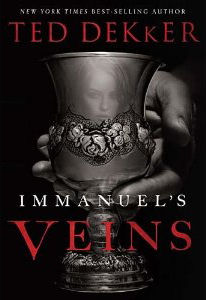
Immanuel’s Veins by Ted Dekker

This week, the
Christian Fiction Blog Alliance
is introducing
Immanuel’s Veins
Thomas Nelson (September 7, 2010)
by
Ted Dekker


ABOUT THE AUTHOR:

Ted Dekker is a New York Times best-selling author of more than twenty novels. He is best known for stories which could be broadly described as suspense thrillers with major twists and unforgettable characters, though he has also made a name for himself among fantasy fans.

Early in his career he wrote a number of spiritual thrillers and his novels were lumped in with ‘Christian Fiction’ a surprisingly large category. His later novels are a mix of mainstream novels such as Adam, Thr3e, Skin, Obsessed and BoneMan’s Daughters, and fantasy thrillers that metaphorically explore faith. Best known among these is his Circle Series: Green, Black, Red, White and The Paradise Books: Showdown, Saint, and Sinner.

Dekker was born to missionaries who lived among the headhunter tribes of Indonesia. Because his parents’ work often included extended periods of time away from their children, Dekker describes his early life in a culture to which he was a stranger as both fascinating and lonely. It is this unique upbringing that forced him to rely on his own imagination to create a world in which he belonged.

After leaving Indonesia, Dekker graduated from a multi-cultural high school and took up permanent residence in the United States to study philosophy and religion. Upon earning his Bachelor’s Degree, he entered the corporate world and proceeded to climb the proverbial ladder. But his personal drive left him restless and, after many successful years, he traded corporate life for wide range of entrepreneurial pursuits that included buying and selling businesses, healthcare services, and marketing.

In the early nineties while visiting a friend who had just written a book, Dekker decided to pursue a long held desire to be a novelist. Over the course of two years he wrote two full length novels before starting from scratch and rewriting both. Now fully enamored by the the process and the stories, he realized that storytelling was in his blood and a new obsession to explore truth through story gripped him anew.

He sold his business, moved his family to the mountains of Western Colorado and began writing full-time on his third novel. Two years and three novels later his first novel, Heaven’s Wager, was published.

Now, Dekker’s novels had sold over 3.4 million copies worldwide. Two of his novels, Thr3e and House, have been made into movies with more in production. Dekker resides in Austin, Texas with his wife Lee Ann and two of their daughters.

ABOUT THE BOOK:

This story is for everyone–but not everyone is for this story.

It is a dangerous tale of times past. A torrid love story full of deep seduction. A story of terrible longing and bold sacrifice.

Then as now, evil begins its courtship cloaked in light. And the heart embraces what it should flee. Forgetting it once had a truer lover.

With a kiss, evil will ravage body, soul, and mind. Yet there remains hope, because the heart knows no bounds.

Love will prove greater than lust. Sacrifice will overcome seduction. And blood will flow.

Because the battle for the heart is always violently opposed. For those desperate to drink deep from this fountain of life, enter.

But remember, not everyone is for this story.

If you’d like to read the first chapter of Immanuel’s Veins, go HERE.

Watch the book trailer:

SACRIFICIAL LOVE:

As part of my post for Immanuel’s Veins, Thomas Nelson has asked me to answer this question: “What is sacrificial love?”

When I think of sacrificial love, several things come to mind. As a Christian, the first  thing I think of is the ultimate sacrifice of Christ – He suffered a horrendous death on the cross to cover our sins because he loves us so much. There are  several  other degrees of sacrificial love that I can imagine and I’m sure the possibilities are endless. I believe God calls us to live a sacrificial life but that most of us misunderstand just what that means. We think to live sacrificially means to give up everything we hold dear and most of us are unwilling to let go. Yet if we are open to the voice of the Holy Spirit, we can demonstrate sacrificial love each and every day. The following are just a few examples that range from extreme sacrifice to simple everyday sacrifice:

  • Risking one’s own life to save a friend, family member, or even a stranger.
  • Parents who gives up their food so that their children can eat.
  • Giving up something like a cup of coffee or soft drink a day in order to contribute to missions.
  • Simply giving up one’s own plans or wishes for another person.

MY REVIEW:

Immanuel’s Veins is a darkly beautiful masterpiece that should be read with the heart engaged so that its true message can be absorbed. If over analyzed, it would probably fall short of the author’s intentions. With a predominate theme of sacrificial love, the story also illustrates the subtle but deceptive allure of evil. Filled with magnificent imagery, Immanuel’s Veins takes the reader into the darkest depths of the human heart and brings him back out into the illumination of Christ’s love. It is a story that will stay with me a long time – a story that left me with emotions not easily explained.

Although I had reservations before reading Immanuel’s Veins based on negative reviews, I found myself swiftly turning its pages and finishing it in less than a day. What a pleasant surprise! In my opinion, this is one of Dekker’s best works. With a truly gothic ambience, Immanuel’s Veins is the perfect gift for those ‘Twilight’ fans of your acquaintance.